Aug
31
2026
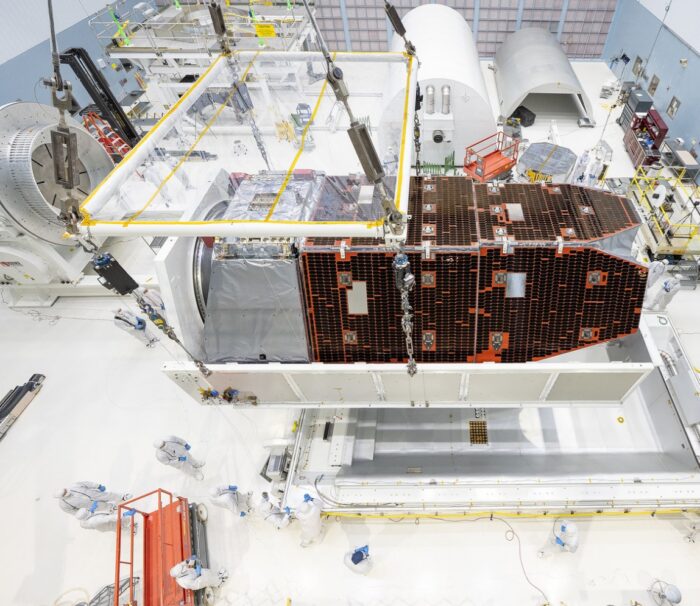 On Sunday August 30, 2026, NASA successfully launched the Nancy Grace Roman space telescope aboard a Space X Falcon Heavy. This telescope has amazing capabilities and will add to our ability to study and understand the universe, with a special focus on dark energy, black holes, and exoplanets. However, the best way to look at such telescopes is as part of a system of instruments, each with complementary trade-offs in abilities. But there are also some genuine technological advancements in this instrument.
The telescope is named after Nancy Grace Roman, who was NASAs first Chief Astronomer and NASA’s first female executive. She is also consider the “Mother of the Hubble” telescope for her critical role in planning and securing funding for the Hubble telescope.
Let’s start with the technical details. The Roman telescope was launched on a journey 1 million miles to the L2 Lagrange point between the Earth and Sun. Lagrange points are locations within overlapping gravitational fields, like the gravitational fields of the Earth and Sun, where there is a balance between the pull of both fields and the centrifugal force of orbiting itself. . The result is net zero forces on an object at a Lagrange point (of which there are 5 between Earth and the Sun). It does functionally act like a gravitational well itself. Roman will be orbiting the L2 point in what’s called a quasi-halo orbit, a large loop that ranges from about 117,000 to 500,000 miles away. The James Webb telescope is in a similar orbit around the same L2 point, but their orbits will keep them safely separated from each other. It will take Roman three months to arrive in its orbit around L2.
The primary mirror of Roman is a wide field infrared camera, with a 2.4 meter lens (the same size as Hubble’s). However, one of Roman’s primary features is that this lens is wide field – it can see 100 times as much of the sky in clear focus at the same time as the Hubble. It has a 300 megapixel camera with which to capture this information. This means it can gather a ton of data quickly, surveying the sky 1000 times faster than the Hubble. It will gather 50 times more data in 5 years than Hubble has in the last 30 years.
Continue Reading »
Aug
27
2026
 There is a lot of legitimate concern over the net effects of students using AI to do their school work. If you let AI do your writing, then you will not learn how to write, for example. Or worse – if you let AI think for you, then you will not learn how to think. I have spoken with many teachers at many levels about this and they range from those who take diligent steps to minimize AI “cheating”, to the other end where some throw up their arms and essentially say, “if students us AI to cheat, they are just cheating themselves out of an education.” For me the bigger question is – what happens to society if we raise a generation intellectually crippled by their dependence on AI?
Certainly, the educational system at every level needs to deal with the reality of AI, and needs to protect the legitimacy of their methods for evaluating students. But also, schools need to face the reality of a world with AI and prepare their students for that world, which may require leveraging AI itself as a teaching tool. In fact, using AI as part of the teaching itself may secondarily solve (or at least mitigate) the AI-cheating problem. For example, if you develop a workflow that includes human and AI elements, then use of AI is already baked in and accounted for. Ideally, the outcome will be optimal when the human adds value to the process and uses AI effectively. The outcome should be better than AI alone, or human alone, could generate. And if you have to show your work throughout the workflow, it becomes hard to fake your contribution to the process.
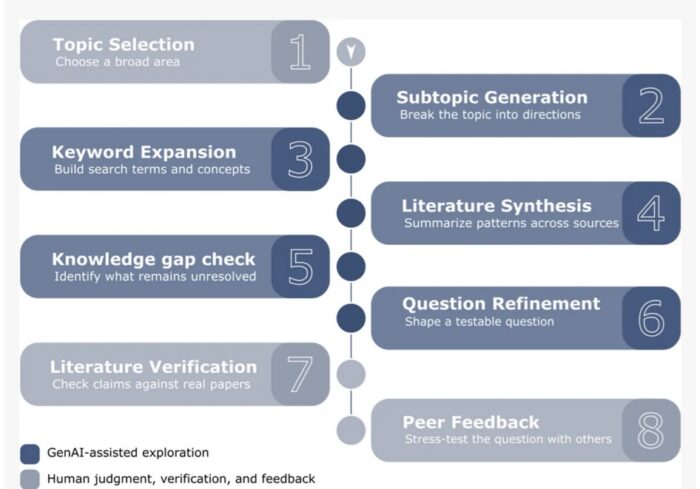
I don’t think researchers were even thinking of the AI-cheating problem when they developed this AI assisted workflow to teach undergraduates how to develop proper research questions. They were trying to more effectively teach students how to develop research questions. But their model may provide a useful template in many other educational contexts, and also help the AI-cheating problem.
Here is the problem they were trying to address – undergraduate students often have a difficult time developing useful research questions. It’s a lot harder than you might think – “Students can usually name a topic they care about, but often lack strategies for turning that interest into a question that is grounded in evidence, scoped to what is feasible, and aligned with available methodologies.” This has long been identified as a bottleneck in undergraduate research education. Developing a solid research question is often the most critical step in any research, and is often the most challenging thing to do. Continue Reading »
Aug
24
2026
 It should be clear by now that drone technology has crossed a technological threshold where they are cheap and efficient enough to have widespread use. They have transformed modern warfare. They are commonly used in surveillance. Over 75% of recent action films use drone footage, which has reduced the cost of aerial footage by about 90%. And now it seems that drone delivery services are poised to expand considerably.
What has caused this advance in technology? Part of it is advances in battery tech, which allows for greater range with lighter batteries, but that is not the whole picture. AI control systems are also critical. Sensor technology has also improved, both in miniaturization and Beyond Visual Line of Sight (BVLOS) technology. This is the ability to communicate with and control drones beyond line of sight using cellular, satellite, and mesh radio networks.
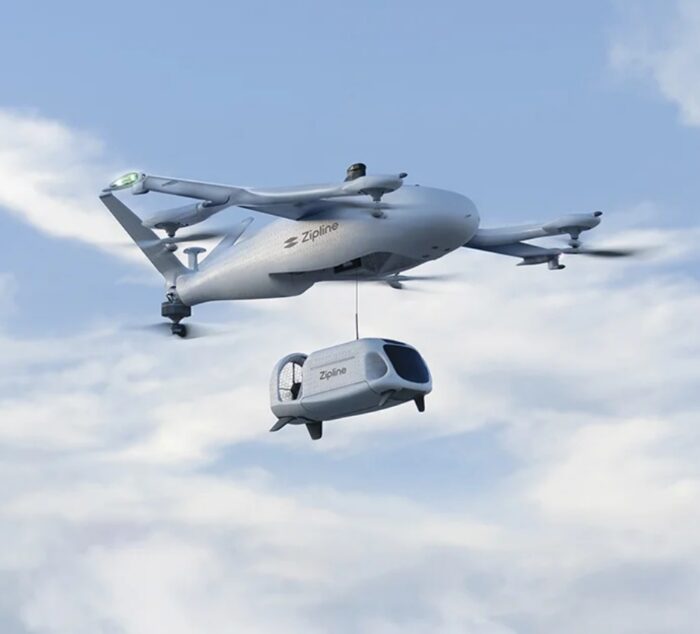
So are we about to see the future as depicted in Ready Player One, with drones constantly buzzing around the sky delivering everything from pizza to VR equipment? Probably not, but we will be seeing more drones. Several companies have been developing their drone delivery technology, and have already made millions of deliveries world wide. Amazon already has drone delivery available in 11 cities with more on the way. Wing is another company with current but limited drone delivery available. Zipline has perhaps the most advance system. They have been using and testing their system is Rwanda to deliver medications and other vital supplies to villages without an adequate road system. They have also now apparently made a deal with Uber Eats to deliver one million meals per day.
Continue Reading »
Aug
20
2026

In the last few decades our understanding of human evolution has expanded considerably. We have identified numerous new species, fleshing out a complex branching bush of relationships among early humans. But these discoveries have also caused a problem – our taxonomical naming convention for all these species is basically broken. That is the argument made by paleontologist Ian Towle in a provocative paper – Clades, Grades, and the Genus Problem: A Case for Revising Hominin Taxonomy. Let me lay out the problem before I discuss his proposed solution.
There are basically two layers to the problem – the first is a tension between a cladistic approach to taxonomy and a traditional Linnaean approach (or what Towle refers to as clades vs grades). Cladistics is a classification system that is strictly determined by evolutionary branching points. A clade includes a common ancestor and all descendants (any taxonomic group with this feature is called monophyletic). Clades are nested within larger clades. Traditional taxonomy then maps ranks such as family, tribe, genus and species onto some of those branching levels, although there is no biologically fixed amount of evolutionary divergence corresponding to any particular rank, and not all branching points are ranked. This approach is potentially clean and reflects our understanding of evolutionary relationships. The primary challenge of the cladistic approach, especially when we drill down to the genus and species level, is that we do not always know exactly what the evolutionary branching points are. Further, those branching points may not be clean and different species can still exchange genetic material often for millions of years.
The traditional Linnaean approach uses a variety of criteria for its classification, including evolutionary relationship but also morphology and behavior. A distinct group living in a particular place and time can be defined by specific morphological characteristics. The advantage here is that you don’t have to know the precise evolutionary branching points, you can identify species by features you can see. Perhaps the classic example of the difference between cladistics and the Linnaean approach is birds. Under a cladistic system, birds are dinosaurs. Under the Linnaean system, they could be a distinct group identified by their common derived features. Continue Reading »
Aug
17
2026
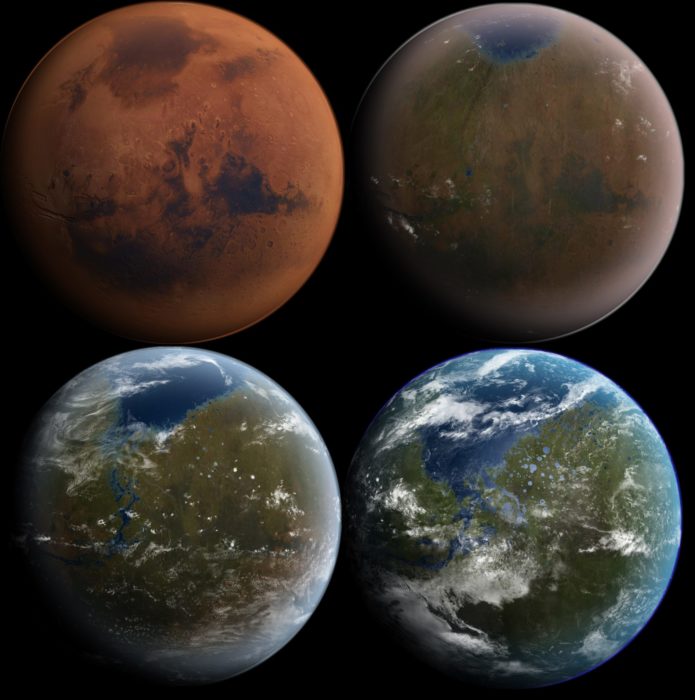 Terraforming, altering a planet’s atmosphere and surface to make it more Earth-like, has become a staple of science fiction. The benefit of successfully terraforming a planet are huge in that we now have an entire planet we can settle without the need for spacesuits and air-tight stations. We could also farm the surface for food, and would have access to liquid water. But how feasible is it? Is this something we could theoretically do with existing technology, and how long would it take?
The answer to these questions depends upon the planet in question. Right now the only planet for which it is even a discussion is Mars. Terraforming Venus is theoretically possible, at least on paper, but would likely be much more difficult, so let’s focus on Mars. What would it take to terraform Mars?
Mars is dry and cold with a wispy atmosphere – less than 1% the density of Earth’s atmosphere at sea level. We would therefore need to increase the thickness of the atmosphere, including greenhouse gases to help warm up Mars to a livable temperature. Average surface temperature is around -75 F / -65 C, but it can get quite balmy at the equator during the say, 70-80 F. But even there the temperature plummets to -100 F at night, because the lack of atmosphere cannot retain the heat.
Would the “Total Recall” approach work, simply melt the polar ice caps, which are mostly CO2 and water ice, to release a thick atmosphere? No. Melting the Martian icecaps would increase the atmosphere from 0.6% to 1.2% of an Earth atmosphere, which is negligible and would not result in runaway heating. But there is also CO2 and ice in the Martian regolith around the planet. What is we could melt all of the ice? https://www.nasa.gov/news-release/mars-terraforming-not-possible-using-present-day-technology/According to a NASA study, if we could release all that ice we would still only get up to 6.9% of an atmosphere. At that pressure the water in your body would boil and oxygen would leave your lungs. Humans require 20-25% atmosphere to survive without a pressure suit – not that it would be comfortable, but you would not quickly die.
Continue Reading »
Aug
11
2026
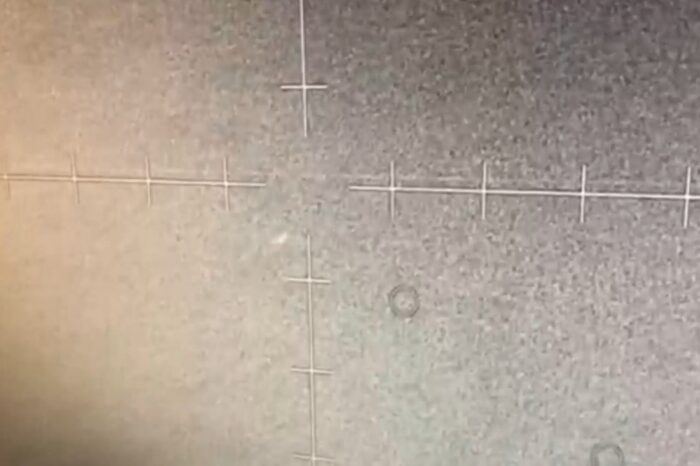 I saw the movie, Disclosure Day. I was not impressed. It was (mild spoiler alert) a completely unimaginative wet dream of what the UFO community fantasizes the government is hiding from all of us. There were no new interesting angles or plot twists or deeper story elements added to this now standard modern mythology. I kept waiting for the story to get actually interesting. It never did.
What would have been a far more brilliant movie, in my opinion (but not one that Spielberg, a believer, would ever do) is if, at the end of the movie, when the government’s UFO files were finally released to the public, they showed exactly what the Pentagon’s UFO files actually show. It would have been wonderfully anti-climactic, forcing the audience to rethink everything they just watched and were lead to believe. Of course, the rest of the movie would need to be tweaked to be consistent with this ending, and if done well it would be like Sixth Sense – a brilliant twist ending that changes your perspective on the entire movie.
Imagining such an ending to a movie like Disclosure Day, I think, puts the real-world disclosures by the Pentagon into perspective. They are giant nothing-burgers. . They consist of blobs and dots and shadows, and we must be told what we are looking at. The descriptions can sound impressive, but they contain hidden assumptions and often bad analysis that do not hold up under scrutiny. I have to say, If I were a UFO believer, waiting a large chunk of my life for the “truth” about alien spaceships to finally come out, and then being fed nothing but a bunch of blobsquatch videos, I would be beyond disappointed. Continue Reading »
Aug
10
2026
 It’s interesting to go back to see articles I wrote years ago to see how they held up. In 2019 I wrote a post about the “Challenges of Deepfakes“, which I just reread. What I discussed held up pretty well – deepfakes have both the effect of spreading misinformation and reducing confidence in real information. I think it’s fair to say that what I and others were warning about at the time is coming to fruition. However, what was interesting was what I did not discuss. ‘
I wrote that article just prior to the LLM revolution, and I didn’t even mention the potential for AI to transform the world of deepfakes. AI certainly makes deepfakes more convincing and harder to detect, especially for video, but that is not really the primary effect. The availability of AI tools incredibly lowers the bar for making deepfakes – that is their real impact. This makes it cheap and technically easy to create them, and this introduces potential uses that would otherwise not be feasible. It’s now possible to flood the zone with fake content, making any attempt at controlling or regulating such content perhaps impossibly difficult.
As I discussed at the time, the existence of deepfakes creates two problems – confusing fake content for real content (Type 1 problem) but also dismissing real content as fake (Type 2 problem). It turns out – the type 2 problem is far bigger, and the ease with which deepfakes can now be created dramatically exacerbates this. It is now a not-unreasonable assumption that any picture or video you might be seeing online is fake. It should be standard procedure to withhold judgement unless and until a video or picture has been vetted and verified. But this is work, and not everyone is going to be willing to do such work, especially for something that supports their narrative.
It is extremely important to note, however, we are not in the alleged post-truth world (not yet) – unless we believe that we are. If you believe you cannot trust any information, then you won’t, and there will not be any objective facts for you. You will be functioning as if we live in a post truth world. But most information online is still accurate, there are still trusted sources, and it is actually not that difficult to spend just a minute or two to verify most pieces of content you may be interested in. This simply has to become part of our information hygiene. And we must resist the temptation to just throw up our hands and conclude it’s all fake. Continue Reading »
Aug
06
2026
 I am back from an almost three week trip to LA, Sydney and Christchurch. Sorry I did not have time to keep up with my blog over that period – in which we recorded four live SGU shows, produced three days of conference content, put on two stage shows, and hosted several other events. It was a tremendous amount of fun, but also a great deal of work. I am now jet-lagged and fighting off the remains of a viral infection I picked up along the way.
Such trips always reinvigorate my dedication to science communication and scientific skepticism. I appreciate every conference-goer who came up to tell me about their personal journey and the role the content I have helped produce had played in it. I thought I would share some further observations from the trip.
First, while the skeptical movement, such as it is, has been through a lot, it is still alive and well. The crowds we are able to attract to these events remain robust, and in fact are larger than many past events. There is a lot of enthusiasm for science and critical thinking. There is also a deep hunger for developing the skills to navigate our increasingly complex world. How do we deal with what social media, growing misinformation, deep fakes, and now artificial intelligence has wrought?
People also have a deep desire for community – the kind of community that comes from getting physically together for a shared purpose, not just online. The number of people we can reach in these physical conferences and meetings is much smaller than online, but I think it remains a critical complement to online content. It also reinforces what I think many of use have learned from the “social media” phenomenon. Online communities are not the same as in-person communities, just online. People interact differently in person and online. The dynamics of social media were simply not what many of us expected. I don’t think we should abandon social media (although I know people who make a reasonable argument that we should), but rather we need to have a more realistic view of its strengths and weaknesses, its vulnerabilities and psychological effects. Continue Reading »