Sep
24
2026
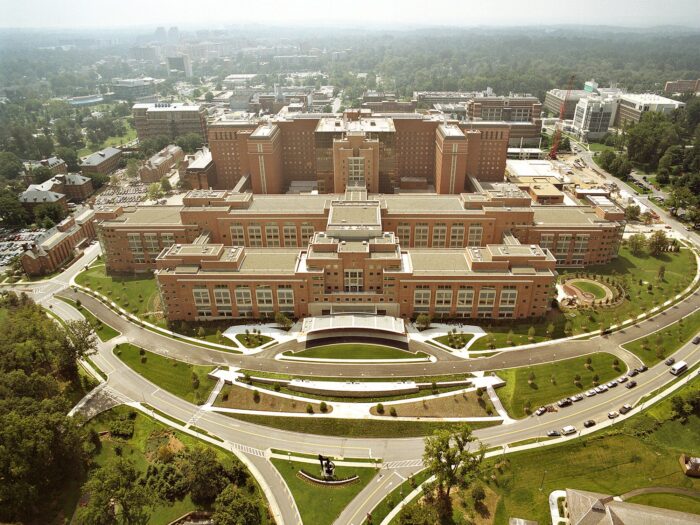 This is a tiny bit of good news it what has been a horrific story for American science over the last almost two years. Trump has backtracked on his attempts to politicize science funding at the NIH, and throughout the federal government. He did this apparently in reaction to bipartisan pushback from Congress. This, however, does not mean that there hasn’t already been profound damage and that further meddling will not happen.
To put all this into context, it is important to understand the infrastructure of scientific research that has been developed in the US, largely since WWII. The federal government created a number of institutions, the biggest of which is the NIH with an annual budget of $48 billion, to fund scientific research. This money largely went to universities through specific grants. This grant money is the life-blood of many research institutions – it pays for the research itself but also the infrastructure that allows the research to happen. Grants are awarded by merit, determined by panels of relevant experts. In exchange the funding organizations can impose many quality control rules on grant receiving institutions, labs, and researchers. You have to maintain a suite of certifications, and the results of your research have to serve some definable purpose and be accessible to the taxpayers who ultimately fund the research.
The NIH and other granting institutions are creatures of Congress – they were created by Congress, who determines their mission and provide their funding. Generally Congress determines their general goals, and then allows appointed experts to execute those goals by determining things like which grants get funded. This system has worked fabulously well over the last 70 years or so, allowing America to lead the world in scientific development. It is arguably one of the main reasons the US today is the superpower that it is. Here is a good discussion by Neil deGrasse Tyson on the power of this research infrastructure and the damage that has resulted from tampering with it.
As a general rule this arrangement, of politicians and funders determining broad goals and experts determining how to best execute those goals, works well. Historically whenever politicians try to meddle in those details, to “micromanage” what experts should be doing, the results range from bad to catastrophic. The classic historical example is Lynsenkoism in the former Soviet Union. Briefly (read the linked Wikipedia entry for more info) Trofim Lysenko did not believe in Mendelian genetics or natural selection, but favored what is now called a more Lamarkian approach. His science was favored by Stalin because it aligned better with Soviet ideology, and so he was elevated in power and those scientists who disagreed with him vanished. The result was mass starvation and a hollowing out of the science of genetics in Russia, something that they have still not fully recovered from. For this reason, whenever political ideology inappropriately meddles in the conduction of science, it is referred to as Lysenkoism. Arguably, that is exactly what the Trump administration is doing. Continue Reading »
Sep
14
2026
When you hear the phrase, “Science is socially constructed,” what does that mean to you? If you are a philosopher of science, you likely have a deep and nuanced understanding of exactly what that means. Unfortunately, in my experience, many scientists and science communicators do not fully appreciate what it means, and may even have severe misconceptions about it. I am not a philosopher, but I have studied a lot of philosophy and always try to align my understanding with the experts. I also have an interest in many different sciences, which I think is extremely helpful in understanding the socially constructed nature of science.
Let me first say what is not meant by that phrase – it does not mean that science is not real, that the findings of science are not true in some meaningful way, or that all methods of understanding the universe are equivalent. This is not relativism or post-modernism.
What it does mean is that science is something that people do. That may seem obvious, even trivial, but often people speak of “science” as if it is an entity unto itself. I know that we often use shorthand for convenience, but it is good to occasionally think about how that shorthand may bias how we think about things, and reflect those biases. When people say things like, “listen to the science” it makes it seem as if “science” is something that can speak with its own voice. It isn’t. Similarly someone might say, “look at the facts” as if the facts can interpret themselves. They can’t. People are always in the loop. People actively construct science out of observations and hypotheses and theories. There are institutions of science, different cultures within science, and different perspectives.
Continue Reading »
Aug
27
2026
 There is a lot of legitimate concern over the net effects of students using AI to do their school work. If you let AI do your writing, then you will not learn how to write, for example. Or worse – if you let AI think for you, then you will not learn how to think. I have spoken with many teachers at many levels about this and they range from those who take diligent steps to minimize AI “cheating”, to the other end where some throw up their arms and essentially say, “if students us AI to cheat, they are just cheating themselves out of an education.” For me the bigger question is – what happens to society if we raise a generation intellectually crippled by their dependence on AI?
Certainly, the educational system at every level needs to deal with the reality of AI, and needs to protect the legitimacy of their methods for evaluating students. But also, schools need to face the reality of a world with AI and prepare their students for that world, which may require leveraging AI itself as a teaching tool. In fact, using AI as part of the teaching itself may secondarily solve (or at least mitigate) the AI-cheating problem. For example, if you develop a workflow that includes human and AI elements, then use of AI is already baked in and accounted for. Ideally, the outcome will be optimal when the human adds value to the process and uses AI effectively. The outcome should be better than AI alone, or human alone, could generate. And if you have to show your work throughout the workflow, it becomes hard to fake your contribution to the process.
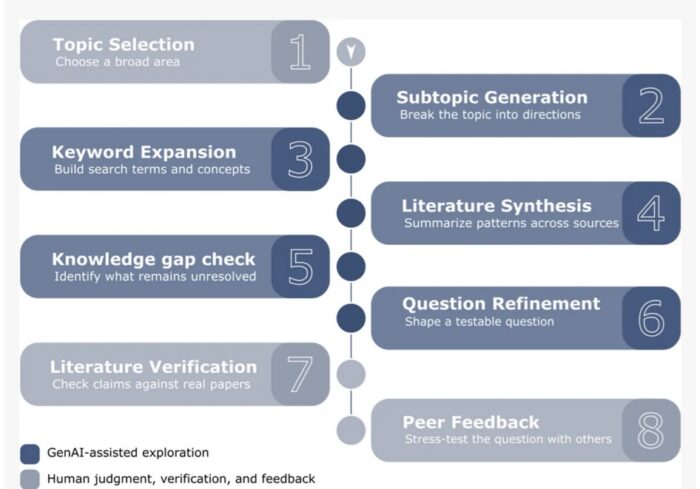
I don’t think researchers were even thinking of the AI-cheating problem when they developed this AI assisted workflow to teach undergraduates how to develop proper research questions. They were trying to more effectively teach students how to develop research questions. But their model may provide a useful template in many other educational contexts, and also help the AI-cheating problem.
Here is the problem they were trying to address – undergraduate students often have a difficult time developing useful research questions. It’s a lot harder than you might think – “Students can usually name a topic they care about, but often lack strategies for turning that interest into a question that is grounded in evidence, scoped to what is feasible, and aligned with available methodologies.” This has long been identified as a bottleneck in undergraduate research education. Developing a solid research question is often the most critical step in any research, and is often the most challenging thing to do. Continue Reading »
Mar
09
2026
 Researchers have recently published a discovery that could lead to more efficient photosynthesis in many crops. It’s hard to overstate how impactful this would be, as this could significantly increase crop yields while decreasing inputs. The growing human population makes such advances critical. Even without that factor, increasing yields decreases the land intensiveness of agriculture, which has a dramatic impact on our environment and sustainability. Improved photosynthesis would be a win across the board.
Before we get into the study there are a couple of points I want to explore. When I first learned of the various research efforts to improve photosynthesis my first reaction was – why hasn’t evolution already optimized something that is so critical to all life. The first photosynthetic organisms evolved at least 3.4 billion years ago. That’s a lot of time for evolutionary tweaking. So why is efficiency still an issue? There are a couple answers, but the primary one appears to be the constraints of evolutionary history. What this means is that evolution can only work with what it has, and it cannot undo its history. Once development leads down a certain path, evolution can make variations on the path but it cannot go back in time and take a completely different path. All vertebrates are variations on a basic body plan, for example.
So what are the evolutionary constraints of photosynthesis? Photosynthesis involves using the energy from sunlight to combine carbon dioxide (CO2) with water (H2)) to make glucose and oxygen. Critical to this reaction is an enzyme, ribulose-1,5-bisphosphate carboxylase/oxygenase (RubisCO), which fixes the carbon from CO2 into organic compounds. This enzyme, RubisCO, is responsible for over 90% of all carbon in living things. It is the most common enzyme in the world and is a cornerstone of living ecosystems, which mostly depend on energy from the sun.
Continue Reading »
Nov
25
2025
Yesterday I started a response to this article, which seems to me fits cleanly into a science-denial format. The author is making a lawyers case against the notion of climate change, using classic denialist strategies. Yesterday I focused on his denial that scientists can ever form a meaningful consensus about the evidence, conflating it with the straw man that a consensus somehow is mere opinion, rather than being based on the totality of the evidence. Today I am going to focus on the notion of “post-normal” science. Macrae gives this summary of what post-normal science is:
“The conclusions of post-normal science aren’t ultimately based, then, on empirical data, with theories that can be rigorously tested and falsified, but on “quality as assessed by internal and extended peer communities,” i.e., “consensus,” i.e., informed guesses.”
This is another straw man. He is creating a false dichotomy here, based on his misunderstanding of science (he is a journalist, not a scientist). Yesterday I gave this summary of how science works:
“Science is not a simple matter of proof. There are many different kinds of evidence – observational, experimental, theoretical, and modeling (computer modeling, animal models, etc.). Scientific evidence can use deduction, induction, can start with observation or start with a hypothesis, can use theoretical constructs, can make observations about the past and make predictions about the future. All of these various activities are part of the regular operation of science. No one type of evidence is supreme or perfect – they all represent different tradeoffs. Scientific conclusions are always a matter of inference – scientists make the best inference they can to the most probable explanation given all of the available evidence. This always involves judgement, and some opinion. How are different kinds of evidence weighted when they appear to conflict?”
Continue Reading »
Nov
24
2025
This article is from a year ago, but it was just sent to me as it is making the rounds in climate change denying circles. It is by Paul Macrae, who is an ex-journalist who now seems to be primarily engaged in climate change denial. The article (a chapter from his book on the subject) is full of the standard climate denial tropes – for the sake of space, I would like to focus on three specific points. The first is the claim that climate science is “settled”, the second is the notion of “post-normal science”, and the third is a factual claim about the accuracy of prior climate models.
Of course, if there is a consensus among climate scientists that global warming (I will get into more details on what this means) is “settled”, that makes it difficult, especially for a non-scientists, to question the conclusion. So order number one – deny that there is a consensus, deny that consensus is even a thing in science, and deny that science can ever be settled. I don’t suspect that I will ever be able to slay this dragon, it is simply too useful rhetorically, but for those who are open to argument, here is my analysis.
First – consensus is absolutely a thing in the regular operations of science. A consensus can be built in a number of ways, but often panels of recognized world experts are assembled to review all existing scientific data and make a consensus statement about what the data shows. This is often done when there is a policy or practice question. For example, in medicine, practitioners need to know how to practice, and these consensus statements are used as practice guidelines. They also set the standard of care, so as a practitioner you should definitely be aware of them and not violate them unless you have a good reason. Obviously, the question of global warming is a serious policy question, and so providing scientific guidance to policy makers is the point, such as with the IPCC. Consensus is also used to set research and funding priorities, to establish terminology, and resolve controversies. But to be clear – these mechanisms of consensus do not determine what the science says. That is determined by the actual science. The point is to provide clarity regarding complex scientific evidence, especially when a practice or policy is at issue.
Continue Reading »
Sep
02
2025
 The World Wide Web has proven to be a transformative communication technology (we are using it right now). At the same time there have been some rather negative unforeseen consequences. Significantly lowering the threshold for establishing a communications outlet has democratized content creation and allows users unprecedented access to information from around the world. But it has also lowered the threshold for unscrupulous agents, allowing for a flood of misinformation, disinformation, low quality information, spam, and all sorts of cons.
One area where this has been perhaps especially destructive is in scientific publishing. Here we see a classic example of the trade-off dilemma between editorial quality and open access. Scientific publishing is one area where it is easy to see the need for quality control. Science is a collective endeavor where all research is building on prior research. Scientists cite each other’s work, include the work of others in systematic reviews, and use the collective research to make many important decisions – about funding, their own research, investment in technology, and regulations.
When this collective body of scientific research becomes contaminated with either fraudulent or low-quality research, it gums up the whole system. It creates massive inefficiency and adversely affects decision-making. You certainly wouldn’t want your doctor to be making treatment recommendations on fraudulent or poor-quality research. This is why there is a system in place to evaluate research quality – from funding organizations to universities, journal editors, peer reviewers, and the scientific community at large. But this process can have its own biases, and might inhibit legitimate but controversial research. A journal editor might deem research to be of low quality partly because its conclusions conflict with their own research or scientific conclusions.
Continue Reading »
Mar
18
2025
 For much of human history, wolves and other large carnivores were considered pests. Wolves were actively exterminated on the British Isles, with the last wolf killed in 1680. It is more difficulty to deliberately wipe out a species on a continent than an island, but across Europe wolf populations were also actively hunted and kept to a minimum. In the US there was also an active campaign in the 20th century to exterminate wolves. The gray wolf was nearly wiped out by the middle of the 20th century.
The reasons for this attitude are obvious – wolves are large predators, able to kill humans who cross their paths. They also hunt livestock, which is often given as the primary reason to exterminate them. There are other large predators as well: bears, mountain lions, and coyotes, for example. Wherever they push up against human civilization, these predators don’t fare well.
Killing off large predators, however, has had massive unintended consequences. It should have been obvious that removing large predators from an ecosystem would have significant downstream effects. Perhaps the most notable effects is on the deer population. In the US wolves were the primary check on deer overpopulation. They are too large generally for coyotes. Bears do hunt and kill deer, but it is not their primary food source. Mountain lions will hunt and kill deer, but their range is limited.
Without wolves, the deer population exploded. The primary check now is essentially starvation. This means that there is a large and starving population of deer, which makes them willing to eat whatever they can find. They then wipe out much of the undergrowth in forests, eliminating an important habitat for small forest critters. Deer hunting can have an impact, but apparently not enough. Car collisions with deer also cost about $8 billion in the US annually, causing about 200 deaths and 26 thousand injuries. So there is a human toll as well. This cost dwarfs the cost of lost livestock, estimated to be about 17 million Euros across Europe.
Continue Reading »
Oct
03
2024
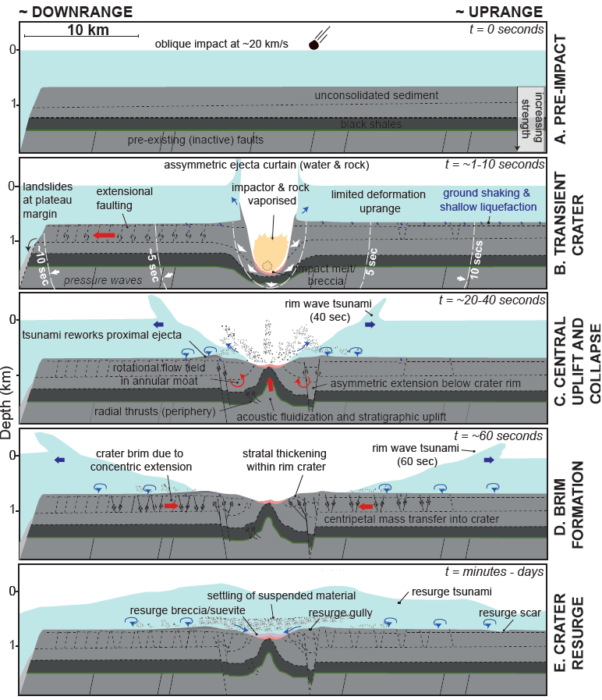 It is now generally accepted that 66 million years ago a large asteroid smacked into the Earth, causing the large Chicxulub crater off the coast of Mexico. This was a catastrophic event, affecting the entire globe. Fire rained down causing forest fires across much of the globe, while ash and debris blocked out the sun. A tsunami washed over North America – one site in North Dakota contains fossils from the day the asteroid hit, including fish with embedded asteroid debris. About 75% of species went extinct as a result, including all non-avian dinosaurs.
For a time there has been an alternate theory that intense vulcanism at the Deccan Traps near modern-day India is what did-in the dinosaurs, or at least set them up for the final coup de grace of the asteroid. I think the evidence strongly favors the asteroid hypothesis, and this is the way scientific opinion has been moving. Although the debate is by no means over, a majority of scientists now accept the asteroid hypothesis.
But there is also a wrinkle to the impact theory – perhaps there was more than one asteroid impact. I wrote in 2010 about this question, mentioning several other candidate craters that seem to date to around the same time. Now we have a new candidate for a second KT impact – the Nadir crater off the coast of West Africa.
Geologists first published about the Nadir crater in 2022, discussing it as a candidate crater. They wrote at the time:
“Our stratigraphic framework suggests that the crater formed at or near the Cretaceous-Paleogene boundary (~66 million years ago), approximately the same age as the Chicxulub impact crater. We hypothesize that this formed as part of a closely timed impact cluster or by breakup of a common parent asteroid.”
Continue Reading »
Jul
30
2024
 The topic of genetically modified organisms (GMOs) is a great target for science communication because public attitudes have largely been shaped by deliberate misinformation, and the research suggests that those attitudes can change in response to more accurate information. It is the topic where the disconnect between scientists and the public is the greatest, and it is the most amenable to change.
The misinformation comes in several forms, and one of those forms is the umbrella claim that GMOs have been bad for farmers in various ways. But this is not true, which is why I have often said that people who believe the misinformation should talk to farmers. The idea is that the false claims against GMOs are largely based on a fundamental misunderstanding of how modern farming works.
There is another issue here, which falls under another anti-GMO strategy – blaming GMOs for any perceived negative aspects of the economics of farming. Like in many industries, farm sizes have grown, and small family farms (analogous to mom-and-pop stores) have given way to large corporate owned agricultural conglomerates. This is largely due to consolidation, which has been happening for over a century (long before GMOs). It happens because larger farms have an economy of scale – they can afford more expensive high technology farm equipment. They can spread out their risk more. They are more productive. And when a small farm owner retires without a family to leave it to, they tend to consolidate with a larger farm. Also, government subsidies tend to favor larger farms.
Continue Reading »