Oct
20
2026
 My wife and I had nothing scheduled yesterday, so we took the opportunity to vote early. On election day, everyone votes in their voting district. For early voting, the entire town votes in one location at the public library. When we arrived at the polling location we encountered long lines – longer than we have in past elections. Initially I thought this was due to unusually high early voter turnout, and that was likely partly the cause. But the main cause was completely unnecessary inefficiency in the voting process, which is what I really want to write about today.
Let me start by saying that voting is sacred to any democracy. Given that it is a critical right that should not be denied any citizen, it is the responsibility of the state to ensure that all voters have reasonable access to voting and the process should not be unduly burdensome. For this reason I think election day should be a national holiday. I also endorse early voting and voting by mail – voting should be as easy as possible within the confines of voting security. America has incredibly secure elections, with insignificant fraud. Since 2016 there have been only 513 proven cases of voter fraud out of 685 million votes.
But I am now talking about something which has nothing to do with election security, but rather with simple efficiency. For elections efficiency is mission critical, because we need millions of people to go through a secure system in a short amount of time. Anything that decreases efficiency even a tiny amount can not only inconvenience voters, it can potentially disenfranchise them. With that in mind, let me describe the process of voting I experienced yesterday.
There were three lines, separated alphabetically by street name. I get why this was necessary, because they want to keep a paper trail of who voted and this is organized by street. But this created unequal lines, and for much of my wait the middle line had no people in it, meaning that the workers at the corresponding table were idle while the others were backed up. They didn’t have a workflow to deal with this contingency. They also had inadequate signage – you could not read the signs at the front of each line from the back of each line. But that was something they were in the process of correcting while I was there.
Continue Reading »
Oct
19
2026
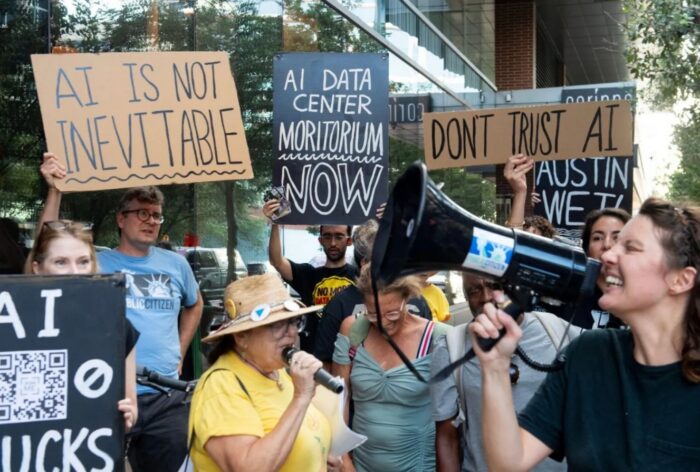 It seems that the hottest topic of 2026 is the potential for artificial intelligence (AI) to bring about some terrible cataclysm, even including mass human death or extinction. This is like catnip to journalists and social media – it allows for sensational headlines and discussions based upon credible sources. What’s not to love? I agree AI is potentially a disruptive technology, and there are many AI-related issues we need to work out (data centers, intellectual property, displacing workers). But I have not seen a credible case from those arguing for near-term or inevitable AI doom. I also think that excessive doomism might short-circuit some of the potential benefits from AI.
To be fair, I also don’t buy the case for unfettered AI optimism. We have to be careful not to fall for the common human tendency to prefer simplistic and morally pure narratives. Whenever I discuss AI I almost always get pushback from those who cannot tolerate hearing anything positive, or others who do not want to hear anything negative, about AI. And when I try to balance my discussion, I get pushback for being self-contradictory. However, something can be both good and bad at the same time. It is not contradictory to point out that fact. And people need to wrap their heads around this fact – your morally pure narrative is not reality. The truth is somewhere between AI alarmism and AI utopianism.
A recent opinion piece makes a great analogy to nuclear power. Nuclear energy is a low-carbon source of reliable energy on a large scale. But nuclear weapons are potentially an existential threat to civilization, and the former can feed into the latter. Nuclear power can also be expensive, carries the risks of nuclear accidents, and creates spent nuclear fuel that we have to deal with. So you can focus on all the negatives to weave an anti-nuclear narrative, or all the positives to create an optimistic case for nuclear, but the reality is in between. Nuclear doomism arguably hampered the adoption of nuclear and exacerbated global warming. What we need is nuclear realism – it is a powerful technology with the potential for creating lots of low-carbon energy or for destruction, and it needs to be carefully managed and regulated. That’s pretty much what we have now, although we can do better.
Continue Reading »
Oct
13
2026
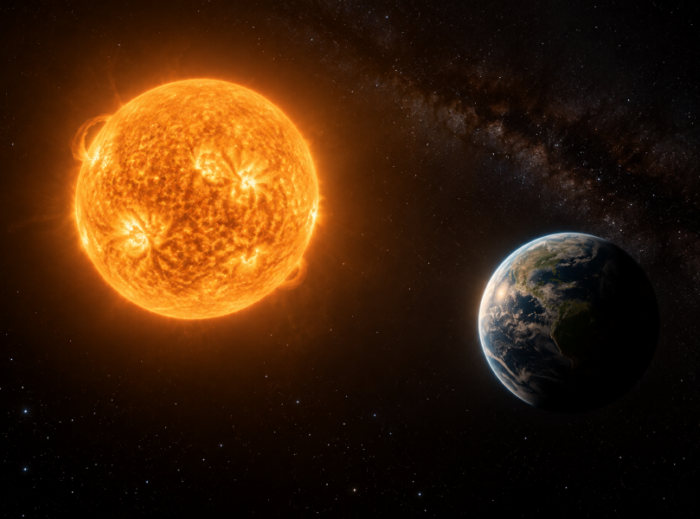 It is an interesting time in human history for our understanding of life in the universe. We have the technology and basic knowledge to search for the signs of life on other planets, but we have not yet detected any. Confirmation of the high probability of life anywhere other than Earth would be an incredible scientific discovery, and it’s exciting to think it may happen in our lifetime. We now have multiple high-tech telescopes on and near Earth, so we are more capable than we have ever been before. But where to look?
We only have one example of life in the universe and so it makes sense to use that as a template. For this reason astronomers have been focusing on Earth-like planets around sun-like stars orbiting in the habitable zone. The Earth is certainly habitable, as evidenced by the fact that it is teeming with life. But is it optimally habitable? Is looking for Earth twins the best place to look for alien life. Astrobiologists are asking this question, and developing a profile for so-called superhabitable worlds – those with optimal features for not just hosting life, but complex and potentially intelligent life.
I have mentioned in previous posts that orange stars (K-dwarfs) are likely the sweet spot for life. As stars get smaller and redder, they also live longer. We have a yellow star (by classification, even though the light it produces is white), which has a stable period of about 5 billion years. If life on Earth is typical, then this is just long enough to evolve intelligent life. Red dwarfs (M-dwarfs) live much longer, 100 billion to trillions of years. There are also a lot of them in the universe. But the light they produce is not ideal for photosynthesis, and they are very unstable, especially in their early lives. Also, the habitable zone is close enough to result in tidal locking. There is still the possibility of life on some of these worlds, but this is certainly not the ideal place to look.
Continue Reading »
Oct
12
2026
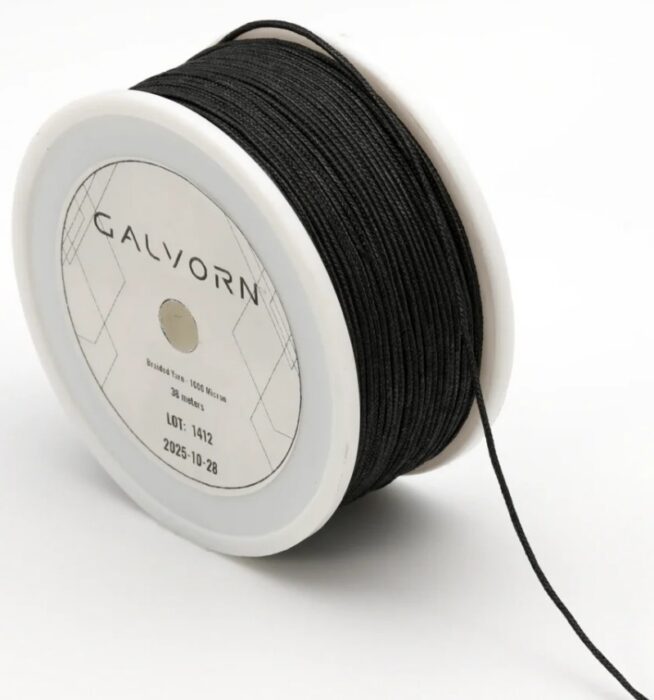 The carbon nanofiber revolution has been slower than hoped. This is one of the drawbacks of being a technophile and following tech news – you hear about exciting technology years before it is realized, and many of the tantalizing breakthroughs never come to realization. So you have to constantly dampen your enthusiasm with caution and skepticism.
This has been the case with carbon nanofibers. The tech is exciting, based upon a two-dimensional material, carbon, aligned in a grid pattern (like chicken wire) just one molecule thick. These can them be made into sheets, rolled into tubes, or woven into fibers. We have had applications for this material for years, but they have been limited to carbon nanofiber “soot” – a collection of short strands that are added to other material to make it stronger or more conductive.
What we have not had is macroscopic organized carbon nanofibers – long strands of carbon cables or sheets of material. These can be made only in tiny amounts in the laboratory setting at great expense. This fits in with many exciting new potential technologies, they work well in the lab but the tech needs to be scaled up. This is often the deal-killer (and a detail often not mentioned in popular news about the technology). Tech news veterans, however, know that this is often the critical question – can it be scaled? Rather, how well can it be scaled, how does that match the demands of specific applications, and at what cost? Unless there are good answers to these questions you don’t have a disruptive technology, you have a lab curiosity.
Continue Reading »
Oct
05
2026
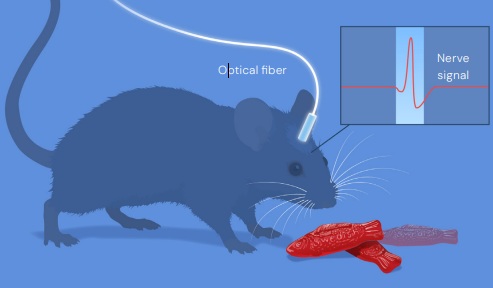 The Nobel Prize is often awarded not to researchers who made a huge discovery about how the world works, but to those who have developed techniques that improve research itself. The downstream effects of such developments are likely to be dozens or hundreds, even thousands, of discoveries This is the case for the 2026 Nobel Prize in physiology or medicine – awarded to Karl Deisseroth, Peter Hegemann, and Georg Nagel for their work developing optogenetics. This is a powerful tool that allows us to create a functional map of the brain.
The story begins with Hegemann who in the 1990s was studying the free swimming algae, Chlamydomonas. The algae swims towards light, which anyone can reproduce by shining a light on a petri dish full of the green organisms. They have a small eyespot which can detect light, but Hegemann was fascinated with how quickly they were able to respond to a light signal. This lead him to hypothesize that the algae may be using a different method for turning light into a signal that can affect their behavior than vertebrate eyes. When he attached electrodes to Chlamydomonas and shined a light on them, he was able to detect an electrical signal in half a millisecond – incredibly fast. This is simply too fast to conduct any signal, so he thought it must be the same protein that detects the light and creates the resulting electrical pulse. Now all he had to do was identify that protein.
A Japanese group had already mapped the DNA of Chlamydomonas, and of the genes identified, two had properties that might fit the bill. But this was now a bit out of the field of expertise of Hegemann, so he contacted Nagel for help and sent him the code for the two candidate genes. Nagel injected the genes into separate batches of frog eggs, which began to express the proteins. He could then study how the proteins functioned, and was able to confirm Hegemann’s hypothesis. Both proteins, named channelrhodopsin-1 and channelrhodopsin-2, were ion channels that respond to light by opening up, allowing positive ions to flow through, and creating an electrical potential. Channelrhodopsin-2 was particularly powerful, creating an electrical signal in 0.2 milliseconds. They were able to incorporate the gene for this protein into human and hamster kidney cells and show that they become light sensitive.
Continue Reading »
Oct
01
2026
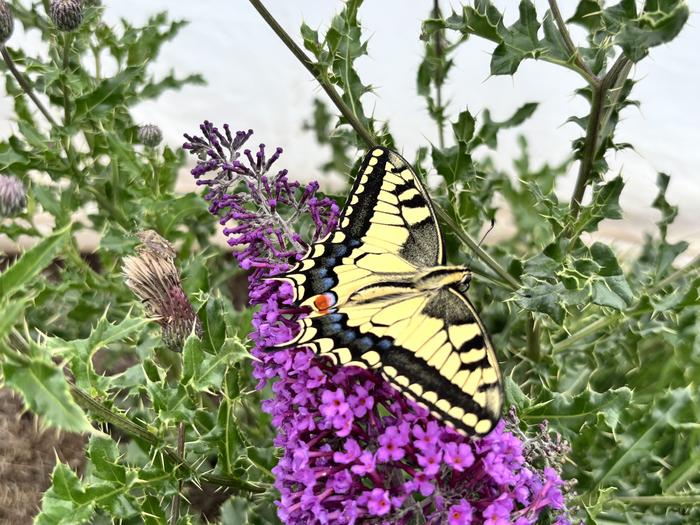 Stephen J Gould (still my favorite science essayist) wrote an excellent article in 1985 (Red Wings in the Sunset, later published in his book, Bully for Brontosaurus) about artist and naturalist Abbott Handerson Thayer. Thayer wrote about how animals use coloration as camouflage – what he called “cryptic coloration”. His ideas were solid, but he made a classic mistake that scientists sometimes make, overapplying their key discovery. Thayer argued that all animal coloration is cryptic. For example, he argued that flamingos are pink because it hides them in the setting sun (hence the title of the essay). This is a transparently absurd argument, and it shows how Thayer tried to shoehorn all evidence into his preferred and absolute narrative. It is better to assume that nature is complex, and all explanations are at best partial (unless proven otherwise).
Animal coloration, in fact, can serve many different purposes, only one of which is camouflage. Thayer also struggled with the male peacock, for example. Butterflies appear to be another example. Actually, many butterflies are camouflaged on the underside of their wings, so that when they are at rest with their wings up they tend to blend into their surroundings. But the top side of their wings are often very colorful and not camouflaged at all.
One assumption is that the brightly colored part of their wings is to attract mates. This may be true, but that does not mean the coloration does not serve another function. Often animals use visual cues when choosing their mates that are markers for health and success. As evidence that butterfly wing color may be serving a survival benefit, if you look at birds that feed on insects during flight, they target dully-colored moths much more than brightly colored butterflies, even though the butterflies should be easier to see.
A recent study tests the hypothesis that the brightly colored and patterned top side of butterfly wings may have evolved to produce an optical illusion to confuse predators. The idea of using optical illusions as visual protection in animals is not new. For example, zebra stripes allow zebras to hide in the herd, confusing predators as to where one zebra ends and another begins. Stripes on zebras and snakes may also serve to confuses predators about their direction of motion, but this hypothesis has not been tested previously. Continue Reading »