Nov
25
2025
Yesterday I started a response to this article, which seems to me fits cleanly into a science-denial format. The author is making a lawyers case against the notion of climate change, using classic denialist strategies. Yesterday I focused on his denial that scientists can ever form a meaningful consensus about the evidence, conflating it with the straw man that a consensus somehow is mere opinion, rather than being based on the totality of the evidence. Today I am going to focus on the notion of “post-normal” science. Macrae gives this summary of what post-normal science is:
“The conclusions of post-normal science aren’t ultimately based, then, on empirical data, with theories that can be rigorously tested and falsified, but on “quality as assessed by internal and extended peer communities,” i.e., “consensus,” i.e., informed guesses.”
This is another straw man. He is creating a false dichotomy here, based on his misunderstanding of science (he is a journalist, not a scientist). Yesterday I gave this summary of how science works:
“Science is not a simple matter of proof. There are many different kinds of evidence – observational, experimental, theoretical, and modeling (computer modeling, animal models, etc.). Scientific evidence can use deduction, induction, can start with observation or start with a hypothesis, can use theoretical constructs, can make observations about the past and make predictions about the future. All of these various activities are part of the regular operation of science. No one type of evidence is supreme or perfect – they all represent different tradeoffs. Scientific conclusions are always a matter of inference – scientists make the best inference they can to the most probable explanation given all of the available evidence. This always involves judgement, and some opinion. How are different kinds of evidence weighted when they appear to conflict?”
Continue Reading »
Nov
24
2025
This article is from a year ago, but it was just sent to me as it is making the rounds in climate change denying circles. It is by Paul Macrae, who is an ex-journalist who now seems to be primarily engaged in climate change denial. The article (a chapter from his book on the subject) is full of the standard climate denial tropes – for the sake of space, I would like to focus on three specific points. The first is the claim that climate science is “settled”, the second is the notion of “post-normal science”, and the third is a factual claim about the accuracy of prior climate models.
Of course, if there is a consensus among climate scientists that global warming (I will get into more details on what this means) is “settled”, that makes it difficult, especially for a non-scientists, to question the conclusion. So order number one – deny that there is a consensus, deny that consensus is even a thing in science, and deny that science can ever be settled. I don’t suspect that I will ever be able to slay this dragon, it is simply too useful rhetorically, but for those who are open to argument, here is my analysis.
First – consensus is absolutely a thing in the regular operations of science. A consensus can be built in a number of ways, but often panels of recognized world experts are assembled to review all existing scientific data and make a consensus statement about what the data shows. This is often done when there is a policy or practice question. For example, in medicine, practitioners need to know how to practice, and these consensus statements are used as practice guidelines. They also set the standard of care, so as a practitioner you should definitely be aware of them and not violate them unless you have a good reason. Obviously, the question of global warming is a serious policy question, and so providing scientific guidance to policy makers is the point, such as with the IPCC. Consensus is also used to set research and funding priorities, to establish terminology, and resolve controversies. But to be clear – these mechanisms of consensus do not determine what the science says. That is determined by the actual science. The point is to provide clarity regarding complex scientific evidence, especially when a practice or policy is at issue.
Continue Reading »
Nov
17
2025
 I am currently in Dubai at the Future Forum conference, and later today I am on a panel about the future of the mind with two other neuroscientists. I expect the conversation to be dynamic, but here is the core of what I want to say.
As I have been covering here over the years in bits and pieces, there seems to be several technologies converging on at least one critical component of research into consciousness and sentience. The first is the ability to image the functioning of the brain, in addition to the anatomy, in real time. We have functional MRI scanning, PET, and EEG mapping which enable us to see cerebral blood flow, metabolism and electrical activity. This allows researchers to ask questions such as: what parts of the brain light up when a subject is experiencing something or performing a specific task. The data is relatively low resolution (compared to the neuronal level of activity) and noisy, but we can pull meaningful patterns from this data to build our models of how the brain works.
The second technology which is having a significant impact on neuroscience research is computer technology, including but not limited to AI. All the technologies I listed above are dependent on computing, and as the software improves, so does the resulting imaging. AI is now also helping us make sense of the noisy data. But the computing technology flows in the other direction as well – we can use our knowledge of the brain to help us design computer circuits, whether in neural networks or even just virtually in software. This creates a feedback loop whereby we use computers to understand the brain, and the resulting neuroscience to build better computers.
Continue Reading »
Nov
17
2025
 The popularity of the acai berry as a so-called “superfood” is a triumph of marketing over reality. This is a berry from the Amazon that was eaten by local people – because it was available – but was then marketed by a company called Sambazon and became an international sensation.
There are lots of berries around the world that are a fairly good source of vitamins, but none of them deserve the moniker “super”. That is pure marketing hype. Acai is bitter (does anyone actually like acai?) and has to be imported from the Amazon, while if you live in the US there are lots of better choices, like blueberries. Why would people bother? Because they were lied to by celebrities.
The idea is that a superfood packs so much nutrition, including things like antioxidants, that they have specific health benefits. This is not a credible claim, and there is no solid scientific data to back up such claims. Generally the companies trying to market these foods will finance some studies designed to generate marketing copy, but nothing am0unting to serious research.
The very concept of a “superfood” is flawed, and likely to be counterproductive. What matters is one’s entire diet, not one component of the diet. The best approach is a simple one – eat a varied diet containing plenty of fruits and vegetables. That’s it – there, I just saved you from having to buy any healthy eating books, spending time or money on fancy diets, or obsessing over minutiae regarding your diet. Just eat your fruits and veg.
Continue Reading »
Nov
10
2025
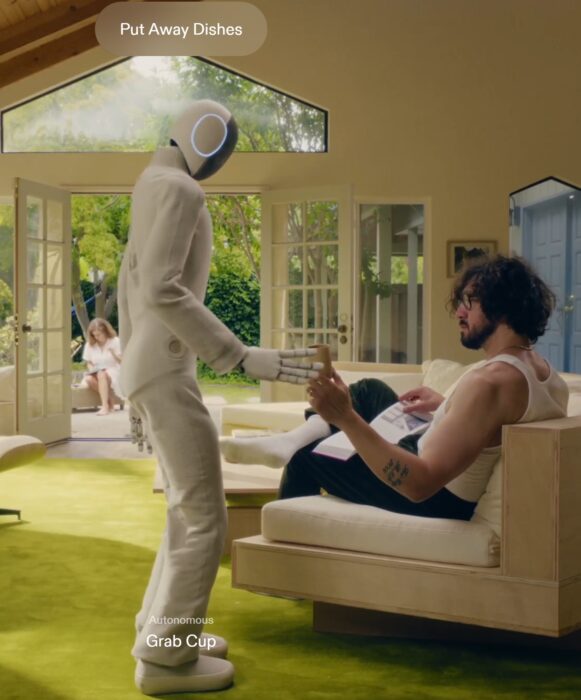 Recently the company 1X announced NEO, an in-home autonomous (sort of) android all purpose robot, for a cost of $20,000. This has been a vision of futurists, tech enthusiasts, and sci-fi fans for decades. Who doesn’t want a Rosie the Robot to do all their domestic chores? But is the tech really ready?
The home is not a friendly environment for an autonomous robot. It is chaotic, may include children and pets, has a lot of breakable stuff, and is optimized for people, not robots. Still, my Roomba does fine – it is a smart autonomous robot that does one thing (vacuum) reasonably well for a reasonable price. But what about all my other chores? And if the home is built for people, then why not a humanoid robot? The question is – are we there yet?
I spoke with Christian Hubicki, a roboticist, about NEO (if you’re are a patron you can see this on the SGU livestream) and he was impressed with the price-point. Twenty grand for an android robot is pretty good. It seems to function well, in that it can walk and pick up things. It is designed to be soft and is powered by current chatbot level AI. A the very least, it’s a walking chatbot.
Continue Reading »
Nov
04
2025
 When did our hominid ancestors first start using tools? This is a fascinating question of human paleontology, and it is also difficult to answer definitively. There are two basic reasons for this difficulty. The first is generic to all paleontology – our knowledge of when something emerged is dependent upon the oldest specimen. But the oldest specimen is likely not the very first emergence, so dates are frequently being pushed back when yet older specimens are discovered. Often scientists will say that something is “at least” a certain age old, knowing it could be older.
Tool uses specifically, however, has another challenge – we can only really know about tools that survive and are recognizable in the record. If early hominids were using wooden tools, for example, it would be very difficult to know this. If they were using unmodified stones this would also be difficult. We could potentially infer such use if the results were visible in the fossil record, such as marks on the bones of prey, but that can be difficult.
So when we talk about the earliest evidence for tool use in our ancestors we are talking about crafted stone tools. The oldest known stone tools date to 3.3 million years ago, at the Lomekwi 3 site in Kenya. At this time there were Australopithecines around but not yet any members of the genus Homo. H. habilis and H. rudolfensis date from 2.8-2.75 million years ago.
Continue Reading »
Nov
03
2025
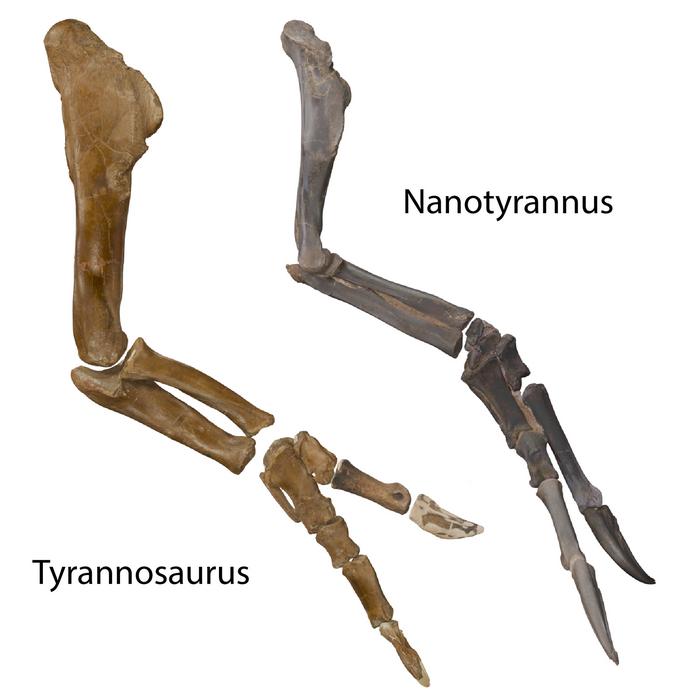 One of the things I like about following paleontology news is that new evidence can just be discovered, and sometimes these new pieces to the puzzle can significantly change what we think about past life. One such controversy I have been following for a while is whether or not small specimens of Tyrannosaurus rex-like dinosaurs represent juvenile T-rexes or a separate smaller species of theropod dinosaur. A new analysis of a nearly complete Nanotyrannus specimen has definitively resolved the debate – Nanotyrannus was a separate genus.
There are several layers of context that make this story more interesting. First, why was it so difficult to determine if different specimens were the same genus or not? This is not just due to having incomplete specimens – even with complete specimens, this can sometimes be tricky. Will all unknown species paleontologists need to determine if morphological differences are just within-species variation, different growth stages, or even male-female differences. Are we looking at two different species or genera, or a male and female of the same species?
This can be particularly difficult with dinosaurs, because many dinosaur species grow very large over a long period of time. Further, they can undergo significant morphological change as they grow. Another similar controversy, for example, was between Triceratops and Taurasaurus, the latter being larger and with a slightly different frill. It was considered plausible that Taurasaurus specimens were just older Triceratops, and therefore bigger and with age-related changes to the frill. With further specimens and analysis it is now considered that Taurasaurus is its own genus within the family Ceratopsidae.
Continue Reading »