Archive for May, 2026

May 12 2026

NYT Epic Fail on Acupuncture

Dozens of people have e-mailed me about a recent article in the New York Times Magazine on the interstitium. The reason is not because of the interstitium itself, but because it is being used to retcon an alleged explanation for acupuncture.  The discussion of the interstitium itself is fine, but then the author veered off into gratuitous pseudoscience.
The interstitium was proposed in 2018 based on a study showing that the interstitial connective tissue spaces around organs and other tissues in the body are not separate spaces but all appear to be connected. Essentially the authors propose this is a body-wide fluid filled space in the body through which fluids flow and communicate. This adds to the other fluid systems in the body, such as the lymphatic system (which drains excess fluid from tissues), the circulatory system (which distributes oxygen and nutrients and carries away waste), and the spinal fluid system (which is inside and surrounds the central nervous system). Later studies have supported the evidence for one continuous interstitial space.

Of course, the more we know about how the body works the better we will be able to understand disease processes and design treatments. Cancer cells, for example might spread through the interstitium, resulting in distant metastasis.

Continue Reading »

No responses yet

May 11 2026

Pentagon Releases More Boring UFO Videos

Published by under UFO's / Aliens

If I were a UFO enthusiast, someone who believes that some UFOs (now UAPs) are aliens visiting the Earth and that the US government knows this and is covering it up, I would be really disappointed. I might engage in some serious motivated reasoning to convince myself that the recent release of documents by the Pentagon was somehow dramatic, but down deep how could you escape crushing devastation. Lucy once again put the football out there for Charlie Brown and then yanked it.

Trump wrote that his administration will, “begin the process of identifying and releasing Government files related to alien and extraterrestrial life, unidentified aerial phenomena (UAP), and unidentified flying objects (UFOs).” The Pentagon announced they will make their files available to the public. The NASA director applauded this transparency. The media is now hyping up these
“never before seen” documents.

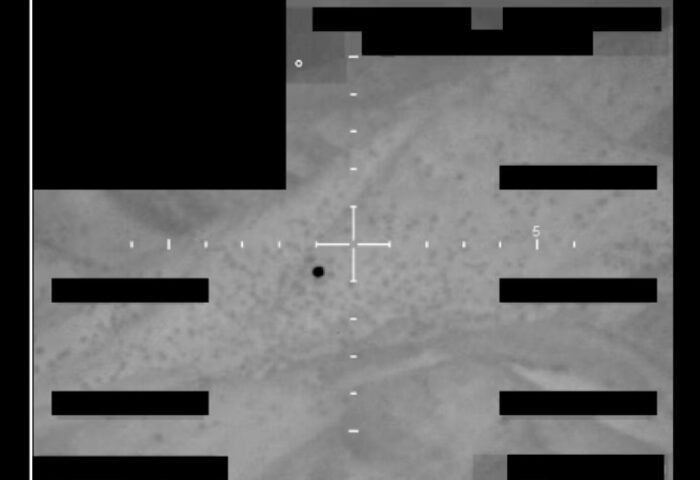
And the result – an absolute nothingburger. We get more indistinct blobs, dots of light, blurry nothings, camera artifacts, and stories of people seeing dots of light. The Pentagon acknowledges – there is no evidence that any of these things are alien phenomena, but also that some of the blobs and lights have not been fully explained. So we are exactly where we have always been – there is no compelling or unambiguous evidence of aliens. Believers can weave whatever anomaly-hunting stories they want from the terrible evidence. Skeptics will continue to point out that the evidence does not tell us anything. Conspiracy theorists will continue to argue that the government is covering up the “real” evidence, and this data dump must be a false flag.

Continue Reading »

No responses yet

May 07 2026

Richard Dawkins Discovers AI and Philosophy

Richard Dawkins is a public intellectual of some renown, although not without his controversies. So it is noteworthy when he writes an article claiming that the chatbot Claude is likely conscious. I found the article fascinating, not because I agree with his core claim or feel that he has contributed anything significant to the conversation, but because it seems to represent a scholar and deep thinker writing about a topic in which he lacks specific expertise. I also see no evidence in the article that he engaged meaningfully, or at least adequately, with a topic expert. As a result he makes some thoughtful and instructive errors.

He begins with a discussion of the Turing test, which has long been discussed as an early thought experiment about how we might determine if an AI is actually conscious. Dawkins essentially accepts the Turing test and write:

“It was one thing to grant consciousness to a hypothetical machine that — just imagine! — could one day succeed at the Imitation Game. But now that LLMs can actually pass the Turing Test? “Well, er, perhaps, um… Look here, I didn’t really mean it when, back then, I accepted Turing’s operational definition of a conscious being…””

He feels saying that LLMs have passed the Turing test but still not accepting them as conscious is moving the goalpost. However, the Turing test was never generally accepted by AI experts or philosophers as a true test of consciousness. Rather, it was understood that such a test really is only a measure of a machine’s ability to imitate human speech. I wrote about it in 2008, writing: “Ever since Alan Turing proposed his test it has provoked two still relevant questions: what does it mean to be intelligent, and what is the Turing test actually testing.” I went on to write:

“But I can imagine a day in the not-too-distant future when such AI can pass a Turing test. The algorithms will have to become much more complex, allow for varying answers to the same question, and make what seem to be abstract connections which take the conversation is new and unanticipated directions. You can liken computer AI simulating conversation to computer graphics (CG) simulating people. At first they appeared cartoonish, but in the last 20 years we have seen steady progress. Movement is now more natural, textures more subtle and complex. One of the last layers of realism to be added was imperfection. CG characters still seem CG when they are perfect, and so adding imperfections adds to the sense of reality. Similarly, an AI conversation might want to sprinkle some random quirkiness into the responses.

The questions is – will sophisticated-enough algorithms running on powerful-enough computers ever be conscious? What Loebner is saying, and I agree, is that the answer is no. Something more is needed.”

Basically, the limitation of the Turing test is that it is looking only at output, and therefore there is no way to distinguish the output of true consciousness from a really good simulation. This is not a new idea, and no one is moving the goalpost. We need to know something about how a computer is working to conclude whether or not it is conscious. What LLM experts will tell you is that these chatbots are just really good autocompletes – they are mimicking language, and since language is how we communicate thoughts, this creates the powerful illusion that they are mimicking thought, but they aren’t. They do not think, they do not truly understand.

Continue Reading »

No responses yet

May 04 2026

Some Renewable Energy Updates

Published by under Technology

I came across a few news items that I could possibly write about today and couldn’t decide which to cover, so I will write about all of them, since they all relate to renewable energy. The first is a new study comparing direct air capture (DAC) to installing new wind and solar. This is a direct comparison between these two options, to see which provides the most bang for the buck.

DAC involves taking CO2 directly out of the atmosphere in order to mitigate carbon release through burning fossil fuels. If this technology were sufficiently efficient it could be hugely useful in reducing future climate change. This is the only approach that can potentially have a negative carbon footprint, actually reducing the amount of CO2 in the atmosphere. Other technologies simply reduce the amount released. This negative carbon factor is highly attractive since it could theoretically zero out our carbon release and even take us back in time to an atmosphere with less CO2. Right now, it should be noted, we are not only continuing to release massive amounts of CO2 into the atmosphere, the amount continues to increase. In 2025 the world emitted 38.1 billion tonnes, of carbon, a 1.1% increase over 2024.

But there are problems with DAC – it is currently not very efficient and is not scalable enough to have enough of an impact. Also, the efficiency of DAC depends heavily on how you power it – if you connect it to the grid and there is some fossil fuel energy on that grid, you may actually increase CO2 rather than decreasing it. Ideally DAC would be powered entirely by low carbon energy sources. This is why critics of DAC argue that it simply makes no sense to deploy this technology before we have decarbonized the energy sector, which we should do first.

Continue Reading »

No responses yet