Nov 19 2026
I Saw I Can See Everything
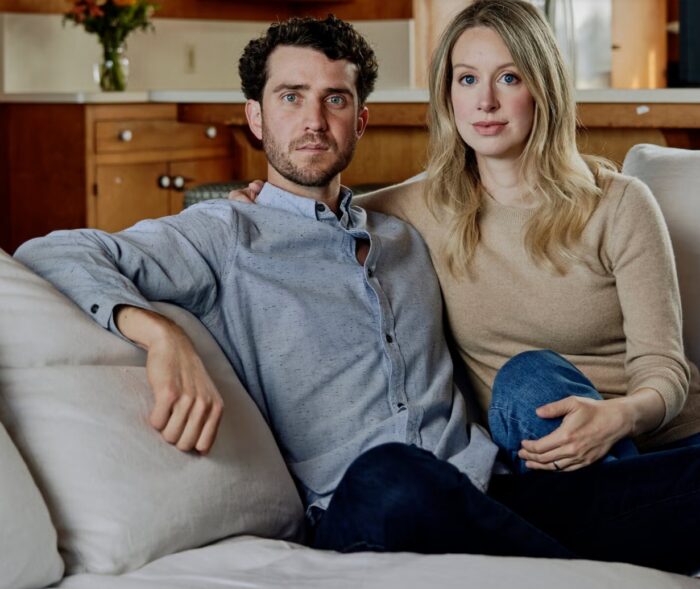 I first wrote about Elizabeth Holmes and Theranos in 2016, right when the story broke of the potential fraud happening at that company. At that time there was still a bit of a controversy as to what, exactly, was going on, and to what extent were the claims being made by Holmes plausible or true. But the tide had turned, her company was rapidly evaporating, and Holmes was quickly transforming from a media and Silicon Valley darling into a con-artist villain. The story essentially became – how did she fool so many rich, powerful, and allegedly savvy people (mostly men)?
Holmes maintains that her technology works and that she was unfairly targeted. Still, I was surprised when I read that she and her new boyfriend were planning on continuing the work of Theranos, even raising money for their venture. As part of her conviction, she is banned from running a company for 10 years. But she has a new partner who can be the CEO for her.
I found it incredible that anyone could trust her after being convicted for fraud, but I know that human gullibility can be bottomless. For these reasons I was fascinated by the new documentary about Holmes (I Can See Everything), following her for the months leading up to her incarceration and for a couple of years afterward. The central question of the film is to what extent is Holmes innocently self-deluded vs a diabolical manipulator? One of the arguments for her innocence is that she is, as she claims, incapable of deception, that she is on the neurodiversity spectrum and as such can make statements that are literally but narrowly true and miss how deceptive they can be. The second argument is that she is young and naive and is easily manipulated by controlling men. In this way she is playing the part of Peter Sellers in the movie Being There.
The counter argument is that she portrays herself this way, but it is all just part of the con. She knows exactly what she is doing. She was directly involved in deliberate deception of investors, and managed to create a multi-billion dollar company out of vaporware. The “helpless damsel” routine is much more plausible as a manipulating strategy than a reality.
The film leaves this fundamental question unanswered, which is part of its brilliance, but I have some fairly strong opinions about where reality lies. First, we (skeptics) get this question all the time – is an alleged charlatan a con-artist or a true believer? My answer tends to be, I don’t know. I can’t read people’s minds. But it doesn’t really matter – they are responsible for their behavior, and we can see their behavior and hold them accountable. Further, in most cases I think the answer is a complex combination of both. To some extent they likely believe their own BS. If you act as if you believe something long enough you do tend to actually believe it. At the same time they know they are cutting corners, or smoothing off the rough edges, putting their best foot forward, or simply engaging in industry standard “fake it till you make it” salesmanship. This blends seamlessly into direct fraud.
Generally I only conclude there is direct fraud when the evidence supports it. If someone engaged in psychic surgery is palming chicken parts to deceive their mark, the only possible explanation for that is deliberate fakery. In the Holmes case, Theranos used industry standard equipment to run blood tests and claimed that they were run on their own machinery (which didn’t actually work). This clearly crossed a line into fraud. In the documentary I think the most revealing exchange is when the interviewer pressed Holmes about her claim that the Theranos machine “can run any blood test”. Eventually it becomes clear that what she is claiming is that the machine is a “platform” where you can download the protocols for any blood test from the internet. In that limited sense, from a purely software perspective, it could run any blood test – assuming that it contained the chemistry to do so. She then gave a blank stare when the interviewer tried to explain to her how this could be deceptive.
I just didn’t buy it, not for a second. This is too clever by half. This is pure marketing deception, with all the fingerprints of deliberate misdirection. The notion that she is so innocently honest that she can’t even wrap her head around how this can be perceived as deception is just nonsense.
As the head of a frontier technology company, who lived with this tech for 10 years, she had to know what the various components of her technology were. One aspect of the technology is microfluidics – Holmes’s actual area of study (before she dropped out). You need to move one drop of blood through 30 or so tests, so this is a necessary component. Perhaps her company did advance this tech somewhat, although by all accounts never got the tech to actually work. Another component is the mechanics and software control of the machine itself, which endeavors to miniaturize and automate the blood testing process. If that were the extent of her claim – a smaller and more efficient blood testing machine – I could buy that. But apparently Theranos never really accomplished that either.
But the critical component of the technology that Holmes was claiming to have developed to disrupt an entire industry is the chemistry. Doing so many different blood tests on such a small volume of blood requires multiple simultaneous innovations in blood-testing chemistry, and that is inherently implausible. That was the main reason for my skepticism in 2016, the chemistry. That also appears to have been the real deal-killer for Theranos, they couldn’t just wish the necessary chemistry innovations into existence, or make the needed breakthroughs on an investor timeframe.
So now she has basically ditched the chemistry claims altogether. She has also downgraded the microfluidics claims – going from a single drop of blood, to a small amount of blood. She is now pretending that her only claim was for the mechanics itself (the platform). Even there, she only has individual components to show for it, not a completed functioning machine. The whole thing smacks of desperation and misdirection. It also seems quite deliberate.
I do recommend the movie, and you can watch it and judge for yourself (which I think was the intent). It is possible that she is now being manipulated by her new boyfriend, who is a very despicable character in the documentary, with a very dysfunctional relationship on display. I buy that to some extent she is neurodivergent. But I think that along the spectrum from true-believer to calculating manipulator, she is farther along toward the latter. It’s a fascinating question, but it does not really matter – she defrauded investors with clearly deceptive claims. I am still upset that she was cleared of defrauding the patients who were given bad blood test results. Perhaps it was just easier to prove the legal case with the investors, but it certainly does make it seem that protecting investors was more of a priority than protecting patients.