Jun
23
2026
A recent study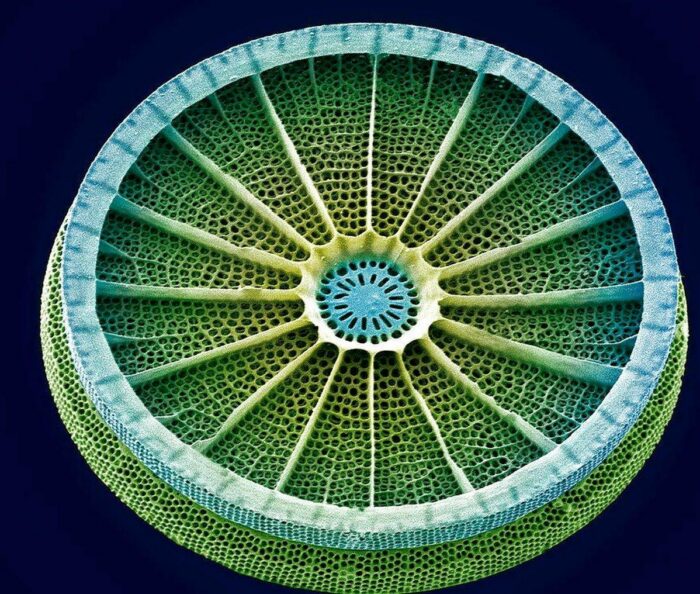 represents a confluence of technological advances that is pretty interesting. The specific problem being addressed – chemotherapy for bladder cancer – is very promising, but the technology itself can potential have many applications.
Let’s start with the problem, delivering chemotherapy to bladder tumors. The trick with chemotherapy is to create the highest levels of toxicity possible for cancer cells while limiting the toxicity for healthy cells. There are several ways to achieve this, with the primary method being finding drugs that are inherently more toxic tumor cells than non-tumor cells. The classic feature that has been targeted is the fact that tumor cells are rapidly reproducing and have a high metabolic rate, so drugs that target such cells are used. This still has an effect on healthy cells, especially those that rapidly reproduce, like hair cells, which is why many chemotherapies cause hair loss. Essentially we push the toxicity of these drugs to the limit of tolerability, to kill the cancer cells as much as possible.
Another strategy is to get these drugs to the tumor in higher concentrations than the rest of the body. You can accomplish this by intralesional injecting (injecting chemotherapy directly into a tumor), by injecting into the body compartment that contains the cancer, or by directing the chemotherapy specifically to the cancer using advanced techniques (such as lipid nanoparticles). For some types of bladder cancer the strategy has been to fill the bladder with chemotherapy and keep it in there for as long as tolerated. This works to some extent, increasing the dose of chemotherapy to the tumor while limiting systemic effects. However, there is limited penetration of the drug into the tumor because of the nature of the bladder lining.
The researchers therefore developed a hybrid algae robot to delivery chemotherapy for bladder cancer. They started with the silica shell of a diatom algae, specifically Coscinodiscus granii. The shell is called a frustule, which you can think of as a tiny glass wiffle ball. They chose G. granii because it has a multilayered porous shell with different sized pores, including a network of nanopores. They cleaned it of all the living algae parts so just the frustule was left. Essentially they are using the algae as nanofactories, mass producing these finely structured rigid shells that are also biodegradable. Nature so far is much better at creating things at the nanoscale than our technology. They then coated the frustules with magnetite and filled them with a chemotherapeutic drug, doxorubicin.
Continue Reading »
May
28
2026
 Understanding, at a deep level, the differences between legitimate science and pseudoscience is increasingly critical in our modern world. Science, in my opinion, is perhaps the most powerful tool humans have collectively developed for understanding the universe in which we find ourselves. (I would clarify that it is complementary with philosophy which is important to ensure that we are thinking clearly, rigorously, and consistently.) Pseudoscience pretends to be scientific but is essentially doing it wrong. There are many underlying reasons for the existence of pseudoscience – it is sometimes just poor quality science due to poor training or sloppy technique, it may result from a motivation to achieve a desired result rather than letting the empirical chips fall where they may, researchers may not appreciate their own biases, or it may be part of a dedicated campaign motivated by profit, politics, ideology, religion, culture, or just wishful thinking.
I spend a lot of time studying and writing about certain classic pseudosciences because I think they are especially instructive, and acupuncture is definitely on the short list. I just wrote about it last week, specifically about a gullible article in the NYT which has bought into the pro-acupuncture propaganda. That piece resulted in lots of feedback, some of which doubled-down or extended the pseudoscientific arguments often made for acupuncture, so I wanted to reply to some of those and further clarify my position.
One common feature of pseudoscience is the use of vague or fluctuating definitions. Science requires unambiguous definitions, which is why it so often relies on technical jargon which evolves to be incredibly precise. This is one of the things I love about science, and why I think everyone should study it to some degree, at least enough to become functionally scientifically literate. Science forces you to think clearly, precisely, and consistently. If we take a seemingly simple question, for example, such as “does acupuncture work”, we first have to operationally define “acupuncture” and also “work”. You also have to include – work for what? I am usually careful to do so when addressing this question.
Continue Reading »
May
12
2026
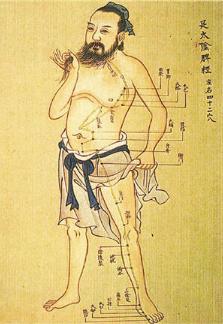 Dozens of people have e-mailed me about a recent article in the New York Times Magazine on the interstitium. The reason is not because of the interstitium itself, but because it is being used to retcon an alleged explanation for acupuncture. The discussion of the interstitium itself is fine, but then the author veered off into gratuitous pseudoscience.
The interstitium was proposed in 2018 based on a study showing that the interstitial connective tissue spaces around organs and other tissues in the body are not separate spaces but all appear to be connected. Essentially the authors propose this is a body-wide fluid filled space in the body through which fluids flow and communicate. This adds to the other fluid systems in the body, such as the lymphatic system (which drains excess fluid from tissues), the circulatory system (which distributes oxygen and nutrients and carries away waste), and the spinal fluid system (which is inside and surrounds the central nervous system). Later studies have supported the evidence for one continuous interstitial space.
Of course, the more we know about how the body works the better we will be able to understand disease processes and design treatments. Cancer cells, for example might spread through the interstitium, resulting in distant metastasis.
Continue Reading »
Apr
20
2026
 Regeneration is one of the futuristic tropes of science-fiction, because it is both incredibly powerful and not theoretically impossible. Imagine the ability to regrow a lost limb, or simply to replace a diseased or worn out limb. There are about a million limb amputations worldwide every year, so it is a very common medical problem. What if we could regenerate organs? This would be a game-changer for medicine.
There are several approaches to addressing missing limbs or failing organs. One is the cyborg approach – make a mechanical version to replace the biological one. We are making progress here, with brain machine interfaces, mechanical hearts, and other advances. Or you could transplant the body part from another person, or even an animal that has been genetically modified to be compatible. You can also regrow the missing or failing body part from the intended recipient’s own tissues and then transplant that. Or you could inject stem cells programed to regrow the needed part inside the recipient. All of these options are active research programs, have shown some incredible promise, but are also years or even decades away, especially in their mature form.
Let’s now add one more technology to the list – genetic therapy that triggers natural regeneration, meaning from the person’s own tissue. This has long been a target of potential therapy, inspired by the fact that there are many animals that can already naturally do this. Most extreme is the axolotl (a type of salamander that for some reason has become very population with the young generation), which can regenerate just about any of its body parts. They form a blastoma of pluripotent stem cells at the site of injury that can quickly regrow into a missing limb, heart, spinal cord, parts of the brain, etc. in weeks. There are also zebrafish, which can regrow their tail fins. Mice can also regrow missing digits, which is important because they are mammals showing that regeneration can happen even within the mammal clade. You don’t have to be a salamander.
Continue Reading »
Mar
19
2026
 This is a tiny ray of light in what has been a gloomy year for science-based federal health policy. Recently U.S. District Court Judge Brian Murphy in Boston ruled that the actions of RFK Jr. as HHS Secretary to fire the entire Advisory Committee on Immunization Practices (ACIP) did not follow procedure and is therefore not valid. Further, he concluded that the new ACIP, packed with anti-vaxxers, made capricious and arbitrary decisions that did not follow established science-based procedure. His ruling is a preliminary injunction that has delayed meetings of the ACIP and stays the revised vaccine schedule. The ruling is in a case brought by a coalition of medical professional societies, including the American Academy of Pediatrics. They are celebrating the ruling as “a momentous step toward restoring science-based vaccine policymaking.”
There are a few layers to this story. The first is RFK Jr. himself and what he has been doing as HHS secretary. I have not written much about him here, because posts about him and other Trump health appointees have dominated the SBM blog over the last year. This has been an “extinction level event” for rational federal health policy, and we have documented it and analyzed it every step of the way. David Gorski has done a great job specifically documenting what RFK Jr. has done to vaccines in the US in his series – “RFK Jr. is definitely coming for your vaccines”, in which he just published part 8. He did a great job not only documenting all of RFK Jr’s harmful actions but actually predicting them. Essentially, RFK is systematically using every lever at his disposal to dismantle the vaccine infrastructure in the US to reduce vaccines as much as possible. Given his actions he clearly straight-up lied to the confirmation committee when he said he was not anti-vaccine and would not take away American’s vaccines.
We, of course, recognized exactly what RFK Jr was doing during the hearings, because we have been following his nonsense for 30 years. He said, for example, “If we want uptake of vaccines, we need a trustworthy government,” Kennedy said. “That’s what I want to restore to the American people and the vaccine program. I want people to know that if the government says something, it’s true.” He then promised “gold standard science”. I would argue he has done the exact opposite. But what this statement is is classic denialism. Just claim you want to review the science, that everything is open to examination, and you just want the highest standards of science. These principles are great, but they can be used as a weapon, not just a tool. You can deny well-established scientific conclusions by arbitrarily claiming we need yet higher standards. Also, claiming you want to “restore” faith in the vaccine program assumes there is currently a lack of faith, which is rich coming from the person who has done the most to undermine that faith with pseudoscience and false claims. That is another denialist strategy – make a well-established science seem controversial, then argue that because it’s controversial we need to reexamine it and call it into question.
Continue Reading »
Feb
26
2026
 The news is abuzz with talk of a potential universal respiratory vaccine. It’s definitely interesting research, but may not be what you think. In this case, the reporting has been quite good on the whole, but the headlines can be misleading if you are not deeply steeped in the complexities of mammalian immunity. Let me start with the biggest caveat – this is a mouse study. This is therefore encouraging pre-clinical research, but we are still years away from translating this into an actual vaccine. Also, most interventions that are encouraging at the animal stage don’t make it through human testing. So don’t expect any revolution based on this treatment anytime soon. Having said that – there is great potential here.
To understand how this new approach works, let’s review some basics of immunity. (Note – the immune system is incredibly complex, and I can only give a very superficial summary here, but enough to understand what’s going on.) Mammalian immune systems have two basic components, innate immunity and adaptive immunity. The adaptive immune system is probably what most people think about when they think about the immune system and vaccines. Adaptive immunity targets and recognizes specific antigens (such as proteins) on pathogens like viruses, bacteria, or fungi. Antibodies attach to these antigens, flagging them to be targeted by immune cells like macrophages which then eat them. The macrophages in turn display the antibody-flagged antigens on their surface, triggering a greater and more specific reaction to those specific antigens. Adaptive immunity is considered slow (it takes days to ramp up), specific (it targets specific antigens on specific pathogens) and durable (it has memory, and will react more quickly and robustly to the same pathogen in the future).
By contrast, the innate immune system is fast, non-specific, and short-lived with no memory. The innate immune system consists of physical barriers, like skin and mucosa, and immune cells that target pathogens based on broad patterns that are not learned but are innate (hence the name). There are Toll-like receptors (TLRs – the name Toll comes from the German for “fantastic”, allegedly said by a researcher upon discovery). The Toll gene was first discovered in fruit flies and then similar genes were later discovered in mammals, hence “Toll-like”. TLRs detect pathogen-associated molecular patterns (PAMPs), which are highly conserved features of types of pathogens. In other words – a TLR might recognize a snippet of RNA as a pattern typical of RNA viruses, or proteins that tend to occur on pathogenic bacteria. “That looks like an RNA virus, so let’s attack it.”
Continue Reading »
Dec
08
2025
A new study reinforces the evidence for the safety and efficacy of the mRNA COVID-19 vaccines. That’s the TLDR, but let’s dive into the details.
Medical evidence is always rolled out in stages. First there is what we would consider preclinical evidence, or basic science. This could be initial uncontrolled clinical observations, or mechanistic animal or in vitro research. At some point we have sufficient evidence to generate a hypothesis that a specific treatment could be effective in treating a specific disease, enough to progress to human research. For FDA qualifying research, there are four specific phases. Phase I trials look at the safety of the intervention in usually healthy controls, while also answering basic questions and mechanism and effects. If there are no safety red-flags then the research progressed to a phase II trial, which look for preliminary evidence of efficacy, and further safety data. Again, if that data continues to look encouraging we can progress to a phase III trial, which is a larger and more rigorous trial designed to be definitive. Usually the FDA requires several phase III trials to grant approval of a drug for a specific indication. Then, once on the market there is phase IV trials, which look at data from more widespread use to confirm safety and effectiveness in the real world.
Looked at another way, we do research in the lab, then on dozens of people, then score to hundreds of people, then hundreds to thousands of people, and then finally on thousands to millions of people. Each step of the way we gain the ability to detect less and less common side effects in a broader set of people. Further, the types of evidence are designed to be complementary. Phase III trials, for example, are rigorously experimental, with highly defined populations with randomization to control as many variables as possible. Phase IV trials, on the other hand, are generally observational, designed to look at very large numbers of people in an uncontrolled setting – to determine how safe and effective the treatment is in real-world conditions.
Continue Reading »
Sep
23
2025
 Yesterday, Trump and RFK Jr had a press conference which some are characterizing as the absolutely worst firehose of medical misinformation coming from the White House in American history. I think that is fair. This was the presser we knew was coming, and many of us were dreading. It was worse than I anticipated.
I suspect much of this stems from RFKs previous promise that in six months he would find the cause of autism so that we can start eliminating these exposures – six months is September. This was an absurd claim given that there has been and continues to be extensive international research into autism for decades, and absolutely no reason to suspect any major breakthrough in those six months. Those of us following RFK’s career knew what he meant – he believes he already knows the causes, that they are environmental (hence “exposures”) and include vaccines.
So Kennedy had to gin up some big autism announcement this month, and there is always plenty of preliminary or inconclusive research going on that you can cherry pick to support some preexisting narrative. It was basically leaked that his target was going to be an alleged link between Tylenol (acetaminophen) use in pregnancy and autism. This gave us an opportunity to pre-debunk this claim, which many did. Just read my linked article in SBM to review the evidence – bottom line, there is no established cause and effect and two really good reasons to doubt one exists: lack of a dose response curve, and when you control for genetics, any association vanishes.
Continue Reading »
Jun
26
2025

RFK Jr. is an anti-vaxxer. He will protest that, but it’s a dodge. He basically lied (and it was quite transparent) to the senate confirmation committee, and I think Cassidy and others knew full well what they were getting when they approved him as HHS secretary. Those of us who have been following RFK’s career as an anti-vaxxer have not been surprised (although we are certainly horrified) as he got to work systematically undermining vaccines in every way within his reach. You can read the saga in great detail at SBM, where we anticipated his moves. Let’s quickly review.
Of course, RFK is not going to say, “I will destroy America’s vaccine infrastructure because I hate all vaccines.” He is doing what he always does, using a pretext. Now he is claiming that he is just supporting “gold standard science”. But this is exactly like science deniers saying that they are just applying healthy skepticism. When it comes to safety data, for example, you can set the bar as arbitrarily high as you want. There is no such thing as 100% certitude in science or medicine, and so you can nit pick the evidence-base and declare that any medical intervention you don’t like needs more safety data. You can claim that any connection to industry is a fatal conflict of interest, even if it isn’t. You can claim data is too old and needs review, or that public funds are better spent elsewhere. Finding a pretext to undermine vaccines is easy. The pattern, however, is undeniable and was predicted – in every case, RFK’s judgement will come down against vaccines.
He has pulled funding for mRNA research into viruses with pandemic potential, including the bird flu. He clawed back funding that was already given to fund testing, claiming the vaccine needs more testing. he also claimed that other interventions are more promising. This, of course, is also the guy who thinks that vitamin A is more effective than vaccines at preventing measles, something which is patently not true. It’s hard to imagine a better health investment than developing a vaccine to prevent the next pandemic, but here we are.
Continue Reading »
Jun
06
2025
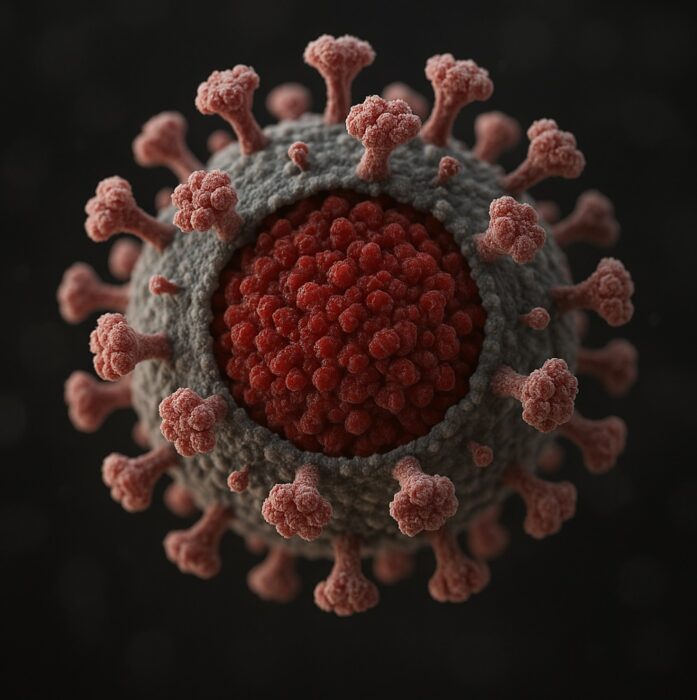 First, don’t get too excited, this is a laboratory study, which means if all goes well we are about a decade or more from an actual treatment. The study, however, is a nice demonstration of the potential of recent biotechnology, specifically mRNA technology and lipid nanoparticles. We are seeing some real benefits building on decades of basic science research. It is a hopeful sign of the potential of biotechnology to improve our lives. It is also a painful reminder of how much damage is being done by the current administration’s defunding of that very science and the institutions that make it happen.
The study –Efficient mRNA delivery to resting T cells to reverse HIV latency – is looking for a solution to a particular problem in the treatment of HIV. The virus likes to hide inside white blood cells (CD4+ T cells). There the virus will wait in a latent stage and can activate later. It acts as a reservoir of virus that can keep the infection going, even in the face of effective anti-HIV drugs and immune attack. It is part of what makes HIV so difficult to fully eliminate from the body.
We already have drugs that address this issue. They are called, appropriately, latency-reversing agents (LRAs), and include Romidepsin, Panobinostat, and Vorinostat. These drugs inhibit an enzyme which allows the virus to hide inside white blood cells. So this isn’t a new idea, and there are already effective treatments, which do make other anti-HIV drugs more effective and keep viral counts very low. But they are not quite effective enough to allow for total virus elimination. More and more effective LRAs, therefore, could be highly beneficial to HIV treatment.
Continue Reading »