Aug 24 2026
The Drones Are Coming
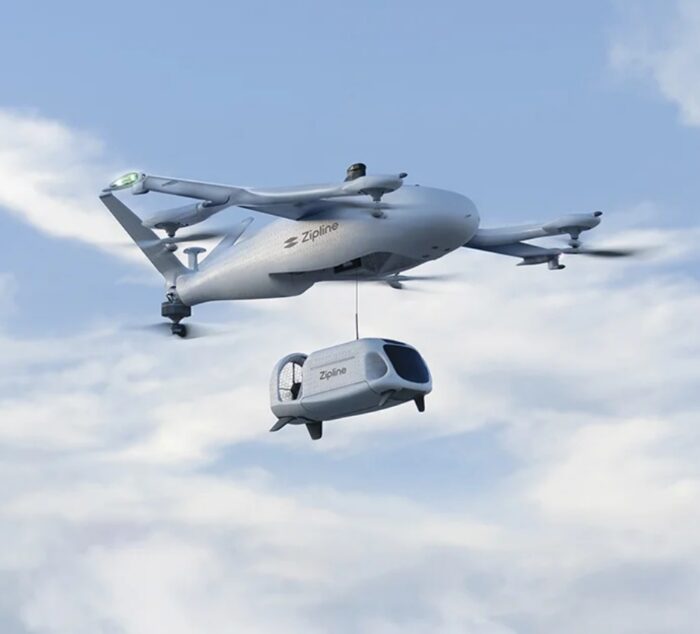 It should be clear by now that drone technology has crossed a technological threshold where they are cheap and efficient enough to have widespread use. They have transformed modern warfare. They are commonly used in surveillance. Over 75% of recent action films use drone footage, which has reduced the cost of aerial footage by about 90%. And now it seems that drone delivery services are poised to expand considerably.
What has caused this advance in technology? Part of it is advances in battery tech, which allows for greater range with lighter batteries, but that is not the whole picture. AI control systems are also critical. Sensor technology has also improved, both in miniaturization and Beyond Visual Line of Sight (BVLOS) technology. This is the ability to communicate with and control drones beyond line of sight using cellular, satellite, and mesh radio networks.
So are we about to see the future as depicted in Ready Player One, with drones constantly buzzing around the sky delivering everything from pizza to VR equipment? Probably not, but we will be seeing more drones. Several companies have been developing their drone delivery technology, and have already made millions of deliveries world wide. Amazon already has drone delivery available in 11 cities with more on the way. Wing is another company with current but limited drone delivery available. Zipline has perhaps the most advance system. They have been using and testing their system is Rwanda to deliver medications and other vital supplies to villages without an adequate road system. They have also now apparently made a deal with Uber Eats to deliver one million meals per day.
There are potential advantages and weaknesses to drone delivery. If we consider delivering one package from a warehouse to a customer, a typical drone designed for delivery can travel straight to the target at about 75 mph. This is much faster than a truck driving on the roads. Zipline currently stays within a 50 mile range, although their drones have a total of 190 mile range on a single charge which could theoretically support a 95 mile delivery range, but they are building in a reasonable buffer. Weight limit is currently 8 pounds. Drone deliveries are therefore very fast, and can support 30 minute delivery times. Using drones can therefore be more energy efficient, cost effective, and reduce road traffic.
Truck (or bike or other road vehicle) deliveries, however, have the advantage of being able to deliver multiple packages to multiple destinations in one trip. They can also deliver larger and heavier packages. What this means is that trucks have the advantage the more densely packed the population, while drones may have the advantage in more rural areas. It makes not sense to send a truck with one small package to one destination when you can send a drone. Likewise, it makes no sense to send a hundred drones to the same area when a single truck would do, and that truck has to go there anyway to deliver heavy packages. What this means is that drone delivery will not replace road delivery – they will be complementary. There will likely emerge a complex algorithm for determining when to use each delivery method, which can easily be added to the existing complex algorithms for managing package deliveries. I also suspect that we will start seeing rapid drone delivery as an option, for a drone delivery fee, for when you need that package within the hour rather than in a day or two.
This can happen more frequently than you might imagine. I recently was in this exact situation, leaving the next day for a long trip and discovering I could use an item or two, but only if they could be delivered that same day as I was getting on a plane early the next morning. But of course, some people may just be impatient and be willing to pay a few dollars not to have to weight a day or two for their new toy. The 30 minute delivery does make food delivery by drone a viable option. It can also be used for vital things like medications that you may need the same day.
What will be some of the challenges? Drones need a clear and safe place to drop their cargo. This gets more difficult for closely packed housing – another reason this will likely not be a common option in cities. I can also imagine an infrastructure evolving around the accommodation of drone deliveries. A delivery box, clearly visible from above and even labeled with your address, and with a collapsible opening, is obvious. Perhaps such a box could be designed to hang off the back of your deck, away from any “porch pirates”. Rooftop drone delivery platforms or boxes could become standard on top of apartment buildings or any other building with a flat roof. Might houses eventually be built with elevated drone delivery locations, easily accessible from within the house but safe from the ground?
As a side note, this will create an additional incentive to bury power lines, which are a hazard to drones. I think there already is enough of an advantage to justify the cost of burying power lines. It is an infrastructure investment worth making, and we can do it while we upgrade our grid and roll out fiber optics. Making the skies safe for drone deliveries is just an added bonus.
What about pirates and vandals? How much of a problem will this be? Drones can have security measures, like video to record anyone interfering with their delivery, they can have alarm systems and spotlights to draw attention to any vandals, they can avoid unsafe locations, and abort delivery if attacked. Will this be enough? Will the rate of theft and vandalism (unlikely to be zero) be small enough to be an acceptable cost of doing business?
Finally, what will life be like when we reach peak drone delivery? Depending on where you live, will there be the occasional drone that you take no more notice of than the occasional plane flying overhead. Or – will the skies be constantly buzzing with drones, and just become part of life? Will we need zoning laws to restrict drones to certain times of day? Will there be permanent no drone zones? How will these decisions be made? What will we put up with for the convenience of drone delivery?
One thing seems for sure – drone delivery is coming. It will play some role in our future lives. Hopefully it will be a net positive role.