Oct 27 2026
Is “Ultraprocessed” Useful?
 Is the food category of “ultraprocessed” useful for consumers? To answer that I am going to take a huge detour, but I promise to return to this question.
Humans like heuristics. What this means is that we use a lot of cognitive short cuts to help us deal with a complex world in an efficient manner. Many of these heuristics are likely evolved, since they appear to be fairly universal. For example, we tend to look at the left most digit to get a quick estimate of the size of a number. That is exactly why marketers prices things as $19.99 rather than $20.00 – that really does work. There is also the availability heuristic – we estimate how common something is by how easily we can bring examples to mind. Since we don’t often have access to comprehensive statistics, this can serve as a useful metric.
The problem with heuristics, however, is that they are not strictly true or accurate. We sacrifice precision and accuracy for speed and convenience. This can be perfectly rational. If you can get 90% of the way to an answer with 10% of the effort, is it really worth making the other 90% of the effort to get that last 10% accuracy? In everyday life, probably not. The cost-benefit is not there, it will just slow you down for little gain. If you are a scientist, however, then absolutely. That’s your job. But it seems to be also true that we evolved our common heuristics in a pre-industrial society, and now we are applying them to the extremely complex world we have erected for ourselves. So those heuristics break down much more often and much more catastrophically. We some some analytical critical thinking to adapt our thinking to the modern age.
Let’s apply the concept of heuristics to healthy eating. Most people are not nutritional experts, and yet in developed societies there is an increasingly complex array of food choices. Further, we evolved in a world where the primary nutritional concern was getting enough calories, and that’s pretty much it. Our bodies adapted to the food we had available to us, and we just had to keep from starving. Today people living in developed countries live with calorie abundance. Eating for optimal health, and an extended life expectancy, requires navigating often complex nutritional advice – glycemic index, trans-fats, vitamin levels, and macronutrient balance. Our evolved hunger, if you will, is not adapted to these choices. We have to use our frontal lobes.
Therefore, to avoid cognitive overload, people keep coming up with different heuristics to help people navigate these complex nutritional decisions. Here is the heuristic that I think works the best – eat a variety of food, the more varied the better, including a lot of plants. Don’t overconsume any one type of food, and don’t consume too much. For most people that is the 90 percenter – it is a simple and easy to understand rule that gets you most of the way to a healthful diet. If you add a little bit of nutritional literacy, you can get 99% of the way – eat fruits and vegetable of different colors, which tend to correlate with different nutritional contents. Eat plant fats over animal fats. Minimize trans-fats. Eat complex carbohydrates over simple carbohydrates. It also helps to have some idea of the salt and calorie content of the common food items you consume. That is pretty much it. You can get most people to a very healthful diet with a pamphlet of information.
However, there are vested interests at work here. The wellness/diet/self-help industry can’t make money by selling you a pamphlet of easily available information. The food industry wants you to buy their products, and they do so primarily by hacking into our evolved calorie-seeking behavior. There are plenty of healthful options out there, but distinguishing them from the less healthful options takes two things, transparency and functional nutritional literacy.
The diet industry, from my perspective, sells two types of products – simple heuristics that do not work (so-called fad diets), and complex specific information that is also of dubious scientific validity but invites consumers to obsess over every tiny detail of their diets. Both strategies are ultimately harmful. Here are some of the common heuristics that have become popular over the decades – low fat, then low carb, paleo (eat like our ancestors), organic, “whole” foods, non-GMO, eat “clean”, and now avoid processed and ultraprocessed food. None of these heuristics are of much value, which is partly why there is this endless conveyor belt of such things.
Each step of the way, the food industry has been happy to conform to the latest fad in order to optimize their own marketing. They do this without improving the healthfulness of their products, they just keep up with the latest fad. They can even charge a premium for doing so. The whole system – revolving food fads and food industry marketing – just exploits consumers.
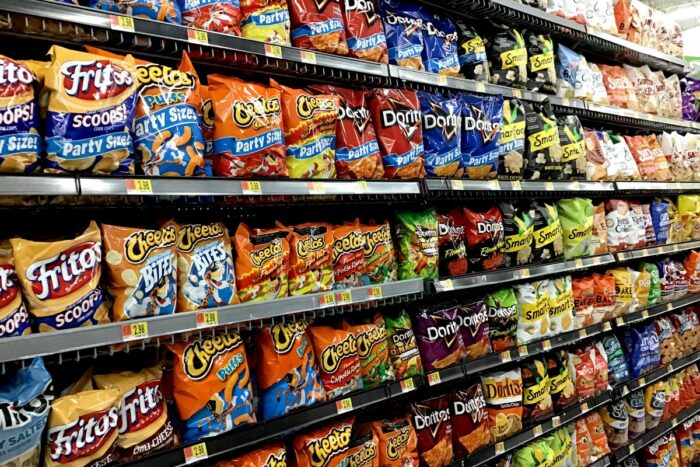
The “ultraprocessed” category is based on the NOVA categorization system. This divides foods into four categories: unprocessed or minimally processed (like fresh fruits and vegetables), purified ingredients used in cooking but not meant for direct consumption (sugar, flour), processed foods that involve mixing and processing ingredients into a final product, and ultraprocessed which also involves adding ingredients (like food coloring and preservatives) that are not otherwise found in food. The emphasis is deliberately on processing, rather than nutritional content. I think this is a heuristic of very limited utility, and ultimately is counterproductive.
First, the processing itself is entirely incidental to the healthfulness and nutritional value of the food. In each category there are food items that range the full spectrum of nutritional value. Also, the additives that make a food item ultraprocessed have been studied for decades and are safe.
What is true is that food items that are processed or ultraprocessed can be very calorie dense, or have high levels of salt, fat, and sugar. This gets back to the food industry wanting their product to be tasty to maximize their sales. But this is not universally true of these categories, and it’s not a useful heuristic. If it becomes popular the food industry will find ways to game the system without sacrificing the marketability of their products.
Further, processed food tends to be relatively cheap and convenient. For this reason it is disproportionately consumed by people in the lower socioeconomic status. As a public health intervention, recommending that people do not eat cheap and convenient food is likely of little value.
What about evidence that consuming processed/ultraprocssed food is less healthy? This research is mixed and complicated. First, it is largely correlational, and the association with lower socioeconomic status is a massive confounding factor. Further, studies that show outcomes like increased weight gain correlate with increased caloric intake. So again, it comes back to the ingredients and nutritional composition – not the processing.
If the “processed” and other diet heuristics are not helpful, then what is? Well, I already gave the heuristic I think is helpful – eat a variety of foods including enough plants and not too many calories. Combine that with a modicum of nutritional literacy. In terms of the food industry, I think what is most important is transparency – we need accurate, accessible, easy to understand food labels that give critical bottom-line information to consumers. None of this – calories per serving, where each “serving” is one sixth of a clearly single-serving food item. Also we need to oppose movements to mandate labeling that is based on unhelpful or misleading heuristics, like the whole GMO labeling nonsense.
The FDA already regulates food ingredients. Should they also regulate overall food items? That’s a tricky question. Let’s start with full transparency. We could entertain labels that have to do with nutritional content – for example labeling items as high calorie. Give the industry an incentive to make their processed food items have a better nutritional profile, without easily gaming the system.
In the end, however, I don’t think there is any substitute for having a nutritionally literate public. This is an extreme challenge, however, which is complicated by the wellness industry and the food industry, both of which are motivated to mislead and misinform the public.