Jan
26
2026
 As we continue the search for life outside of the Earth, it helps if we have a clear picture of where life might be. This is all a probability game, but that’s the point – to maximize the chance of finding the biosignatures of life. One limitation of this search, however, is that we have only one example of life and a living ecosystem – Earth. Life may take many different forms and therefore exist in what we would consider exotic environments.
That aside, it seems a good bet that life is more likely in locations where liquid water is possible, and therefore liquid water is a reasonable marker for habitability. When we talk about the habitable zone of stars, that is what we are talking about – the distance from the star where it is possible for liquid water to exist on the surface of planets. There are more variables than just the temperature of the star, however. The composition of the atmosphere also matters. High concentrations of CO2, for example, extend the habitable zone outward. There is therefore a conservative habitable zone, and then a more generous one allowing for compensating factors.
A new paper wishes to extend the conservative habitable zone further, specifically around M and K class dwarfs. K-dwarfs, or orange stars, are likely already the best candidates for life. They are bright and hot enough to support liquid water and photosynthesis, they emit less harmful radiation than red (M) dwarfs, and live a relatively long time, 15-70 billion years. They also comprise about 12% of all main sequence stars. Yellow stars like our sun are also good for life, but have a shorter lifespan (10 billion years) and make up only about 6% of main sequence stars.
Continue Reading »
Jan
22
2026
 A group of AI experts have released a paper that explores (or “predicts”) the possibility of a near-term AI explosion that ultimately leads to the extinction of humanity. This has, of course, sparked a great deal of discussion, feedback, and criticism. Here is the scenario they lay out, in their “AI 2027” paper.
To avoid targeting a specific company, they discuss a fictional company called OpenBrain, which sets out specifically to develop an AI application to automate computer coding. They call their first iteration Agent 0, and use it to speed up the development of more AI. They build larger and larger data centers to power and train Agent 0, and do leap six months ahead of their competition. They use Agent 0 to develop Agent 1, which is an autonomous coder. China manages to steel some of the core IP of Agent 1, setting off an AI competition between superpowers.
I am giving you the quick version here, and you can read all the details in the paper. Agent 1 is used to develop Agent 2, which is powerful enough to essentially kick off the Singularity – the hypothesized technology explosion which is created by developing AI that is capable of creating more powerful AI. In this scenario Agent 2 develops a new and more efficient computer language, and uses it to develop Agent 3, which is the first truly general AI. However, the company starts to panic a little when they realize they have essentially lost control of Agent 3, and can no longer guarantee that it aligns with the companies goals and ethics. They discuss rolling back for now to Agent 2, but competition with China and other companies convinces them to forge ahead, resulting in Agent 4, which is not only a general AI but a superintelligence.
Continue Reading »
Jan
19
2026
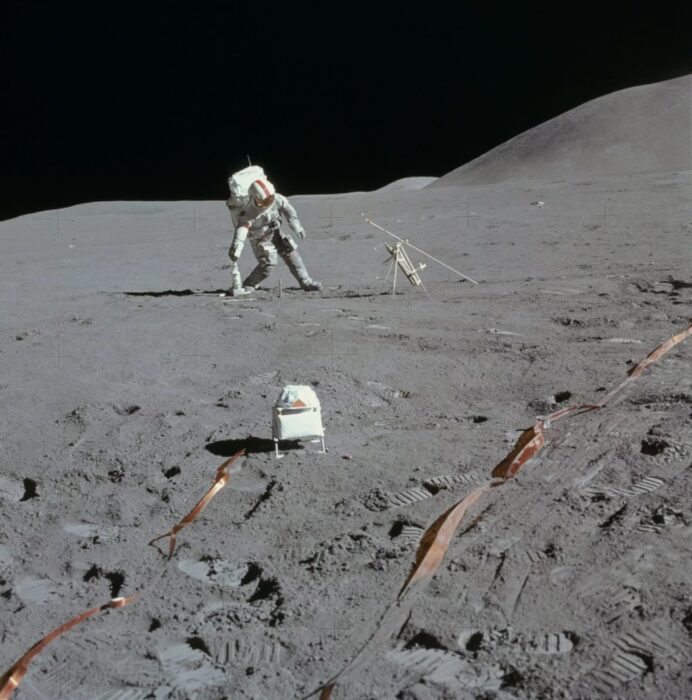 Last week a child of one of my cohosts on the SGU, who is in fifth grade (the child, not the cohost), came home from school and declared, rather dramatically, “Mom, Dad – did you know that we never went to the Moon? It was all fake.” They found this to be a surprising revelation, but was convinced this was a proven scientific fact. Of course, we live in the age of the internet, and our children are going to be exposed to all sorts of information that may be misleading or age-inappropriate. This is one more thing parents have to deal with. What was disturbing about this incident was where they learned this “scientific fact” – from their science teacher.
Any parent should be concerned about this, but in a family of skeptical science communicators, this raised the alarm bells. But the first thing they did was send a polite e-mail to the teacher (cc’ing the principal) and simply ask what happened. This is good practice – always go to the primary source. It’s easy for anyone to get the wrong idea, and this wouldn’t be the first time a fifth grader misinterpreted a lesson in class. The teacher essentially said that while he did not explicitly tell the students we did not go to the Moon (the student reports he said “it’s possible we did not go to the Moon”), he personally believes we did not, and that it is a “proven scientific fact” that it would have been impossible, then and now, to send people to the Moon (somebody should tell the Artemis astronauts).
Apparently he raised at least two points in class – that there were (impossibly) no stars in the background of the photographs taken from the Moon, and the astronauts could not have survived passage through the radiation belts around the Earth. These are both old and long-debunked claims of the Moon-hoax conspiracy theorists. While it is easy to find sources online, let me briefly summarize why these claims are wrong.
Continue Reading »
Jan
13
2026
 The tech world is buzzing with the claims of a startup battery company out of Finland called Donut Lab. They claim to have created the world’s first production solid state battery. At first blush the claims are exciting but seem in line with the promises that we have been hearing about solid state batteries for years. So it may seem that a company has finally cracked the technical issues with the technology and gotten a product across the finish line. But let’s take a closer look.
First let’s review their claims. The CEO is claiming that their battery has a specific energy of 400 watt hours per kilogram. This is great, considering the current lithium ion batteries in production are in the 175-250 range. The Amprius silicon anode Li-ion battery has 370 Wh/kg, so 400 sounds plausibly incremental, but make no mistake, this would still be a huge breakthrough. Meanwhile the CEO also claims 100,000 charge-discharge cycles, and operation temperature from -30 to 100C. In addition he claims his battery is cheaper than standard Li-ion, does not use any geopolitically sensitive raw materials, and is already in production (for motorcycles). Further it can be fully recharged in 5 minutes, and is incredibly stable with no risk of catching fire.
As I have pointed out previously, battery technology is tricky because a useful EV battery needs a suite of features all at the same time, while reality often requires trade-offs. So you can get your high capacity, but with increased expense, for example (like the Amprius battery). So claiming to have every critical feature of an EV battery improve all at once is beyond a huge deal. That in itself starts to get into the implausibility range, but it’s not impossible. My reaction appears to be similar to most people in the tech world – show me the money. At the CES where Donut rolled out its battery claims, in short, they did not do that.
Continue Reading »
Jan
05
2026
 South Korean astronomers are challenging the notion that the universe’s expansion is accelerating, an observation in the 1990s that lead to the theory of dark energy. This is currently very controversial, and may simply fizzle away or change our understanding of the fate of the universe.
In the 1990s astronomers used data from Type Ia supernovae to determine the rate of the expansion of the universe. Type Ias are known as standard candles because they put out the exact same amount of light. The reason for this is the way they form. They are caused by white dwarfs in a double star system – the white dwarfs might pull gas from their partner, and when that gas reaches a critical amount its gravity is sufficient to cause the white dwarf to explode. Because the explosions occur at the same mass, the size of the explosion, and therefore its absolute brightness, is the same. If we know the absolute brightness of an object, and we can measure its apparent brightness, then we can calculate its exact distance.
The astronomers used data from many Type Ia supernova to essentially map the expansion of the universe over time. Remember – when we look out into space we are also looking back in time. They found that the farther away galaxies were the slower they were moving away from each other, as if the universal expansion itself were accelerating over time. This discovery won them the Nobel Prize. The problem was, we did not know what force would cause such an expansion, so astronomers hypothesized the existence of dark energy, as a placeholder for the force that is pushing galaxies away from each other. This dark energy force would have to be significant, stronger than the gravitational force pulling galaxies together.
Continue Reading »
Dec
29
2025
 Definitely the most fascinating and perhaps controversial topic in neuroscience, and one of the most intense debates in all of science, is the ultimate nature of consciousness. What is consciousness, specifically, and what brain functions are responsible for it? Does consciousness require biology, and if not what is the path to artificial consciousness? This is a debate that possibly cannot be fully resolved through empirical science alone (for reasons I have stated and will repeat here shortly). We also need philosophy, and an intense collaboration between philosophy and neuroscience, informing each other and building on each other.
A new paper hopes to push this discussion further – On biological and artificial consciousness: A case for biological computationalism. Before we delve into the paper, let’s set the stage a little bit. By consciousness we mean not only the state of being wakeful and conscious, but the subjective experience of our own existence and at least a portion of our cognitive state and function. We think, we feel things, we make decisions, and we experience our sensory inputs. This itself provokes many deep questions, the first of which is – why? Why do we experience our own existence? Philosopher David Chalmers asked an extremely provocative question – could a creature have evolved that is capable of all of the cognitive functions humans have but not experience their own existence (a creature he termed a philosophical zombie, or p-zombie)?
Part of the problem of this question is that – how could we know if an entity was experiencing its own existence? If a p-zombie could exist, then any artificial intelligence (AI), even one capable of duplicating human-level intelligence, could be a p-zombie. If so, what is different between the AI and biological consciousness? At this point we can only ask these questions, some of them may need to wait until we actually develop human-level AI.
Continue Reading »
Dec
15
2025
 As human civilization spreads into every corner of the world, human and animal territories are butting up against each other more intensely. This often doesn’t end well for the animals. This is also causing evolutionary pressures that are adapting some species to living in close proximity to humans.
Humans cause significant changes to the environment – we may, for example, clear forests in order to plant crops. We also convert a lot of land to human living spaces. We alter the ecosystem with lots of light pollution. We are also now warming the planet.
Humans also produce a lot of food and along with it a lot of food waste. One of the common rules of evolution is that if a resource exists, something will adapt to exploit it. Perhaps the most versatile species in terms of adapting to human sources of food is rats. They follow humans everywhere we go, and prosper in our shadow. New York city experiencing this phenomenon first hand – there is basically no effective way to deal with the rat problem in the city as long as they have a waste problem. They will need to significantly reduce the availability of food waste if they want to make any dent in the rat population.
There is another way that humans provide a selective pressure on the animals that live close to us – we kill aggressive animals. A recent study shows this effect in a population of brown bears that live in Italy, close to humans. This isolated population has become its own genetic subpopulation of brown bears with distinctive features, including a genetic profile associated with less aggressiveness. Make no mistake, these are still wild animals, and brown bears are a dangerous animal. But they are less aggressive than other brown bears.
Continue Reading »
Dec
11
2025
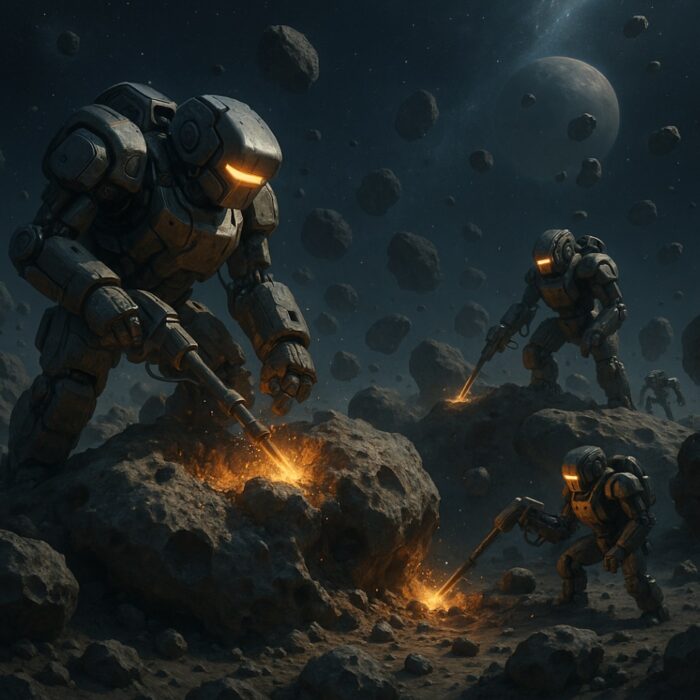 We are not close to mining asteroids, but the idea is intriguing enough to cause some serious study of the potential. The idea is simple enough – our solar system is full of chunks of rock with valuable minerals. If we could make it economically viable to mine even a tiny percentage of these asteroids the potential would be immense, a game changer for many types of resources. How valuable are asteroids?
The range of potential value is extreme, but at the high end we have a large metal rich asteroid like 16 Psyche in the asteroid belt. Astronomers estimate that the iron in 16 Psyche alone is worth about $10,000 quadrillion on today’s market. By comparison the world’s current economic output is just over $100 trillion, so that’s 100,000 times the world’s annual economic output. Of course, the cost of extraction would be high and the market value would likely be dramatically affected by such a resource, but it shows the dramatic potential of mining asteroids. Some asteroids are rich in platinum-group metals or rare earths, which would be even more valuable. But even the more common carbonaceous asteroids would likely have minerals worth quadrillions.
Again, these figures are likely not the actual monetary value that would be profited from mining asteroids, but they indicate that it is very likely economically viable to do so. I am reminded of the fact that aluminum was more expensive than gold in the 19th century. Then a process for extracting and refining aluminum from dirt was found, and now it is worth about $1.30 a pound. Still the aluminum industry is worth about $300 billion today. Mining asteroids would have a similar effect on many industries.
Continue Reading »
Dec
08
2025
A new study reinforces the evidence for the safety and efficacy of the mRNA COVID-19 vaccines. That’s the TLDR, but let’s dive into the details.
Medical evidence is always rolled out in stages. First there is what we would consider preclinical evidence, or basic science. This could be initial uncontrolled clinical observations, or mechanistic animal or in vitro research. At some point we have sufficient evidence to generate a hypothesis that a specific treatment could be effective in treating a specific disease, enough to progress to human research. For FDA qualifying research, there are four specific phases. Phase I trials look at the safety of the intervention in usually healthy controls, while also answering basic questions and mechanism and effects. If there are no safety red-flags then the research progressed to a phase II trial, which look for preliminary evidence of efficacy, and further safety data. Again, if that data continues to look encouraging we can progress to a phase III trial, which is a larger and more rigorous trial designed to be definitive. Usually the FDA requires several phase III trials to grant approval of a drug for a specific indication. Then, once on the market there is phase IV trials, which look at data from more widespread use to confirm safety and effectiveness in the real world.
Looked at another way, we do research in the lab, then on dozens of people, then score to hundreds of people, then hundreds to thousands of people, and then finally on thousands to millions of people. Each step of the way we gain the ability to detect less and less common side effects in a broader set of people. Further, the types of evidence are designed to be complementary. Phase III trials, for example, are rigorously experimental, with highly defined populations with randomization to control as many variables as possible. Phase IV trials, on the other hand, are generally observational, designed to look at very large numbers of people in an uncontrolled setting – to determine how safe and effective the treatment is in real-world conditions.
Continue Reading »
Dec
01
2025
 We have all likely had the experience that when we learn a task it becomes easier to learn a distinct but related task. Learning to cook one dish makes it easier to learn other dishes. Learning how to repair a radio helps you learn to repair other electronics. Even more abstractly – when you learn anything it can improve your ability to learn in general. This is partly because primate brains are very flexible – we can repurpose knowledge and skills to other areas. This is related to the fact that we are good at finding patterns and connections among disparate items. Language is also a good example of this – puns or witty linguistic humor is often based on making a connection between words in different contexts (I tried to tell a joke about chemistry, but there was no reaction).
Neuroscientists are always trying to understand what we call the “neuroanatomical correlates” of cognitive function – what part of the brain is responsible for specific tasks and abilities? There is no specific one-to-one correlation. I think the best current summary of how the brain is organized is that it is made of networks of modules. Modules are nodes in the brain that do specific processing, but they participate in multiple different networks or circuits, and may even have different functions in different networks. Networks can also be more or less widely distributed, with the higher cognitive functions tending to be more complex than specific simple tasks.
What, then, is happening in the brain when we exhibit this cognitive flexibility, repurposing elements of one learned task to help learn a new task? To address this question Princeton researchers looked at rhesus macaques. Specifically they wanted to know if primates engage in what is called “compositionality” – breaking down a task into specific components that can then be combined to perform the task. Those components can then be combined in new arrangements to compose a new task, like building with legos.
Continue Reading »