Mar
31
2026
 Many teachers are panicking over AI (artificial intelligence), and for good reason. This goes beyond students using AI to cheat on their homework or write their essays for them. If you have AI essentially think for you, then you will not learn to think. On the other hand optimists point out that AI can be a powerful tool to aid in learning. It all comes down to how we use, regulate, and manage our AI tools.
The cautionary approach was captured well, I think, by Mark Crislip in this SBM commentary, in which worries about the effects of AI on doctor education. How will a new generation of physicians learn how to think like expert clinicians if they can have AIs do all their clinical thinking for them? My question is – is AI fundamentally different than all the other technological advances that have come before. Did calculators take away our ability to do math? The answer appears to be no. Students still gain basic math skills at the same rate with or without access to calculators. But there are lots of confounding factors here, and so some teachers still warn of allowing kids access to calculators too soon. Others point out that access to calculators has simply shifted our math abilities, away from basic operations toward more modeling, problem solving, and complex concepts. It seems we are in the middle of the same exact conversation about AI.
We can also think about things like GPS. My ability to navigate from point A to point B without GPS, or to navigate with maps, has definitely declined. But using GPS has also made my navigating to unfamiliar locations easier and more efficient. I would not want to go back to a world without it.
Continue Reading »
Mar
30
2026
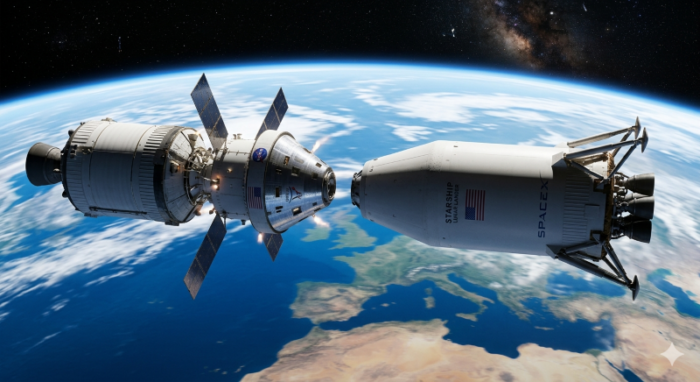 As we anticipate the Artemis II launch, now slated for early April with plans to take four astronauts on a trip around the Moon and back to Earth, NASA has been unveiling some significant changes to its plans for returning to the Moon and beyond. If you have fallen behind these announcements, here is a summary of the important bits.
Artemis II will continue as planned, marking the first crewed deep space mission since 1972 (Apollos 17). The original plan was for Artemis III to land on the Moon in 2027, but this mission has been pushed to an Artemis IV mission in 2028. A new Artemis III mission has been inserted – this will go only to low Earth orbit (LEO) and will test the integration of all the systems necessary to land on the Moon. This will include docking with one or both of the two landers, one being built by SpaceX and one by Blue Origin. This sounds like a really good idea, and it did seem unusual that they were planning on going straight to the Moon without ever test docking with the lander.
Even though landing on the Moon will be delayed by at least a year, NASA says this will set them up to have at least annual landings on the Moon after that, with a goal of a landing every six months. The reason for this frequent pace is the the more recent announcement by NASA last week – that they are putting on pause plans for a Lunar Gateway in lunar orbit and instead are going to focus on building a permanent Moon base near the lunar south pole.
In order to make this possible, and to support the future Moon base (no word yet on whether this will be called Moon Base Alpha, as it should) NASA plans about 30 uncrewed robotic landings on the Moon every year. They will be scoping out the location for the base and delivering equipment and supplies.
Continue Reading »
Mar
24
2026
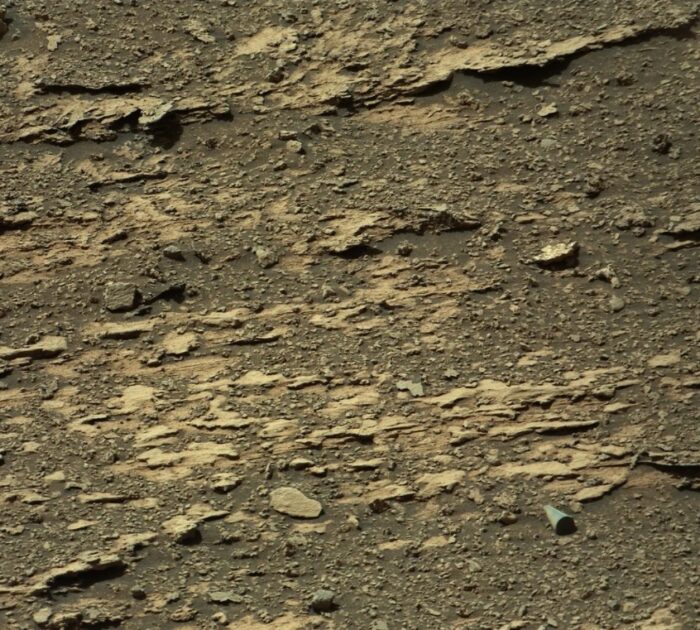 Last year the inner solar system had an interstellar visitor – 3I/Atlas (which stands for the third interstellar object which was discovered by the Atlas telescope). The third ever of anything is by definition a rare event, and so this was scientifically exciting. The comet came into the inner solar system, passing close to Jupiter and Mars, but not to the Earth, went behind the sun, then emerged on its path away from the sun. It is now headed for the orbit of Jupiter and out of the solar system. At first 3I/Atlas displayed a number of minor anomalies. It was behaving sort of like a comet, but with some differences. This fits well, however, with the main hypothesis that it is an interstellar comet – so it’s a comet, but may have a different composition from comets that were formed in our own solar system. This is not almost certainly the case – the comet comes from the thick disc of the galaxy, likely from a low metallicity star system, and has likely been travelling through interstellar space for billions of years, possibly being even older than our own star.
Now that it is passing out of the solar system we can look at all the data that NASA collected and make some fairly confident conclusions. There are a lot of sources of information, but Wikipedia actually has a pretty good summary and list of references. In the end, 3I/Atlas behaved mostly like a typical comet. It formed a tail heading away from the sun, brightened as it got close, then faded away as it moved away from the sun. Spectral analysis found that the comet was unusually rich in carbon dioxide (CO2), with small amounts of water ice, water vapor, carbon monoxide (CO), and carbonyl sulfide (OCS). It also had small amounts of cyanide and nickel gas, which is common in comets from our own solar system. In other words – it is a comet. It did originate from a part of the sky that we had previously calculated would have fewer such interstellar objects, which either makes it especially rare or means that our calculations are off.
Every time we encounter a new interstellar object we gather more data about such objects – how frequent are they, where do they come from, and what is their nature. Right now we have just three data points. After the first one, Oumuamua, we had not idea how common they were because we had just one data point. Now we have enough instruments surveying the sky that we are better able to detect such objects, which are very fleeting. The question was – was Oumuamua a one-off, and we just got lucky to detect something that happens very rarely, or are such objects common. We now have three data points and can conclude that they are fairly common, and we should detect one every few years or so, perhaps even more often if we start looking more.
Continue Reading »
Mar
23
2026
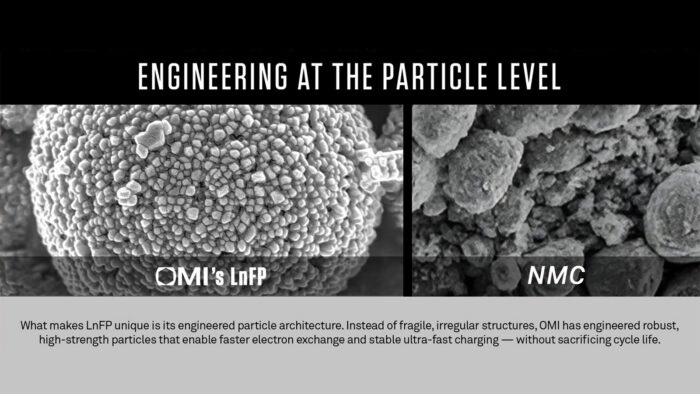 In the decades before the Wright brothers historic 1903 flight at Kitty Hawk there were many claims of powered heavier-than-air flying machines. There were also many false sightings of “airships”, amounting to a form of mass delusion. But the false claims and false sightings do not change the fact that the technology for powered flight was right on the cusp, and that the Wright brothers crossed that threshold in 1903, leading ultimately to the massive industry we have today. This is not surprising. There is often a sense, in the industry and spreading to the public, that the technological pieces are in place for a significant application breakthrough. Today this is more true than ever, with a vibrant industry of tech news, showcases, conferences, blogs, podcasts, etc. I cover plenty of tech new here. It’s interesting to try to glimpse what technology is right around the corner. Any technology that is closely watched and much anticipated is likely to generate lots of premature hype and false claims.
This is definitely true for battery technology. We are arguably in the middle of a massive effort to electrify as much of our industry as possible, especially transportation. Also maximizing intermittent renewable sources of energy would be greatly facilitated by advances in energy storage. Meanwhile electronic devices are becoming increasingly integrated into our daily lives. Advances in battery technology can have a dramatic impact on all these sectors, and is likely to be a critical technology for the next century. So it’s no surprise that there is a lot of hype surrounding battery tech, some of it legitimate, some of it fake, and some just premature. But this hype does not change the fact that battery technology is rapidly improving and the hype will become reality soon enough (just like the Wright flyer).
When it comes to EV batteries we all have a wish-list of features we would like to see. I now own two EVs, and they are the best cars I have ever owned. At least for my personal situation (I live in an exurb and own my own parking spots), EVs are great, and current battery technology is more than adequate for EVs. But sure, I live everyday with the reality of how advances in battery tech will make EVs even more convenient and useful. I have detailed the wish-list before, but here it is again: increased capacity, both in terms of volume but especially weight (specific energy), to decrease the weight while increasing the potential range of EVs, faster charging (with the holy grail being the ability to fully recharge an EV as fast as you can fill a car with gas), long charge-discharge cycle lifespan (longer than the lifespan of the car), useful in a wide range of temperatures, stability (does not spontaneously catch fire), and cheap, which is tied to being made from cheap and abundant elements. This last feature also means that the battery is not dependent on rare elements whose supply line is largely controlled by hostile or conflict-ridden countries.
Continue Reading »
Mar
19
2026
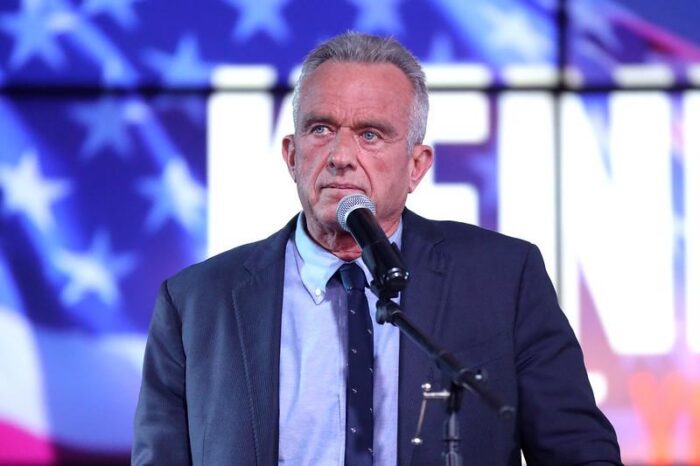 This is a tiny ray of light in what has been a gloomy year for science-based federal health policy. Recently U.S. District Court Judge Brian Murphy in Boston ruled that the actions of RFK Jr. as HHS Secretary to fire the entire Advisory Committee on Immunization Practices (ACIP) did not follow procedure and is therefore not valid. Further, he concluded that the new ACIP, packed with anti-vaxxers, made capricious and arbitrary decisions that did not follow established science-based procedure. His ruling is a preliminary injunction that has delayed meetings of the ACIP and stays the revised vaccine schedule. The ruling is in a case brought by a coalition of medical professional societies, including the American Academy of Pediatrics. They are celebrating the ruling as “a momentous step toward restoring science-based vaccine policymaking.”
There are a few layers to this story. The first is RFK Jr. himself and what he has been doing as HHS secretary. I have not written much about him here, because posts about him and other Trump health appointees have dominated the SBM blog over the last year. This has been an “extinction level event” for rational federal health policy, and we have documented it and analyzed it every step of the way. David Gorski has done a great job specifically documenting what RFK Jr. has done to vaccines in the US in his series – “RFK Jr. is definitely coming for your vaccines”, in which he just published part 8. He did a great job not only documenting all of RFK Jr’s harmful actions but actually predicting them. Essentially, RFK is systematically using every lever at his disposal to dismantle the vaccine infrastructure in the US to reduce vaccines as much as possible. Given his actions he clearly straight-up lied to the confirmation committee when he said he was not anti-vaccine and would not take away American’s vaccines.
We, of course, recognized exactly what RFK Jr was doing during the hearings, because we have been following his nonsense for 30 years. He said, for example, “If we want uptake of vaccines, we need a trustworthy government,” Kennedy said. “That’s what I want to restore to the American people and the vaccine program. I want people to know that if the government says something, it’s true.” He then promised “gold standard science”. I would argue he has done the exact opposite. But what this statement is is classic denialism. Just claim you want to review the science, that everything is open to examination, and you just want the highest standards of science. These principles are great, but they can be used as a weapon, not just a tool. You can deny well-established scientific conclusions by arbitrarily claiming we need yet higher standards. Also, claiming you want to “restore” faith in the vaccine program assumes there is currently a lack of faith, which is rich coming from the person who has done the most to undermine that faith with pseudoscience and false claims. That is another denialist strategy – make a well-established science seem controversial, then argue that because it’s controversial we need to reexamine it and call it into question.
Continue Reading »
Mar
16
2026
 How common is life in the universe? This is one of the greatest scientific questions, with incredible implications, but we lack sufficient information to answer it. The main problem is the “N of 1” problem – we only have one example of life in all the universe. So we are left to speculate, which is still very useful when based on solid scientific evidence and reasoning. It helps guide our search for signs of life that arose independently from life on Earth.
One important question, therefore, is where is it possible for life to exist? We know life can arise on a rocky planet with a nitrogen and CO2 atmosphere in a temperature range that allows liquid water on the surface. We also know that such life may create and sustain large amounts of oxygen in the atmosphere. It therefore makes sense to focus our search on similar planets. But life does not have to be restricted to Earth-like life. Scientists, therefore, try to imagine what other conditions might also support some kind of life. It is possible, for example, that life arose in the vast oceans under the ice of moons like Europa or Enceladus. Such life would be very different than most life on Earth. It would be dependent on chemical processes for energy (chemosynthetic), rather than sunlight.
Knowing how many different kinds of places life could possibly exist affects our estimate of the number of locations in our galaxy that might harbor life. The current estimates for how many Earth-like exoplanets there are in the Milky Way galaxy ranges from 300 million to 40 billion, depending on various assumptions and how tightly you define “Earth-like”. There are 100-400 billion stars in the galaxy, but about a third of those stars are in multi-star systems, so that means there are tens to up to 100 billion distinct stellar systems in the Milky Way. One estimate from observed multi-star systems is that about 89% of them could allow for a stable orbit of a rocky planet in the habitable zone.
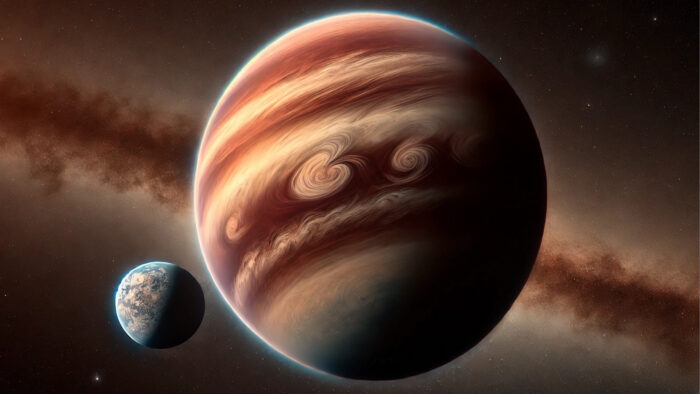
But perhaps we should not limit the calculations of how many worlds in the galaxy may support life to Earth-like planets. I am not just talking about life in oceans under icy moons. Astronomers have also been considering the possibility of life on moons that orbit free floating gas giant planets. A free floating planet (FFP), also called a nomadic planet or rogue planet, does not orbit a star at all. At some point, likely early in the life of its parent star, it was flung out of its system and now wanders freely between the stars. Astronomers estimate there may be hundreds of billions of such planets in the Milky Way. But this means the planet is dark, without any sunlight to keep it warm or fuel life. What about the moons of an FFP, however?
Continue Reading »
Mar
12
2026
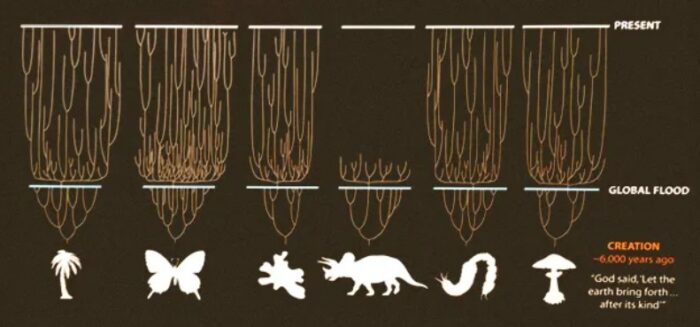 Creationism, in all its various manifestations, is sophisticated pseudoscience. This makes it a great teaching tool to demonstrate the difference between legitimate science and science denial dressing up as a cheap imitation of science. Creationist arguments are a great example of motivated reasoning, providing copious examples of all the ways logic and argumentation can go awry. It has also been interesting to see creationist arguments (at the leading edge) “adapt” and “evolve” into more complex forms, while maintaining their core feature of denying evolution at all costs.
I am going to focus in this article on young Earth creationists, specifically Answers in Genesis, and something that is a persistent element of their position. Essentially they do not understand the concept of nested hierarchies. I have a strong sense that this is because they are highly motivated not to understand it, because if they did the entire structure of their YEC arguments would collapse.
This AiG article is a great example – Speciation is Not Evolution. The article is more than a bit galling, given that the author seeks to lecture scientists about the use of precise definitions. It begins by patronizingly explaining the humor in the famous “Who’s on First” skit (gee, thanks for that), then accuses scientists of not being precise with their definitions. This is, of course, the opposite of the truth. Good science endeavors to be maximally precise in terminology (hence the jargon of science), and it is creationists who habitually use vague and shifting definitions – such as their abuse of the word “information” and for that matter “evolution”.
Continue Reading »
Mar
09
2026
 Researchers have recently published a discovery that could lead to more efficient photosynthesis in many crops. It’s hard to overstate how impactful this would be, as this could significantly increase crop yields while decreasing inputs. The growing human population makes such advances critical. Even without that factor, increasing yields decreases the land intensiveness of agriculture, which has a dramatic impact on our environment and sustainability. Improved photosynthesis would be a win across the board.
Before we get into the study there are a couple of points I want to explore. When I first learned of the various research efforts to improve photosynthesis my first reaction was – why hasn’t evolution already optimized something that is so critical to all life. The first photosynthetic organisms evolved at least 3.4 billion years ago. That’s a lot of time for evolutionary tweaking. So why is efficiency still an issue? There are a couple answers, but the primary one appears to be the constraints of evolutionary history. What this means is that evolution can only work with what it has, and it cannot undo its history. Once development leads down a certain path, evolution can make variations on the path but it cannot go back in time and take a completely different path. All vertebrates are variations on a basic body plan, for example.
So what are the evolutionary constraints of photosynthesis? Photosynthesis involves using the energy from sunlight to combine carbon dioxide (CO2) with water (H2)) to make glucose and oxygen. Critical to this reaction is an enzyme, ribulose-1,5-bisphosphate carboxylase/oxygenase (RubisCO), which fixes the carbon from CO2 into organic compounds. This enzyme, RubisCO, is responsible for over 90% of all carbon in living things. It is the most common enzyme in the world and is a cornerstone of living ecosystems, which mostly depend on energy from the sun.
Continue Reading »
Mar
06
2026
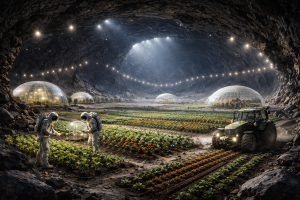 If we are going to have an enduring presence on either the Moon or Mars, or anyplace off of Earth, we will need to grow food there. It is simply too expensive, inconvenient, and fragile to be dependent on food entirely from Earth. In fact, any off-Earth habitat will need to be able to recycle most if not all of its resources. You basically need a reliable source of energy, sufficient food, water, and oxygen (consumables) to sustain all inhabitants, and the ability to endlessly recycle that food, water, and oxygen.
The ISS has achieved 98% recycling of water, which is what NASA claims is the threshold for sustainability of long space missions. The ISS also recycles about 40% of its oxygen. However, the ISS grows none of its food. It is all delivered from Earth, with a 6 month supply aboard the ISS. There are experiments to grow plants on the ISS, and these have been successful, but this is not a significant source of nutrition for the astronauts.
Doing the same on the Moon is not practical for long missions, although we will certainly be doing this for a time. But the goal, if we are to have a lunar base as NASA hopes (NASA plans a lunar base at the Moon’s south pole by 2030) is to grow food on the Moon (and eventually on Mars). On the ISS the big limiting factor is microgravity. The Moon has lower gravity than Earth, but it has some gravity and so that will likely not be a major problem, especially since we can grow plants on the ISS. We can also grow plants hydroponically pretty much anywhere, and I suspect this will happen on any lunar base. But a fully hydroponic system has its limits as well.
Hydroponics on the Moon would be challenging for several reasons. First, it is energy intensive, and energy may be a premium on a lunar base, especially early on. Second, it requires a precise balance of nutrients in the water, and those nutrients would have to be sourced from Earth. So it doesn’t really solve the problem of dependence on Earth. And third, hydroponics requires a lot of equipment which would have to be shipped from Earth. We could theoretically leach nutrients from lunar regolith, and this might help a bit, but is also energy intensive and would not be a source of nitrogen.
Continue Reading »
Mar
02
2026
 A recent study shows pretty clearly that highschoolers benefit from a little extra sleep. We will get to the study in a bit, but first I want to note that this information is not new. Teenagers tend to stay up late, and yet we make them get up super early to be at class, often by 7:00 AM. This is not good for their health or their learning. So why do we do it?
The primary reason is logistical, which is tied to cost. School systems have tiered start times for elementary, middle school, and high school because this allows them to use the same fleet of buses and drivers for all three. Starting high school later, at the same time as middle school, would mean increasing the size of the fleet. There are other stated reasons, but honestly I think this is the real reason and everything else is a backend justification. The other reasons are more tradeoffs, that benefit some people but not others. For example, a parent with a long commute could drop off their highschooler on the way to work. There is more time for after school clubs, sports, and jobs. While some older teens may get home early to watch their younger siblings until their parents get home.
This all points to a main reason our civilization is frustratingly sub-optimal (to be polite). The default is to follow the pathway of least resistance – everyone just does what’s best for themselves, with people in power doing their best to solidify more power, with vested interests putting the most consistent effort into making the system work for their narrow interest. What is often lacking is any kind of systemic planning, and when that does occur (even with the best intentions) the law of unintended consequences often results in a net wash or even detriment. The world is complex, and we are just not very good at managing that level of complexity. What we need are institutions that can accumulate evidence-based institutional knowledge to incrementally make things work better. But that’s a lot of work, and it’s too easy for vested interests to sabotage such efforts.
Continue Reading »