Archive for November, 2026

Nov 16 2026

The Coming Power Transmission Crisis

Published by under Technology

This past week saw the stranding of many US air travelers and the cancellation of thousands of flights. This was due to an instability in the air-traffic control system that caused the FAA to ground all flights. The system did not technically “go down”, they are saying, but had become too unstable, a problem that had to be addressed. The cause of the problem, as far as the experts can say so far, is that a new router installed at one airport began flooding the system with data, causing a cascade of failure. But the real cause is an incredibly ancient air traffic control infrastructure, resulting from decades of underinvestment.  The eye-popping fact that brings this home is – the FAA is still using floppy discs to maintain their legacy systems from the 1980s in over 400 locations. They plan to phase them out by 2028. Wow.

The US clearly has an infrastructure problem, which I think is a manifestation of dysfunction in our government. We tend to underinvest in infrastructure, which then slowly gets crusty over time. We then pick our heads up when disaster strikes, and everyone wrings their hands about infrastructure, and maybe something gets done, but usually not nearly enough. This has happened with water pipes, and bridges, and freight trains, and now air traffic control. Well, here is another big infrastructure problem looming – our transmission lines are out of date, and we are building new lines at about 10% the rate that we need to in order to keep up with growing electricity demand.

In this case the cause is clearly governmental dysfunction. A recent paper published in Science outlines the problem and steps we can take to fix it. The primary limiting factor here is jurisdiction. The federalist system in the US has its advantages, but also its trade-offs. Building long-distance infrastructure that by necessity spans across multiple jurisdictions is an extreme challenge. It is one thing to build a bridge in one city of one county of one state. It is another to build a railroad or a transmission line that cuts across many jurisdictions at many levels (state and local), with each one having veto power over the entire project. This can not only outright kill projects, even in the best case scenario it causes delays. With building large infrastructure projects, time is money. Delays alone can turn a profitable project into a loser, or can cause cost overruns that make politicians cancel the project, or scale it down. This also allows politicians to effectively kill a project they don’t like by simply tying it up in regulatory red tape, and they can justify it by saying they are just protecting consumers, or the environment, or whatever.

This is a case for the federal government just assuming sole jurisdiction over essential projects that benefit the whole country, or a large region covering many states. There is already a legal mechanism for this, called eminent domain. All levels of government have eminent domain over private property – they can force private citizens to sell their property (at fair market value) if it is necessary for infrastructure. Also, the federal government can claim eminent domain over state and local land for the same reason. And, because of federal supremacy, they can override state and local zoning and other laws.  Continue Reading »

No responses yet

Nov 10 2026

The Definition of “Biological Sex” – A Lesson for Skeptics

This article is the result of a rather long journey in science communication, and I think carries some important lessons for science communicators, skeptics, and anyone interested in this topic. What is the technical scientific definition of the term “biological sex”? I have to say I went into this discussion naively thinking that this question would be easy to resolve, and would serve as a good basis of common ground from which to discuss more complex related topics, specifically the trans phenomenon. This is a topic that divides popular skeptics and science communicators, and I am always fascinated and drawn to such controversies. They seem like fertile territory to deepen my understanding of complex topics, and hopefully to contribute to the conversation.

I soon learned that there were two fairly entrenched perspectives on this question. Jerry Coyne, Richard Dawkins and others were claiming that sex (whether an organism is male or female) is determined entirely by gamete size, with males having small gametes and females large gametes (a property known as anisogamy). I and others favor the multidimensional definition of biological sex – that it includes and is defined by the entire spectrum of biological sexual differences – chromosomes and genes, gonads, gametes, hormones, reproductive organs, genitals, and all secondary sexual characteristics. I admit and can see now that I assumed this was “the” scientific definition of sex. It was the definition I learned in medical school in the 1980s, and pretty much the only definition I encountered throughout my medical career. I was therefore somewhat surprised when I received push back from other science communicators that this was not “the” definition, even being accused of trying to change the definition to suit my needs, and of engaging in pseudoscience.

It seemed to me that these two schools of thought on sex were primarily determined by political ideology, and I still think that is playing a significant role. This is especially true among non-biologists, who mostly just accept the definition that fits their political opinions. This also allows for both sides to claim that science is on their side, and the other side is engaging in pseudoscience and allowing their politics to influence their scientific reasoning. This is pretty much where things sit – two entrenched sides largely talking past each other. This is not a good look for a group that identifies as skeptics and presumes to communicate science to the public.

Continue Reading »

No responses yet

Nov 09 2026

COVID-19 Vaccines Were Cost Effective

One of my goals as a science communicator with a focus on healthcare is to increase the general understanding of how to think about clinical interventions. Just take a look at the many health-related videos on TikTok or other social media platform, contradicting standard medical advice. Many are based on false information, but they also almost uniformly do not think about public health measures or medical decisions properly. This disconnect between how experts think of intervention and how the public may perceive them was massively on display during the recent COVID pandemic.

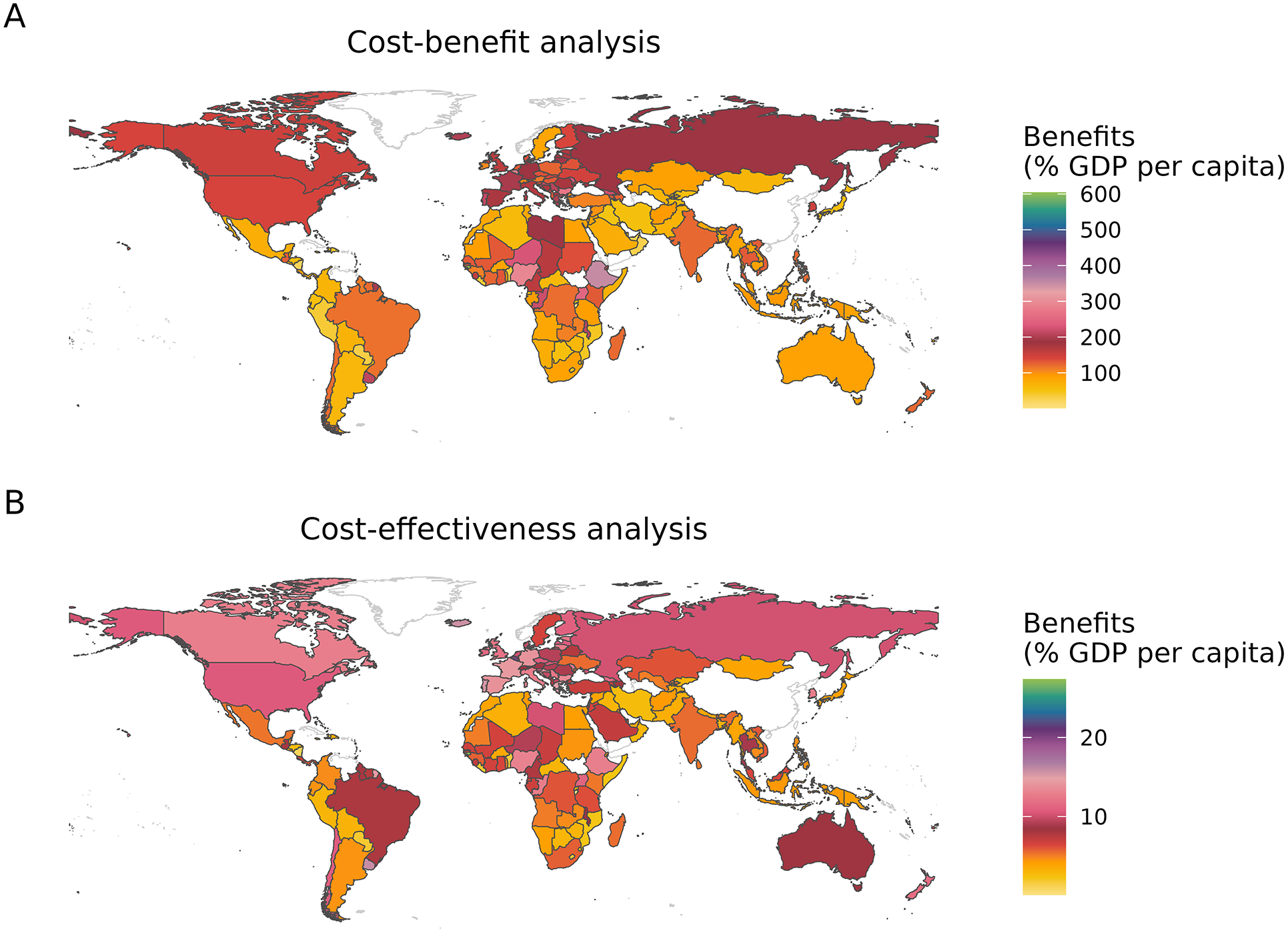
Here is the quick primer. Think of interventions based upon their risk vs benefit. You cannot only consider risk, and you have to consider the risk vs benefit of all options, including doing nothing. On the diagnostic end, it is better to consider the predictive value of information, not just whether it is a sign or symptom. In the realm of public health there are more considerations, not just the risk vs benefit at the individual and the population level. Because we have limited resources, and often there are competing valid options, we also like to look at the return on investment (ROI) of interventions. A recent study does that for the COVID-19 vaccines – how much public and private money was spent for their development, manufacture, and distribution and what were the health and economic benefits?

The bottom line is that the COVID-19 vaccination programs had a massive ROI, they had a positive cost-benefit and cost effectiveness (in addition to a positive benefit to risk ratio). But the details are interesting, so let’s dive in.

There are many ways to slice and dice such data, and many ways to estimate the cost benefits of preventing illness. So the authors provided as much information as possible, without just choosing one analysis. I am going to present the data from the bottom up – from the most conservative estimates to the most complete estimates. First, the estimated cost of all stages of the vaccine programs (including the first year of delivery) was $79.4 billion worldwide. That is a high price tag, but what did we get in return? The most straightforward type of cost benefit from a healthcare intervention is avoided future healthcare costs. The authors estimated this by using estimates of hospitalizations avoided and the average cost of hospitalization in each country. That amounted to $222 billion. So based on that maximally conservative estimate the vaccine programs were very cost-effective.  Continue Reading »

No responses yet

Nov 02 2026

Could AI Be Conscious?

This question will not go away. I am getting asked this questions at conferences now. The media also seems to think this is a compelling question, and they are fueled in part by the tech industry itself, some of whom indulge this question. I will admit the answer has become more complex and nuanced than a simple “no”, but it is still mostly no.

Certainly the rise of neural networks, deep learning, transformer technology, and specifically large language models have ushered in the era of  – are we really sure current AI is not conscious? Our intuition tells us that they may be – LLMs are getting scary in how sophisticated they are and in their ability to simulate complex human conversations. Five years ago I was with the crowd who argued that LLMs are basically really good auto-complete apps, but this pithy sentiment no longer covers it. Even if they do not have a whisper of conscious awareness, they employ context-dependent logic. They are “intelligent” in their own way. And they are rapidly getting more impressive. So I get why people would be asking the question.

Everyone I know who works with AI apps has their example of when they were blown away by an interaction with an LLM. For me, I was trouble-shooting a web-based app I was using, and ChatGPT was very effective at helping with the trouble-shooting and producing a differential problem list. At one point it asked for a screen capture so it could have more information, and it gave me a cogent analysis. But here’s the part I found surprising – it “noticed” another window open in the background and inferred from this that I was also using this other app in the process, and used this to generate further potential sources of the problem.

Continue Reading »

No responses yet