May
28
2026
 Understanding, at a deep level, the differences between legitimate science and pseudoscience is increasingly critical in our modern world. Science, in my opinion, is perhaps the most powerful tool humans have collectively developed for understanding the universe in which we find ourselves. (I would clarify that it is complementary with philosophy which is important to ensure that we are thinking clearly, rigorously, and consistently.) Pseudoscience pretends to be scientific but is essentially doing it wrong. There are many underlying reasons for the existence of pseudoscience – it is sometimes just poor quality science due to poor training or sloppy technique, it may result from a motivation to achieve a desired result rather than letting the empirical chips fall where they may, researchers may not appreciate their own biases, or it may be part of a dedicated campaign motivated by profit, politics, ideology, religion, culture, or just wishful thinking.
I spend a lot of time studying and writing about certain classic pseudosciences because I think they are especially instructive, and acupuncture is definitely on the short list. I just wrote about it last week, specifically about a gullible article in the NYT which has bought into the pro-acupuncture propaganda. That piece resulted in lots of feedback, some of which doubled-down or extended the pseudoscientific arguments often made for acupuncture, so I wanted to reply to some of those and further clarify my position.
One common feature of pseudoscience is the use of vague or fluctuating definitions. Science requires unambiguous definitions, which is why it so often relies on technical jargon which evolves to be incredibly precise. This is one of the things I love about science, and why I think everyone should study it to some degree, at least enough to become functionally scientifically literate. Science forces you to think clearly, precisely, and consistently. If we take a seemingly simple question, for example, such as “does acupuncture work”, we first have to operationally define “acupuncture” and also “work”. You also have to include – work for what? I am usually careful to do so when addressing this question.
Continue Reading »
Feb
03
2026
 Engaging on social media to discuss pseudoscience can be exhausting, and make one weep for humanity. I have to keep reminding myself that what I am seeing is not necessarily representative. The loudest and most extreme voices tend to get amplified, and people don’t generally make videos just to say they agree with the mainstream view on something. There is massive selection bias. But still, to some extent social media does both reflect the culture and also influence it. So I like to not only address specific pieces of nonsense I find but also to look for patterns, patterns of claims and also of thought or narratives.
Especially on TikTok but also on YouTube and other platforms, one very common narrative that I have seen amounts to denying history, often replacing it with a different story entirely. At the extreme the narrative is – “everything you think you know about history if wrong.” Often this is framed as – “every you have been told about history is a lie.” Why are so many people, especially young people, apparently susceptible to this narrative? That’s a hard question to research, but we have some clues. I wrote recently about the Moon Landing hoax. Belief in this conspiracy in the US has increased over the last 20 years. This may be simply due to social media, but also correlates with the fact that people who were alive during Apollo are dying off.
Another factor driving this phenomenon is pseudoexperts, who also can use social media to get their message out. Among them are people like Graham Hancock, who presents himself as an expert in ancient history but actually is just a crank. He has plenty of factoids in his head, but has no formal training in archaeology and is the epitome of a crank – usually a smart person but with outlandish ideas and never checks his ideas with actual experts, so they slowly drift off into fantasy land. The chief feature of such cranks is a lack of proper humility, even overwhelming hubris. They casually believe that they are smarter that the world’s experts in a field, and based on nothing but their smarts can dismiss decades or even centuries of scholarship.
Continue Reading »
Nov
17
2025
 The popularity of the acai berry as a so-called “superfood” is a triumph of marketing over reality. This is a berry from the Amazon that was eaten by local people – because it was available – but was then marketed by a company called Sambazon and became an international sensation.
There are lots of berries around the world that are a fairly good source of vitamins, but none of them deserve the moniker “super”. That is pure marketing hype. Acai is bitter (does anyone actually like acai?) and has to be imported from the Amazon, while if you live in the US there are lots of better choices, like blueberries. Why would people bother? Because they were lied to by celebrities.
The idea is that a superfood packs so much nutrition, including things like antioxidants, that they have specific health benefits. This is not a credible claim, and there is no solid scientific data to back up such claims. Generally the companies trying to market these foods will finance some studies designed to generate marketing copy, but nothing am0unting to serious research.
The very concept of a “superfood” is flawed, and likely to be counterproductive. What matters is one’s entire diet, not one component of the diet. The best approach is a simple one – eat a varied diet containing plenty of fruits and vegetables. That’s it – there, I just saved you from having to buy any healthy eating books, spending time or money on fancy diets, or obsessing over minutiae regarding your diet. Just eat your fruits and veg.
Continue Reading »
Sep
15
2025
 This is not really anything new, but it is taking on a new scope. The WSJ recently wrote about The Rise of ‘Conspiracy Physics’ (hat tip to “Quasiparticular” for pointing to this in the topic suggestions), which discusses the popularity of social media influencers who claim there is a vast conspiracy among academic physicists. Back in the before time (pre world wide web), if you were a crank – someone who thinks they understand science better than they do and that they have revolutionized science without ever checking their ideas with actual experts – you would likely mail your manifesto to random academics hoping to get their attention. The academics would almost universally take the hundreds of pages full of mostly nonsense and place it in the circular file, unread. I myself have received several of these (although I usually did read them, at least in part, for skeptical fodder).
With the web, cranks had another outlet. They could post their manifesto on a homemade web page and try to get attention there. The classic example of this was the “Time Cube” – the site is now inactive but you can see a capture on the wayback machine. This site came to typify the typical format of such pages – a long vertical scrawl, almost unreadable color scheme, filled with boasting about how brilliant the creator is, and claiming a conspiracy of silence among scientists.
With web 2.0 and social media, the cranks adapted, and they have continued to adapt as social media and society evolves. Today, as pointed out in the WSJ article, there is a wave of anti-establishment sentiment, and the cranks are riding this wave. If you read the comments to the WSJ article you will see evidence of some of the contributing factors. There is, for example, a lot of “blame the victim” sentiment – blaming physicists, or scientists, academics, experts in general. They did not do a good enough job of explaining their field to the public. They ignored the cranks and let them flourish. They responded to the cranks and gave them attention. They are too closed to fringe ideas that challenge their authority.
Continue Reading »
Jun
02
2025
 I was away on vacation the last week, hence no posts, but am now back to my usual schedule. In fact, I hope to be a little more consistent starting this summer because (if you follow me on the SGU you already know this) I am retiring from my day job at Yale at the end of the month. This will allow me to work full time as a science communicator and skeptic. I have some new projects in the works, and will announce anything here for those who are interested.
On to today’s post – I recently received an e-mail from Janyce Boynton, a former facilitator who now works to expose the pseudoscience of facilitated communication (FC). I have been writing about this for many years. Like many pseudosciences, they rarely completely disappear, but tend to wax and wane with each new generation, often morphing into different forms while keeping the nonsense at their core. FC has had a resurgence recently due to a popular podcast, The Telepathy Tapes (which I wrote about over at SBM). Janyce had this to say:
I’ll be continuing to post critiques about the Telepathy Tapes–especially since some of their followers are now claiming that my student was telepathic. Their “logic” (and I use that term loosely) is that during the picture message passing test, she read my mind, knew what picture I saw, and typed that instead of typing out the word to the picture she saw.
I shouldn’t be surprised by their rationalizations. The mental gymnastics these people go through!
They’re also claiming that people don’t have to look at the letter board because of synesthesia. According to them, the letters light up and the clients can see the “aura” of each color. Ridiculous. I haven’t been able to find any research that backs up this claim. Nor have I found an expert in synesthesia who is willing to answer my questions about this condition, but I’m assuming that, if synesthesia is a real condition, it doesn’t work the way the Telepathy Tapes folks are claiming it does.
For quick background, FC was created in the 1980s as a method for communicating to people, mostly children, who have severe cognitive impairment and are either non-verbal or minimally verbal. The hypothesis FC is based on is that at least some of these children may have more cognitive ability than is apparent but rather have impaired communication as an isolated deficit. This general idea is legitimate, and in neurology we caution all the time about not assuming the inability to demonstrate an ability is due purely to a cognitive deficit, rather than a physical deficit. To take a simple example, don’t assume someone is not responding to your voice because they have impaired consciousness when they could be deaf. We use various methods to try to control for this as much as possible.
Continue Reading »
Apr
28
2025

RFK Jr.’s recent speech about autism has sparked a lot of deserved anger. But like many things in life, it’s even more complicated than you think it is, and this is a good opportunity to explore some of the issues surrounding this diagnosis.
While the definition has shifted over the years (like most medical diagnoses) autism is currently considered a fairly broad spectrum sharing some underlying neurological features. At the most “severe” end of the spectrum (and to show you how fraught this issue is, even the use of the term “severe” is controversial) people with autism (or autism spectrum disorder, ASD) can be non-verbal or minimally verbal, have an IQ <50, and require full support to meet their basic daily needs. At the other end of the spectrum are extremely high-functioning individuals who are simply considered to be not “neurotypical” because they have a different set of strengths and challenges than more neurotypical people. One of the primary challenges is to talk about the full spectrum of ASD under one label. The one thing it is safe to say is that RFK Jr. completely failed this challenge.
What our Health and Human Services Secretary said was that normal children:
“regressed … into autism when they were 2 years old. And these are kids who will never pay taxes, they’ll never hold a job, they’ll never play baseball, they’ll never write a poem, they’ll never go out on a date. Many of them will never use a toilet unassisted.”
This is classic RFK Jr. – he uses scientific data like the proverbial drunk uses a lamppost, for support rather than illumination. Others have correctly pointed out that he begins with his narrative and works backward (like a lawyer, because that is what he is). That narrative is solidly in the sweet-spot of the anti-vaccine narrative on autism, which David Gorski spells out in great detail here. RFK said:
“So I would urge everyone to consider the likelihood that autism, whether you call it an epidemic, a tsunami, or a surge of autism, is a real thing that we don’t understand, and it must be triggered or caused by environmental or risk factors. “
In RFK’s world, autism is a horrible disease that destroys children and families and is surging in such a way that there must be an “environmental” cause (wink, wink – we know he means vaccines). But of course RFK gets the facts predictable wrong, or at least exaggerated and distorted precisely to suit his narrative. It’s a great example of how to support a desired narrative by cherry picking and then misrepresenting facts. To use another metaphor, it’s like making one of those mosaic pictures out of other pictures. He may be choosing published facts but he arranges them into a false and illusory picture. RFK cited a recent study that showed that about 25% of children with autism were in the “profound” category. (That is another term recently suggested to refer to autistic children who are minimally verbal or have an IQ < 50. This is similar to “level 3” autism or “severe” autism, but with slightly different operational cutoffs.)
Continue Reading »
Dec
08
2023
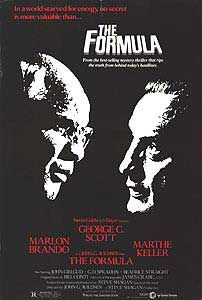 Remember the 1980 film, The Formula? Probably not, because it was a mediocre film that did not age well. The basic plot is that Nazi chemists during WWII developed a formula for synthetic gasoline. A detective investigating a murder gets embroiled in a conspiracy to cover up the existence of this formula, and he struggles to expose it to the world, but is ultimately foiled by the many layers of this conspiracy. At the heart of the conspiracy is the fossil fuel industry, who wants to protect their golden goose. I remember thinking at the time that this was dumb, and now I appreciate how dumb it is on a much deeper level.
There is a scientific and critical thinking layer to the superficial thoughtlessness of this plot. From a critical thinking perspective, a conspiracy to suppress such a formula makes no sense. Such a formula (if we buy the premise of such a thing, which I don’t, as you will see) would be incredibly valuable to anyone who controls it. An oil company could (again, given the film’s premise) in a single stroke dominate the world’s energy production and crush the competition. But perhaps more critically, it makes no sense that such a formula would have been discovered almost 40 years prior to the timeframe of the film and yet was never reproduced. Have you every noticed that for any significant invention there are often a host of people claiming they really invented it. That’s because they likely did, or at least contributed to the invention. When our science and technology are at a point where a breakthrough is possible, it is likely that many people/labs/companies/nations will converge on the discovery at roughly the same time.
However, popular culture is stuck in the “lone genius” narrative, thinking of scientific breakthroughs as the unique product of a singular genius. This is just not how science typically works. Increasingly, it is a tangled web of collaboration with many players each contributing incrementally to an overall progress. Major inventions are “ripe”, and they have a paper trail. The notion that Nazi chemists were decades ahead of the rest of the world in such an immense technology is not plausible.
But even more fatal to the plot of this film is the premise of the title – that the limiting factor in the ability to fuel the world with synthetic gasoline is knowing the proper formula. Having a chemical formula for synthesizing hydrocarbons is not the tricky part. Whenever dealing with any energy technology, I find it extremely useful to ask the basic question – where is the energy coming from? If you don’t have a very thorough answer to this question, be skeptical.
Continue Reading »
Oct
23
2023
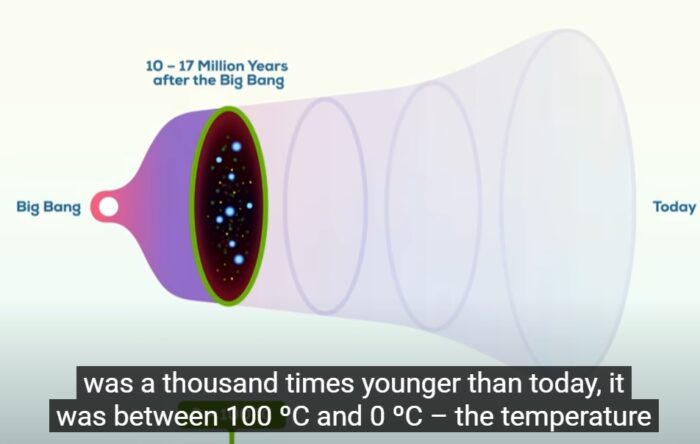 Recently I was asked what I thought about this video, which suggests it is possible that life formed in the early universe, shortly after the Big Bang. Although no mentioned specifically in the video, the ideas presents are essentially panspermia – the idea that life formed in the early universe and then spread as “seeds” throughout the universe, taking root in suitable environments like the early Earth. While the narrator admits these ideas are “speculative”, he presents what I feel is an extremely biased favorable take on the ideas being presented.
The video starts by arguing that life on Earth arose very quickly, perhaps implausibly quickly. The Earth is 4.5 billion years old, and it likely cooled sufficiently to be compatible with life around 4.3 billion years ago. The oldest fossils are 3.7 billion years old, which leaves a 600 million year window in which life could have developed from prebiotic molecules. When during that time did these complex molecules cross the line to be considered life is unknown, but it seems like there was probably 1-2 hundred million years for this to happen. The video argues that this was simply not enough time – so perhaps life already existed and seeded the Earth. But this argument is not valid. We do not have any information that would indicate something on the order of 100 million years was not enough time for the simplest type of life to form. So they set up a fake problem in order to introduce their unnecessary “solution”.
But the argument gets worse from there. Most of the video is spent speculating about the fact that between 10 million and 17 million years ago the temperature of the universe would have been between 100 C and 0 C, the temperature range of liquid water. During this time, life could have formed everywhere in the universe. But there is a glaring problem with this argument, that the video hand-waves away with a giant “may”.
Continue Reading »
May
01
2023
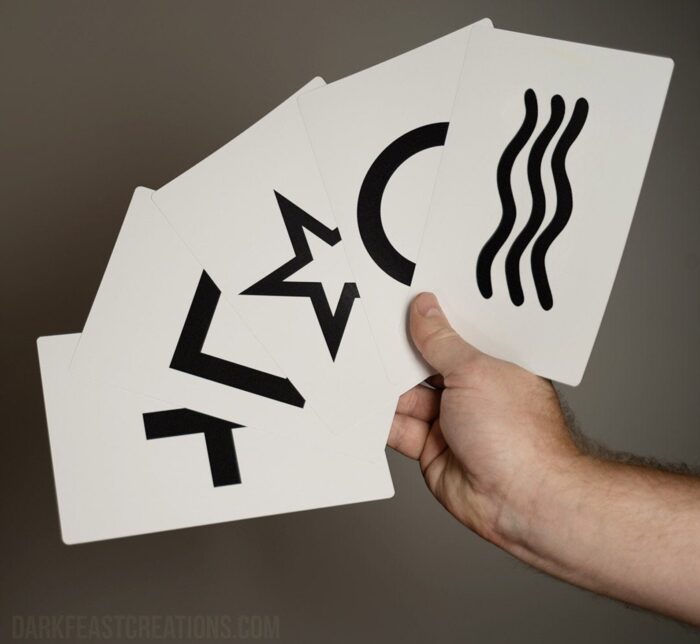 I was interviewed recently for a Daily Beast article on recent research involving the Institute of Noetic Sciences (IONS). Overall the article is very good, and author Maddie Bender was fair and reasonable in how I was quoted. I can’t always take that as a given. No matter how careful you are, a lot can be done with the edit and perfectly reasonable statements can be framed in a positive or negative light. It all depends on what story the author is writing.
In this case the story was about how fringe science and even pseudoscience can infiltrate mainstream academic institutions. There is a lot of nuance to this topic, because as with many such things there is a demarcation problem. As I have discussed many times before, for example, there is a demarcation problem between science and pseudoscience. There is no sharp line between the two, but a smooth transition. Much mainstream science can fall short in terms of rigorous methodology, and not all pseudoscience gets everything wrong. But that doesn’t mean there isn’t pseudoscience (that would be the false continuum logical fallacy) – get far enough to one end of the spectrum and you are in the realm of pseudoscience.
Academic institutions have another demarcation problem to deal with – academic freedom. This one is perhaps even trickier, because it is critically important that academics have the intellectual freedom to explore new and unpopular ideas, even ones that may be considered “dangerous”. As I have also written before, I have no problem with researchers exploring new ideas, fringe ideas, even weird ideas, as long as they are being true to scientific philosophy and methodology, and not making claims that go beyond the evidence. Further, this means that pseudoscience is not an area of study, but a set of behaviors. You can be doing pseudoscience when studying mainstream claims, or rigorous science when studying the paranormal. It’s the method and logic that matter. For example, Richard Wiseman has done rigorous investigations of the paranormal. I would never call him a pseudoscientist.
One of the core features of doing pseudoscience is assuming that your claim (paranormal or otherwise) is true and then working backwards from that assumption. This leads to performing research to show that the phenomenon is true, or perhaps how it works, but not doing research capable of determine if it is true. This brings us back to IONS and the Daily Beast article. The article focuses on neuroscientist Spiro Pantazatos and his collaboration with IONS, looking for brain regions that might correlate with specific paranormal phenomena. My problem with this research is that is assumes various paranormal phenomena are real, when that has not been scientifically established. In fact, as I point out in the article, we have over a century of research which has failed to demonstrate psi phenomena (ESP, clairvoyance, telekenesis, etc.) to point to. This is not some new idea that has never been explored.
Continue Reading »
Jan
27
2023
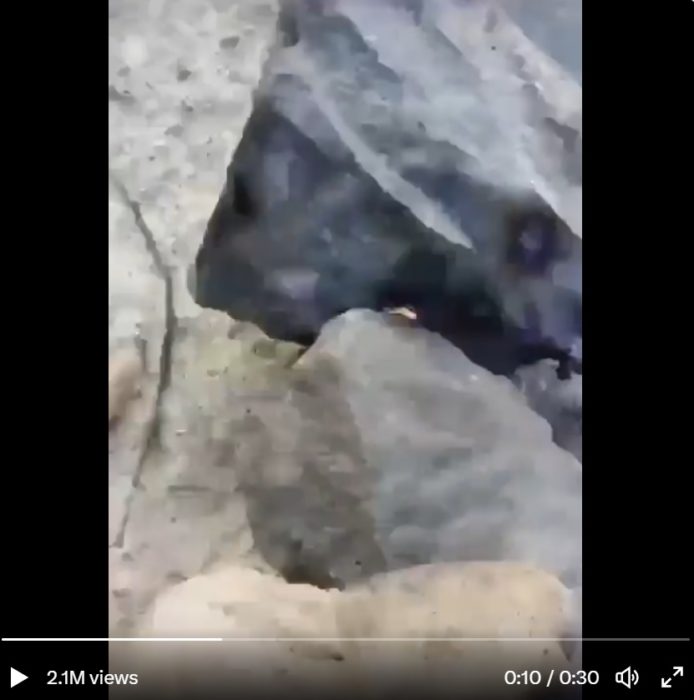 There are several viral videos spreading claiming to demonstrate a large electric charge stored in certain kinds of rocks in Africa. The most popular is this one which alleges to show electrically charged rocks from the Democratic Republic of Congo (DRC). When touched together the rocks give off large sparks which leave burn marks on the stones. The comments are mostly amusing and sad, reflecting the cultural turmoil of the region. A few figured out what is happening here.
We can start by evaluating the plausibility of the claim. The sparking is not a single event, as if there were static electricity in the rocks that discharged. They continue to discharge without diminishing. It is implausible that a natural ore (i.e. not a battery) would contain so much electricity. Also, where would the electricity come from? Some commenters through out the piezoelectric effect, the transformation of mechanical stress to current, but this only produces a tiny amount of electricity. Even if there were some small amount of static electricity in the material, this would not be a source of power, as some seem to believe.
What about the video itself? There are countless deceptive and fake videos on social media, so it’s good to have some basic idea how to recognize deception. I recommend Captain Disillusion’s Youtube channel – he is a digital effects expert who examines dubious videos and reveals their deception. On this video there are some immediately suspicious features. First, the video is very close-up. We are seeing just the rocks with little space around them. Close-cropping like this is a standard technique for hiding things out of view of the lens. An honest video documenting a phenomenon would show the environment and the setup, and show multiple angles and perspectives. It may zoom in at some point, but if all you see if a super close-up, be suspicious.
Continue Reading »