Apr
28
2026
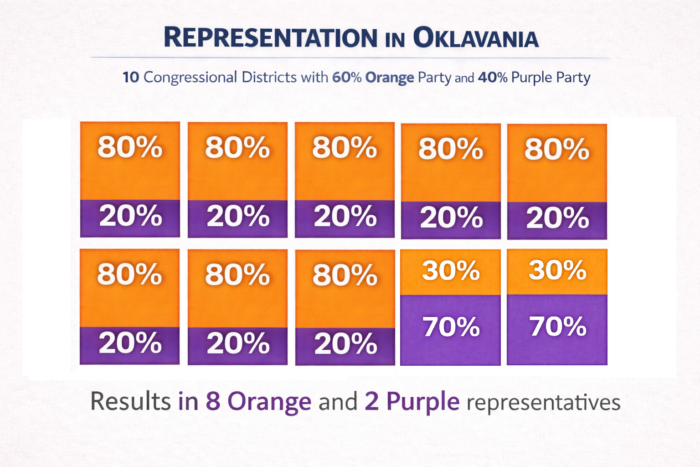 It is long past time the US eliminated gerrymandering, the drawing of district lines specifically for the purpose of favoring one political party, across the board. This requires either a 50 state agreement, or action at the federal level. This has been a problem since near the beginning of our democracy, and seems to be getting worse. We are now in the middle of a mid-decade tit-for-tat rash of gerrymandering that is extremely anti-democratic, so it’s a good time to raise this as an issue voters should definitely understand and prioritize.
As a quick aside – this is not a “political” blog, which does not mean that I never discuss political issues or topics with a political dimension. It partly means that I try my best to by non-partisan, and to avoid purely political value-judgements. I recognize this is an impossible ideal – we all have our biases and perspectives that color our thinking on topics in subtle ways. But we can try. Also, this is not a strictly science blog, it covers science, critical thinking, and media savvy, which are part of what we call scientific skepticism. Recently I started a video podcast, Political Reality, with co-host Andrea Jones Roy, who is a political scientist, for the purpose of applying scientific skepticism to political topics. This is also not a partisan show, and is mostly part civics lesson and part fact-checking. With that in mind, I thought I would write about what science and critical thinking have to say about gerrymandering, given that this is a topic in the news recently, although not as much as I think it should be. We also did cover this topic on Political Reality.
The term gerrymander dates back to 1812 when Massachusetts Governor Elbridge Gerry redistricted his state’s representative districts in order to favor his party, the Democratic Republicans. One of the districts looked like a salamander, leading the Boston Gazette to quip that it was really a “Gerry-mander”, and the name stuck. (Ironically, the two parts of that term, gerry and mander, both kinda sound like they mean “rig”, but the word has nothing to do with that.) Since then all political parties have used gerrymandering to gain unfair advantage. This stems from some features of US politics.
Continue Reading »
Feb
27
2024
 Amid much controversy, the Alabama State Supreme Court ruled that frozen embryos are children. They did not support their decision with compelling logic, with cited precedence (their decision is literally unprecedented), with practical considerations, or with sound ethical judgement. They essentially referenced god. It was a pretty naked religious justification.
The relevant politics have been hashed out by many others. What I want to weigh in on is the relevant logic. Two years ago I wrote about the question of when a fetus becomes a person. I laid out the core question here – when does a clump of cells become a person? Standard rhetoric in the anti-abortion community is to frame the question differently, claiming that from the point of fertilization we have human life. But from a legal, moral, and ethical perspective, that is not the relevant question. My colon is human life, but it’s not a person. Similarly, a frozen clump of cells is not a child.
This point inevitably leads to the rejoinder that those cells have the potential to become a person. But the potential to become a thing is not the same same as being a thing. If allowed to develop those cells have the potential to become a person – but they are not a person. This would be analogous to pointing to a stand of trees and claiming it is a house. Well, the wood in those trees has the potential to become a house. It has to go through a process, and at some point you have a house.
That analogy, however, breaks down when you consider that the trees will not become a house on their own. An implanted embryo will become a child (if all goes well) unless you do something to stop it. True but irrelevant to the point. The embryo is still not a person. The fact that the process to become a person is an internal rather than external one does not matter. Also, the Alabama Supreme Court is extending the usual argument beyond this point – those frozen embryos will not become children on their own either. They would need to go through a deliberate, external, artificial process in order to have the full potential to develop into a person. In fact, they would not exist without such a process.
Continue Reading »
Feb
23
2023
 The Supreme Court (SCOTUS) is hearing a case that will have profound effects on social media – is Google liable for a terrorist killing? The family of Nohemi Gonzalez is suing Google, because she was shot by an Islamic terrorist in 2015 and the family alleges this act was abetted by Google recommending videos encouraging such acts. Google argues it is protected by Section 230 of the Communications Decency Act of 1996.
In cases like this there is always legal complexity, and it’s not my intention to do a legal analysis of the case. I just want to focus on Section 230. There are some misconceptions about what it says and does not say, so here is the actual wording:
“no provider or user of an interactive computer service shall be treated as the publisher or speaker of any information provided by another information content provider.”
The law was passed in 1996, and was meant to protect website owners from liability stemming from what third parties post on their websites. It is not, as some pundits state at times, about protective “passive” platforms. I have also heard some commenters frame it as similar to protecting phone companies for the content of phone conversations. But Section 230 specifically refers to “interactive computer service” – so, not passive.
But at the same time, this law is more than a quarter of a century old. It is literally “web 1.0” and was written prior to the social media revolution. Google itself was created in 1998, two years after this law passed. The first blog was created in 1994, but blogs were not popular until later. WordPress, the most popular blog platform, was created in 2003. Twitter was created in 2006, and Facebook in 2004.
Continue Reading »
Jun
28
2022
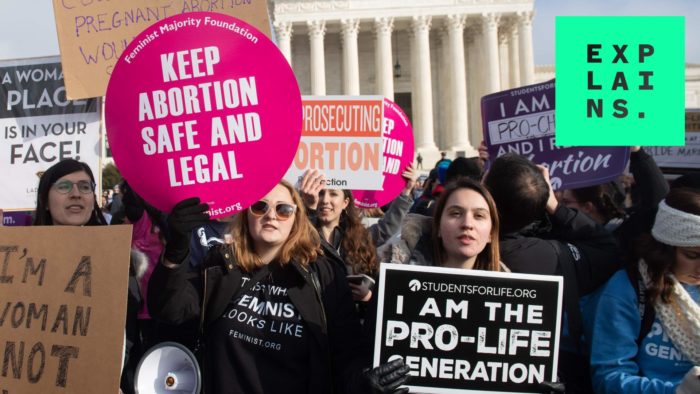 Often, contentious political and social questions have a scientific question in the middle of them. Resolving the scientific question will not always resolve the political ones, but at least it can properly inform the debate. The recent overturning of Roe v Wade has supercharged the debate about when human life begins. It may seem, then, that what science has to say about this question is important to the debate. But it may be less useful than it at first appears.
For example, in a recent editorial Henry Olsen, who is pro-life, asserts – “The heart of the abortion debate: What is human life?” I actually disagree with this framing. That is often a subtle and effective way to manipulate a debate – you assume a certain framing of the question that is biased toward one side. In this case, if the question is – what is a human life – then the pro-life side only has to argue that a fetus is a human life. But this framing is wrong on multiple levels.
Olsen is trying to frame this as a scientific question, but really the abortion debate is much more of a philosophical question. First let’s address what science questions there are.
Is a fertilized human embryo “human life?” Sure. It’s a living organism, and it is certainly human. But that’s not the only question. One could also ask – when does a fertilized egg become a person? That is a more nuanced question. I think there is broad agreement that a baby is a person. At the other end of the process we have a single cell. That cell may have the potential to develop into a person, but the cell itself is not a person.
At what point does a clump of cells become an actual person (again – not just the future potential of one)? This is an unanswerable question, as there is no sharp dividing line. There is no definable moment. There are milestones we can use to make some reasonable judgement calls. For example, one might argue that a person has to have the capacity for self-awareness, some sense of self and of being. This requires at least a minimally functioning brain.
Continue Reading »
Jan
04
2022
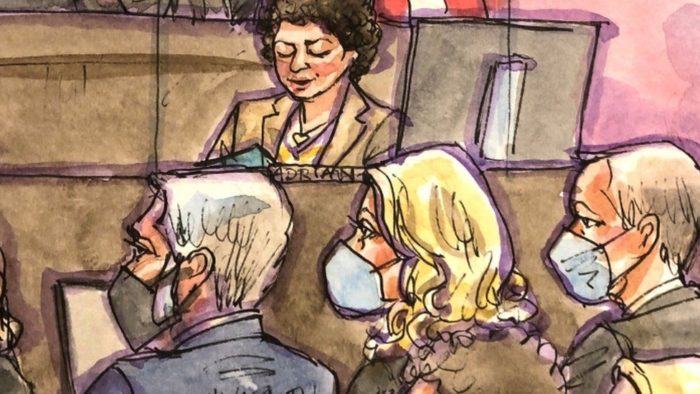 There are a lot of complexities to this case, as you might imagine. Some question whether or not Holmes, CEO of the now disgraced Theranos company that claimed it had revolutionized blood testing, was unfairly targeted because she is a woman. Her defense was also complex, including a claim she was abused by her boyfriend. These details are, of course, important in the pursuit of individualized justice. But I want to focus on some big picture factors – what might the results of this case mean?
I first wrote about Theranos in 2016 – I recognized the story as a skeptical cautionary tale. The claims that Holmes was making were implausible in the extreme. She claims her company innovated the technology to perform hundreds of different blood tests with a very small amount of blood and within a short period of time. The public is used to such advances in technology, and this claim, while bold, may seem plausibly incremental. However, medical experts recognized the claim for the nonsense it was. Far from being incremental, such a feat would have required hundreds of scientific breakthroughs all brought to technological fruition in a marketable product. This kind of advance does not come out of nowhere, without a paper trail of scientific research behind it.
Holmes was counting on a general level of scientific illiteracy, specifically to how the process of science works. It is increasingly difficult to make a major discovery or technological advance without all the groundwork being laid by incremental research spread out among various experts and institutions. Often when we hear of a new technology hitting the market, there is 20-30 years of background research. The idea for an mRNA vaccine started in the 1980s, for example. The new medical technologies that are coming online in the last decade have roots that go back decades.
Continue Reading »
Jul
27
2020
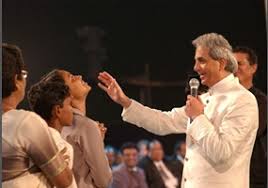 The Alaska Supreme Court just reaffirmed a very important legal and ethical principle – declaring that prayer is not a replacement for medicine. While this may seem obvious to many, this is a critical legal decision. It will probably not have the downstream effect that it should, but it does highlight a vital reality.
The case involves Rachel “O”, who has been taking care of her mother, Tiffany “O”. Rachel states that because she graduated from a ministry school she is qualified to treat her mother solely with prayer, including her mother’s epilepsy, and emergency treatment. The essence of the ruling is this:
“If Tiffany required immediate medical attention, the results could be fatal,” the court concluded. “For this reason, while religious liberty is a fundamental right under the Alaska Constitution, the state’s actions in this case are justified by a compelling interest.”
Generally, when the Constitution or other laws establish that people have certain rights, the state cannot infringe upon those rights, unless the state has a “compelling interest” that is deemed by the courts to be greater than the infringement on individual rights. This is a balancing act, and can sometimes lead to controversial decisions. Eminent domain is an example – we have a right to property and the state cannot seize our property, unless they have a compelling public interest in eminent domain (they need to build a highway through your property). This is meant to balance public interest with individual interest. This became highly controversial because of the Kelo vs New London case, in which the Supreme Court expanded eminent domain to include the state’s interest in maximizing its taxation.
Continue Reading »
Jun
01
2020
 In the last 20 years I have been called to jury duty several times. Every time I was dismissed almost instantly, once I made it known that I am a professional skeptic. Apparently lawyers fear that kind of skepticism on their juries (at least one side always did). The same is true of many of my skeptical colleagues, so I am not an isolated case. Once my brother said during the process that he wrote an article on the fallibility of human memory and eyewitness testimony. His but barely hit the seat when he was dismissed.
It is unclear how best to interpret these anecdotes, but what is clear is that justice requires facts and needs to align optimally with reality. Falsehoods and pseudoscience do not generally lead to justice. It is for this reason that courtrooms have elaborate rules of evidence, and generally they work well. Even in our adversarial system, you need to use generally valid arguments, you need to back up your statements with evidence, and there are rules of admissibility. Each side provides a check on the other, as a neutral arbiter presides over the process. It is imperfect (because imperfect people are involved) but at least it has a process.
One area where this process has historically had significant problems, however, is in forensic science, and the admissibility of science itself. The main problem, as I see it, is that it is based largely on authority, in both a good and bad way. Each side is allowed to find their own experts, and they can cherry pick experts whose opinion aligns with their needs. Often a non-expert jury is then tasked with sorting it out. There are standards for which expert testimony is admissible, and this has been a controversy unto itself. Here is a good summary:
Prior to 1993, the Frye standard for admitting expert testimony was the prevailing standard for guiding federal and state courts in their consideration as to whether scientific expert testimony should be admitted at trial. Frye v. United States[1]. The Frye standard requires that the proponent of the evidence establish the general acceptance of the underlying scientific principle and the testing procedures. Notably, Frye only applies to new or novel scientific evidence. However, in 1993, following a revision to the Federal Evidence Code by Congress, the Supreme Court of the United States annunciated the new standard in Daubert v. Merrell Dow Pharmaceuticals, Inc.[2] The Daubert inquiry was meant to be flexible and focused on scientific principles and methodology, not conclusions. The Daubert opinion emphasized that the Federal Rules of Evidence governed admissibility and suggested a series of factors a court could consider, but did not establish a test per se. Under Daubert, the admissibility of expert evidence rests squarely within the discretion of the trial court judge. In contrast to Frye, Daubert applies to all expert witness testimony.
This article is about the fact that Florida has reverted to the Frye standard recently. This highlights the fact that legal precedent is largely how this is sorted out, and may differ for every state and at the federal level.
Continue Reading »
Jan
16
2020
 This is going to be a long struggle, perhaps endless. Antivaxxers have been around since there have been vaccines, for over two hundred years, so there is no reason to expect they are going anywhere. Rather, we need an equally permanent anti-antivaxxer movement (otherwise known as the skeptical movement).
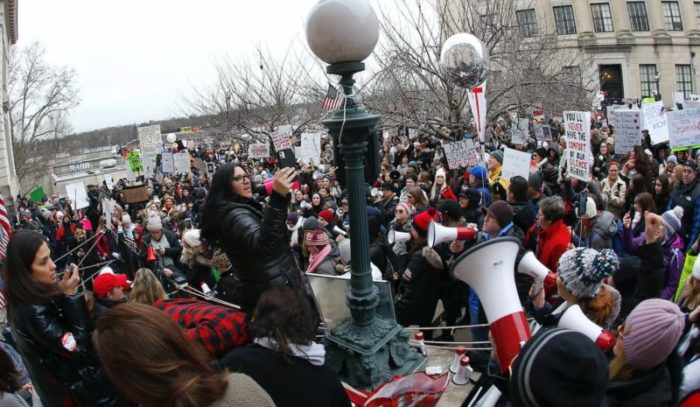
After the Disneyland measles outbreak, there has been political pressure to push back against antivaxxers and strengthen our vaccine requirements. This resulted, for example, in SB277 in California, a law to remove personal beliefs as a reason for vaccine exemption. The return of measles in the last few years (1,282 cases in 2019 in the US, more than 140,000 worldwide) has fueled similar push back. But the antivaxxers have not taken this lying down. They are now fired up to defend their debunked conspiracy theories and pseudoscience at the expense of public health.
A recent clash in New Jersey shows the intensity on both sides. Bill S2173 narrowly failed in the senate amid vocal protests by the antivaxxers. The bill would have removed religious exemptions for vaccine requirements for schools and daycare. In order to save the bill, proponents amended it to apply only to public schools, but this only cost more support as some senators correctly pointed out this will only concentrate the unvaccinated in private schools and result in more outbreaks. Proponents of the bill vow to revise it and try again.
It’s clear that there is now intensity on both sides. One side, however, is completely wrong, something I rarely say but there are issues where this is clearly true. Antivaxxers claim, falsely, that vaccines don’t work, they cause more harm than good, they are linked to autism and other serious complications, and even that there is a corporate-government conspiracy to hide these facts. Debunking these claims will take many many articles, but fortunately I and my colleagues have already written them. You can look through here and also here for articles addressing pretty much every antivaxxer claim. But it is an unfortunate reality that there is always an asymmetry in these cases, because it takes much more time and effort to debunk a false claim than to make it in the first place.
Continue Reading »
Jul
23
2019
A federal court has recently affirmed that states do indeed have the right to enforce professional licensing laws. This may seem obvious, and I think it is, but lawyers for Heather Del Castillo (from the libertarian, public-interest law firm, The Institute for Justice), a “holistic health coach” based in Florida, argued in court that their client was protected by the First Amendment’s guarantee of free speech. Judge Casey Rogers of the US District Court for the Northern District of Florida rejected their arguments out of hand.
This is a very important ruling for anyone interested in science, skepticism, and professionalism. Had the ruling gone the other way, it would have been a disastrous precedent. Let’s review what the First Amendment does and does not guarantee.
First, you have to think about when a question of speech and censorship is a First Amendment issue at all. For example, if you get banned from a social media outlet because someone doesn’t like your speech, that is not a First Amendment issue. The First Amendment states, “Congress shall pass no law…abridging the freedom of speech…” This applies only to the government, both federal and state. So this affects how and when the government can censor, oppress, and punish speech. It has zero effect on private companies or citizens. The bottom line is that you have no right to speech in someone else’s private venue.
What about getting fired from your job for your speech? Nope, that’s not a First Amendment issue either, if you work for a private company and not any government. However, your employer may still run afoul of the Civil Rights Act or contract law. If you do work for the government, then the burden of proof shifts to the government. They can only discipline you for your speech if it interferes with your job or violates your contract or ethical guidelines of the job.
The First Amendment applies when government is involved in any way. If you get sued for libel, then that is a First Amendment issue. The government cannot shut down your newspaper because it doesn’t like your editorial policy. You cannot be arrested and jailed for your speech (with certain limits). Once we determine that a certain situation is a First Amendment issue we are not done, because freedom of speech is not absolute. There are certain very narrowly defined limits.
Continue Reading »
Jul
03
2017
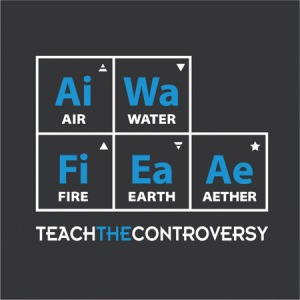 Florida just passed a bill designed to challenge the teaching of evolution, climate change, and other “controversial” science in the classroom. This represents the evolution of such laws promoted by those opposed to the teaching of evolution.
In the past century there have been a number of such state laws passed in the US, most of which have been struck down by Federal courts, including The Supreme Court, as a violation of the separation of church and state. These including banning the teaching of evolution, requiring the teaching of “creation science”, teaching the controversy, and teaching creationism’s alter-ego, Intelligent Design.
Essentially these are all attempts to force or allow schools to determine what is taught in the public school science classroom not by the current scientific consensus but by the prevailing religious beliefs of the community. The string of legal defeats has not stopped efforts to oppose the teaching of evolution. Rather deniers have simply tried to craft laws to get around the pesky first amendment.
Continue Reading »