Feb 26 2026
Universal Respiratory Vaccine
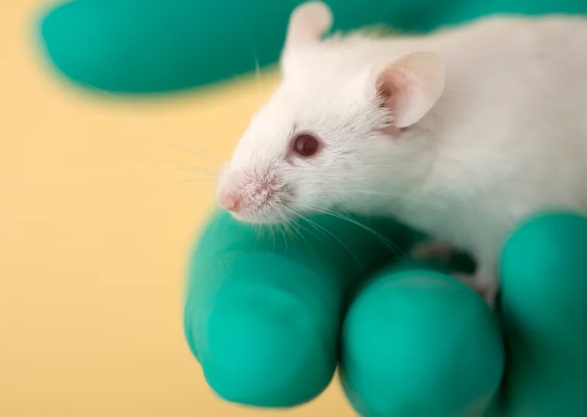 The news is abuzz with talk of a potential universal respiratory vaccine. It’s definitely interesting research, but may not be what you think. In this case, the reporting has been quite good on the whole, but the headlines can be misleading if you are not deeply steeped in the complexities of mammalian immunity. Let me start with the biggest caveat – this is a mouse study. This is therefore encouraging pre-clinical research, but we are still years away from translating this into an actual vaccine. Also, most interventions that are encouraging at the animal stage don’t make it through human testing. So don’t expect any revolution based on this treatment anytime soon. Having said that – there is great potential here.
To understand how this new approach works, let’s review some basics of immunity. (Note – the immune system is incredibly complex, and I can only give a very superficial summary here, but enough to understand what’s going on.) Mammalian immune systems have two basic components, innate immunity and adaptive immunity. The adaptive immune system is probably what most people think about when they think about the immune system and vaccines. Adaptive immunity targets and recognizes specific antigens (such as proteins) on pathogens like viruses, bacteria, or fungi. Antibodies attach to these antigens, flagging them to be targeted by immune cells like macrophages which then eat them. The macrophages in turn display the antibody-flagged antigens on their surface, triggering a greater and more specific reaction to those specific antigens. Adaptive immunity is considered slow (it takes days to ramp up), specific (it targets specific antigens on specific pathogens) and durable (it has memory, and will react more quickly and robustly to the same pathogen in the future).
By contrast, the innate immune system is fast, non-specific, and short-lived with no memory. The innate immune system consists of physical barriers, like skin and mucosa, and immune cells that target pathogens based on broad patterns that are not learned but are innate (hence the name). There are Toll-like receptors (TLRs – the name Toll comes from the German for “fantastic”, allegedly said by a researcher upon discovery). The Toll gene was first discovered in fruit flies and then similar genes were later discovered in mammals, hence “Toll-like”. TLRs detect pathogen-associated molecular patterns (PAMPs), which are highly conserved features of types of pathogens. In other words – a TLR might recognize a snippet of RNA as a pattern typical of RNA viruses, or proteins that tend to occur on pathogenic bacteria. “That looks like an RNA virus, so let’s attack it.”
 Fascination with UFOs (unidentified flying objects) is endless. I get it – I was into the whole UFO narrative when I was a child, and didn’t shed it until I learned science and critical thinking and filtered the evidence through that lens. I credit Carl Sagan for initiating that change. In his excellent series, Cosmos (still worth a watch today), he summarized the skeptical position quite well. To paraphrase – after decades, there isn’t a single hard piece of evidence, not one unambiguous photo or video. He gave a couple of examples of evidence (widely cited at the time) that were completely useless. Now -four decades later – the situation is the same. The evidence, in a word, is crap. It is exactly what you would expect (if you were an experienced skeptic) from a psychocultural phenomenon, without any evidence that forces us to reject the null hypothesis.
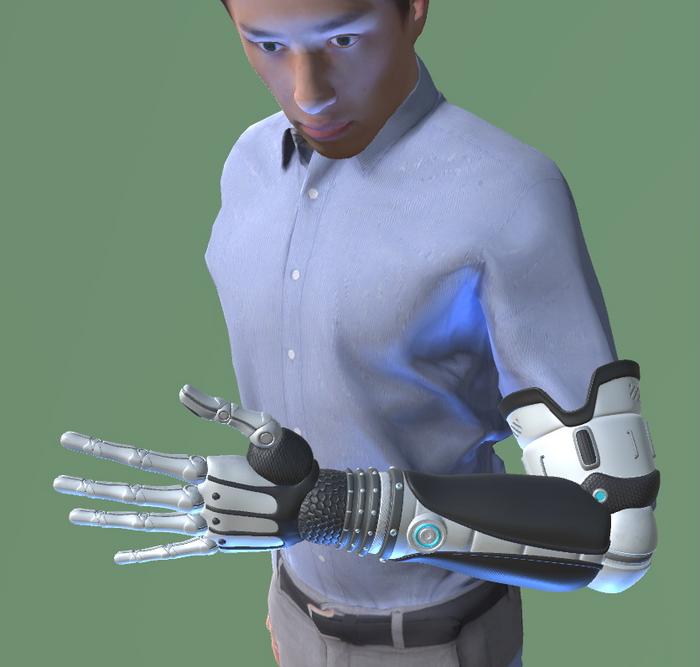 It’s not easy being a futurist (which I guess I technically am, having
  There are many ways in which our brains can be hacked. It is a complex overlapping set of algorithms evolved to help us interact with our environment to enhance survival and reproduction. However, while we evolved in the natural world, we now live in a world of technology, which gives us the ability to control our environment. We no longer have to simply adapt to the environment, we can adapt the environment to us. This partly means that we can alter the environment to “hack” our adaptive algorithms. Now we have artificial intelligence (AI) that has become a very powerful tool to hack those brain pathways.
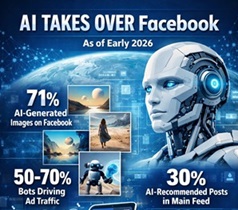 Mark Zuckerberg said a few months ago
 Engaging on social media to discuss pseudoscience can be exhausting, and make one weep for humanity. I have to keep reminding myself that what I am seeing is not necessarily representative. The loudest and most extreme voices tend to get amplified, and people don’t generally make videos just to say they agree with the mainstream view on something. There is massive selection bias. But still, to some extent social media does both reflect the culture and also influence it. So I like to not only address specific pieces of nonsense I find but also to look for patterns, patterns of claims and also of thought or narratives.
 My long-stated position (although certainly modifiable in the face of any new evidence, technological advance, or good arguments) is that the optimal pathway to most rapidly decarbonize our electrical infrastructure is to pursue all low-carbon options. I have not heard anything to dissuade me so far from this position. A couple of SGU listeners, however,