Apr 28 2025
How Should We Talk About Autism
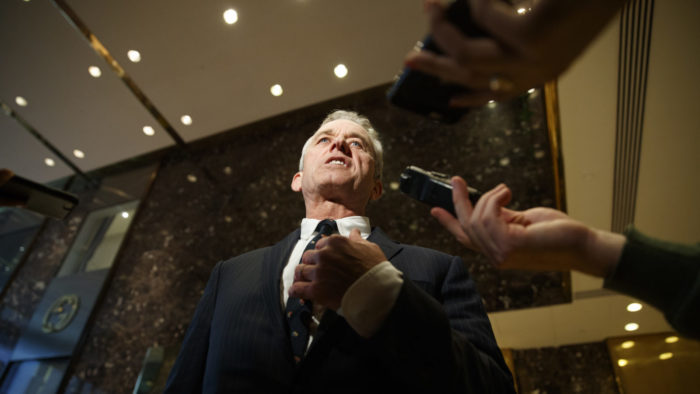
RFK Jr.’s recent speech about autism has sparked a lot of deserved anger. But like many things in life, it’s even more complicated than you think it is, and this is a good opportunity to explore some of the issues surrounding this diagnosis.
While the definition has shifted over the years (like most medical diagnoses) autism is currently considered a fairly broad spectrum sharing some underlying neurological features. At the most “severe” end of the spectrum (and to show you how fraught this issue is, even the use of the term “severe” is controversial) people with autism (or autism spectrum disorder, ASD) can be non-verbal or minimally verbal, have an IQ <50, and require full support to meet their basic daily needs. At the other end of the spectrum are extremely high-functioning individuals who are simply considered to be not “neurotypical” because they have a different set of strengths and challenges than more neurotypical people. One of the primary challenges is to talk about the full spectrum of ASD under one label. The one thing it is safe to say is that RFK Jr. completely failed this challenge.
What our Health and Human Services Secretary said was that normal children:
“regressed … into autism when they were 2 years old. And these are kids who will never pay taxes, they’ll never hold a job, they’ll never play baseball, they’ll never write a poem, they’ll never go out on a date. Many of them will never use a toilet unassisted.”
This is classic RFK Jr. – he uses scientific data like the proverbial drunk uses a lamppost, for support rather than illumination. Others have correctly pointed out that he begins with his narrative and works backward (like a lawyer, because that is what he is). That narrative is solidly in the sweet-spot of the anti-vaccine narrative on autism, which David Gorski spells out in great detail here. RFK said:
“So I would urge everyone to consider the likelihood that autism, whether you call it an epidemic, a tsunami, or a surge of autism, is a real thing that we don’t understand, and it must be triggered or caused by environmental or risk factors. “
In RFK’s world, autism is a horrible disease that destroys children and families and is surging in such a way that there must be an “environmental” cause (wink, wink – we know he means vaccines). But of course RFK gets the facts predictable wrong, or at least exaggerated and distorted precisely to suit his narrative. It’s a great example of how to support a desired narrative by cherry picking and then misrepresenting facts. To use another metaphor, it’s like making one of those mosaic pictures out of other pictures. He may be choosing published facts but he arranges them into a false and illusory picture. RFK cited a recent study that showed that about 25% of children with autism were in the “profound” category. (That is another term recently suggested to refer to autistic children who are minimally verbal or have an IQ < 50. This is similar to “level 3” autism or “severe” autism, but with slightly different operational cutoffs.)
 Regulations are a classic example of a proverbial double-edged sword. They are essential to create and maintain a free and fair market, to prevent exploitation, and to promote safety and the public interest. Just look at 19th century America for countless examples of what happens without proper regulations (child labor, cities ablaze, patent medicines, and food was a crap shoot). But, regulations can have a powerful effect and this includes unintended consequences, regulatory overreach, ideological capture, and stifling bureaucracy. This is why optimal regulations should be minimalist, targeted, evidence-based, consensus-driven, and open to revision. This makes regulations also a classic example of Aristotle’s rule of the “golden mean”. Go too far to either extreme (too little or to onerous) and regulations can be a net negative.
 Have you ever been into a video game that you played for hours a day for a while? Did you ever experience elements of game play bleeding over into the real world? If you have, then you have experienced what psychologists call “
 Exoplanets are pretty exciting – in the last few decades we have gone from knowing absolutely nothing about planets beyond our solar system to having a catalogue of over 5,000 confirmed exoplanets. That’s still a small sample considering there are likely between 100 billion and 1 trillion planets in the Milky Way. It is also not a random sample, but is biased by our detection methods, which favor larger planets closer to their parent stars. Still, some patterns are starting to emerge. One frustrating pattern is the lack of any worlds that are close duplicates of Earth – an Earth mass exoplanet in the habitable zone of a yellow star (I’d even take an orange star).
 Last week
 We may have a unique opportunity to make an infrastructure investment that can demonstrably save money over the long term – by burying power and broadband lines. This is always an option, of course, but since we are in the early phases of rolling out fiber optic service, and also trying to improve our grid infrastructure
 This really is just a coincidence –
 Yes –
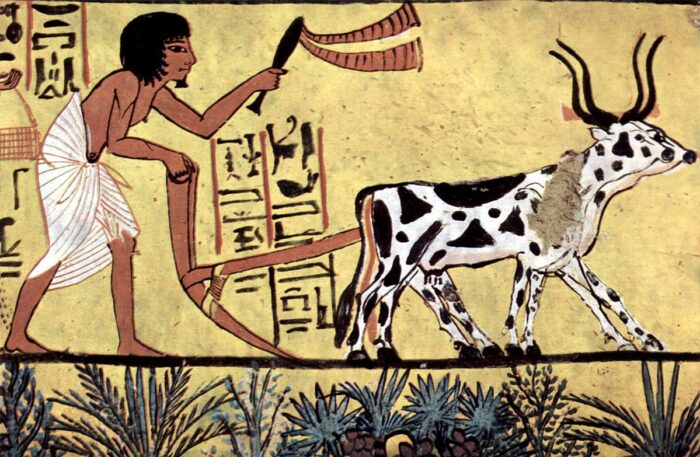 It is generally accepted that the transition from hunter-gatherer communities to agriculture was the single most important event in human history, ultimately giving rise to all of civilization. The transition started to take place around 12,000 years ago in the Middle East, China, and Mesoamerica, leading to the domestication of plants and animals, a stable food supply, permanent settlements, and the ability to support people not engaged full time in food production.