Jul 15 2024

World Events and the Conspiracy Instinct

By now most people have heard that on Saturday there was a failed assassination attempt on candidate Trump at a rally. While it has only been a few days, preliminary investigation has found that 20-year-old Thomas Matthew Crooks, using a AR style rifle purchased legally by his father, acted alone in attempting to kill the former president. Again preliminarily, Crooks fits the typical profile of someone who would do this (young white male, loner, fond of guns) although his ideology is not clear at this time, and may be complicated. He is a registered Republican but has donated to liberal groups.

This is a huge event, which may alter the course of the campaign (although I am not convinced, given how galvanized public opinion is at this point). It was also an extremely close call, and we can’t help considering how world history can turn over a fraction of an inch. It’s unsettling. How people react in the moment says a lot about their psychology and the broader culture. Unsurprisingly, many people immediately reached for a conspiracy theory to help make sense of these events. Even among people I know personally, who are generally savvy and not conspiracy theorists, the possibility was immediately raised.

The conspiracy theories come into basic flavors – on the left the possibility was raised that this was a false flag operation in order to help Trump’s campaign. On the right, there were accusations that Biden was somehow responsible for the shooting, or even directly ordered it. Some comments are just political opportunism and spin, but the reaction goes way beyond that to blatant conspiracy theories, which exploded on the internet within minutes of the event.

It is a great example of motivated reasoning and the pitfalls of conspiracy thinking, so at least can serve as a teachable moment. First, at least anecdotally it is pretty blatant that these casual conspiracy theories align with the politics of the one proposing the conspiracy. In this sense, they essentially amount to wishful thinking. With blood still on his face, Trump was immediately seizing the event for its obvious political opportunity. The wishful thinking comes in when one imagines that it can all be taken away, and even reversed, if it is discovered that Trump staged the whole thing. On the other side, a desire for the event to have maximal impact, even be a death blow to Biden, leads to thinking that the assassination attempt can be tied to him. In either case, people then search for reasons to support their emotionally generated conspiracy theory.

Continue Reading »

Comments: 0

Jul 11 2024

The Neolithic Revolution

What was the greatest invention of human civilization? Arguably it was agriculture, which allowed for civilization itself. Prior to agriculture humans were some combination of hunters, gatherers, scavengers, and fishers. We lived off the land, which was a full-time job. Many communities had to be nomadic, to follow prey and follow the seasons. There were some permanently occupied sites, if they were in proximity to an adequate food source. Food was the ultimate limiting factor on human populations and ingenuity.
Agriculture was therefore a transformative invention, allowing people to stay in one place and develop infrastructure. It also freed up some members of the group to do things other than focus on acquiring food. It made civilization possible. How far back does agriculture go?

The consensus is that agriculture began in earnest about 12,000 years ago, in the fertile crescent that is now Iran, Iraq, Turkey and surrounding regions. Evidence for this includes the remnants of domesticated plants, and also evidence of farming and food processing. In addition there is evidence of domesticated animals, which would have been a source of labor and also an additional food source. There were also some downsides to this shift in lifestyle – relying on a narrow range of plants reduced food diversity and therefore overall nutritional quality. Living with domesticated animals, and in larger populations, also saw the rise of communicable diseases. The latter still plagues humanity. However, successful societies all figured out eventually how to farm a combination of plants that would provide adequate nutrition. You may have noticed that most cultures’ staple foods include some combination of a grain plus a legume – corn and beans, rice and lentils, for example.

Continue Reading »

Comments: 0

Jul 09 2024

Trust in New Technology

In an optimally rational person, what should govern their perception of risk? Of course, people are generally not “optimally rational”. It’s therefore an interesting thought experiment – what would be optimal, and how does that differ from how people actually assess risk? Risk is partly a matter of probability, and therefore largely comes down to simple math – what percentage of people who engage in X suffer negative consequence Y? To accurately assess risk, you therefore need information. But that is not how people generally operate.

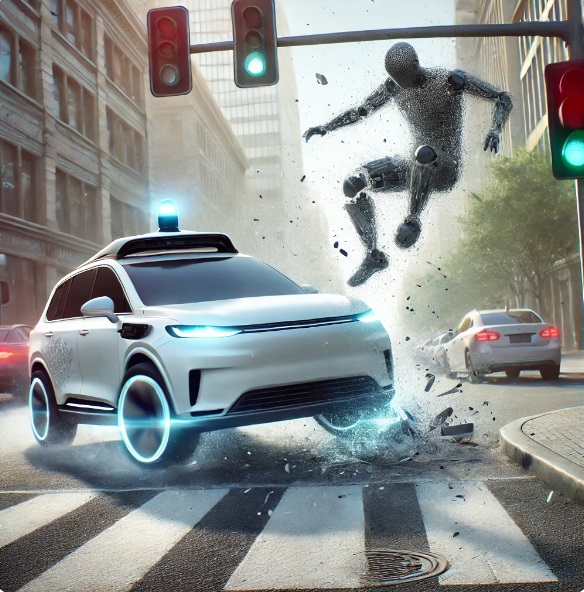
In a recent study assessment of the risk of autonomous vehicles was evaluated in 323 US adults. This is a small study, and all the usual caveats apply in terms of how questions were asked. But if we take the results at face value, they are interesting but not surprising. First, information itself did not have a significant impact on risk perception. What did have a significant impact was trust, or more specifically, trust had a significant impact on the knowledge and risk perception relationship.

What I think this means is that knowledge alone does not influence risk perception, unless it was also coupled with trust. This actually makes sense, and is rational. You have to trust the information you are getting in order to confidently use it to modify your perception of risk. However – trust is a squirrely thing. People tend not to trust things that are new and unfamiliar. I would consider this semi-rational. It is reasonable to be cautious about something that is unfamiliar, but this can quickly turn into a negative bias that is not rational. This, of course, goes beyond autonomous vehicles to many new technologies, like GMOs and AI.

Continue Reading »

Comments: 0

Jul 08 2024

Some Thoughts on Aging

If either of the two presumptive nominees for the major political parties in the US are elected in November they will be the oldest person ever to be inaugerated as president. What implications does this have? As a neurologist who sees patients every workday of various ages, evaluates them, and explicitly investigates the effects of aging on their function, I have some thoughts.

The first thing to realize is that aging affects different people differently. Especially once people get north of 40 you start to see significant and growing divergence in how well people age, in terms of their health and various aspects of functioning. I have seen many patients in their 90s who are completely sharp and fully functional or have just specific issues to deal with, but are overall healthy. I have also seen patients in their 50s who are wrecked and suffering from various aspects of declining health.

This divergence is partly due to the luck of genetics, and partly due to lifestyle. Some people have a chronic illness that dramatically affects their aging. Others may have suffered an injury with long term effects that get more challenging with age. While others have engaged in one or more poor lifestyle choices and have paid a heavy toll. Chronic alcohol use disorder, for example, can be devastating, adding years or decades to one’s apparent age. Smoking also takes its toll.

For these reasons, what we can say about a person based upon just a number is actually quite limited. We can make statistical comments, but that’s all. Even there, we can only describe what is typical, but there are exceptions. There are, for example, so-called “super agers” who do not develop the typical brain changes that most people do with age.

Continue Reading »

Comments: 0

Jul 02 2024

DNA Nanorobot Kill Switch for Cancer

How’s that for a provocative title? But it is technically accurate. The title of the paper in question is: “A DNA robotic switch with regulated autonomous display of cytotoxic ligand nanopatterns.” The study is a proof of concept in an animal model, so we are still years away from a human treatment (if all goes well), but the tech is cool.

First we start with what is called “DNA origami”. These are sequences of DNA that fold up into specific shapes. In this case the DNA origami is used to create a nanoscale “robot” which is used as a delivery mechanism for the kill switch. The skill switch is quite literal – a “death receptor” (DR) which is a ligand of 6 amino acids. These exist on all healthy cells, but when sufficiently clustered on the surface of a cell, DRs trigger apoptosis, which is programmed cell death – a death switch.

The DNA origami robot has six such ligands arranged in a hexagonal pattern on the interior of its structure. The DNA, in fact, creates this structure with precise distance and arrangement to effectively trigger apoptosis.  When it opens up it reveals these ligands and can attach them to a cell surface, triggering apoptosis. The researchers have managed to create a DNA robot that remains closed in normal body pH, but also will open up in an acidic environment.

Continue Reading »

Comments: 0

Jul 01 2024

BBC Gets Into UFOs

Paranormal phenomena tend to wax and wane in the public interest. Typically a generation will become fascinated with a topic, but eventually the novelty will wear thin and interest will fade. But the flame will be kept alive by the hardcore believers. Wait long enough, and interest will come around again. We are seeing this today with UFOs (Unidentified Flying Objects, now technically terms UAPs or Unidentified Anomalous Phenomena).

Not surprisingly the BBC wants to get in on this UFO action, and they are doing that with their Paranormal series, which they are promoting on their news outlet. They clearly are trying to remain respectable, and not completely abandon their journalistic integrity, but they predictably fall for all the usual fallacies that skeptics have explained many times over decades.

They focus on an incident in Wales in 1977 at the Broad Haven elementary school. This is often referred to as the Roswell of Wales. There were reports that day of something strange going on, including a silver humanoid walking around town, and possible UFO sightings. Some of the students thought they saw something in a field near the school’s playground, and many students then went out to take a look. What UFO believers point to as “compelling” evidence that they saw an actual space craft is that the students, under questioning by the school staff, all drew similar images of what they saw – a pretty typical flying saucer. The BBC captions a picture of some of these drawings: “The children reportedly drew near identical images of the UFO, which captured widespread media attention.”

Continue Reading »

Comments: 0

Jun 27 2024

Cities on Fire

Most major cities in the US experienced a major fire sometime between 1860 and 1920. Actually these fires, called conflagrations, have been occurring since colonial times and into the middle of the 20th century, but saw a peak in the late 19th and early 20th century. Many cities experienced multiple conflagrations, and in the 19th century was responsible for more loss of property than any other phenomenon.

Why this is true is an interesting historical story. But in the world of social media, especially platforms like TikTok, history may seem irrelevant. I have been reviewing videos on TikTok and it’s been quite the journey. I find it interesting that each social media platform has its own subculture within the broader social media culture, which itself is a subculture of the broader culture. In any case, what I have found is that TikTok is a cesspool of confident ignorance. Obviously there is lots of kinds of content there, and some of it good, but there is also a high proportion of people just making stuff up and presenting it to the world as if it were some great realization or bit of wisdom.

I have been thinking quite a bit about what this phenomenon actually is. I think a large part of it may be generational as well as just part of the changing times brought to us by social media. My overall impression is that TikTok videos are primarily about performance. Everything in infotainment. I often find it difficult to determine if someone believes what they are saying or not, and am often left with the impression that even they don’t know. More precisely, they don’t care – whether or not something is true is irrelevant in the world of TikTok. Engagement matters. Performance matters. All ideas are equally valid.

Continue Reading »

Comments: 0

Jun 24 2024

Concrete Battery

I know it’s only been a couple of weeks since I wrote about cement, but now I need to write about concrete, or potential version of concrete that is able to function as a battery. If we can get the technology to work this could an extremely useful item for a future of green energy.
The idea is one example of a more general idea – making structural material that can double as energy storage, either as a battery or supercapacitor. Imagine, for example, if the frame of your car was its battery. Similarly, imagine if the foundation of your house was a massive supercapacitor. That is the idea behind an MIT research project, which right now is in the proof-of-concept laboratory phase.

The researchers added carbon black to cement and the usual other ingredients to make concrete that can function as a supercapacitor. The carbon black is highly conductive, and it can form many branching tendrils in the concrete. These conductive bits are separated by insulating bits – and that is the basic structure of a capacitor. Charge can build up in the conductive carbon black and be maintained by the insulating layers.

At this point their test material can store 300 watt hours per cubic meter. A typical US home uses about 30 kwh per day, so would need 100 cubic meters to have one day’s worth of energy storage. That is in the order of magnitude of the volume of concrete in a, say, 1,500 sq foot home’s foundation (about 50 cubic meters). Larger homes would have larger foundations, and of course the foundations can be made deliberately thick to increase the storage. In other words, this is a useful amount of energy, theoretically. Any incremental advances in energy density would also be very useful, and the researchers are working on that.

Continue Reading »

Comments: 0

Jun 18 2024

Rats!

Published by under General
Comments: 0

What killed off the dodo? Humans first arrived at Mauritius island in the late 1500s. They found on this island fat flightless birds who nested on the ground and were a convenient way to restock their ship’s food supply. Within 80 years the dodo went extinct. But hunting was not the only, and maybe not even the primary, cause of their extinction. Rather it was likely something that the humans brought with them – invasive species. One species in particular tends to follow humans every where we go, causing havoc on any local ecosystem not already adapted to them – rats.

Dodos nested on the ground and typically had one large egg per nest. This was also a convenient food source for invasive rats, who quickly multiplied and decimated the dodo population. There were other invasive species as well (monkeys and pigs), and there was also habitat loss due to human activity – all of these factors put stress on the dodo population that was unsustainable.

It is an unfortunate unintended consequence of human history that as we explored and populated the world, rats followed us. Rats now exist on every continent except Antarctica, and they are likely the most populous mammal species in the world. They are a clever and adaptive species, and are very good at stowing away. They also reproduce very quickly, with a single female able to produce 50 pups per year. They also have a low mortality rate because they live in communities and protect their young.

Continue Reading »

Comments: 0

Jun 17 2024

Are Animals Conscious?

This is a great scientific question because it challenges how we ask and answer scientific questions. Are animals conscious? This is a question discussed in a recent BBC article that piqued my interest. They eventually get to a question that they should have opened with – how do we specifically define “consciousness”? We can’t answer questions about an alleged phenomenon unless we know what it is. Ideally we would have an operational definition, a list of inclusion and exclusion criteria that need to be met to fit the definition.
So I am going to start with this question – how do we define consciousness? I think there are at least two different contexts here. In medicine we use the term to refer to different states in people. We know, from our own experience, that humans are conscious, and from one point of view we define consciousness as what humans experience. We assume other fully functioning humans are conscious because we are, and there is no reason to think that other beings with brains similar to our own have a fundamentally different phenomenon driving their behavior. In fact part of consciousness is a theory of mind, which is the ability to think about what other beings think and feel.

So when we talk about consciousness in humans the question revolves around the health and functioning of the brain. Someone might be unconscious, or comatose, or vegetative. We label these as “disorders of consciousness”. We might also discuss consciousness in the context of healthy altered states, such as sleeping. Here we do have very specific technical definitions, based upon neurological examination. However, even here our definition is being challenged by new technology, such as functional MRI scanning, which may shows signs of subtle consciousness in someone who does not show signs on exam.

Continue Reading »

Comments: 0

« Prev - Next »