Sep 12 2024

Carbon Fiber Structural Battery

I have written previously about the concept of structural batteries, such as this recent post on a concrete battery. The basic idea is a battery made out of material that is strong enough that it can bare a load. Essentially we’re asking the material to do two things at once – be a structural material and be a battery. I am generally wary of such approaches to technology as you often wind up with something that is bad at two things, rather than simply optimizing each function.

In medicine, for example, I generally don’t like combo medications – a single pill with two drugs meant to take together. I would rather mix and match the best options for each function. But sometimes there is such a convenience in the combination that it’s worth it. As with any technology, we have to consider the overall tradeoffs.

With structural batteries there is one huge gain – the weight and/or volume savings of having a material do double duty. The potential here is too great to ignore. For the concrete battery the advantage is about volume, not weight. The idea is to have the foundation of a building serve as individual or even grid power storage. For a structural battery that will save weight, we need a material is light and strong. One potential material is carbon fiber, which may be getting close to characteristics with practical applications.

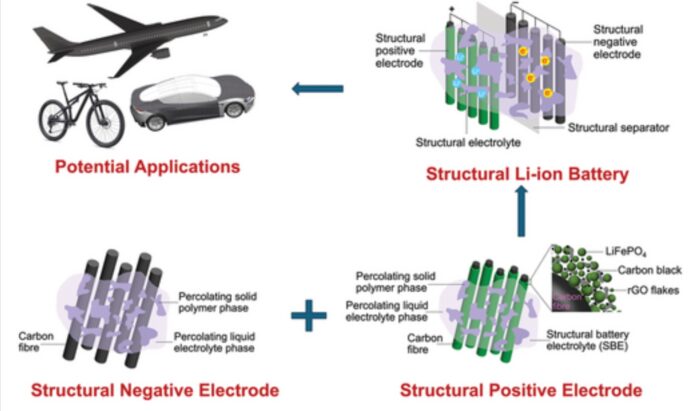
Material scientists have created in the lab a carbon fiber battery material that could serve as a structural battery. Carbon fiber is a good substrate because it is light and strong, and also can be easily shaped as needed. Many modern jets are largely made out of carbon fiber for this reason. Of course you compromise the strength when you introduce materials needed for the energy storage, and these researchers have been working on achieving an optimal compromise. Their latest product has an elastic modulus that exceeds 76 GPa. For comparison, aluminum, which is also used for aircraft, has an elastic modulus of 70 GPa. Optimized carbon fiber has an elastic modulus of 200-500 GPa. Elastic modulus is one type of strength, specifically the resistance to non-permanent deformity. Being stronger than aluminum means it is in the range that is suitable for making lots of things, from laptops to airplanes.

Continue Reading »

Comments: 0

Sep 10 2024

Artificial Robotic Muscles

By now we have all seen the impressive robot videos, such as the ones from Boston Dynamics, in which robots show incredible flexibility and agility. These are amazing, but I understand they are a bit like trick-shot videos – we are being shown the ones that worked, which may not represent a typical outcome. Current robot technology, however, is a bit like steam-punk – we are making the most out of an old technology, but that technology is inherently limiting.

The tech I am talking about is motor-driven actuators. An actuator is a device that converts energy into mechanical force, such a torque or displacement. This is a technology that is about 200 years old. While they get the job done, they have a couple of significant limitations. One is that they use a lot of energy, much of which is wasted as heat. This is important as we try to make battery-driven robots that are not tethered to a power cord. Dog-like and humanoid robots typically last 60-90 minutes on one charge. Current designs are also relatively hard, so that limits their interaction with the environment. They also depend heavily on sensors to read their environment.

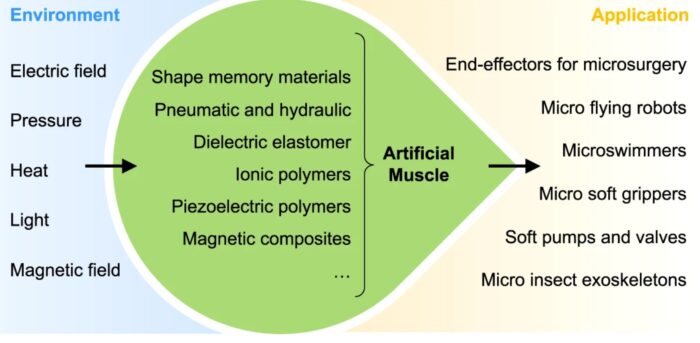
By contrast we can think about biological systems. Muscles are much more energy efficient, are soft, can be incredibly precise, are silent, and contain some of their own feedback to augment control. Developing artificial robotic muscles that would perform similar to biological systems is now a goal of robotics research, but it is a very challenging problem to crack. Such a system would also need to contract slowly or quickly, and even produce bursts of speed (if, for example, you want your robot to jump). They would need to be able to produce a lot of power, enough for the robot to move itself and carry out whatever function it has. It would also need to be able to efficiently hold a position for long periods of times.

Continue Reading »

Comments: 0

Sep 03 2024

Marmosets Call Each Other By Name

Humans identify and call each other by specific names. So far this advanced cognitive behavior has only been identified in a few other species, dolphins, elephants, and some parrots. Interestingly, it has never been documented in our closest relatives, non-human primates – that is, until now. A recent study finds that marmoset monkeys have unique calls, “phee-calls”, that they use to identify specific individual members of their group. The study also found that within a group of marmosets, all members use the same name to refer to the same individual, so they are learning the names from each other. Also interesting, different families of marmosets use different kinds of sounds in their names, as if each family has their own dialect.

In these behaviors we can see the roots of language and culture. It is not surprising that we see these roots in our close relatives. It is perhaps more surprising that we don’t see it more in the very closest relatives, like chimps and gorillas. What this implies is that these sorts of high-level behaviors, learning names for specific individuals in your group, is not merely a consequence of neurological develop. You need something else. There needs to be an evolutionary pressure.

That pressure is likely living in an environment and situation where families members are likely to be out of visual contact of each other. Part of this is the ability to communicate at long enough distance that will put individuals out of visual contact. For example, elephants can communicate over miles. Dolphins often swim in murky water with low visibility. Parrots and marmosets live in dense jungle. Of course, you need to have that evolutionary pressure and the neurological sophistication for the behavior – the potential and the need have to align.

Continue Reading »

Comments: 0

Aug 30 2024

Accusation of Mental Illness as a Political Strategy

I am not the first to say this but it bears repeating – it is wrong to use the accusation of a mental illness as a political strategy. It is unfair, stigmatizing, and dismissive. Thomas Szasz (let me say straight up – I am not a Szaszian) was a psychiatrist who made it his professional mission to make this point. He was concerned especially about oppressive governments diagnosing political dissidents with mental illness and using that as a justification to essentially imprison them.

Szasz had a point (especially back in the 1960s when he started making it) but unfortunately took his point way too far, as often happens. He decided that mental illness, in fact, does not exist, and is 100% political oppression. He took a legitimate criticism of the institution of mental health and abuse by oppressive political figures and systems and turned it into science denial. But that does not negate the legitimate points at the core of his argument – we should be careful not to conflate unpopular political opinions with mental illness, and certainly not use it as a deliberate political strategy.

While the world of mental illness is much better today (at least in developed nations), the strategy of labeling your political opponents as mentally ill continues. I truly sincerely wish it would stop. For example, in a recent interview on ABC, senator Tom Cotton was asked about some fresh outrageous thing Trump said, criticism of which Cotton waved away as “Trump Derangement Syndrome”.

Continue Reading »

Comments: 0

Aug 29 2024

Dog Soundboards

Published by under General
Comments: 0

I am a lifelong dog owner, and like many dog owners am often impressed with how smart my dogs have been. They pick up on subtle body language and non-verbal cues, they seem to understand specific words, and they are capable of successfully communicating their wants and desires. My latest dog is an Australian shepherd, who is both smart and willful. Any attempt at training him to do what we want results in him equally training us to do what he wants. An of course we love them and the emotional connection is real and bidirectional. Dogs and humans have evolved a symbiotic relationship.

Still, I was very skeptical when I heard about a recent social media phenomenon – posting videos of dogs using a soundboard to communicate. After watching the videos I am completely unimpressed, and my skepticism has been supported. It turns out that this is mostly just the old “Clever Hans” effect, falling into the same trap that all attempts to teach animals to communicate have risked.

In the early 20th century, Wilhelm von Osten, who was a mystic and phrenologist (among other things) showcased his horse, Hans, who he claimed could not only do arithmetic, but could read, solve problems, track a calendar, and other tasks. Hans would communicate by tapping his hoof the correct number of times. Osten probably really believed in Hans’s abilities, and he showcased them far and wide. However, when psychologist Oskar Pfungst investigated Hans he found that the horse was simply responding to non-verbal cues from his owner, essentially noted when to stop on the correct answer. He initially removed the trainer from the area, but Hans was still able to perform. However, he then made sure that no one present knew the answer, and then Hans could not perform. Hans needed cues from people to know when to stop.

Continue Reading »

Comments: 0

Aug 27 2024

Roleplaying Games May Help Autistic People

Gotta love the title of this paper: “A critical hit: Dungeons and Dragons as a buff for autistic people“. Dungeons & Dragons (D&D) is a tabletop roleplaying game where a small group of people each play characters adventuring in an imaginary world run by the dungeon master (DM). (That explanation was probably not necessary for the majority of readers here, but just to be thorough.) The game has just celebrated its 50th anniversary, which was even commemorated by official US stamps.

The game certainly has a very different reputation today than it did in the 70s and 80s. Back then it was seen as the exclusive domain of extreme geeks and nerds, mostly males who needed a distraction from the fact that they had no chance of finding a girlfriend. This was never true, but that was the reputation. In the 80s things got even worse, with D&D being tied to the “satanic panic” of that decade. The game was blamed, mostly by fundamentalist religious groups, for demon worship, witchcraft, and resulting in suicides and murder. I still remember when the school board in our town had a debate about whether or not the game should be banned from school grounds. The adults having the conversation had literally no idea what they were talking about, and filled the gaps in their knowledge with their own vivid imaginations.

In reality D&D and similar roleplaying games are perfectly wholesome and have a lot of positive attributes. First, they are extremely social. They are especially good for people who may find social interactions challenging or at least very demanding. While roleplaying you are in a social safe-space, where you can let aspects of your personality out to play. The game is also mostly pure imagination. Other than a few aids, like dice for random outcome generation, maps and figures, the adventure takes place in the minds of the players, helped along by the GM. The game can therefore help people develop social connections and social skills, and to learn more about themselves and close friends.

Continue Reading »

Comments: 0

Aug 26 2024

Superconducting Kagome Metals

Superconductivity is an extremely interesting, and potentially extremely useful, physical phenomenon. It refers to a state in which current flows through a material without resistance, and therefore without any loss of energy or waste heat. As our civilization is increasingly run by electronic devices, the potential benefit is huge.

As physicists unravel the quantum physics of superconductivity, this allows them to potentially design new materials that can display superconductivity in useful settings. One recent study presents a small breakthrough in a specific type of superconducting material – Kagome metals. These are a class of ferromagnetic metal metamaterials with an interwoven structure that resembles the Japanese basket by the same name. This creates some specific quantum effects that are currently being researched for their technological uses, one of which is superconductivity.

One of the ways in which superconductivity arises is through what are known as Cooper pairs – two electrons that join together in a quantum state that distributes them like a wave throughout the material. Cooper pairs can therefore “travel” through a material without resistance. A recent study looks at the formation of Cooper pairs within Kagome metals, showing something surprising to physicists. Previously it was believes that Cooper pairs were evenly distributed within Kagome metals. The new study finds that the number of Cooper pairs in the star-point locations with the Kagome pattern can contain a variable number of Cooper pairs.

This was predicted in 2023 by Professor Ronny Thomale. His predictions have now been verified by direct observation, changing how physicists think about the superconducting potential of Kagome metals. You can read the study if you want to delve deeper into the details, but let’s talk a bit about the technological potential.

Continue Reading »

Comments: 0

Aug 23 2024

Collapsars and Gravitational Waves

Published by under Astronomy
Comments: 0

The state of modern science and technology is truly amazing, much more so than the fake stuff that people like to spread around. Gravitational waves have opened up an entirely new type of astronomy, a way to explore the universe through very subtle ripples in spacetime produce by powerful gravitational events. Einstein predicted the existence of gravitational waves in 1916, but it took decades to develop the technology to actually detect them. Their existence was inferred from neutron star observations in 1974, but they were not directly detected until 2015, almost a century after their prediction.

The Laser Interferometer Gravitational Wave Observer (LIGO) uses the interference at the intersection of two lasers at right angles to each other to detect tiny fluctuations in spacetime. Each laser travels through an arm 4 kilometers long. It is sensitive enough to detect changes 1/10,000 the diameter of a proton.

Using LIGO many gravitational wave events have been detected, all involving the merger of massive bodies – some combination of neutron stars and black holes. A new study, however, uses computer simulations to predict another potential source of gravitational waves – collapsars.

What are collapsars? They result from the death of rapidly spinning large stars, 15-20 solar masses. When they run out of fuel to keep their cores burning they rapidly collapse under their massive gravity, and then they explode from all that matter crashing into itself. This results in the formation of a black hole at the core, surrounded by a lot of mass that is leftover. This mass swirls rapidly around the black hole and is quickly consumed, within minutes. This large rapidly moving mass is what causes the gravitational waves – at least that is what is predicted by the current model. d

Continue Reading »

Comments: 0

Aug 22 2024

AI Humor

It’s been less than two years (November 2022) since ChatGPT launched. In some ways the new large language model (LLM) type of artificial intelligence (AI) applications have been on the steep part of the improvement curve. And yet, they are still LLMs with the same limitations. In the last two years I have frequently used ChatGPT and other AI applications, and often give them tasks just to see how they are doing.

For a quick review, LLMs are AIs that are trained on vast amounts of information from the internet. They essentially predict the next work chunk in order to build natural-sounding responses to queries. Their responses therefore represent a sort-of zeitgeist of the internet, building on what is out there. Responses are therefore necessarily derivative, but can contain unique combinations of information. This has lead to a so-far endless debate about how truly creative LLMs can be, or if they are just stealing and regurgitating content from human creators.

What I am finding is that LLMs are getting better at doing what they do, but have not broken out of the limitations of this regurgitation model. Here is a good example from the New York Times – an author (Curtis Sittenfeld) wrote a short story based on the same prompt given to ChatGPT, and published both to see if readers could tell the difference. For me, I knew right away which story was AI. The author’s story was interesting and engaging. ChatGPTs story bored me before the end of the first paragraph. It was soulless and mechanical. It reminded me of a bad story written by a freshman in high school. It got the job done, and used some tired and predictable literary devices, but failed to engage the reader and lacked any sense of taking the reader on an emotional journey.

This reinforced for me what I suspected from my own interactions – LLMs are getting better at being LLMs, but have not broken out of their fundamental limitations.

Continue Reading »

Comments: 0

Aug 20 2024

Luminescent Solar Concentrators for Solar Power

Solar power is on the upswing. In 2023, 407–446 GW of solar power was installed globally, bringing the total to 1.6 TWdc. To put this into perspective, this was 55% of new power capacity added to energy production. For the first time, a renewable energy source contributed the most to new capacity. In 2024 so far solar is 75% of new capacity. In the US this was 60% of new power generation (capacity is the potential to make energy at any given time, while generation or production is the actual energy produced). In 2023 solar made up 5.5% of world energy production.

The reason for the increase in solar is that it’s the cheapest form of new energy. According to the International Energy Agency (IEA), solar electricity costs $30–60/MWh in Europe and the US, and $20–40/MWh in China and India. Solar is also the safest, with the fewest numbers of deaths per TWh produced (0.02, compared to the worst, 32.72 for brown coal). Because solar is clean and environmentally friendly, making solar cheaper and more efficient will only enhance its advantages. As is often discussed here, there are other considerations to the overall strategy of energy production, such as intermittency, grid storage, and grid upgrades, but we are not close, at least globally, to running into significant issues. We can take solar from the current 5.5% to at least 30% without too much issue, and can push higher with some infrastructure investment.

Along the lines of making solar power better and cheaper – let’s talk about Luminescent Solar Concentrators (LSCs). If we want to make solar power more efficient there are a few approaches. We could make the conversion of photons to electrons (the photovoltaic effect) more efficient. Right now commercial silicon solar panels have an efficiency of 22-24%, which is pretty good. The theoretical limit of silicon is about 29%, and newer materials, like perovskite, have an even higher potential efficiency.

Another approach is to have some kind of layered solar panel, where each layer may have efficiencies in the 20% range but the different layers have different peak efficiencies in terms of wavelength (color) of light, and there are multiple chances for each photon to be absorbed and converted into energy. Yet another approach is a solar collector – bringing more photons to the photovoltaic cell. Mirrors, for example, are an efficient way of redirecting light to a photovoltaic cell.

LSCs are a method of solar concentration. They use luminescent material to absorb light and then re-emit that light (luminesce). This has several advantages. First, LSCs are efficient at collective diffuse light. Solar panels work best with direct light, and the more direct the better. This is why there is a huge advantage to orienting a panel toward the sun, and for large installations even following the sun with movable panels. But LSCs don’t care – they can collect diffuse or scattered light from any direction with equal efficiency. They can then re-emit that light at a specific wavelength (color), and that light can be directed through a process called total internal reflection. This is like a fiber optic cable, where all light that hits the interface at the surface of the cable is reflected internally, so it travels down the cable and never leaves it.

What this means is that you can have a system of LSCs that are arranged to gather diffuse or direct light from any direction. These LSCs then give off light which travels down a fiber to a photovoltaic where the light is made into electricity. The LSCs are semi-transparent and can be of different colors. If you are thinking of a frond of leaf-like LSCs, then you are on the right track. LSCs are like leaves, and they can be arranged just like leaves, connecting to central fibers and brining energy to the photovoltaic device. In fact, trees have evolved to have a very efficient arrangement of leaves. They absorb light, but also scatter light so that it can be collected by other leaves.

LSCs can already be cost effective, compared to solar panels. They are cheaper to make – mostly just glass or plastic with a luminescent covering. PVs, by contrast, are relatively expensive for the same surface area. So it is more cost effective to have cheap LSCs covering a wide area and bringing light to the more expensive PVs. They also avoid the need for expensive tracking systems. Further, they can be made to be more modular, easier to upgrade and replace. The cost competitiveness improved further with larger area covered, and greater variability in light intensity and scattering.

LSCs are still on the steep part of the technology curve. A recent study presents ways to make them even more efficient, by reducing the size of each LSC and bunching them in a leaf-like structure. The hope is that this approach will make LSCs more scalable, cost effective, and efficient. There already is an LSC industry, but it is small compared to the PV industry. We may, however, be getting close to a shift.

It’s possible that in the future we will not have large fields of solar panels tracking the sun and collecting energy, but fields of artificial trees covered with leaf-like LSCs collecting sunlight and directing it down to their trunks where PVs turn the photons into energy.

Comments: 0

« Prev - Next »