Jul
29
2025
I wasn’t planning on doing a follow up to my recent post on AI so quickly, but a published commentary on the issue makes a good point of discussion. I know it can get tiring to see so much news and commentary about AI, but we are in the middle of a rapidly evolving and potentially disruptive technology, so an active and dynamic conversation is needed. Also, yesterday I was giving a seminar to high school STEM students on critical thinking and media savvy, and the students were eager to raise the question of AI and what impact it has. They very much wanted to know how to navigate this world they are inheriting overwhelmed with AI-generated misinformation and deep fakes. How bad is it going to get, and what should they do?
Like many such questions we can focus on two levels – individual and societal. This question very much needs to be addressed issue by issue, but generally speaking I am a proponent of dealing with societal issues with societal solutions, and not just dumping all the burden and responsibility on individual citizens. This does not mean individuals should not take responsibility for themselves, only that this should not be the only solution. Let’s take crime as an example. There are steps that individuals can take to make themselves less vulnerable to crime, but that is not the ultimate solution to a society overwhelmed by crime. We also need police, social programs, good street lighting, and other measures to reduce overall crime.
The same is true with AI-generated deep fakes, misinformation, disinformation, and just low quality slop. Since my talk yesterday was on critical thinking, I focused on what we can do as individuals. This is basically scientific skepticism 101. Evaluate the source of any information and always try to track back any claim to its original source. Do not accept someone else’s narrative about that information – if it’s important, take the time to find out for yourself. Also, do not let other people curate information for you, because that let’s them control your information ecosystem and create the narrative for you. Do not rely on any one source for information. Seek out different sources and different perspectives, and specifically seek out information that contradicts or falsifies any claim you are facing (especially if it’s something you want to be true).
Continue Reading »
Jul
22
2025
 Avi Loeb is at it again. He is the Harvard astrophysicist who first gained notoriety when he hypothesized that Oumuamua, the first detected interstellar object, might be an alien artifact. His arguments were pretty thin, not taken very seriously by the scientific community, and mostly did not pan out. However, Oumuamua has left the solar system and so any unanswered questions will remain forever unanswered. But Loeb has been riding his fame and his alien artifact narrative ever since, founding the Galileo Project dedicated to looking for alien technological artifacts. Recently, NASA discovered the third every interstellar object, and the first interstellar comet, 3I/ATLAS. (“3I” is simply the nomenclature for the third interstellar object, and “ATLAS” for the Asteroid Terrestrial-impact Last Alert System that made the discovery.) Loeb recently published a paper and is blogging that this too shows “anomalies” deserving of exploring the ET technology hypothesis. And again – I am not impressed.
Let me jump ahead a bit and say up front – I am not against exploring the alien hypothesis, pretty much in any context. Even though the probability may be low, the payoff would be huge, and it’s worth a consideration. I am not against looking for alien technological signatures. This may, in fact, be the best method for detecting an alien technological civilization. I also think that serious academics and scientists should be taking such efforts seriously and there should be no academic shame in engaging in them. So I am with Loeb to that extent.
What bothers me about Loeb is that his arguments are so terrible. He is just another classic example of an academic and scientist who has no apparent experience with scientific skepticism and therefore is falling for common pitfalls. He also appears to not have learned anything in the last seven years, which is greatly disappointing. In fact, I would argue that he is hurting his stated greater cause (with which I largely agree), to make searching for alien technology academically respectable. Loeb is essentially engaging in anomaly hunting, and shows no signs of understanding what that means. Let’s take a look at his latest list of apparent “anomalies” to see what I mean.
Continue Reading »
Jul
21
2025
 I have been away on vacation for the last week and a half, so I thought I would ease back into blogging with a light non-controversial topic – the Epstein Files. OK – let’s all take a collective deep breath. Everyone – and I mean everyone – I talk to about this issue has strong feelings and beliefs about it. Even some of my close fellow skeptics have a hard time wrapping their head around what the most logical and objective opinion to have on this issue is. I have struggled as well. I don’t plan on making a hard case for one interpretation, or doing a deep dive on the political implications. If you want to read about that, there is plenty to feast on.
I do want to explore a couple of aspects of this case from a skeptical perspective, mostly having to do with conspiracy thinking, how that works, and how it feeds our current social media ecosystem. To quickly review the basic facts, Jeffrey Epstein was a wealthy financier, although I have read that there is significant uncertainty as to how, exactly, he made his millions. He used his money partly to cozy up to celebrities, politicians, and scientists. This list includes Donald Trump, which is why we are all still talking about it. Epstein also apparently had an appetite for young girls and used his money and the influence he was able to get from it to secure a steady stream of underage girls to his properties, where he sexually abused them.
Epstein essentially ran what many refer to as a child sex trafficking ring. He pled guilty in Florida to one count of solicitation of a minor in 2008 (plus another count of prostitution, but not of a minor), and was given a light sentence and was able to shield himself from federal prosecution. He hired some high-power lawyers to essentially make his legal problems go away, and then he resumed his activities. Then in 2019 he was indicted again in New York federal court. By this time the complaints and the case had grown too large to ignore or for him to just make go away with some legal power. Prosecutors determined that the prior plea deal did not block a new prosecution, so he was arrested. While being held in federal prison he was found dead by apparent suicide in his cell. This was shortly after being taken off suicide watch.
Two main questions remain about the case: Did Epstein really kill himself in his cell, or was he murdered? Or perhaps he was taken off suicide watch so that he could take his own life. The second question is – is there a list of “clients” that took part in the child sex ring, and if so, who is on that list? Let me start with the first question.
Continue Reading »
Jul
07
2025
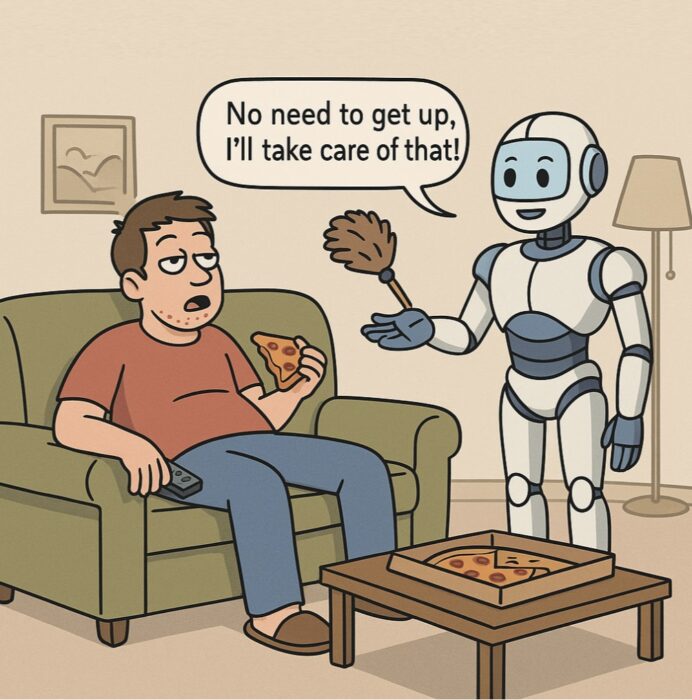 Artificial Intelligence (AI) is unavoidable. It’s now a part of our daily lives as it has been steadily infiltrating the technology we use every day, whether you realize it or not. I remain somewhat in the middle in terms of the hype-to-technological-miracle spectrum. I don’t think, as some fellow skeptics do, that the current batch of AI is all hype and nothing new. Machine learning, neural networks, and large language models have clearly turned a corner. Companies are now willing to spend millions, even hundreds of millions, to train models on vast sets of data. The latest AI apps are powerful. They are genuinely accelerating the pace of research and development, for example, accomplishing in hours or days what previously took weeks or months. But current AI also has clear limitations. It makes mistakes, and can even confidently (it appears to the end-user) proclaim as facts things it just completely fabricated, including entire scientific references. On the creative side (which I use often) it’s still mostly derivative dreck.
I look at AI as an interesting and potentially powerful tool that is flawed and limited. The outcome depends entirely on how it is used, and this is where I think the true risk of rapidly introducing new AI tools into society lies. It’s disruptive in good and bad ways, and if we are not careful it will be mostly in the bad ways. I also think we are facing the silicon valley culture of “move fast and break things” combined with an attitude of “just get out of my way” when it comes to any regulation or quality control. It’s a reasonable corporate strategy to “break things” internally as you are exploring new technology. I really don’t care how many ships Musk blows up if that process leads to a working safe rocket. But they appear to be moving fast and breaking things out there in the world in ways that affect people and society.
How is the use of AI going wrong? One important way is that it makes it easy for people to be lazy. This is something I have long worried about existentially for humanity. I now think of this as the WALL-E syndrome – in a society run by AI and robots (or any such system) that can totally take care of your needs, it’s easy to sit back and do nothing. It’s possible we evolved a certain laziness as an efficiency mechanism – accomplish tasks efficiently, conserve energy and resources.
Continue Reading »
Jun
30
2025

Humans are dramatically changing the environment of the Earth in many ways. Only about 23% of the land surface (excluding Antarctica) is considered to be “wilderness”, and this is rapidly decreasing. What wilderness is left is also mostly managed conservation areas. Meanwhile, about 3% of the surface is considered urban. I could not find a statistic for suburban, and there is currently no specific definition of what qualifies as suburban.
This, of course, is having an impact on animal life. One interesting question is how animals are adapting to these changes, and specifically are there species of animals that are adapting to urban life. Some species clearly do better than others in cities. Rats and pigeons are doing well. Peregrine falcons have also adapted well – the tall buildings give them excellent perching locations, and the pigeons provide an ample food source. Bats do well in Australian cities. In Africa some hyena populations are adapting to human food sources, and are believed to be in the process of self-domesticating.
Coyotes have also set up populations in many cities, feeding on the small animals that also live in cities. A significant part of the diet of urban coyotes is small rodents, including rats. Coyotes are well established in NYC, probably partly due to the abundant rodent population.
Racoons are another mammal that has adapted well to urban life. They tend to follow humans as a convenient food source. This has created a bit of an arms race between humans trying to keep racoons out of their garbage bins and racoons trying to find a way in. Racoons are smart critters to begin with. They have a relatively high neuronal density and good problem-solving skills. In one study city racoons displayed greater problem solving than their rural cousins.
Continue Reading »
Jun
26
2025
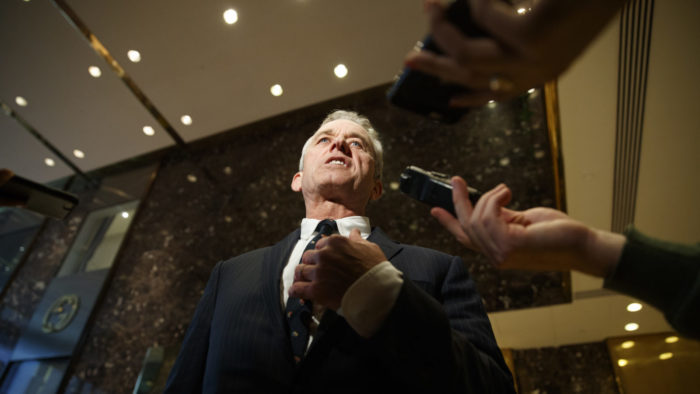
RFK Jr. is an anti-vaxxer. He will protest that, but it’s a dodge. He basically lied (and it was quite transparent) to the senate confirmation committee, and I think Cassidy and others knew full well what they were getting when they approved him as HHS secretary. Those of us who have been following RFK’s career as an anti-vaxxer have not been surprised (although we are certainly horrified) as he got to work systematically undermining vaccines in every way within his reach. You can read the saga in great detail at SBM, where we anticipated his moves. Let’s quickly review.
Of course, RFK is not going to say, “I will destroy America’s vaccine infrastructure because I hate all vaccines.” He is doing what he always does, using a pretext. Now he is claiming that he is just supporting “gold standard science”. But this is exactly like science deniers saying that they are just applying healthy skepticism. When it comes to safety data, for example, you can set the bar as arbitrarily high as you want. There is no such thing as 100% certitude in science or medicine, and so you can nit pick the evidence-base and declare that any medical intervention you don’t like needs more safety data. You can claim that any connection to industry is a fatal conflict of interest, even if it isn’t. You can claim data is too old and needs review, or that public funds are better spent elsewhere. Finding a pretext to undermine vaccines is easy. The pattern, however, is undeniable and was predicted – in every case, RFK’s judgement will come down against vaccines.
He has pulled funding for mRNA research into viruses with pandemic potential, including the bird flu. He clawed back funding that was already given to fund testing, claiming the vaccine needs more testing. he also claimed that other interventions are more promising. This, of course, is also the guy who thinks that vitamin A is more effective than vaccines at preventing measles, something which is patently not true. It’s hard to imagine a better health investment than developing a vaccine to prevent the next pandemic, but here we are.
Continue Reading »
Jun
23
2025
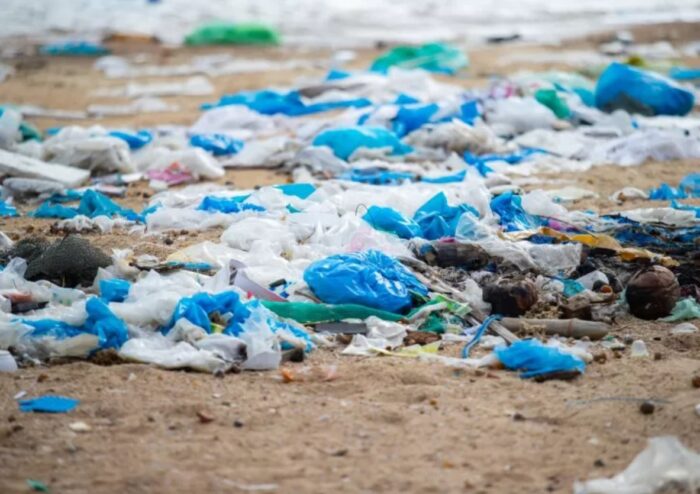 There is a lot of talk concerning the growing plastic waste problem in the world, and that’s because it is a real and serious problem. The world produces about 430 million tons of plastic waste per year, and this is steadily increasing over time. About 6 millions tons of this will end up in water environments – rivers, lakes, shorelines, and the ocean. This plastic can be disruptive to marine life through entanglement, ingestion, and contamination.
There is a bit of semi-good news – a recent study finds that policies aimed at reducing single-use plastic bags are somewhat effective. They used data from apps used by people who clean up waste along the shoreline. The apps track how much and what kind of waste they pick up. This was a convenient source of study data. It is also true that in the US there is no Federal ban on plastic bags, so the researchers were able to compares local, county, and state-wide policies limiting plastic bag use. They could also compare the two main types of policies, bans and fees.
They found that areas with plastic bag policies had 25 – 47% reduced plastic bag waste compared to areas without such policies. The effect was greater over time, and was greater in areas with higher initial plastic bag waste. They also found that plastic bag fees were more effective than bans, which I found interesting. Partial bans were the least effective. Policies at all governmental scales were effective, with state level policies being the most effective.
But – and here is the reason for my caveats above – in all areas the absolute amount of plastic waste increased over the study period. There was only a decrease in the relative amount of increase in areas with a policy compared to those without. So policies decrease the rate of increase of plastic waste. How can this data inform policies going forward?
Continue Reading »
Jun
12
2025
The human brain is extremely good at problem-solving, at least relatively speaking. Cognitive scientists have been exploring how, exactly, people approach and solve problems – what cognitive strategies do we use, and how optimal are they. A recent study extends this research and includes a comparison of human problem-solving to machine learning. Would an AI, which can find an optimal strategy, follow the same path as human solvers?
The study was specifically designed to look at two specific cognitive strategies, hierarchical thinking and counterfactual thinking. In order to do this they needed a problem that was complex enough to force people to use these strategies, but not so complex that it could not be quantified by the researchers. They developed a system by which a ball may take one of four paths, at random, through a maze. The ball is hidden from view to the subject, but there are auditory clues as to the path the ball is taking. The clues are not definitive so the subject has to gather information to build a prediction of the ball’s path.
What the researchers found is that subjects generally started with a hierarchical approach – this means they broke the problem down into simpler parts, such as which way the ball went at each decision point. Hierarchical reasoning is a general cognitive strategy we employ in many contexts. We do this whenever we break a problem down into smaller manageable components. This term more specifically refers to reasoning that starts with the general and then progressively hones in on the more detailed. So far, no surprise – subjects broke the complex problem of calculating the ball’s path into bite-sized pieces.
What happens, however, when their predictions go awry? They thought the ball was taking one path but then a new clue suggests is has been taking another. That is where they switch to counterfactual reasoning. This type of reasoning involves considering the alternative, in this case, what other path might be compatible with the evidence the subject has gathered so far. We engage in counterfactual reasoning whenever we consider other possibilities, which forces us to reinterpret our evidence and make new hypotheses. This is what subjects did, h0wever they did not do it every time. In order to engage in counterfactual reasoning in this task the subjects had to accurately remember the previous clues. If they thought they did have a good memory for prior clues, they shifted to counterfactual reasoning. If they did not trust their memory, then they didn’t.
Continue Reading »
Jun
09
2025
 Citrus greening (also called Huanglongbing or HLB) is an infectious disease affecting citrus trees in Florida. It is a bacterium, Candidatus Liberibacter asiaticus, and spread by an invasive fly, the Asian citrus psyllid. Since 2004 it has caused a reduction in the Florida citrus industry by 90% and doubled production costs. It is close to completely wiping out the Florida citrus industry. Various methods have been tried to keep it under control, but they have all failed.
There is good news, however. The University of Florida in collaboration with the company Soilcea, has developed a GMO orange that is highly resistant to citrus greening. They expect to have commercial trees available by the Spring of 2027. The limiting factor is that it takes years to grow test trees to see that they remain resistant and produce viable fruit. So far the test trees are doing well.
The company licensed the finding of Nian Wang, a professor at the University of Florida, who found that the bacterium is dependent upon interactions with the host that can be traced to several genes. The company used CRISPR to silence those genes, making it more difficult for the bacterium to infect plants and thereby making the plants resistant to infection. This approach has apparently worked, although again we won’t be sure until the first test trees reach maturity.
Continue Reading »
Jun
06
2025
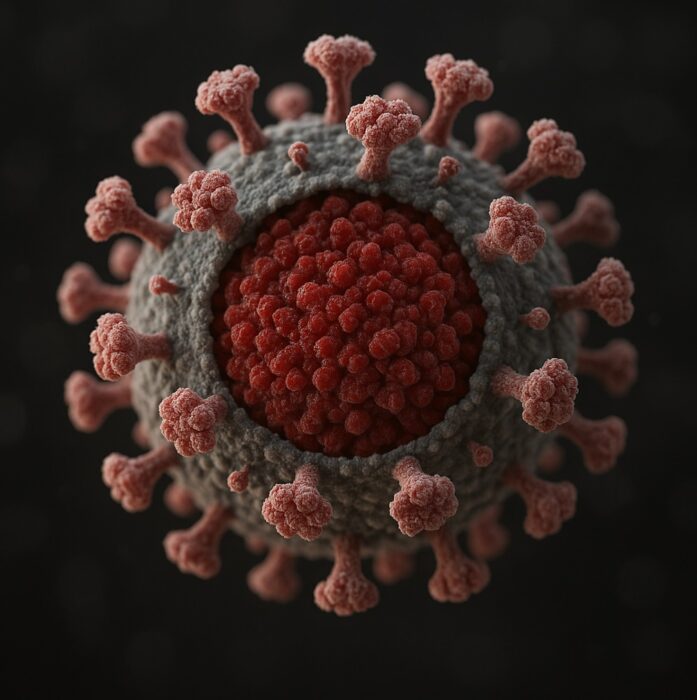 First, don’t get too excited, this is a laboratory study, which means if all goes well we are about a decade or more from an actual treatment. The study, however, is a nice demonstration of the potential of recent biotechnology, specifically mRNA technology and lipid nanoparticles. We are seeing some real benefits building on decades of basic science research. It is a hopeful sign of the potential of biotechnology to improve our lives. It is also a painful reminder of how much damage is being done by the current administration’s defunding of that very science and the institutions that make it happen.
The study –Efficient mRNA delivery to resting T cells to reverse HIV latency – is looking for a solution to a particular problem in the treatment of HIV. The virus likes to hide inside white blood cells (CD4+ T cells). There the virus will wait in a latent stage and can activate later. It acts as a reservoir of virus that can keep the infection going, even in the face of effective anti-HIV drugs and immune attack. It is part of what makes HIV so difficult to fully eliminate from the body.
We already have drugs that address this issue. They are called, appropriately, latency-reversing agents (LRAs), and include Romidepsin, Panobinostat, and Vorinostat. These drugs inhibit an enzyme which allows the virus to hide inside white blood cells. So this isn’t a new idea, and there are already effective treatments, which do make other anti-HIV drugs more effective and keep viral counts very low. But they are not quite effective enough to allow for total virus elimination. More and more effective LRAs, therefore, could be highly beneficial to HIV treatment.
Continue Reading »