Nov
23
2021
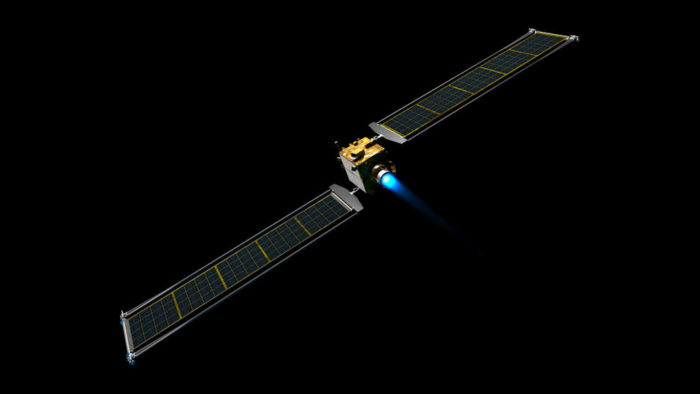
Why is NASA planning on deliberately crashing a spacecraft into a small asteroid that poses no threat to the Earth? It’s a test of an asteroid deflection system – DART (Double Asteroid Redirection Test). Why the “double”? Most articles on the topic don’t say, and I had two hypotheses. The first is that the mission is targeting two asteroids, or actually a binary asteroid, Didymos (Greek for “twin”). Didymos has a primary asteroid that’s 780 meters across, and a smaller secondary asteroid 160 meters across that actually orbits the primary asteroid, and is therefore called a “moonlet”. However, the mission was originally supposed to be part of a pair of missions, with the second one by the ESA who were going to send their AIM probe to orbit and monitor Didymos during the DART mission. The ESA cancelled this mission, however, and now Didymos will be monitored by ground telescopes. But it turns out the “double” refers to the twin asteroids.
In any case, the purpose of the mission is to test out an asteroid defense system known as a kinetic impactor. The course of an asteroid can be altered by ramming something into it very fast. At first this seems like a crude method, but sometimes simple is best. The mission is part of NASA’s Planetary Defense Coordination Office. The European Space Agency (ESA) is also engaged in planetary defense, although their cancelling of AIM was disappointing. There are also international meetings on planetary defense, with calls for the USA, Russia and China to work together on this project. Russia, for their part, has proposed repurposing old ICBMs as asteroid busters. This would not be a kinetic impactor, but actually use nukes to blow up asteroids.
The DART mission is the first real test of an asteroid defense system. The spacecraft uses electric motors powered by solar panels, and will be going 6.6 km/s when it impacts the smaller Didymos asteroid. This impact will only divert the orbit of the asteroid by less than a percent, but that will be enough to change its orbit around the larger asteroid by several minutes, which can be observed from Earth. The craft is scheduled to launch tonight, November 23rd, at 10:21 pm PST aboard a SpaceX Falcon 9 rocket. It will intercept Didymos in late September 2022.
Continue Reading »
Nov
16
2021
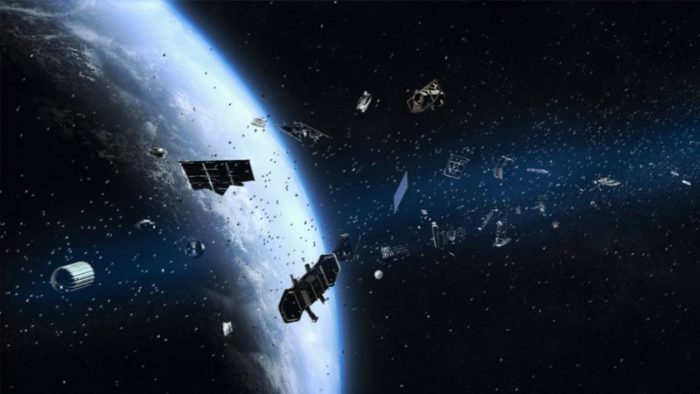 In the movie Gravity (one of my favorite movies, highly recommended), the Russians shoot down one of their own satellites in order to test their anti-satellite system. The debris from this satellite crashes into other satellites causing a cascade of debris, which travels around the Earth eventually crashing into the ISS and a space shuttle in low Earth orbit. I have to point out that the orbital mechanics in the movie are terrible. One big problem is that objects in the same orbit are going the same velocity, by definition. So the debris would not have been flying by so fast. But putting all that aside, the core concept that space debris is a huge problem, and blowing up satellites in orbit is a horrifically bad idea, is valid.
Which is why it is head scratching that 8 years after Gravity came out Russia would blow up one of its own satellites in orbit in order to test its anti-satellite system. Didn’t anyone in Russia see this movie? More seriously, they should know that this is a terrible idea, contributing significantly to the problem of space debris. The US and other space-faring nations are not happy. In a state department release they said:
“The test has so far generated over 1,500 pieces of trackable orbital debris and hundreds of thousands of pieces of smaller orbital debris that now threaten the interests of all nations.”
The astronauts aboard the ISS had to shelter in capsules for safety as a result of the debris. Our goal is to reduce space debris, not significantly increase it. Russia is not the first country to do this. In 2007 China destroyed one of its defunct weather satellites, producing more than 2,000 pieces of trackable debris. After nearly 65 years of putting satellites into orbit, there are now over a million pieces of debris between 1 and 10 cm orbiting the Earth. NASA is tracking 27,000 pieces of larger debris. While space may seem big, low Earth orbit is finite and valuable real estate. Having more than a million pieces of debris flying around is a significant risk. They can damage satellites and threaten crewed missions, such as the ISS. In fact the ISS frequently has to adjust its orbit in order to avoid tracked debris.
Continue Reading »
Nov
08
2021
 Space is an incredibly hostile environment, and we are learning more about the challenges of living and traveling in space the more we study it. Apart from the obvious near vacuum and near absolute zero temperatures, space is full of harmful radiation. We live comfortably beneath a blanket of protective atmosphere and a magnetic shield, but in space we are exposed.
Traveling through space adds another element – not only would radiation be passing through us, the faster our ship is traveling the more stuff we would be plowing through. Space is not empty, it is full of gas and dust. In our own solar system, most of the dust is confined to the plane of the ecliptic, in what’s called the zodiacal cloud. But of course, if we are traveling from one planet to another, that would be the plane we are traveling in. At interplanetary velocities, assuming we want to get to our destination quickly (which we do, to minimize exposure to all that radiation) our craft would be plowing through the zodiacal cloud.
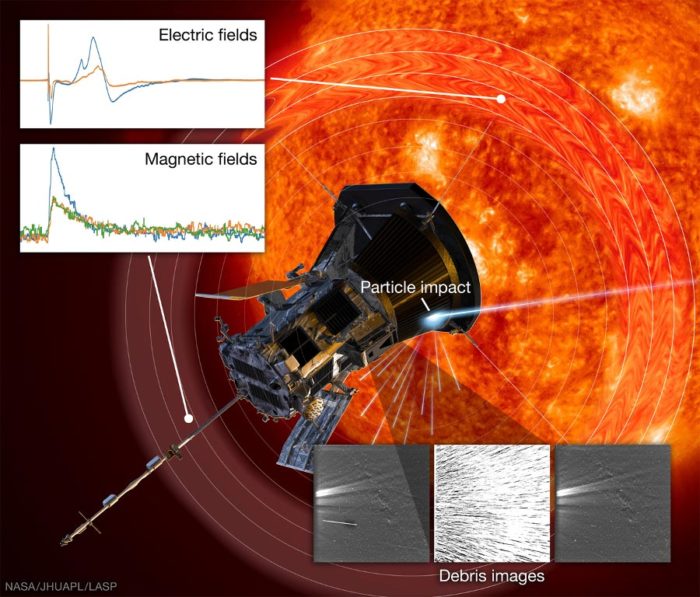
We now have some measurements from The Parker Solar Probe regarding the effects of impacts with dust at high velocity. The Parker probe is the fastest human object at 180 kilometers per second. It is also the closest probe ever to the Sun and the one able to operate at the highest temperature. To accomplish this it must keep its heat shield oriented toward the sun. Meanwhile it is encountering thousands of dust particles, tiny grains between 2 and 20 microns in diameter (less than that standard measure of all things tiny, the width of a human hair). We now have data from the probe about the effect of these impacts. Dust grains are striking the probe at hypervelocity, greater than 10,800 km per hour. When they hit they are instantly heated and vaporized, along with a small portion of the surface of the probe. The resulting cloud of debris is also hot enough to become ionized, turning into a plasma. Smaller grains are entirely vaporized in less than a thousandth of a second. Larger grains also give off a cloud of debris that expands away from the craft.
The authors report that the effect of this is:
Some of the impactors encountered by Parker Solar Probe are relatively large, resulting in plasma plumes dense enough to (i) refract natural plasma waves away from the spacecraft, (ii) produce transient magnetic signatures, (iii) and drive plasma waves during plume expansion. Further, some impacts liberate clouds of macroscopic spacecraft material which can result in electrostatic disturbances near the spacecraft that can linger for up to a minute, which is ~10,000 times longer than the transient plasma plume.
Continue Reading »
Nov
02
2021
NASA and China are both planning on sending people to Mars sometime in the 2030s. This is an ambitious goal and I would be pleasantly surprised if either hit that target. Sometime in the 2040s, and only if plans go fairly well, may be more realistic. There are many challenges to such a mission. NASA’s plan is to work out most of the technology by going back to the Moon first, setting up a semi-permanent presence there, and essentially using it as a stepping stone to Mars.
But Mars presents some of its own challenges, primarily, of course, the distance. Just getting to Mars and back is pushing the limits of how long astronauts can safely stay in space due to radiation exposure. There are no practical plans for shielding from cosmic rays (solar radiation is more manageable) and so NASA’s plan is just to keep missions within the three year safety window.
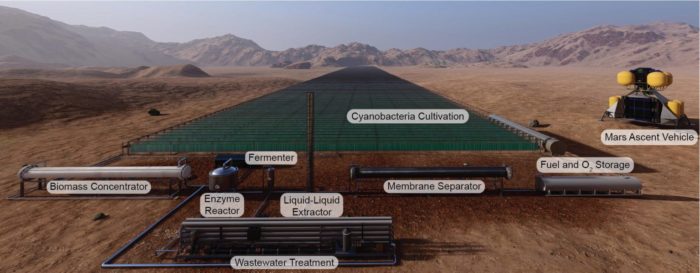
Another challenge Mars does not share with missions to the Moon is sourcing the fuel for a return trip. If you recall the rocket equation, the more fuel you need to get to your destination, the more fuel you need to carry that fuel, and so on. So small changes in weight and the needed change in velocity can lead to huge increases in fuel needs. We can get to the Moon with enough fuel to get back. We cannot get to Mars with enough fuel to get back. A mission to Mars will need to refuel on Mars in order to make the return trip. Robotic missions to Mars are one-way trips, so this has not been an issue before, but we would like to get our astronauts back home.
Continue Reading »
Oct
26
2021
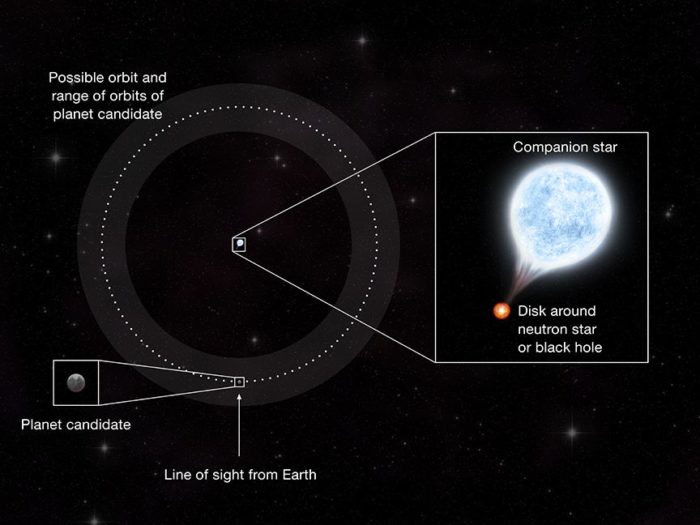 For most of recorded human history we knew of only those planets that were naked-eye visible (Mercury, Venus, Mars, Jupiter and Saturn). We new these dots of light in the sky were different from the other stars because they were not fixed, they wandered about. The invention of the telescope and its use in astronomy allowed us to study the planets and see that they were worlds of their own, while adding Uranus, Neptune and Pluto to the list. Pluto has since been recategorized as a dwarf planet, with four others added to the list, and many more likely.
Of course astronomers suspected that our own solar system was not unique and therefore other stars likely had their own planets. The first observation of a disc of material around another star was in 1984, supporting the idea of planet formation around other stars. The first exoplanets (as planets outside our solar system are called) was discovered in 1992, orbiting a pulsar. In 1995 the first planet orbiting a main sequence star (like our own) was discovered. This confirmed the possibility of planetary systems theoretically capable of supporting organic life. So far more than 4,000 exoplanets have been confirmed.
The most common method of detecting an exoplanet is the transit method. For systems where the plane of planetary orbits aligns with the angle of view from Earth, orbiting planets will pass in front of their parent star. Astronomers measure what they call the “light curve” of the star, and when a planet transits the light curve dips then returns to baseline. From this they can infer the size and distance of the planet. If the orbit is short enough, they can confirm the exoplanet and measure its year by detecting multiple transits.
Continue Reading »
Oct
18
2021
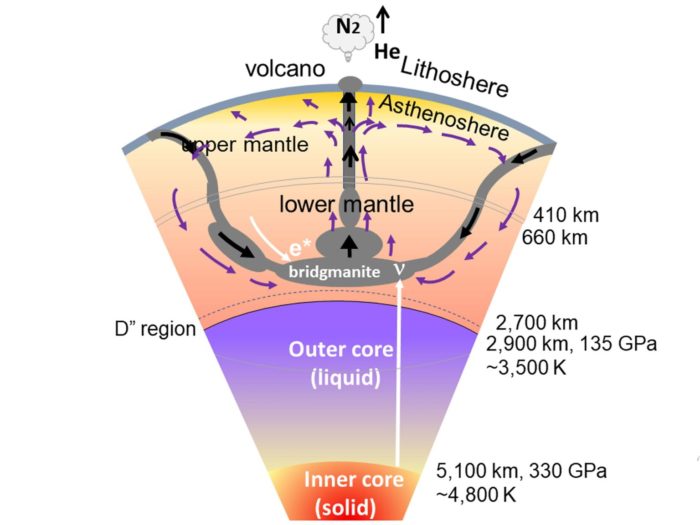 Perhaps the most famous line from Carl Sagan’s Cosmos series is, “We’re made of star stuff”. In this statement Sagan was referring to the fact that most of the elements that make up people (and everything else) were created (through nuclear fusion) inside long dead stars. While this core claims is true, physicists are finding potential supplemental sources of heavy elements, including in some surprising locations.
Elements are defined entirely by their number of protons, with hydrogen being the lightest element at one proton. The isotope of an element is determined by the number of neutrons, which can vary. The number of electrons are determined by the number of protons. An atom with greater or fewer electrons than protons is an ion, because it carries an electric charge. The next lightest element is helium, at two protons, and then lithium, at three protons. Current theories, observations, and models suggest that these three elements were the only ones created in the Big Bang, in a process known as nucleosynthesis.
It actually took about 1 second after the Big Bang for the universe to cool enough for protons and neutrons to exist, and then for the next three minutes or so all the elemental nuclei formed – about 75% hydrogen, 25% helium, and trace lithium (by mass). It then took 380,000 years for the universe to cool enough for these nuclei to capture electrons. Where, then, did the elements heavier than lithium come from? This is where Sagan’s “star stuff” comes in.
Stars are fueled by nuclear fusion in their cores, the process of combining lighter elements into heavier elements. The more massive the star, the more heat and pressure they can generate in their core, and the heavier the elements they can fuse. Fusion of these elements is exothermic, it produces the energy necessary to sustain the fusion. This lasts until enough of the heavier fusion product builds up in the core to effectively stop fusion. Then the star will collapse further, becoming hotter and denser until it can start fusing the heavier element. This process continues until the star is no longer able to fuse the elements in its core because it is simply not massive enough, there is therefore nothing to stop its collapse and it becomes a white dwarf.
Continue Reading »
Oct
15
2021
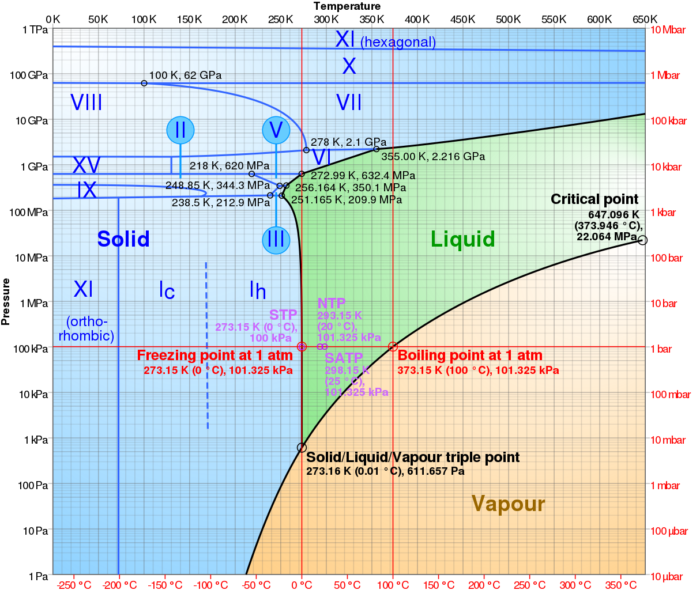 Some planets have planetary magnetic fields, while others don’t. Mercury has a weak magnetic field, while Venus and Mars have no significant magnetic field. This was bad news for Mars (or any critters living on Mars in the past) because the lack of a significant magnetic field allowed the solar wind to slowly strip away most of its atmosphere. Life on Earth enjoys the protection of a strong planetary magnetic field, protecting us from solar radiation.
The Earth’s magnetic field is created by molten iron in the outer core. Rotating electrical charges generate magnetic fields, and iron is a conductive material. This is called the dynamo theory, with the vast momentum of the spinning iron core translating some of its energy into generating a magnetic field. In fact, the molten outer core is rotating a little faster than the rest of the Earth. This phenomenon is also likely the source of Mercury’s weak magnetic field.
The two gas giants have magnetic fields, with Jupiter having the strongest field of any planet (the sun has the strongest magnetic field in the solar system). It’s largest moon, Ganymede, also has a weak magnetic field, making it the only moon in our solar system to have one. Jupiter’s magnetic field is 20,000 times stronger than Earth’s. It’s massive and powerful. The question is – what is generating the magnetic field inside Jupiter? It’s probably not a molten iron core, like on Earth. Based on Jupiter’s mass and other features, astronomers suspect that the magnetic field is generated by liquid hydrogen in its core. Under extreme pressure, even at high temperatures, hydrogen can become a metallic liquid, capable of carrying a charge, and therefore generating a magnetic field. This is likely also the source of Saturn’s magnetic field, although it’s field is slightly weaker than Earth’s.
Continue Reading »
Jul
15
2021
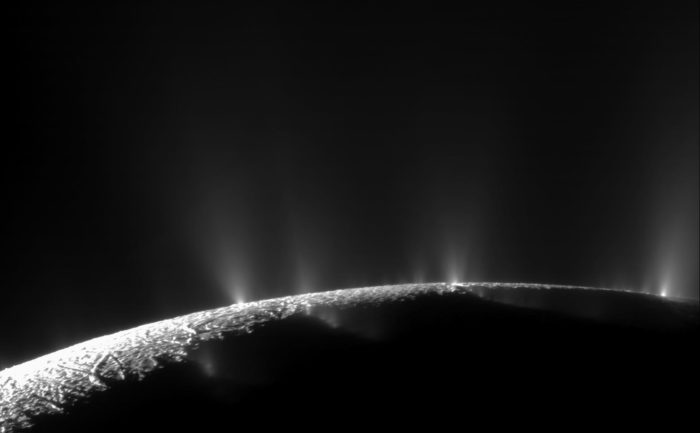 Enceladus is the 6th largest moon of Saturn, about 500 km in diameter. It is completely covered with mostly fresh ice, making it highly reflective (in fact, it is the object in the solar system with the highest albedo, reflecting almost 100% of the light that hits it). Given its small size, astronomers assumed it was likely frozen solid. This small chunk of ice, however, became significantly more interesting in 2005 when Cassini first observed plumes ejecting from its southern pole. This suggested that Enceladus has liquid water beneath that surface crust of ice – and any place with liquid water is a potential candidate location for life.
Over the next 10 years Cassini made many Enceladus flybies, collecting data that is still being analyzed. NASA now estimates that there is an ocean beneath the southern pole of the moon, below 30-40 km of surface ice, and 10 km deep. Further, analysis of the misty plumes finds that it is salty water with a higher level of organic material than predicted.
Now we have a new analysis of Cassini data looking at the methane content of the Enceladus plumes. Methane is of particular interest to exobiologists looking for telltale signs of life. This is for two good reasons. One is that methane is a highly reactive gas, and will not persist for long in an atmosphere or liquid water. So if it is present in significant amounts it must be being constantly replenished. It shares this feature with oxygen, which is why oxygen is also a significant sign of potential life. Further (and again like oxygen) methane is known to be a byproduct of metabolism of certain kinds of critters. On Earth deep sea vents contain methanogenic archaea, bacteria-like single-celled organisms that live by chemosynthesis.
Continue Reading »
Jul
12
2021
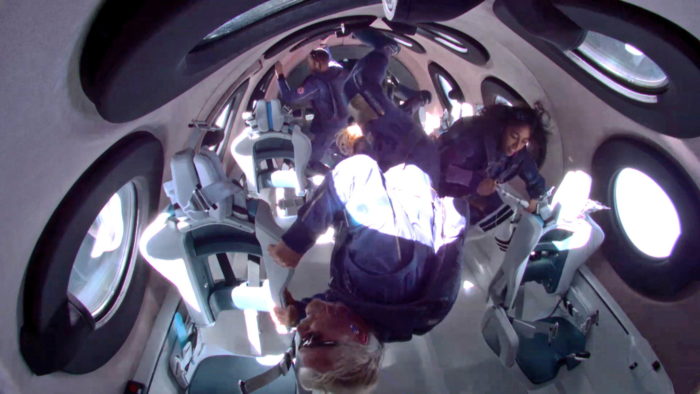 A common theme that emerges when writing about science and technology is that often the most important factor in determining if and how a technology is adapted is not the tech itself. Economics is often the overriding factor. People will tend to take the most efficient and least expensive route to any goal. We don’t usually do things just because we can. This is why it is so important that the market places a fair and proper price on goods and services without significant distortion. Distorted market forces (like allowing companies to externalize real costs of their business) will produce distorted outcomes. (Government regulation is used when efficiency is not the only desired outcome. We also want a clean environment, justice, and protection of minors, for example.)
This is why recent developments have been exciting for space enthusiasts, who have long accepted that the route to a robust space infrastructure requires commercialization of space. Big government programs will pave the way, bootstrapping the technology, but will likely not be able to sustain a space industry. The moment going to space becomes profitable, we will truly enter the space age. And one industry well positioned to be on the leading edge of commercialization is tourism.
All this is why the recent trip to the edge of space by Virgin Galactic is noteworthy. The ship is designed as a space plane, that takes off horizontally like a traditional jet. There is a carrier portion, named White Knight, which carries the actual ship, Spaceship 2, in the middle section (the mission itself was dubbed Unity 22). At 15 km the ships separated. Spaceship 2 then rocketed up to an altitude of 80 km. “Space” is considered to begin at 100 km (at the Kármán line), so this was technically not into space (therefore the oft-cited “edge of space”). Also, this was a suborbital flight, not capable of getting into orbit around the Earth. The maximum altitude of Spaceship 2 is about 90 km, so it is not capable of orbital flight.
Continue Reading »
Jun
17
2021
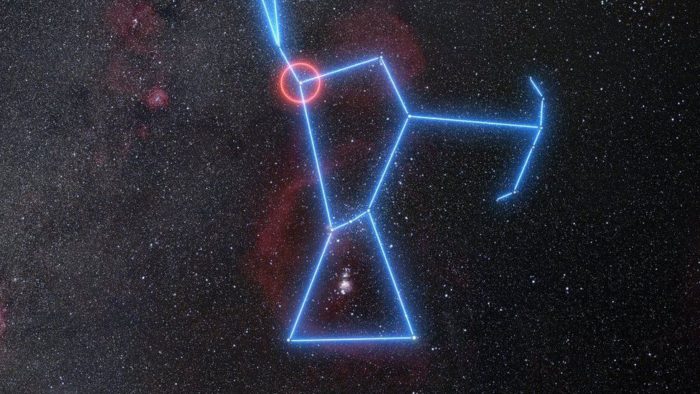 In 2019 and 2020 the red supergiant star Betelgeuse was dimming, and by a significant amount. Betelgeuse is the right shoulder of the constellation Orion and so is one of the easier stars to find. As a red supergiant it is also in the later stages of it’s life. Such start might dim like this when they are getting close to going supernova, and so that possibility was excitedly proposed. Not only would it be incredibly cool to see a supernova that close by – it would be visible during the day for weeks, or light up the night sky – but the opportunity to study a supernova close up (just 724 light years away) like that would be a scientific boon. But astronomers were too cautious to jump to conclusions, and therefore explored other options as well.
It didn’t take long before the evidence started pointing in a different direction. First, the star started to brighten again, which would not happen if it were about to go kablooi. Betelgeuse, it seems, is not in its final stage, ready to collapse and explode, and likely still has tens of thousands of years of life left. The dimming was likely due to a large dust cloud. But that would be unprecedented, and astronomers had not ready explanation for why a dust cloud would suddenly obscure such a large star to such a degree. Now a new study may have solved the mystery, thanks to high resolution observations of the star. They report:
Here we report high-angular-resolution observations showing that the southern hemisphere of Betelgeuse was ten times darker than usual in the visible spectrum during its Great Dimming. Observations and modelling support a scenario in which a dust clump formed recently in the vicinity of the star, owing to a local temperature decrease in a cool patch that appeared on the photosphere.
Continue Reading »