Sep 21 2026
NYT – Don’t Shill for Fake Psychics
 A recent article in the New York Times is, unfortunately, terrible journalism that ends up shilling for a fraudulent and exploitative industry. The author, Sarah Wildman, tells of her previous encounter with a medium through her unnamed cousin. Part of the subject was Wildman’s 14 year-old daughter who had died the year before. This is a massive conflict that compromises her objectivity. No editor should have let this article go through. Wildman herself admits. “Also, I did not really want to debunk it.” She wanted to believe – that makes her a vulnerable target, not an objective journalist.
The essence of the article is that it really doesn’t matter if mediums are genuine or not. They allow people to feel a connection to their deceased loved-ones, and there is research evidence that such a feeling of connection can be emotionally useful. But the research she cites is about people remembering their loved-ones, thinking about them, looking at pictures and videos, etc. It is not about receiving messages from them through mediums. There is some research looking specifically at mediums, but it is all non-controlled and retrospective (this is exploratory preliminary research). What this research also shows is that feeling comfort from a medium is largely dependent on believing that the communication is real – you have to believe that the mediums are genuinely psychic. And that is a huge problem.
I would therefore challenge Wildman’s core conclusion, that mediums are necessarily or uniquely helpful. People can be assisted in their bereavement through other means that do not involve giving money to an industry built on grift and exploitation. There are also methods that do not require people to believe in things that are not real. In fact, people who seek mediums often feel shame for doing so, and hide what they have done for fear of being dismissed. Wildman blames scientists and skeptics for this. She wrote:
“The study of these occurrences and their impact on grief has long been prejudiced by exactly what you’d expect: the surety of scientists and skeptics that all of it — mediums, sensations, signs — might be about as real as a dime-store Ouija board, a 19th-century séance or, worse, a momentary psychotic episode.”
She then completely conflates spontaneous or perhaps induced (by meditation, say) episodes where someone experience extreme grief senses or even experiences the presence of their lost loved one with readings from a medium. These are not the same thing. A therapist dealing with someone in grief does not need to confront the question of whether or not such an experience was “real”. A lot depends on what the person thinks about the experience and how they react. But largely a therapist will investigate how the experience made them feel, and reassure them that such experiences are common, it does not mean they are “crazy”, and regardless of the ultimate metaphysical nature of the experience, it can be comforting. Doctors and therapists are not supposed to challenge the religious beliefs of their clients/patients. That is not our role. But neither do we need to endorse them. Wildman completely misinterprets the therapeutic reality of these situations.
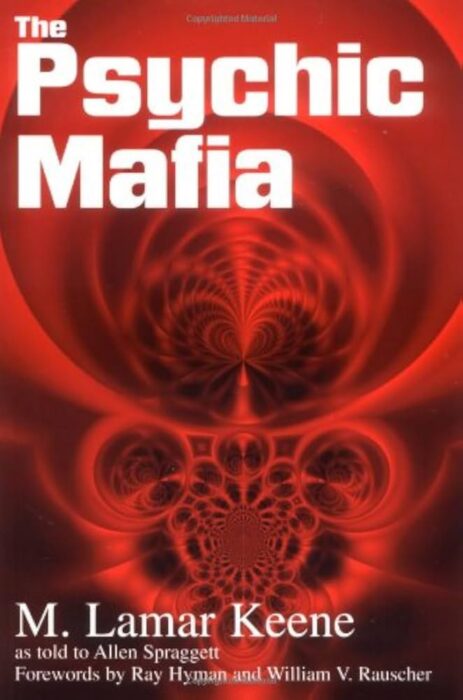
Wildman uses these false analogies that she badly misinterprets to conclude that it does not matter if medium readings “real”. I strongly disagree with her methods and her conclusion. It matters a great deal. Wildman pays scant lip-service to the notion that some mediums are exploiting those in grief, but that should not detract from those acting in good faith. She is talking as if the occasional grifter is the exception rather than the rule, but if she had done a proper investigation she would know the situation is the opposite. Exploitation is core to the industry, it is not incidental. She would have done well to read the book, The Psychic Mafia, or the many recent cases and reviews showing this industry is still very much built on fraud.
Throughout Wildman, while trying to seem “agnostic”, clearly believes this is all real. She refers to episodes as “unexplainable” and finishes with this:
“Just before we wrapped up our call, she asked me: Did Orli have a weird stuffed animal? “Not like a teddy bear,” she added. I laughed. Orli had an anteater stuffed animal, pillow-size, I said. It is still on her bed. Ms. Jackson mentioned her own spiritual signs are armadillos, aardvarks and anteaters. Receiving a sign of an unusual animal like this one, she said, was a wink to us both from Orli. She said I’d receive such a sign, and it would arrive as an image.
I didn’t tell anyone about this conversation.
Some weeks later, one of my old friends from college texted me out of the blue. It happened to be Orli’s birthday. “I just saw this,” he wrote. He attached an image of a belt buckle he said he planned to buy. It had, he said, made him think of us.
On it was a brass armadillo.”
What you will not find in her article is the term “cold reading”, which easily explains all of her alleged “inexplicable” cases. The cold reading technique involves the fake medium throwing out many possible pieces of information, usually vague or items that sound more specific then they are. They then listen for the sitter’s responses, and build on them. It is a mentalism technique, that can produce an incredibly impressive illusion of anomalous information – but it is all a deception. The sitter also does most of the cognitive work, remembering the hits, forgetting the misses, and making the specific connections to vague suggestions.
What Wildman is reporting above (which we should note is a memory which itself is likely not accurate, but that aside) is a good example. The fake psychic asks for a non-teddy bear stuffed animal. That may sound specific, but it isn’t. In my personal experience, 100% of the children in my extended family have such things. She then expands the anteater to include “armadillos, aardvarks and anteaters.” This greatly expands the possibility of a random hit (increases the so-called degrees of freedom). It is now up to Wildman to be on the look-out (even subconsciously) for any potential hit, over any period of time (another degree of freedom). It is not surprising that she found a hit – an armadillo (not an anteater like her child’s stuffed animal).
Wildman describes, without realizing it, the process of confirmation bias – filtering the countless details of everyday life to find potential coincidences that can then be imbued with meaning.
There is also no mention of “hot reading” in the article, cheating by accessing information about a sitter beforehand. Wildman does try to dismiss this possibility by stating that her cousin does not share a last name with her and had not posted about her or her daughter. But this is also incredibly naive – it does not take much internet savvy to find connections between a person and their extended network of people. AI apps make this a lot easier. We are given no information to be able to assess this possibility (or how much cold reading was done, btw).
I understand why Wildman would be motivated to do all this. She lost a child – an unimaginable trauma. I do not fault anyone for engaging in some soft thinking to deal with the pain. I also make it a point not to directly challenge people on their personal emotional tragedies. But she posted this in the NYTs, promoting an industry based on exploitation of vulnerable people, and selling an anti-intellectual world view through cheap magic-tricks. The editors at the NYT should never have let this happen, but I get that this is little more than wishful thinking on my part. Emotional fluff like this is catnip to news outlets. It has just enough of a patina of respectability for plausible deniability. But it is a massive journalism fail.