Nov 16 2026
The Coming Power Transmission Crisis
 This past week saw the stranding of many US air travelers and the cancellation of thousands of flights. This was due to an instability in the air-traffic control system that caused the FAA to ground all flights. The system did not technically “go down”, they are saying, but had become too unstable, a problem that had to be addressed. The cause of the problem, as far as the experts can say so far, is that a new router installed at one airport began flooding the system with data, causing a cascade of failure. But the real cause is an incredibly ancient air traffic control infrastructure, resulting from decades of underinvestment. The eye-popping fact that brings this home is – the FAA is still using floppy discs to maintain their legacy systems from the 1980s in over 400 locations. They plan to phase them out by 2028. Wow.
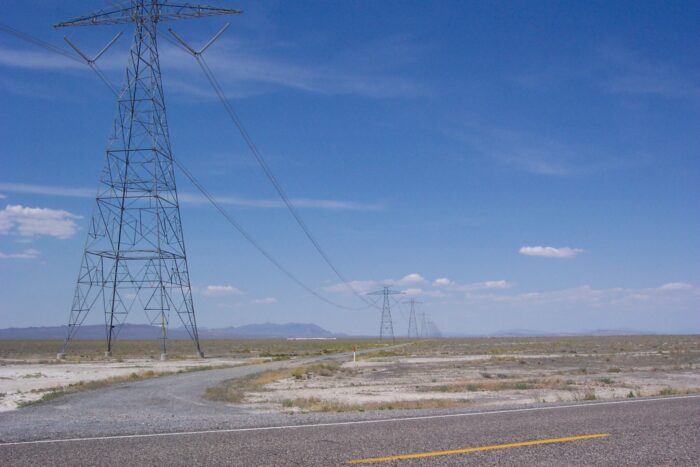
The US clearly has an infrastructure problem, which I think is a manifestation of dysfunction in our government. We tend to underinvest in infrastructure, which then slowly gets crusty over time. We then pick our heads up when disaster strikes, and everyone wrings their hands about infrastructure, and maybe something gets done, but usually not nearly enough. This has happened with water pipes, and bridges, and freight trains, and now air traffic control. Well, here is another big infrastructure problem looming – our transmission lines are out of date, and we are building new lines at about 10% the rate that we need to in order to keep up with growing electricity demand.
In this case the cause is clearly governmental dysfunction. A recent paper published in Science outlines the problem and steps we can take to fix it. The primary limiting factor here is jurisdiction. The federalist system in the US has its advantages, but also its trade-offs. Building long-distance infrastructure that by necessity spans across multiple jurisdictions is an extreme challenge. It is one thing to build a bridge in one city of one county of one state. It is another to build a railroad or a transmission line that cuts across many jurisdictions at many levels (state and local), with each one having veto power over the entire project. This can not only outright kill projects, even in the best case scenario it causes delays. With building large infrastructure projects, time is money. Delays alone can turn a profitable project into a loser, or can cause cost overruns that make politicians cancel the project, or scale it down. This also allows politicians to effectively kill a project they don’t like by simply tying it up in regulatory red tape, and they can justify it by saying they are just protecting consumers, or the environment, or whatever.
This is a case for the federal government just assuming sole jurisdiction over essential projects that benefit the whole country, or a large region covering many states. There is already a legal mechanism for this, called eminent domain. All levels of government have eminent domain over private property – they can force private citizens to sell their property (at fair market value) if it is necessary for infrastructure. Also, the federal government can claim eminent domain over state and local land for the same reason. And, because of federal supremacy, they can override state and local zoning and other laws.
This is what the paper recommends, therefore, as one of their critical fixes. “The Federal Energy Regulatory Commission (FERC) and the Department of Energy (DOE) should exercise existing statutory powers to designate national-interest transmission corridors and overcome state-level siting impasses.” They can just cut a path through state and local red tape, vastly simplifying the process of installing new transmission lines. To also help make this happen: “Establish a Presidential-Congressional Transmission Commission: To break decades of regulatory gridlock, Congress and the White House should form a joint commission modeled on successful bipartisan task forces of the past that puts all key players together to hammer necessary tradeoffs.” Makes sense.
Their other recommendation has to do with High Voltage DC (HVDC) power lines. This is their main technical recommendation, and it is an interesting story unto itself. At the dawn of the age of electricity there was a famous competition between AC and DC current. AC won out because it was easier to use transformers to increase the voltage for long distance transmission and then step down the voltage again for local use. DC power could not be transmitted over sufficiently long distances. But with modern technology, this is no longer the case. In fact, over very long distances DC transmission is more energy and cost efficient.
AC (alternating current) involves the electrons in the wire changing direction, which is US systems happens 120 times per second, or completing 60 cycles of back and forth per second. The electrons, therefore, do not travel down the line but simply move rapidly back and forth. The energy is transmitted via the magnetic fields that are generated by this movement, which are guided by the wires down the line (this is an over simplifcation, but basically how it works). In direct current (DC), the electrons simply flow in one direction. The US has three main AC grids (in the lower 48), Eastern, Western, and Texas. Alaska has its own main grid and several smaller grids in rural areas.
HVDC power lines experience less power loss over distance, about half of AC – 3.5% vs 6.7%. But, they experience 1-2% power loss when converting AC power from power plants to DC for transmission, then back again to AC for local use. Therefore over short distances HVDC is less efficient and cost effective than AC transmission. The longer distance the transmission, the greater their efficiency advantage over AC transmission. When the line is crossed to DC advantage depends on the type of line – overhead (500-800 km) vs underground (50-100 km) vs submarine cable (50-100 km).
There are two other advantages of HVDC to consider. The three AC grids in the US are asynchronous, which means their alternating current are not in synchrony with each other. If you are going to interconnect those grids, therefore, you need to use equipment that synchronizes the waveforms. However, you can directly connect them through HVDC without the need for synchronization. Also, it is easier to feed wind and solar power into an HVDC line. Solar power is already DC, so you won’t have to convert it to AC for transmission. Wind power usually generates AC power, but it is variable and not synchronous to the grid. Converting it to DC for HDVC transmission could therefore be an advantage.
Given all this, what the authors of the paper recommend is that we follow what some other developed nations have already done and build an HVDC long distance transmission backbone. This should also be buried for maximal safety, aesthetics, and transmission efficiency and reduced maintenance and vulnerability to weather. They point out that we could follow existing interstate highways, in which the federal government already has jurisdiction. This HVDC backbone would allow for the transmission of a lot of electrical energy, would allow for the integration of distributed sources of power, and would allow for the interconnection of the three national grids. This would allow for greater power sharing, which is great for grid stability, and can compensate for some of the intermittency problem of wind and solar.
This by itself is not enough. We also need to upgrade and expand the local transmission through reconductoring, which itself can triple capacity, and expansion. This entire project, to get us where we need to be by 2050 to meet growing electricity demands, will cost hundred of billions of dollars. That sounds like a lot, because it is, but we have already spent about $50 billion on the Iran war, which will likely cost 2-3 billion per month (this is direct costs only, not counting the economic impact). All things considered, I think most US citizens would probably rather have had that money spent on our crumbling infrastructure (take your pick). Also – infrastructure should better be viewed as an investment, because it usually involves long term economic gain. If we spend $500 billion on transmission upgrades, the DOE estimates a direct return on investment of 1.6 0 1.8 times, by 2050. But the benefits would continue long after that. This also does not capture lots of downstream economic advantages. Further still, most of the money invested on infrastructure is spent in the US and direclty bolsters the economy.
When I am in an optimistic mood it does feel as if, perhaps, we are having a bit of a political awakening in the US. Specifically, people seem frustrated by politicians focusing on partisan sniping, culture war issues, and other nonsense, made worse by rampant corruption. Rather, we need our government to focus on the basics of governing, and top of the list is infrastructure. Perhaps we are at a political moment where we can get some bipartisan action on critical infrastructure. It will take some sustained attention by the public (which is perhaps the trickiest part). We cannot just move on from the recent FAA disaster – this is a warning sign, one of many. We have the resources to have among the best infrastructure in the world, and yet we have among the worst for a developed nation. We should all be collectively outraged, and not just when we are waiting in an airport because of a cancelled flight. The public needs to make this a politician priority.