Apr 21 2020
The Strange Interstellar Comet
 Is our solar system similar to other solar systems? That’s actually a complex question with many layers. We know that there are different types of stars, varying mainly on their mass and age. We have a yellow sun, but a system around a red, orange, or blue sun is likely to be very different. We also know that at different relative locations in the galaxy the composition of the gas clouds out of which stellar systems form can be very different. One specific difference is known as “metallicity” – which refers to the amount of elements heavier than hydrogen or helium. Older stars were formed before a lot of heavier elements were made, so they have lower mellacity. This feature also varies within our galaxy, with higher metallicity closer to the center. And different galaxies have different mettalicity.
But what should we expect from a stellar system with a yellow sun at a similar location in our own galaxy? If the known variables are the same, should we expect the compositions of elements to also be roughly the same? This gets to the deeper scientific question of how typical our system is. Can we assume that the rest of the universe is similar to our tiny little corner of it? To counteract the hubris of humanity in thinking that we are somehow special, scientists try to follow the principle to assume that we are ordinary. But is that assumption always correct?
How can we even answer this question for stars that are light-years away? The primary method that we use is spectral analysis (spectroscopy) – an awesomely powerful tool that allows us to identify specific elements and chemicals simply from analyzing the light we see from it. You can do a spectral analysis in a lab on a sample, or you can do it with telescopes on distant objects. The method is actually fairly simply. You use a prism to spread out the light into its color spectrum (like a rainbow). You can then analyze the emission lines or absorption lines which are like a signature.
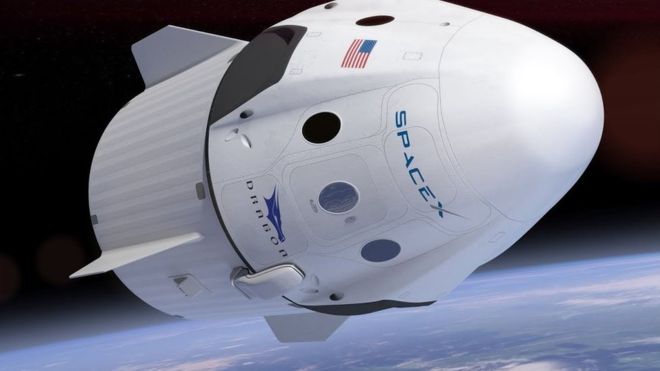 Amid the current crisis there is some good news and significant progress – America is returning to crewed spaceflight after a 9 year gap. Scheduled for May 27th is the
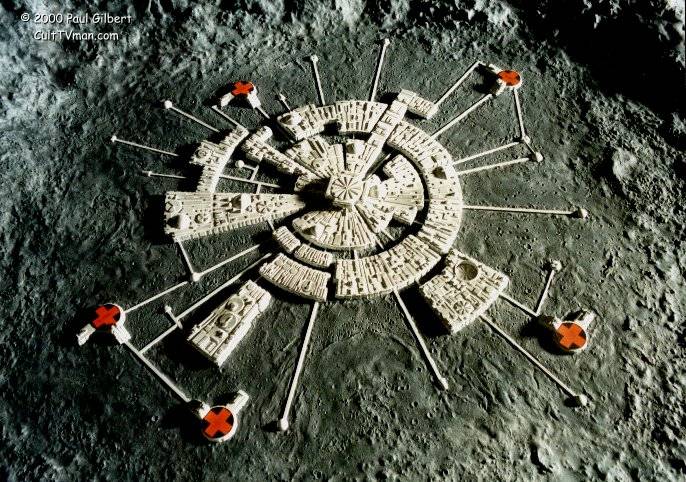 This is an interesting idea that will probably not be actually implemented (although not impossible) but does raise some important points.
 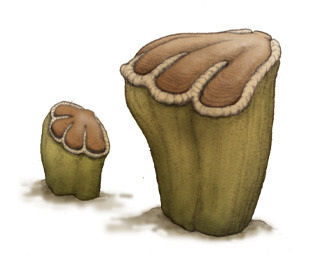 What does an extinct mollusk have to do with the Moon? This is one of those amazing science stories that ties together multiple disciplines and lines of evidence into one elegant narrative. In this case a detailed analysis of a 70 million year old mollusk shell has given scientists a critical piece of information that will help them model the Earth-Moon system.
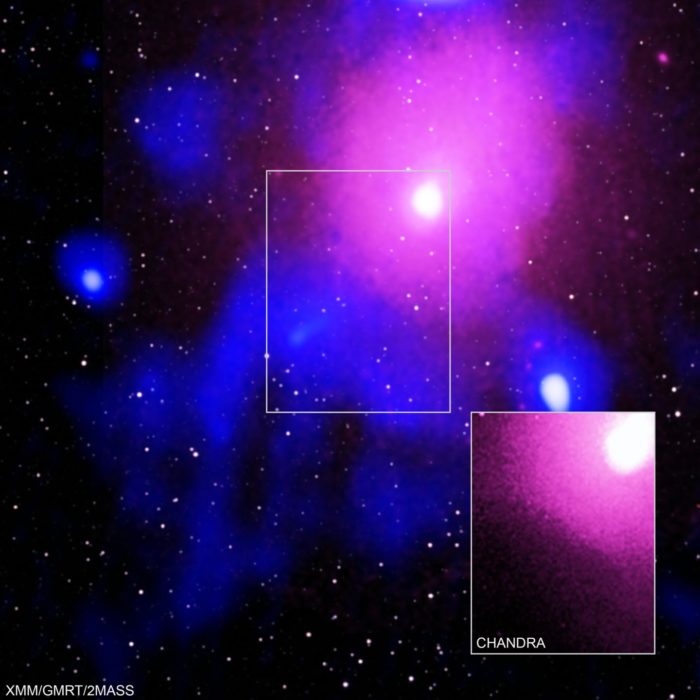 We can quibble about whether or not the Big Bang should be considered an explosion, or whether it happened “in the universe.” It was the expansion of spacetime that is the universe. In any case, astronomers have detected what they think is
 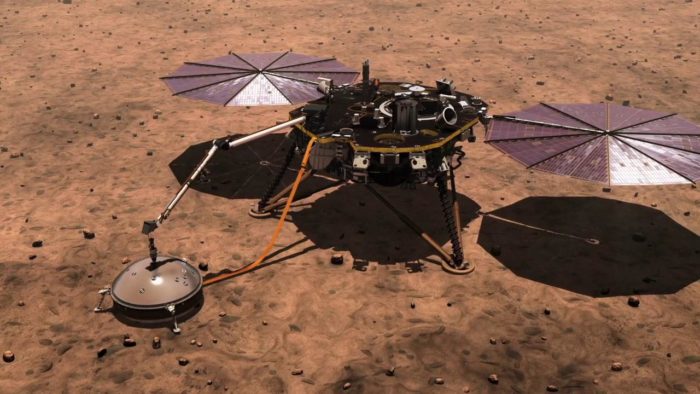 The Mars InSight lander is yielding data, and the first slew of papers reporting early results. The two big stories so far is that Mars has more seismic and magnetic activity than previously thought.
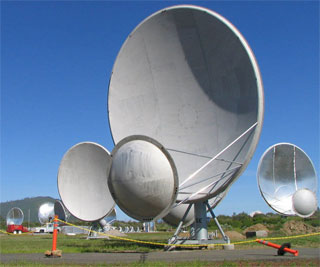 This weekend I was at the AAAS (American Association for the Advancement of Science) meeting in Seattle talking about science communication. The meeting often creates a pulse of science-news reporting, base on all the presentations and lectures there. One talk I didn’t get to see was
 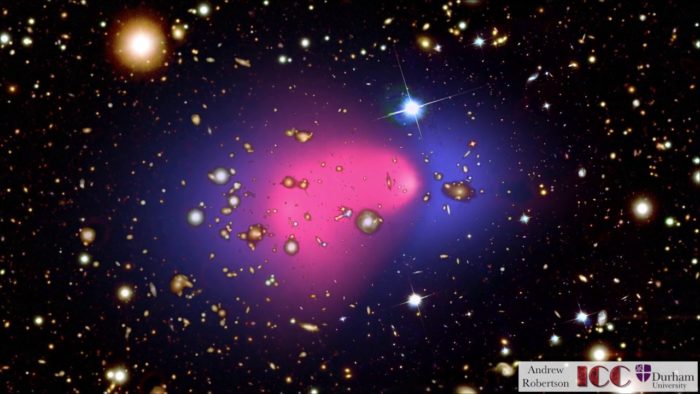 There is more mass in the universe, stuff generating gravity, than we can see. This observation lead to the conclusion that there must be “dark matter” in the universe – stuff out there that we cannot see but is exerting its gravitational effect.
 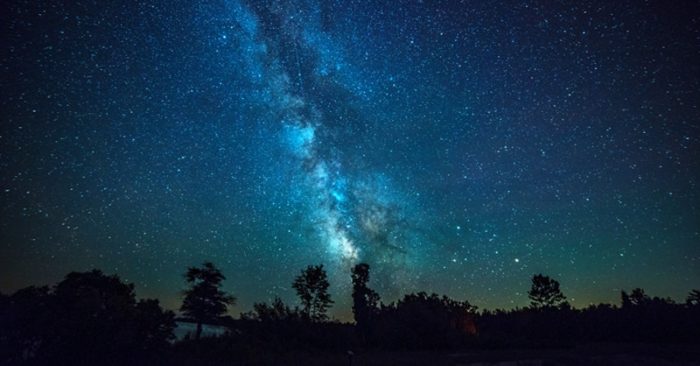 When I was recently in New Zealand and Australia, I tried very hard to get a good look at the Southern sky. It was a lot harder than I thought it would be. Over a period of two weeks I had really one opportunity, and I had to drive 40 minutes out of town to do it. It really drove home for me how bad light pollution has become. Depending on where you live you may spend most of your life unable to see the night sky. A true
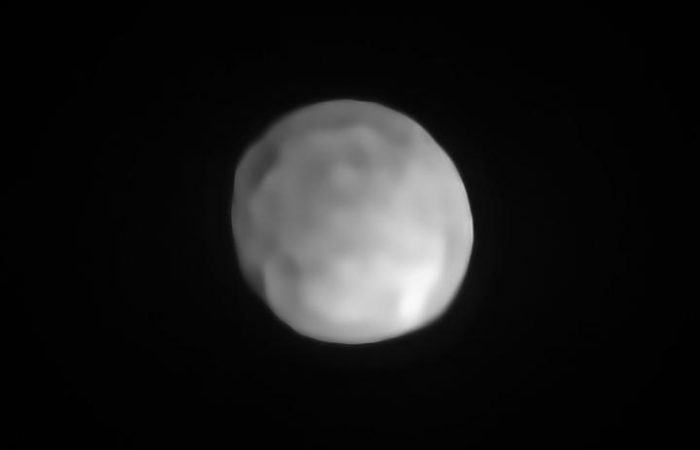 Hygiea is the fourth largest asteroid in the asteroid belt, after Ceres, Vesta and Pallas. Recent observations of Hygiea are now challenging the distinction between an asteroid and a dwarf planet.