Nov 30 2021
Self-Replicating Xenobots
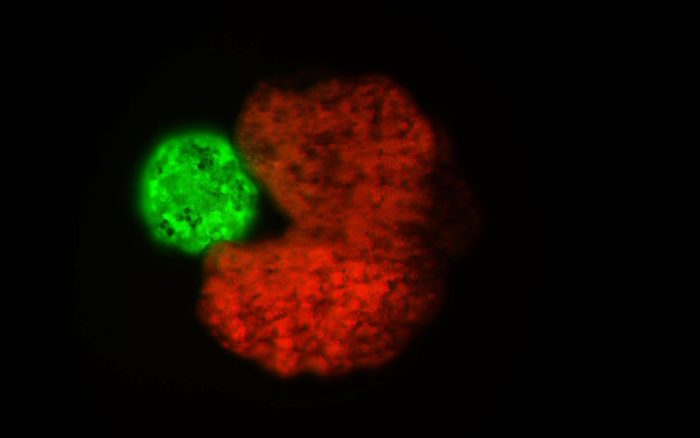 Placing “self-replicating” and any kind of “bots” in the same sentence immediately raises red flags, conjuring the image of reducing the surface of the world to gray goo. But that is not a concern here, for reasons that will become clear. There is a lot to unpack here, so let’s start with what xenobots are. They are biological machines, little “robots” assembled from living cells. In this case the source cells are embryonic pluripotent stem cells taken from the frog species Xenopus laevis. Researchers at the Allen Discovery Center at Tufts University have been experimenting with assembling these cells into functional biological machines, and have now added self-replication to their list of abilities.
Further, these xenobots replicate in a unique way, by what is known as kinematic self-replication. This is the first instance of this type of replication at the cell or organism level. The researchers point out that life has many ways of replicating itself: “fission, budding, fragmentation, spore formation, vegetative propagation, parthenogenesis, sexual reproduction, hermaphroditism, and viral propagation.” However, all these forms of self-replication have one thing in common – they happen through growth within or on the organism itself. By contrast, kinematic self-replication occurs entirely outside the organism itself, through the assemblage of external source material.
This process has been known at the molecular level, where molecules (like proteins) can guide the assemblage of identical molecules using external resources. However, this process is entirely unknown at the cellular level or above.
In the case of xenobots, the researchers placed them in an environment with lots of individual stem cells. The xenobots spontaneously gathered these stem cells into copies of themselves. However, these copies were not able to replicate themselves, so the process ended after one or a very limited number of generations. In a new study, the researchers set out to design an optimal xenobot that could sustain many generations of self-replication. They did not do this the old-fashioned way, through extensive trial and error. Rather, they used an AI simulation, which calculated for literally months, testing billions of possible configurations. It came up with a simple shape – a sphere with a mouth, looking incredibly like a Pac-Man. These xenobots are comprised of about 3,000 cells. The researchers assembled their xenobot Pac-Men and when placed in an environment with available stem cells they spontaneously herded them into spheres and then into copies of themselves. These copies were also able to make more copies of themselves, and so-on for many generations.
 There are different ways of looking at history. The traditional way, the one most of us were likely taught in school, is mostly as a sequence of events focusing on the state level – world leaders, their political battles, and their wars with each other. This focus, however, can be shifted in many ways. It can be shifted horizontally to focus on different aspects of history, such as cultural or scientific. It can also zoom in or out to different levels of detail. I find especially fascinating those takes on history that zoom all the way out, take the biggest perspective possible and look for general trends.
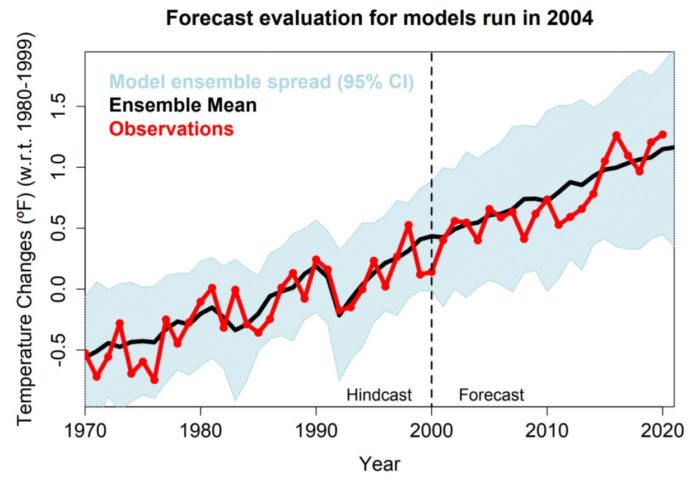 Syukuro Manabe, Klaus Hasselmann, and Giorgio Parisi share
 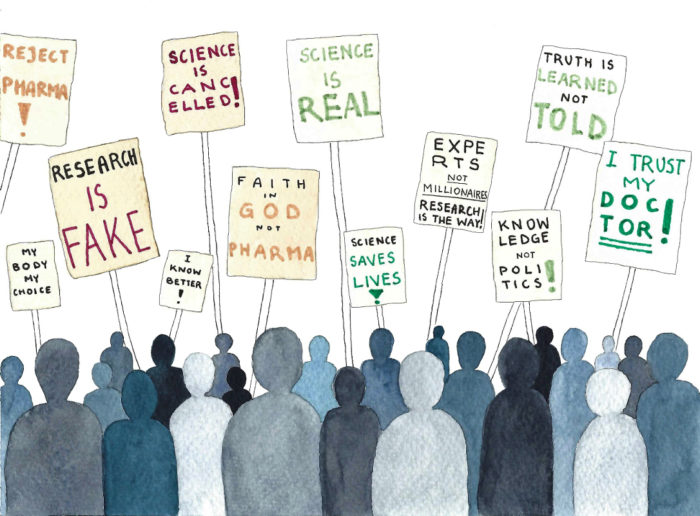 The ultimate goal of scientific skepticism is to skillfully use a process that has the maximal probability of accepting claims that are actually true and rejecting those that are false, while suspending judgment when an answer is not available. This is an open-ended process and is never complete, although some conclusions are so solid that questioning them further requires an extremely high bar of evidence. There are many components to scientific skepticism, broadly contained within scientific literacy, critical thinking skills, and media savvy. Traditional science communication focuses on scientific literacy (the so-called knowledge deficit model), but in the last few decades there has been copious research showing that this approach is not only not sufficient when dealing with many false beliefs, it may even be counterproductive.
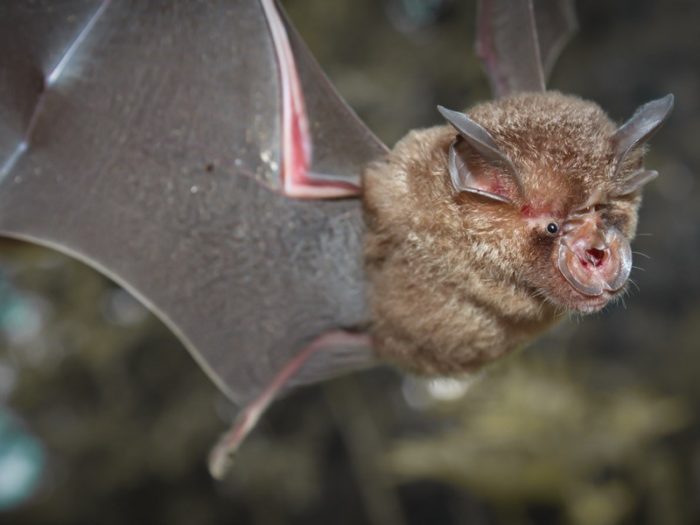 We are approaching two years into this pandemic and we still haven’t proved the origins of the SARS-CoV-2 virus. However, this is not unusual at all, and in itself is not suspicious. It took 13 years to identify the origin of SARS, and we have never identified the origins of some Ebola outbreaks. But what do we know about the origins of SARS-CoV-2? The question has become highly political, which is unfortunate. Let’s review what the actual evidence has to say.
 In the early days of my skeptical activism I and my colleagues often took on some of the classics of pseudoscience, such as UFOs, dowsing, astrology, and ghost-hunting. As a New England-based group we also focused on local pseudoscience, which means ghosts and ghost-hunting. By coincidence we had perhaps the most famous ghost hunters in the world living just a couple towns over from us, Ed and Lorraine Warren. They were made famous by the Amityville Horror case, and more recently by The Conjuring series of movies.
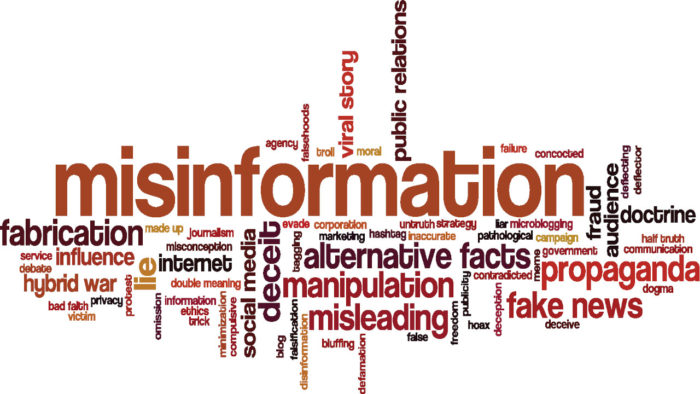 Misinformation is a booming industry, and that is often exactly what it is. Sometimes it may emerge organically, out of sincere error or misunderstanding. But increasingly misinformation is being weaponized to achieve specific goals. That goal might be to protect the interests of a corporation or industry, to promote a candidate or particular policy position, to engage in a broader culture-war, promote an ideology, or just sell a brand or product. Recently it has become more apparent to me that often there is a common strategy to weaponizing misinformation. It’s likely always been there, but is getting more blatant.
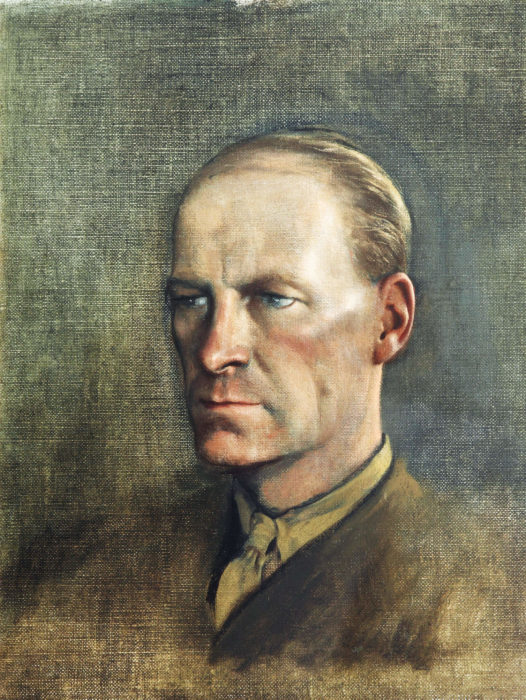 In science it is not only OK to be wrong, it is an unavoidable and perpetual state – depending, of course, on how you define “wrong”. We lack a complete understanding of the universe, and all of our theories are at best approximations of reality. From this perspective no theory is completely correct, and therefore to some extent is at least somewhat wrong. The idea of progress in science it to become less wrong, knowing that perfect knowledge is not technically possible.
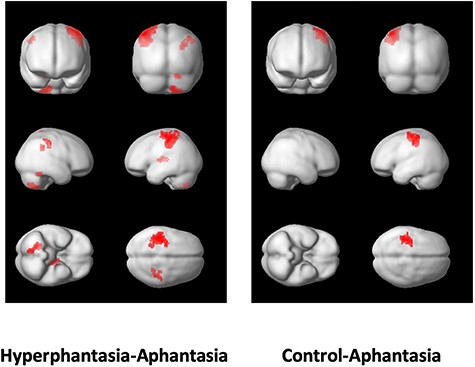 There is definitely something to be said for the neurodiversity perspective – when it comes to brain function there is a wide range of what can be considered healthy. Not all differences should be looked at through the lens of pathology or dysfunction. Some brains may be more typical than others, but that does not mean objectively “normal”, better, or healthier. Like any valid concept it can be taken too far. There are conditions that can reasonably considered to be brain disorders causing objective dysfunction. But the scope of healthy variation is likely far broader than many people assume.