Oct 13 2026
More on Superhabitable Worlds
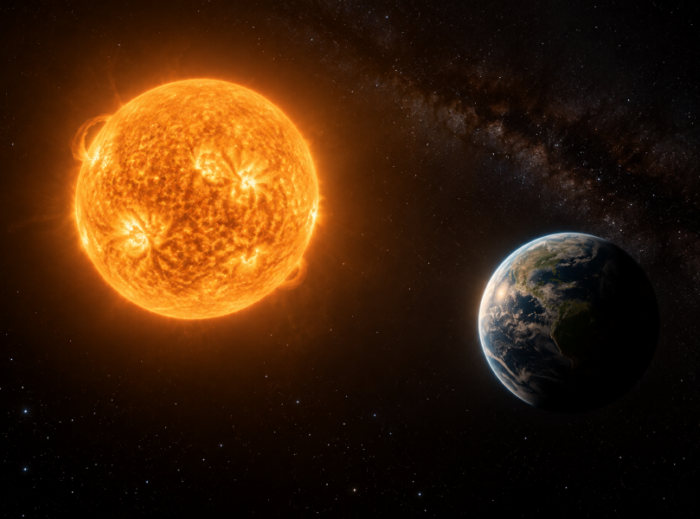 It is an interesting time in human history for our understanding of life in the universe. We have the technology and basic knowledge to search for the signs of life on other planets, but we have not yet detected any. Confirmation of the high probability of life anywhere other than Earth would be an incredible scientific discovery, and it’s exciting to think it may happen in our lifetime. We now have multiple high-tech telescopes on and near Earth, so we are more capable than we have ever been before. But where to look?
We only have one example of life in the universe and so it makes sense to use that as a template. For this reason astronomers have been focusing on Earth-like planets around sun-like stars orbiting in the habitable zone. The Earth is certainly habitable, as evidenced by the fact that it is teeming with life. But is it optimally habitable? Is looking for Earth twins the best place to look for alien life. Astrobiologists are asking this question, and developing a profile for so-called superhabitable worlds – those with optimal features for not just hosting life, but complex and potentially intelligent life.
I have mentioned in previous posts that orange stars (K-dwarfs) are likely the sweet spot for life. As stars get smaller and redder, they also live longer. We have a yellow star (by classification, even though the light it produces is white), which has a stable period of about 5 billion years. If life on Earth is typical, then this is just long enough to evolve intelligent life. Red dwarfs (M-dwarfs) live much longer, 100 billion to trillions of years. There are also a lot of them in the universe. But the light they produce is not ideal for photosynthesis, and they are very unstable, especially in their early lives. Also, the habitable zone is close enough to result in tidal locking. There is still the possibility of life on some of these worlds, but this is certainly not the ideal place to look.
Orange stars or K-dwarfs seem to be ideal. They can survive for tens of billions of years, have a good habitable zone that would not necessarily result in tidal locking, and their light seems to work just fine for photosynthesis. There are also more of them out there than yellow stars.
What about the planet itself? It has to be large enough that its gravity can hold onto volatiles. It should have a magnetic field to protect its atmosphere from solar wind. Too big, however, and you start to get into sub-Neptune territory, where the atmosphere is too thick and includes hydrogen and helium. Some astronomers argue that the ideal size would be a little more massive than Earth. Increased mass would have several effects. It would mean the planet would take longer to cool, which means more time with geological activity and more time with a molten core capable of creating a planet-wide magnetic field.
It would also mean that the increased gravity would smooth out the surface more – with shorter mountains and shallowing trenches in the sea. This would create a larger portion of the planet that would have shallow seas, which are ideal locations for life.
The picture of a superhabitable planet is starting to emerge – a super-Earth orbiting a K-dwarf orange star in its habitable zone. Of course, this only means it is a candidate for life. Venus also sits in our own sun’s habitable zone, as is about the same size as Earth, but it’s atmosphere is too thick and too toxic for life. Astronomers can find candidate superhabitable planets, but then we would need to examine its atmosphere to see if it is actually good for life and further may contain life. We do have some top candidates, however.
KOI 5715.01: Located roughly 3,000 light-years away, this is often considered a top candidate. It orbits an orange dwarf star, is roughly 5.5 billion years old (older than our Sun), and could have a ideal surface temperature if it has enough greenhouse gases to trap heat.
Kepler-1126b (and Kepler-69c): These are confirmed exoplanets located over 2,700 light-years away. They orbit older, stable stars and sit comfortably within their systems’ habitable zones.
KOI 5554.01: Another Kepler object of interest (700 light years away) that stands out to researchers because its estimated age and stellar environment match the theoretical profile for a superhabitable world.
There is one big problem with all of these candidates – they are too far away to effectively examine their atmospheres with current technology, which is only effective out to about 150 light years. There are about 4,500 K-dwarfs within that distance. They have all been broadly surveyed for exoplanets but only about half deeply scrutinized. There are about 450 confirmed exoplanets around these stars. Of those about 300 are Earth-like or superEarths, and of those about 10% are in the habitable zone – about 30 worlds. These are the highest priority exoplanets for atmospheric examination.
Also – the smaller Earth-like planets are not well surveyed as the techniques used tend to favor larger worlds. The bottom line is that there is the potential for many more exoplanets to be discovered around nearby K-dwarfs, and some of those may be superhabitable worlds. Those are the most likely candidate on which to find high probability biosignatures. Another caveat however – the further a planet is from its parent star, the fainter the light filtering through its atmosphere. So, astronomers are priorities rocky worlds around M-dwarfs because it is easier to examine their atmosphere, even though they are not in the sweetest spot for life. Hopefully, as techniques and the technology evolve, we will move on to the K-dwarf superhabitable candidates.
This is all happening now. As I said – exciting times. We would hear any day about biosignatures in the atmospheres of candidate exoplanets. But – I will get more excited when we move on from the M-dwarf worlds to examining the far better candidates around K-dwarfs. This will likely happen around 2030 with the next generation of telescopes. So stay tuned.