Oct 12 2026
Finally – A Carbon Nanotube Application
 The carbon nanofiber revolution has been slower than hoped. This is one of the drawbacks of being a technophile and following tech news – you hear about exciting technology years before it is realized, and many of the tantalizing breakthroughs never come to realization. So you have to constantly dampen your enthusiasm with caution and skepticism.
This has been the case with carbon nanofibers. The tech is exciting, based upon a two-dimensional material, carbon, aligned in a grid pattern (like chicken wire) just one molecule thick. These can them be made into sheets, rolled into tubes, or woven into fibers. We have had applications for this material for years, but they have been limited to carbon nanofiber “soot” – a collection of short strands that are added to other material to make it stronger or more conductive.
What we have not had is macroscopic organized carbon nanofibers – long strands of carbon cables or sheets of material. These can be made only in tiny amounts in the laboratory setting at great expense. This fits in with many exciting new potential technologies, they work well in the lab but the tech needs to be scaled up. This is often the deal-killer (and a detail often not mentioned in popular news about the technology). Tech news veterans, however, know that this is often the critical question – can it be scaled? Rather, how well can it be scaled, how does that match the demands of specific applications, and at what cost? Unless there are good answers to these questions you don’t have a disruptive technology, you have a lab curiosity.
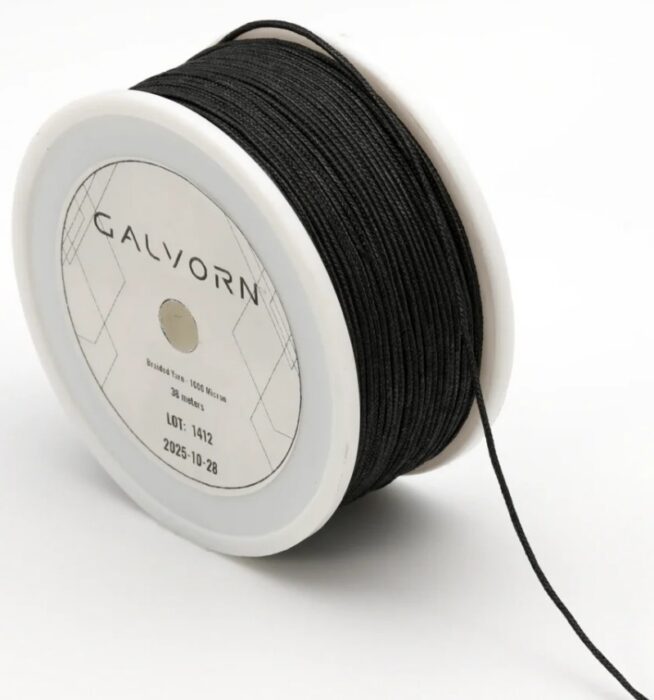
Well, as you likely have guessed, I am writing about this because we likely finally have a macroscopic organized nanotube application. This is by a private company, DexMat, which is a spinoff of the Rice University lab that developed the technology. Their product is Galvorn, a carbon nanotube (CNT) fiber. Their core innovation was developing a wet-solution fiber-spinning process similar to that used in making Kevlar to produce CNT fiber at scale. They have a pilot-scale commercial factory which has increased their productivity 3,000 times and reduced costs 99.5% – the classic economy of scale. Now they are planning on expanding to full-scale commercial production for various applications.
Reading the promotional material feels like just that – it’s clear you are getting a best-case sanitized version of reality. So let’s dig in to the strengths and weaknesses of this new material. They claim the material is 15x stronger than steel and half the weight of aluminum. This is true – but here is a good rule of thumb. Whenever a company says their wonder material is “stronger than steel” it is almost guaranteed they are talking about specific strength, which is the strength to weight ratio. It usually not actually stronger than steel in absolute strength, but it is really strong and much lighter than steel, and that is the case here. But specific strength is what often matters, depending on your application. If light weight is critical, than specific strength is what you want.
They also claim it has the conductivity of copper. This is true but misleading – it does by weight, but not by volume. It has only one-sixth the conductivity of copper by volume, meaning you would need a cable six times the cross-sectional area to carry as much electricity as a copper wire. So again, the specific application is critical. If space is a premium, this might not work. They further claim Galvorn has a good thermal expansion profile, and this is true. That means it will not sag very much when it heats up. Again, this property may or may not matter depending on your application, but this is generally a good thing. Thermal expansion of often a huge problem. Sagging power lines specifically can be a issue.
Finally they claim it is 1,000 times as flexible as copper wire, and this also appears to be true. This makes sense – copper is a metal, this is a carbon fiber, more like Kevlar than copper.
I also discovered something not apparent on their website – if the electrical conductivity is a needed property for your specific application, the cable has a temperature limitation of 100 C. This is because in order to make it a good conductor they had to dope it with other materials, and these other material will bake off at 100 C. This will permanently reduce the conductivity of the wire.
What are some applications of this new material, and will it change the world? There are three areas where it will likely be most useful. The first is aerospace, because this is where weight matters the most and the high specific strength of the material is key. Keep in mind, this material really has two complementary uses – as a structural material, and as a conductive material. It can be used for either, or both together. In aerospace, use as a light-weight structural material could be highly useful by itself. Shave a few pounds off a drone, and you have increased its range. But because it is also conductive, you can potentially reduce the weight of some of the electronics.
That is also where the second potential applications is – non-aerospace electronics, like electrical vehicles or anything that currently uses copper wiring. Here the strength, light weight, and flexibility will all be critical.
Finally, there is the grid or using this for reconductoring (upgrading the grid with more advanced wires). Ironically, for this application the Galvorn will serve only as structural support, not as an electrical conductor. Advanced wires currently use a steel core (or steel carbon hybrid core) for structural strength, surrounded by aluminum wire that conducts the electricity. Galvorn would not work as the conductive part for two reasons – it has a low conduction by volume, so you would need thick cables, but also it loses its conductivity if it heats up to 100 C or more, which is common in power lines. Not only is this common – how much a wire can heat up is part of the limiting factor on how much electricity you can move through it. Some modern wires are designed to withstand higher temperatures so that more juice can flow through them.
But, Galvorn would work as the structural core, replacing the steel. This could reduce the weight of the cables by 20% and increase their strength by 120%. Reducing the weight means lowering the cost, because it reduces the need to reinforce support towers to handle additional wiring.
Overall, how exciting is this? I am excited to finally see the mass production of a macroscopic organized carbon nanofiber material. Galvorn provides many of the properties we were promised. This specific product looks like it will provide a nice incremental improvement on existing technology, but I have learned that such advances add up over time and really make a difference. I am most excited that the industries most likely to benefit involve the transition to electrical technologies and upgrading the grid. The timing here is excellent.
However, there are still some limitations. To fully realize the promise of this material we will need to fix the heat limitation problem for conductivity, and also increase the conductivity by volume. I hope these are features we can simply improve incrementally with further development, and in 10-20 years we may have the ideal superwire so many industries can use. Of course, there is one feature that would make it a truly ideal wire – superconductivity. There are theoretical pathways to make something like Galvorn into a room-temperature (or at least not too cold) superconductor, but this would require a breakthrough that is difficult to predict. A technophile can dream, however.