Nov 17 2025
The Future of the Mind
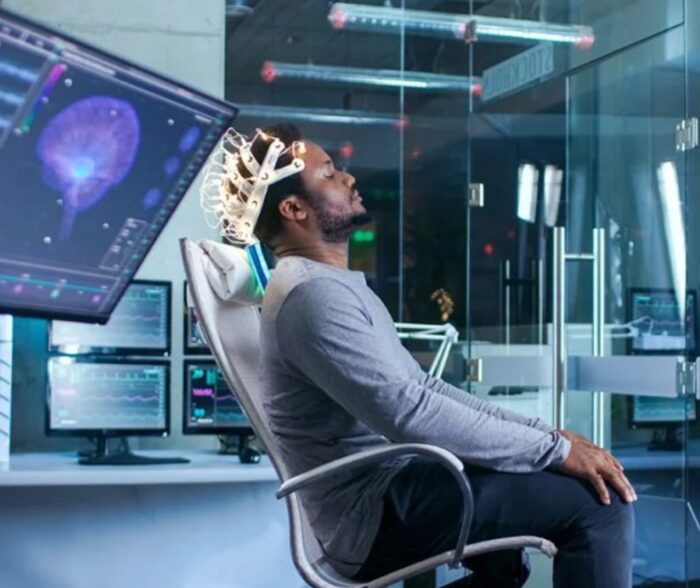 I am currently in Dubai at the Future Forum conference, and later today I am on a panel about the future of the mind with two other neuroscientists. I expect the conversation to be dynamic, but here is the core of what I want to say.
As I have been covering here over the years in bits and pieces, there seems to be several technologies converging on at least one critical component of research into consciousness and sentience. The first is the ability to image the functioning of the brain, in addition to the anatomy, in real time. We have functional MRI scanning, PET, and EEG mapping which enable us to see cerebral blood flow, metabolism and electrical activity. This allows researchers to ask questions such as: what parts of the brain light up when a subject is experiencing something or performing a specific task. The data is relatively low resolution (compared to the neuronal level of activity) and noisy, but we can pull meaningful patterns from this data to build our models of how the brain works.
The second technology which is having a significant impact on neuroscience research is computer technology, including but not limited to AI. All the technologies I listed above are dependent on computing, and as the software improves, so does the resulting imaging. AI is now also helping us make sense of the noisy data. But the computing technology flows in the other direction as well – we can use our knowledge of the brain to help us design computer circuits, whether in neural networks or even just virtually in software. This creates a feedback loop whereby we use computers to understand the brain, and the resulting neuroscience to build better computers.
The third technology is the brain machine interface (BMI). This allows biological brains to talk to computer software, and through that to robotic prosthetics and any other application that can be run digitally. So far it seems like our brains are happy to accept input from software and can learn to control robotic limbs. A robotic hand, for example, can have sensory feedback in addition to motor control, and this closes the loop in the brain so that the user feels as if they own and operate the robotic limb, more like their original biological limb.
All these technologies together, but especially the first two, are building toward a final goal (among many) of creating a human connectome – a map of all the circuits in the human brain at a functional level of resolution. Along the way there have been some interesting milestones. Back in 2011 researchers built the first computer model of a mouse cortical column, a complete circuit in the brain. Since then this kind of research has taken off.
There are several things happening at once: Researchers are modeling brains in some combination of hardware and software, and sometimes in “wetware” that mimics how neurons function. They can also create circuits that combine silicon and living neurons, which can function and learn. Further they can map brain circuits virtually to see how they behave, learn and function. They are also using our knowledge of how the brain and neurons work to design computers and AI that is perhaps more efficient and powerful.
I see no reason why all of these technologies, working together, will not eventually achieve, through nothing but incremental advances, a complete model of a human brain, either virtually in software, or in hardware, or in some combination. This will enable us to confirm (sort of) the ultimate question about the human mind – is the mind an emergent property of brain circuits functioning in real time? If so, then a virtual or silicon brain should be conscious.
Of course, we will not know if the virtual brain experiences its own existence, only that it acts as if it does. We may create an AI p-zombie – a philosophical zombie that acts sentient but does not experience its own existence (no qualia, as the philosophers say). But at this point I think we will be obligated to treat a virtual brain as if it is a sentient being, since it will be indistinguishable from one.
But even if we set aside this question aside, we will be able to model human brain function and measure its behavior and output. This would give us an amazing research tool. We can endlessly alter the circuits to see what happens. We can model psychiatric conditions, like schizophrenia. We can find out how different circuits behave and interact to create the human mind in all its aspects.
Back to BMI – we will also be able to network all of this with biological human brains. We will be able to merge with our AI, to extend our brain capacity with silicon. Will this work? Every indication so far says that it will. I imagine it can function like a third hemisphere. Each hemisphere of our brain is capable of generating independent consciousness – each hemisphere is you. They also contribute their unique function. But they are so robustly connected and networked together that they function like one mind (to our subjective experience).
So – a third silicon hemisphere, robustly connected to the two biological ones, should also function as part of a single mind, just one with expanded capacity and function. Imagine living much of your life with such a computer extension. It would become part of you – it would become you. If it were powerful enough, you may not even notice when the biological hemispheres are damaged or die – unless they are still needed to interface with your body. But if that could be duplicated as well, to create redundant connection from your silicon brain to all the brain’s inputs and outputs, then you would not notice.
But even if we cannot do that last part, your consciousness would continue, perhaps with little change. It could theoretically be placed in a virtual environment, or in an android, or (as in the series Altered Carbon) in another biological body.
These last applications are for the far future – but creating an entire human brain in some combination of hardware, wetware, and software will likely happen sometime this century. Perhaps it will run on a quantum computer, or some advanced neural network that models human neurons as much as possible. Either way, it is the ultimate extension of the current paradigm of neuroscience – the mind is what the brain does, it is an emergent property of brain function. Silicon or virtual brains should demonstrate the same emergent behavior.