Jun
22
2021
Researchers report a study in which they investigate the potential of a closed loop brain-machine interface (BMI) to treat pain in rats. If this line of research is successful it could lead to a new paradigm in the management of chronic pain.
Chronic pain is a tricky condition to treat because we currently have limited options, all of which are problematic in some way. Acute pain, such as after trauma or surgery, is easier to manage because the treatment course is likely to be limited. This kind of pain is called nociceptive pain, when it is the result of tissue damage. The obvious goal here is to manage the damage by treating the underlying condition, but manage the pain in the meantime until healing can reduce the pain. Another category of pain is terminal pain, such as in some cancer patients. While this has its own challenges, aggressive pain management is also appropriate.
Chronic pain, however, may need to be sustained for years, and this presents serious challenges. This may be due to chronic conditions that cannot be cured, such as arthritis, degenerative changes, and primary pain conditions like migraines. This category also include neuropathic pain, where the pain is due to abnormalities in the nervous system itself, rather than the nervous system properly detecting tissue damage. With neuropathic pain, the pain itself is often the disorder.
The challenges of chronic pain stem from the fact that it is often difficult to find a treatment that is effective. But also, even if a treatment is effective, pain medication itself (analgesics) has risks from long term use. Aspirin-like drugs (NSAIDS) can cause ulcers and kidney damage. Acetaminophen can cause liver damage. Narcotics are addictive and cause tolerance. The best approach to chronic neuropathic pain is what we call neuropathic pain prophylaxis – medications safe and intended to take daily to reduce overall pain. But these medications can have significant side effects, and don’t always work sufficiently. There are also nerve stimulators, which avoid pharmaceutical side effects, but have limited efficacy.
Continue Reading »
Jun
18
2021
 Magicians, marketers, and politicians all count, to some degree, on the belief that people (at least collectively) behave in fairly predictable patterns. Each has their own subculture and, history, and research as a guide, but the core phenomenon is the same. Magicians are probably the easiest to demonstrate – if you have ever been to a quality magic show you have likely been amazed at what you saw. This is because magicians exploit predictable patterns in how people direct their attention and process information, knowledge built over centuries of trial and error. Politicians, rather, seem to go on personality and social instinct, with the good ones rising to the top. Although they are increasingly supported by a campaigning industry which is very data driven.
Political campaigns, therefore, are increasingly like any marketing campaign, which is intensively data and research driven. Not only do marketers read and benefit from the psychological research, they have their own research, complete with their own scientific journals. All of this is premised on the notion that people are far from the unique snowflakes we like to think, and are more like predictable sheep that can be herded. Research generally supports this latter view.
Now of course anyone can rise above the herd with knowledge, critical thinking, and consumer savvy. We can learn the tricks, read reviews, learn something about cognitive biases, and take more control of our own purchasing decisions. While I highly recommend all of this, the result is partly an arms-race where marketers try to get more and more subtle with their manipulation, trying to fly under our critical thinking radar. With the advent of big data, social media, and artificial intelligence (AI) their ability to do so is getting frighteningly powerful. This is not something we should underestimate.
Continue Reading »
Jun
15
2021
 There are many amusing movie tropes, mostly used as a shorthand for directors to communicate with the audience. Bags of groceries always have either a loaf of bread or a leafy vegetable sticking out the top, so that you know at a glance they are groceries. Live mics always give a burst of feedback when someone steps up to them. Holograms always glitch, so you know they are holograms. People falling in love always spray water on each other and shop in open-air markets. All raptors sound like red-tailed hawks.
Some tropes, however, are not benign. They are based on and perpetuate a misunderstanding of reality. A pernicious one I have had to deal with professionally is the motion that someone can wake from a prolonged coma and suddenly be neurologically high functioning. They wake up, they are bleary eyed and confused but otherwise intact. As an aside, another trope is that as soon as the person wakes up whoever is present yells for a doctor as if it is an emergency. Here’s a pro tip – it might be an emergency when someone suddenly falls unconscious, but not when they wake up.
Typically there may be a period of physical recovery so they can get their strength back, but neurologically waking up from a coma is presented as flipping on a switch. The problem with this trope is that it almost never occurs (and I am saying “almost” just to be cautious – I am not aware of any cases). This does not mean that meaningful recovery cannot happen, but we have to put this into perspective. The trope also goes beyond entertainment. We see it in news reporting as well, even if only by glossing over important details. Here is a recent BBC report of a woman waking from a 10 month coma. A non-expert reading this would almost certainly come away with a distorted impression of what likely happened (I have no inside information on this specific case, I am only basing that assessment on the BBC report).
Continue Reading »
Jun
10
2021
 There is definitely something to be said for the neurodiversity perspective – when it comes to brain function there is a wide range of what can be considered healthy. Not all differences should be looked at through the lens of pathology or dysfunction. Some brains may be more typical than others, but that does not mean objectively “normal”, better, or healthier. Like any valid concept it can be taken too far. There are conditions that can reasonably considered to be brain disorders causing objective dysfunction. But the scope of healthy variation is likely far broader than many people assume.
Part of this concept is that brain organization and function includes many trade-0ffs. To some extent this is a simple matter of finite brain resources that are allocated to specific abilities, increase one and by necessity another has to diminish. Also different functions can be at cross-purposes. Extraverts may excel in social situations, but introverts are better able to focus their attention inward to accomplish certain tasks.
In light of this, how should we view the phenomenon of aphantasia, a relative inability to summon a mental image? Like most neurological functions, the ability to have an internal mental image varies along a spectrum. At one end of the extreme are those with a hyperability to recall detailed mental images. At the other are those who may completely lack this ability. Most people are lumped somewhere in the middle. The phenomenon of aphantasia was first described in the 1880s, then mostly forgotten for about a century, and now there is renewed interest partly due to our increased ability to image brain function.
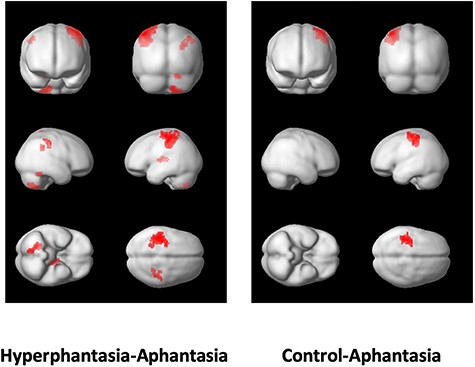
A new study does just that, looking at people across that phantasia spectrum to see how their brain’s differ. Using fMRI they scanned the brains of those with aphantasia, hyperphantasia, and average ability. They found that in neurotypical subject there was a robust connection between the visual cortex (which becomes active when imagining an image) and the frontal cortex, involved in attention and decision-making. That makes sense – this connection allows us to direct our attention inwardly to our visual cortex, to activate specific stored images there. Subjects with aphantasia had a relative lack of these connections. While this is a simple model, it makes perfect sense.
Continue Reading »
Jun
04
2021
 Douglas Adams had a talent for irony. In the Hitchhiker’s Guide series he told the tale of a civilization that tried to improve itself by tricking everyone with a useless job into taking a rocket trip to another world (actually to nowhere). For example, one of the discarded people’s jobs was to clean phones. That’s it – they were a phone cleaner. That civilization later collapsed due to a pandemic started by a phone virus.
Part of Adams’ humor was taking reality and then pushing it to the absurd, but that core of reality gave his humor more heft. We may not have phone cleaners, but it does seem that certain jobs are less useful than others. Of course there is a certain amount of subjectivity and value judgements here, but there are some jobs that even the people in them judge to be without purpose. The concept of “bullshit jobs” was proposed by anthropologist David Graeber. In his book Bullshit Jobs, he claims that 20-50% of people are in BS jobs, that this number is increasing over time, that BS jobs are concentrated in certain professions, and that such jobs are psychologically unhealthy. New research finds that he was correct in one out of four of these claims.
While Graeber was bringing attention to a real issue, the psychological effects of being in a job that you yourself feel is of no value, when it came to the magnitude of this issue he did not have hard data. He was largely making inferences. This did lead to mixed reviews of his work at the time, with some reviewers finding his arguments often labored. The new research is an extensive survey of workers in Europe between 2005-2015, with over 30,000 responses. Since by his own definition, a BS job is one that even the person in it feels is worthless, the survey relied upon self-report of whether one’s job had value. Those who responded “rarely or never” to the question, “I have the feeling of doing useful work,” were deemed to have a BS job. The total percentage of people in this category was 4.8%. That’s still about one in 20 people, but a far cry from the as high as 50% Graeber claimed.
Continue Reading »
May
21
2021
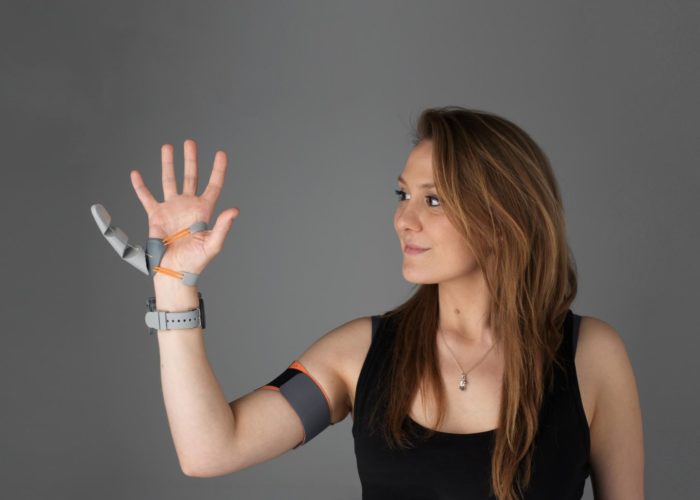 Imagine having an extra arm, or an extra thumb on one hand, or even a tail, and imagine that it felt like a natural part of your body and you could control it easily and dexterously. How plausible is this type of robotic augmentation? Could “Doc Oc” really exist?
I have been following the science of brain-machine interface (BMI) for years, and the research consistently shows that such augmentation is neurologically possible. There is still a lot of research to be done, and the ultimate limits of this technology will be discovered when real-world use becomes common. But the early signs are very good. Brain plasticity seems to be sufficient to allow for incorporation of robotic feedback and motor control into our existing neural networks. But there are still questions about how complete this incorporation can be, and what other neurological effects might result.
A new study further explores some of these questions. They studied 20 participants who them fitted with a “third thumb” opposite their natural thumb on one hand. Each thumb was customized and 3D printed, and could be controlled with pressure sensors under their toes. The subjects quickly learned how to control the thumb, and could soon do complex tasks, even while distracted or blindfolded. They further reports that over time the thumb felt increasingly like part of their body. They used the thumb, even at home, for 2-6 hours each day over five days. (Ten control subjects wore an inactive thumb.)
They used fMRI to scan the subjects at the beginning and end of their training. What they found was that subjects changed the way they used the muscles of their hand with the third thumb, in order to accommodate the extra digit. There were also two effects on the motor cortex representing the hand with the extra thumb. At baseline each finger moved independently would have a distinct pattern of motor cortex activation. After training, these patterns became less distinct. The researchers refer to this as a, “mild collapse of the augmented hand’s motor representation.” Second, there was a decrease in what is called “kinematic synergy.”
Continue Reading »
May
18
2021
 The term “bullshitting” (in addition to its colloquial use) is a technical psychological term that means, “communication characterised by an intent to be convincing or impressive without concern for truth.” This is not the same as lying, in which one knows what they are saying is false. Bullshitters simply are indifferent to whether or not what they say is true. Their speech is optimized for sounding impressive, not accuracy. I have discussed before research showing that people who are more receptive to “pseudoprofound bullshit” are also more gullible in their evaluation of fake news and false claims. Pseudoprofound bullshit are statements that superficially sound wise but are actually vacuous, and operationally for these studies are generated randomly, such as “Innocence gives rise to subjective chaos.”
A new study extends this bullshit research further by looking at the measured and perceived intelligence of subjects correlated to their ability to generate bullshit and receptivity towards it. The study is done to test an evolutionary hypothesis that intelligence evolved largely to provide social skill. Humans are an intensely social species, and the ability to navigate a complex social network requires cognitive skill. Therefore, the authors hypothesize, if this is true that the ability to bullshit (which is used as a marker for social skill) should correlate with intelligence. While the results of the study, which I will get to shortly, are interesting, I think we have to recognize that it is horrifically difficult to make such evolutionary statements of cause and effect.
Cognitive ability is so multifaceted that boiling down selective pressures to any one factor is essentially impossible. At best we can say that the ability to sound confident and convincing is a social skill that would provide one type of advantage to a social species. But we also have to recognize that individuals may pursue many different strategies favoring different attributes. Further, other personality characteristics could have a great influence on the willingness and ability to bullshit that have nothing to do with intelligence. And finally, intelligence bestows so many general advantages that could provide selective reinforcement that, again, it becomes problematic at best to isolate one factor as dominant. While I found the results of this study interesting, there is nothing here that is not incompatible with the interpretation that they are all epiphenomena, not primary selective pressures.
Continue Reading »
May
13
2021
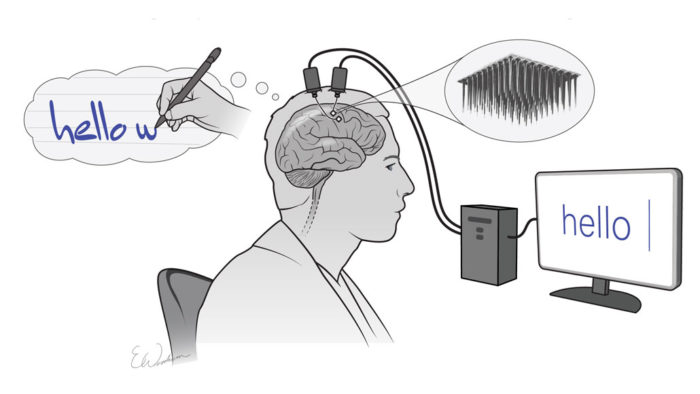 We have another incremental advance with brain-machine interface technology, and one with practical applications. A recent study (by Krishna Shenoy, a Howard Hughes Medical Institute investigator at Stanford University and colleagues) demonstrated communication with thought alone at a rate of 15 words (90 characters) per minute, which is the fastest to date. This is also about as fast as the average person texts on their phone, and so is a reasonably practical speed for routine communication.
I have been following this technology here for year. The idea is to connect electrodes to the brain, either on the scalp, on the brain surface, inside blood vessels close to the brain, or even deep inside the brain, in order to read electrical signals generated by brain activity. Computer software then reads these signals and learns to interpret them. The subject also undergoes a training period where they learn to control their thoughts in such a way as to control something connected to their brain’s output. This could mean moving a cursor on a computer screen, or controlling a robotic arm.
Researchers are still working out the basics of this technology, both hardware and software, but are making good steady progress. There doesn’t appear to be any inherent biological limitation here, only a technological limitation, so progress should be, and has been, steady.
The researchers did something very clever. The goal is to facilitate communication with those who are paralyzed to the point that they cannot communicate physically. One method is to control a cursor and move it to letters on a screen in order to type out words. This works, but is slow. Ideally, we would simply read words directly from the language cortex – the subject thinks words and they appear on a screen or are spoken by a synthesizer. This, however, is extremely difficult because the language cortex does not have any obvious physical organization that relates to words or their meaning. Further, this would take a high level of discrimination, meaning that it would requires lots of small electrodes in contact with the brain.
Continue Reading »
May
03
2021
 From one perspective art is mostly a science that we understand better at an intuitive rather than analytical level. This does not reduce the creative elements off artistic expression, but it does mean there is an underlying empirical phenomenon to be understood. Storytelling, for example, has a basic structure, with elements that serve a specific purpose. One of the more famous attempts at breaking down the structure of certain types of stories is the Hero’s Journey by Joseph Campbell, in which he explains the common elements of epic quests in literature, that hold true even in more modern storytelling like Star Wars.
A recent study by German authors takes a similar look at the “feel good film”, which is not really a specific genre but more of a vague category. The “feel good film” is meant, as the name implies, to elevate the mood and be pleasant to watch. The authors point out that this is often a point of criticism by serious film critics, but simultaneously a point of praise from viewers. There is just as much of an art and science behind making a good feel-good film as any other type, so I think the criticism is unfair. I would focus more on the quality of any specific movie.
After extensive surveying, the authors found that the best formula for a feel good effect is the romantic comedy. The authors write;
“Often these involve outsiders in search of true love, who have to prove themselves and fight against adverse circumstances, and who eventually find their role in the community.”
Further, the authors found that the introduction of a “fairy tale” element served well to lighten the movie and enhance the feel-good effect. The movie that immediately came to mind when I read this was Enchanted, which seems to deliberately follow this formula (and it worked, extremely well). The authors also point out that such films require genuine drama and conflict. There appears to be a sweet spot – where we feel a real threat but we know the good guys are going to pull it out in the end. It’s like a rollercoaster – it’s simulated danger, but we know we are safe. In Enchanted the evil queen needs to seem genuinely menacing, for example.
Continue Reading »
Apr
30
2021
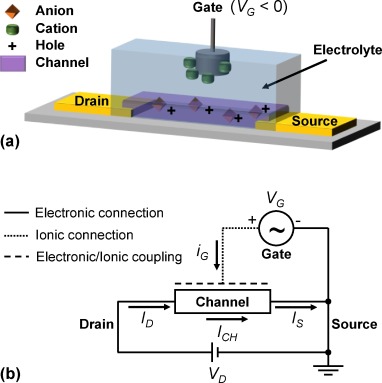 The title of this post should be provocative, if you think about it for a minute. For “organic” read flexible, soft, and biocompatible. An electrochemical synapse is essentially how mammalian brains work. So far we can be talking about a biological brain, but the last word, “transistor”, implies we are talking about a computer. This technology may represent the next step in artificial intelligence, developing a transistor that more closely resembles the functioning of the brain.
Let’s step back and talk about how brains and traditional computers work. A typical computer, such as the device you are likely using to read this post, has separate memory and logic. This means that there are components specifically for storing information, such as RAM (random-access memory), cache memory (fast memory that acts as a buffer between the processor and RAM) and for long-term storage hard drives and solid state drives. There are also separate components that perform logic functions to process information, such as the central CPU (central processing unit), graphics card, and other specialized processors.
The strength of computers is that they can perform some types of processing extremely fast, such as calculating with very large numbers. Memory is also very stable. You can store a billion word document and years later it will be unchanged. Try memorizing a billion words. The weakness of this architecture is that it is very energy intensive, largely because of the inefficiency of constantly having to transfer information from the memory components to the processing components. Processors are also very linear – they do one thing at a time. This is why more modern computers use multi-core processors, so they can have some limited multi-tasking.
Continue Reading »