Aug 10 2026
The Deepfakes We Warned About Are Here
 It’s interesting to go back to see articles I wrote years ago to see how they held up. In 2019 I wrote a post about the “Challenges of Deepfakes“, which I just reread. What I discussed held up pretty well – deepfakes have both the effect of spreading misinformation and reducing confidence in real information. I think it’s fair to say that what I and others were warning about at the time is coming to fruition. However, what was interesting was what I did not discuss. ‘
I wrote that article just prior to the LLM revolution, and I didn’t even mention the potential for AI to transform the world of deepfakes. AI certainly makes deepfakes more convincing and harder to detect, especially for video, but that is not really the primary effect. The availability of AI tools incredibly lowers the bar for making deepfakes – that is their real impact. This makes it cheap and technically easy to create them, and this introduces potential uses that would otherwise not be feasible. It’s now possible to flood the zone with fake content, making any attempt at controlling or regulating such content perhaps impossibly difficult.
As I discussed at the time, the existence of deepfakes creates two problems – confusing fake content for real content (Type 1 problem) but also dismissing real content as fake (Type 2 problem). It turns out – the type 2 problem is far bigger, and the ease with which deepfakes can now be created dramatically exacerbates this. It is now a not-unreasonable assumption that any picture or video you might be seeing online is fake. It should be standard procedure to withhold judgement unless and until a video or picture has been vetted and verified. But this is work, and not everyone is going to be willing to do such work, especially for something that supports their narrative.
It is extremely important to note, however, we are not in the alleged post-truth world (not yet) – unless we believe that we are. If you believe you cannot trust any information, then you won’t, and there will not be any objective facts for you. You will be functioning as if we live in a post truth world. But most information online is still accurate, there are still trusted sources, and it is actually not that difficult to spend just a minute or two to verify most pieces of content you may be interested in. This simply has to become part of our information hygiene. And we must resist the temptation to just throw up our hands and conclude it’s all fake.
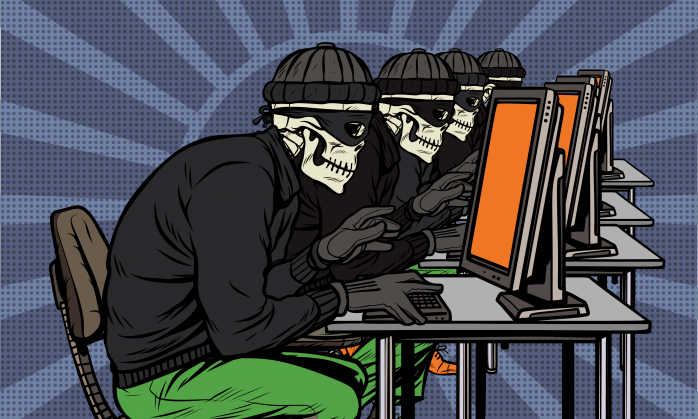
There was another angle to the deepfake story that I also completely missed in 2019 – using deepfakes to scam people. In fairness, this was just starting and was not yet a big phenomenon, but now it is huge. It is estimated that Americans lost $1.48 billion to online scammers in 2025, up 26% from the year before. That increase is mostly due to AI-created deepfakes. It is now easy to duplicate people’s voices in a way that is convincing to their close friends and loved-ones. Because it is so easy it has become cost-effective for large-scale scammers to do so.
A typical scam would involve being called by someone you know claiming to be in a crisis situation (in an accident, held hostage, lost their wallet, arrested, etc.) and they need you to send them money immediately. Red flags for such scams include immediacy – the situation is a crisis that needs an immediate response. The scammers try to isolate the mark and control who they speak to. They also are likely to request funds in a form that is untraceable – crypto, gift cards, cash, etc. You may get called at 2 in the morning to make you more mentally vulnerable.
The BBC article I linked to has good advice for how to protect yourself. First, have a code word (or a code word and a response word) to verify your identity. Second, remember to actually use it. Third, be mentally prepared for such situations. The idea is to catch you off-guard so you will forget, in a panic, any preparation. Also, if you recognize the red flags, that will trigger for you the possibility that you are being scammed. I would also add – in any such situation, call someone you know and trust directly and check the situation with them. There is never any situation where this is a bad idea. The scammers will try to keep you from doing this, don’t believe them.
But as I often point out, while personal protection and responsibility is always good, it shouldn’t have to be entirely on each person to protect themselves. There is clearly a role for governments here under the umbrella of cybersecurity and crime prevention. Most of these scam are run out of warehouses in Asia, and we can be putting more political pressure on the host countries to do more to shut them down, for example. Whether or not we are doing “enough” and the right things is a matter of ongoing debate, but I would argue that the 26% increase over the last year partly speaks for itself.
Especially with the recent progress in AI, cybersecurity needs to become much higher profile and priority than it is.