Search Results for "brain machine interface"

Mar 06 2012

Natural Feeling Neuroprosthetics

Science fiction is full of a future in which we plug our brains into a computer (or a computer into our brains, I guess) and experience a seamless connection to either a virtual world (ala The Matrix) or a robotic machine that we can control as if it were a part of our body. This is called a brain machine interface (BMI), and the applications of this technology would be many and profound.

The question remains, however – will it work? Will the experience be truly seamless? Can our brains adapt to mesh with a virtual reality or control something external? There are two ways you can think about this based upon our current understanding of neuroscience. The first is that BMI will be inherently limited because as the brain develops it adapts to our bodies and the sensory information that it receives. There are also windows of developmental potential, and after our brains develop to a certain point it loses some of its potential to adapt and wire itself to novel input.

We might hypothesize, therefore, that an adult would have a limited capacity to adapt to a BMI. Therefore the experience will seem unnatural and perhaps even unpleasant, and the level of control will be limited and awkward. This is the pessimistic view.

Continue Reading »

12 responses so far

Feb 16 2026

The Future of AI-Powered Prosthetics

It’s not easy being a futurist (which I guess I technically am, having written a book about the future of technology). It never was, judging by the predictions of past futurists, but it seems to be getting harder as the future is moving more and more quickly. Even if we don’t get to something like “The Singularity”, the pace of change in many areas of technology is speeding up. Actually it’s possible this may, paradoxically, be good for futurists. We get to see fairly quickly how wrong our predictions were, and so have a chance at making adjustments and learning from our mistakes.

We are now near the beginning of many transformative technologies – genetic engineering, artificial intelligence, nanotechnology, additive manufacturing, robotics, and brain-machine interface. Extrapolating these technologies into the future is challenging. How will they interact with each other? How will they be used and accepted? What limitations will we run into? And (the hardest question) what new technologies not on that list will disrupt the future of technology?

While we are dealing with these big question, let’s focus on one specific technology – controllable robotic prosthetics. I have been writing about this for years, and this is an area that is advancing more quickly than I had anticipated. The reason for this is, briefly, AI. Recent advances in AI are allowing for far better brain-machine interface control than previously achievable. Recent advances in AI allow for technology that is really good at picking out patterns from tons of noisy data. This includes picking out patterns in EEG signals from a noisy human brain.

This matters when the goal is having a robotic prosthetic limb controlled by the user through some sort of BMI (from nerves, muscles, or directly from the brain). There are always two components to this control – the software driving the robotic limb has to learn what the user wants, and the user has to learn how to control the limb. Traditionally this takes weeks to months of training, in order to achieve a moderate but usable degree of control. By adding AI to the computer-learning end of the equation, this training time is reduced to days, with far better results. This is what has accelerated progress by a couple of decades beyond where I thought it would be.

Continue Reading »

No responses yet

May 13 2025

The AI Conundrum

Published by under Technology

What the true impact of artificial intelligence (AI) is and soon will be remains a point of contention. Even among scientifically literate skeptics people tend to fall into decidedly different narratives. Also, when being interviewed I can almost guarantee now that I will be asked what I think about the impact of AI – will it help, will it hurt, is it real, is it a sham? The reason I think there is so much disagreement is because all of these things are true at the same time. Different attitudes toward AI are partly due to confirmation bias. Once you have an AI narrative, you can easily find support for that narrative. But also I think part of the reason is that what you see depends on where you look.

The “AI is mostly hype” narrative derives partly from the fact that the current AI applications are not necessarily fundamentally different than AI applications in the last few decades. The big difference, of course, is the large language models, which are built on a transformer technology. This allows for training on massive sets of unstructured data (like the internet), and to simulate human speech in a very realistic manner. But they are still narrow AI, without any true understanding of concepts. This is why they “hallucinate” and lie – they are generating probable patterns, not actually thinking about the world.

So you can make the argument that recent AI is nothing fundamentally new, the output is highly flawed, still brittle in many ways, and mostly just flashy toys and ways to steal the creative output of people (who are generating the actual content). Or, you can look at the same data and conclude that AI has made incredible strides and we are just seeing its true potential. Applications like this one, that transforms old stills into brief movies, give us a glimpse of a “black mirror” near future where amazing digital creations will become our everyday experience.

Continue Reading »

No responses yet

Mar 13 2025

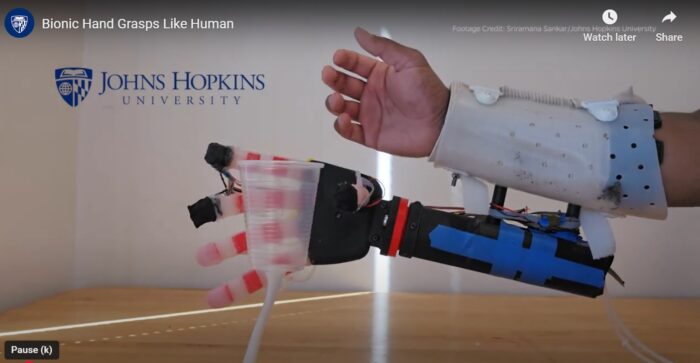
Hybrid Bionic Hand

Published by under Technology

If you think about the human hand as a work of engineering, it is absolutely incredible. The level of fine motor control is extreme. It is responsive and precise. It has robust sensory feedback. It combines both rigid and soft components, so that it is able to grip and lift heavy objects and also cradle and manipulate soft or delicate objects. Trying to replicate this functionality with modern robotics have been challenging, to say the least. But engineers are making steady incremental progress.

I like to check it on how the technology is developing, especially when there appears to be a significant advance. There are two basic applications for robotic hands – for robots and for prosthetics for people who have lost their hand to disease or injury. For the latter we need not only advances in the robotics of the hand itself, but also in the brain-machine interface that controls the hand. Over the years we have seen improvements in this control, using implanted brain electrodes, scalp surface electrodes, and muscle electrodes.

We have also seen the incorporation of sensory feedback, which greatly enhances control. Without this feedback, users have to look at the limb they are trying to control. With sensory feedback, they don’t have to look at it, overall control is enhanced, and the robotic limb feels much more natural. Another recent addition to this technology has been the incorporation of AI, to enhance the learning of the system during training. The software that translates the electrical signals from the user into desired robotic movements is much faster and more accurate than without AI algorithms.

A team at Johns Hopkins is trying to take the robotic hand to the next level – A natural biomimetic prosthetic hand with neuromorphic tactile sensing for precise and compliant grasping. They are specifically trying to mimic a human hand, which is a good approach. Why second-guess millions of years of evolutionary tinkering? They call their system a “hybrid” robotic hand because it incorporates both rigid and soft components. Robotic hands with rigid parts can be strong, but have difficulty handling soft or delicate objects. Hands made of soft parts are good for soft objects, but tend to be weak. The hybrid approach makes sense, and mimics a human hand with internal bones covered in muscles and then soft skin.  Continue Reading »

No responses yet

Feb 14 2025

AI Powered Bionic Arm

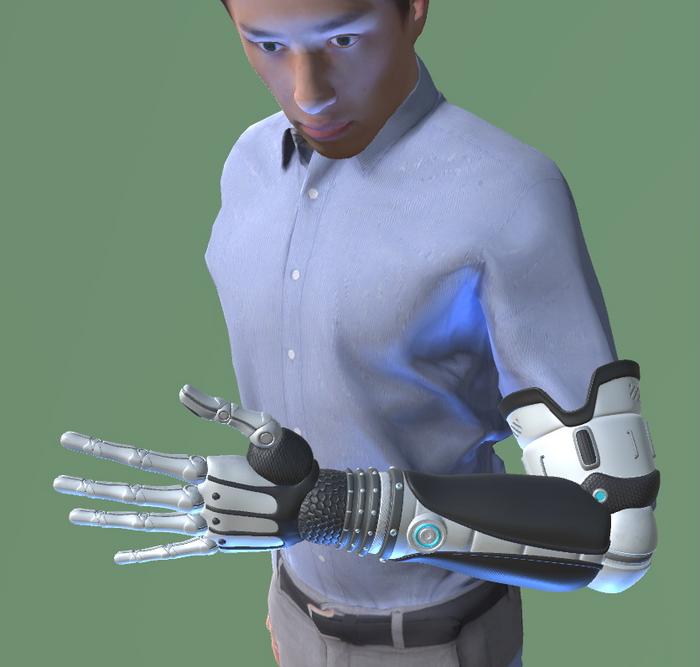
My younger self, seeing that title – AI Powered Bionic Arm – would definitely feel as if the future had arrived, and in many ways it has. This is not the bionic arm of the 1970s TV show, however. That level of tech is probably closer to the 2070s than the 1970s. But we are still making impressive advances in brain-machine interface technology and robotics, to the point that we can replace missing limbs with serviceable robotic replacements.

In this video Sarah De Lagarde discusses her experience as the first person with an AI powered bionic arm. This represents a nice advance in this technology, and we are just scratching the surface. Let’s review where we are with this technology and how artificial intelligence can play an important role.

There are different ways to control robotics – you can have preprogrammed movements (with or without sensory feedback), AI can control the movements in real time, you can have a human operator, through some kind of interface including motion capture, or you can use a brain-machine interface of some sort. For robotic prosthetic limbs obviously the user needs to be able to control them in real time, and we want that experience to feel as natural as possible.

The options for robotic prosthetics include direct connection to the brain, which can be from a variety of electrodes. They can be deep brain electrodes, brain surface, scalp surface, or even stents inside the veins of the brain (stentrodes). All have their advantages and disadvantages. Brain surface and deep brain have the best resolution, but they are the most invasive. Scalp surface is the least invasive, but has the lowest resolution. Stentrodes may, for now, be the best compromise, until we develop more biocompatible and durable brain electrodes.

Continue Reading »

No responses yet

Jan 30 2024

Neuralink Implants Chip in Human

Published by under Skepticism,Technology

Elon Musk has announced that his company, Neuralink, has implanted their first wireless computer chip into a human. The chip, which they plan on calling Telepathy (not sure how I feel about that) connects with 64 thin hair-like electrodes, is battery powered and can be recharged remotely. This is exciting news, but of course needs to be put into context. First, let’s get the Musk thing out of the way.

Because this is Elon Musk the achievement gets more attention than it probably deserves, but also more criticism. It gets wrapped up in the Musk debate – is he a genuine innovator, or just an exploiter and showman? I think the truth is a little bit of both. Yes, the technologies he is famous for advancing (EVs, reusable rockets, digging tunnels, and now brain-machine interface) all existed before him (at least potentially) and were advancing without him. But he did more than just gobble up existing companies or people and slap his brand on it (as his harshest critics claim). Especially with Tesla and SpaceX, he invested his own fortune and provided a specific vision which pushed these companies through to successful products, and very likely advanced their respective industries considerably.

What about Neuralink and BMI (brain-machine interface) technology? I think Musk’s impact in this industry is much less than with EVs and reusable rockets. But he is increasing the profile of the industry, providing funding for research and development, and perhaps increasing the competition. In the end I think Neuralink will have a more modest, but perhaps not negligible, impact on bringing BMI applications to the world. I think it will end up being a net positive, and anything that accelerates this technology is a good thing.

Continue Reading »

No responses yet

Jul 24 2023

Making Computers More Efficient

Published by under Technology

An analysis in 2021 found that 10% of the world’s electricity production is used by computers, including personal use, data centers, the internet and communication centers. The same analysis projected that this was likely to increase to 20% by 2025. This may have been an underestimate because it did not factor in the recent explosion of AI and large language models. Just training a large language model can cost $4-5 million and expend a lot of energy.

I am not trying to doomsay these statistics. Civilization gets a lot of useful work out of all this computing power, and it likely displaces much less efficient ways of doing things. One Zoom meeting vs an in-person meeting can be a huge energy savings. In fact, as long as we use all that computing power reasonably, it’s all good. We can talk about the utility of specific applications, like mining Bitcoins, but overall the dramatic advance of computing is a good thing. But it does shift our energy use, and it does represent the electrification of some technology. We therefore have to factor it in when extrapolating our future electricity uses (just like we need to consider the effect of shifting our car fleet from burning gasoline to using electricity).

The situation also presents an opportunity. As more and more of our energy use is shifted to computers as our world becomes more digital, that means we can have increasing improvement in our overall energy efficiency just by targeting one technology. For example, if computers used 20% of the world’s electricity, a 50% improvement in computer efficiency would result in a 10% drop in our energy demand (once fully implemented). Obviously such improvements would be implemented over years, but it points out how high the stakes are becoming for computer power efficiency. This means the industry needs to focus not just on doing things bigger, better, faster, but also more efficiently. We also need to think twice before adopting wasteful practices.

Continue Reading »

No responses yet

Jul 14 2023

Magnetohydrodynamic Drive – Silent Water Propulsion

Published by under Technology

DARPA, the US Defense Advanced Research Projects Agency, is now working on developing a magnet-driven silent water propulsion system – the magnetohydrodynamic (MHD) drive. The primary reason is to develop silent military naval craft. Imagine a nuclear submarine with an MHD drive, without moving parts, that can slice through the water silently. No moving parts also means much less maintenance (a bonus I can attest to, owning a fully electric vehicle).

But don’t be distracted by the obvious military application – if DARPA research leads to a successful MHD drive there are implications beyond the military, and there are a lot of interesting elements to this story. Let’s start, however, with the technology itself. How does the MHD work?

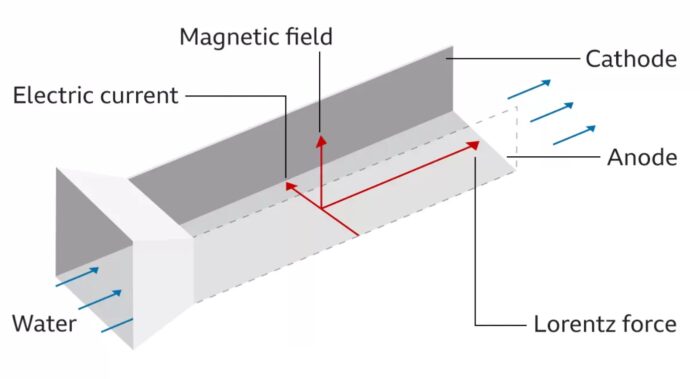
The drive was first imagined in the 1960s. That’s generic technology lesson #1 – technology often has deeper roots than you imagine, because development often takes a lot longer than initial hype would suggest. In 1992 Japan built the Yamato-1, a prototype ship with an MHD drive that worked. It was an important proof of concept, but was not practical. Even over 30 years later, we are not there yet. The drive works through powerful magnetic fields, which are place at right angles to an electrical current, producing a Lorentz force. This is a force produced on a particle moving through both an electrical and magnetic field, at right angles to both. Salt water contains charged particles which would feel this Lorentz force. Therefore, if arranged properly, the magnetic and electrical fields could push water toward the back of the ship, providing propulsion.

Sounds pretty straight forward, so what’s the holdup? Well, there are several. The most important aspect of the Yamato-1 is that is provided great research into all the technical hurdles for this technology. The first is that the MHD drive is horribly energy inefficient, which means it was very expensive to operate. What was mainly needed to improve efficiency was more powerful and more efficient magnets. Here we get to generic technology lesson #2 – basic technology developed for one application may have other or even greater utility for other applications. In this case the MHD is partly benefiting from the fusion energy industry, which requires powerful efficient magnets. We can take those same magnet innovations and apply them to MHD drives, making them energy and cost effective.

But there is still one major and one minor problem remaining. The major problem is the electrodes and electronics necessary to generate the electrical current. Electronics and salt water don’t mix – the salt water is highly corrosive, more so when exposed to magnetic fields and electrical current. We therefore need to develop highly corrosive-resistant electrodes. Fortunately, such development is already underway in the battery industry, that also needs robust electrodes. Apparently we are not there yet when it comes to MHD, and that will be a major focus of DARPA research.

There is also the minor problem of the electrodes electrolyzing the salt water, creating bubbles of hydrogen and oxygen. This reduces the efficiency of the system – not a deal-killer, but it would be nice to reduce this effect. I immediately wondered if the created gases can be captured somehow, both solving the problem and making green hydrogen from the shipping industry. In any case, that’s problem #2 for DARPA to solve.

If all goes well, we are probably 10-20 years (or more) still away from working MHD drives on ships. Probably the military applications will come first. I hope they don’t hog the technology, which they might in order to maintain their military technological dominance, but the civilian applications can be huge. The noise generated by shipping has massive negative consequences on marine life, especially whales and other cetaceans who rely on long distance sound to communicate with each other, to navigate, and to migrate. Propellers churning up water is also an ecological problem. If it ever becomes cost effective enough, a working MHD drive could revolutionize ocean travel and shipping. Electrifying ocean propulsion could also help reduce GHG emissions.

Plus, there might be other downstream benefits from the DARPA research. Those robust corrosion resistant electrodes will likely have many applications. It may feed back into battery technology. It may also lead to better electrodes for a brain-machine interface. This reminds me of the book and TV series Connections, by James Burke. This is a brilliant series I have not seen in a while and should probably watch again. It traces long chains of technological developments, from one application to the next, showing how extensively technologies cross-fertilize. A need in one area leads to an advance that makes a completely different application feasible – and so on and so on. I guess that’s generic technology lesson #3.

DARPA has a solid history of accelerating specific technologies in order to bring new industries to fruition more quickly. Hopefully they will be successful here as well. The downstream benefits of an MHD drive could be significant, with spin-off benefits to many industries.

No responses yet

May 02 2023

Reading The Mind with fMRI and AI

Published by under Neuroscience

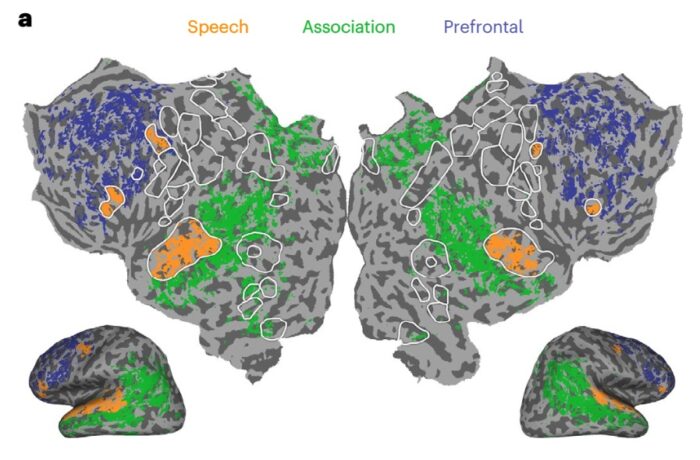
This is pretty exciting neuroscience news – Semantic reconstruction of continuous language from non-invasive brain recordings. What this means is that researchers have been able to, sort of, decode the words that subjects were thinking of simply by reading their fMRI scan. They were able to accomplish this feat using a large language model AI, specifically GPT-1, an early version of Chat-GPT. It’s a great example of how these AI systems can be leveraged to aid research.
This is the latest advance in an overall research goal of figuring out how to read brain activity and translate that activity into actual thoughts.  Researchers started by picking some low-hanging fruit – determining what image a person was looking at by reading the pattern of activity in their visual cortex. This is relatively easy because the visual cortex actually maps to physical space, so if someone is looking at a giant letter E, that pattern of activity will appear in the cortex as well.

Moving to language has been tricky, because there is no physical mapping going on, just conceptual mapping. Efforts so far have relied upon high resolution EEG data from implanted electrodes. This research has also focused on single words or phrases, and often trying to pick one from among several known targets. This latest research represents three significant advances. The first is using a non-invasive technique to get the data, fMRI scan. The second is inferring full sentences and ideas, not just words. And the third is that the targets were open-ended, not picked from a limited set of choices. But let’s dig into some details, which are important.

Continue Reading »

No responses yet

Oct 06 2022

3D Printing Implantable Computer Chips

This is definitely a “you got chocolate in my peanut butter” type of advance, because it combines two emerging technologies to create a potential significant advance. I have been writing about brain-machine interface (or brain-computer interface, BCI) for years. My take is that the important proof of concepts have already been established, and now all we need is steady incremental advances in the technology. Well – here is one of those advances.

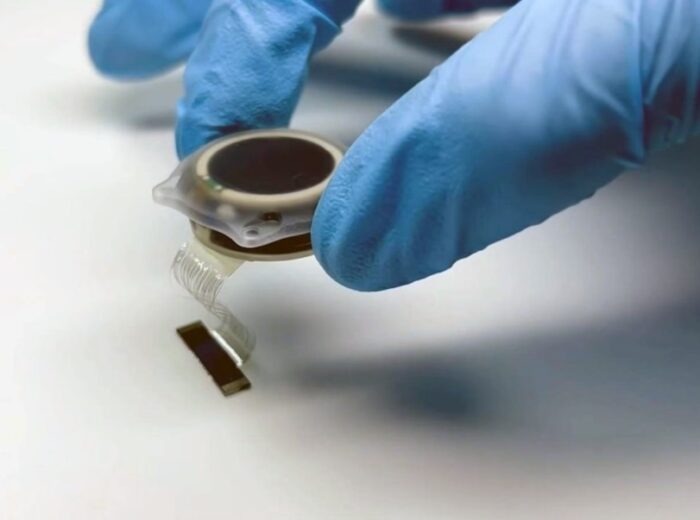
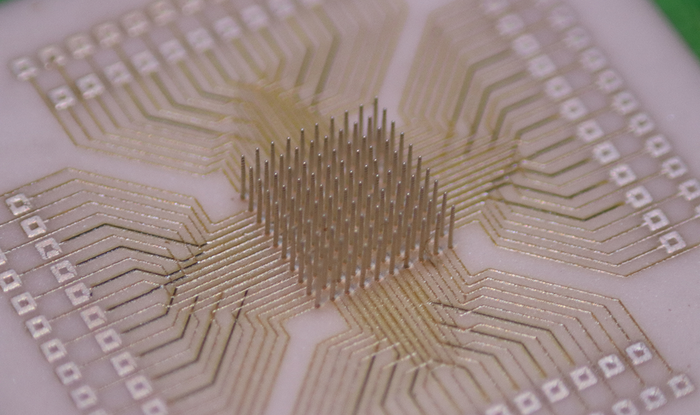
Carnegie Mellon University researchers have developed a computer chip for BCI, called a microelectrode array (MEA), using advanced 3D printing technology. The MEA looks like a regular computer chip, except that it has thin pins that are electrodes which can read electrical signals from brain tissue. MEAs are inserted into the brain with the pins stuck into brain tissue. They are thin enough to cause minimal damage. The MEA can then read the brain activity where it is placed, either for diagnostic purposes or to allow for control of a computer that is connected to the chip (yes, you need wired coming out of the skull). You can also stimulate the brain through the electrodes. MEAs are mostly used for research in animals and humans. They can generally be left in the brain for about one year.

One MEA in common use is called the Utah array, because it was developed at the University of Utah, which was patented in 1993. So these have been in use for decades. How much of an advance is the new MEA design? There are several advantage, which mostly stem from the fact that these MEAs can be printed using an advanced 3D printing technology called Aerosol Jet 3D Printing. This allows for the printing at the nano-scale using a variety of materials, included those needed to make MEAs. Using this technology provides three advantages.

Continue Reading »

No responses yet

« Prev - Next »