Sep
26
2017
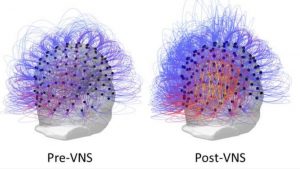 The link to the article from the BBC Science News page reads, “Therapy “Wakes” Vegetative-State Patient.” The headline of the article was a bit more conservative, “Vegetative-state patient responds to therapy.” Annoying click-bait aside, what is actually going on here?
Like every such case so far, the improvement in neurological function in this patient with severe coma is extremely limited. This is mostly a proof of concept study, and the results are interesting, but the term “wakes,” even is quotations, is not even close to being justified.
Here is the case report: Restoring consciousness with vagus nerve stimulation. Even that title is a bit misleading – they aren’t saying they actually restored consciousness, just that vagus nerve stimulation might be a viable approach to develop. For background, a vegetative state is one in which basic neurological functions, like breathing, having a sleep-wake cycle, and some automatic movements, are retained. However, the conscious part of the cortex does not appear to be working. By definition there is no reaction to the environment.
By contrast a minimally conscious state has, as the name implies, minimal response to the environment. Patients in this state might blink to threat, or turn to a voice, but cannot communicate or participate in their daily activities. There is a continuum of neurological function from this minimal state to fully conscious.
As I have discussed before, researchers are trying to improve out ability to tell how impaired individual people are who clinically appear to be vegetative or minimally conscious. The challenge is that the neurological exam is limited. If the patient cannot follow commands, we have a limited ability to directly test which circuits in the brain are functioning. The patient may be more conscious than they appear to be because they are paralyzed or deaf, for example. Using functional MRI scanning and EEGs have enhanced our ability to assess brain function in these cases. Continue Reading »
Apr
21
2017
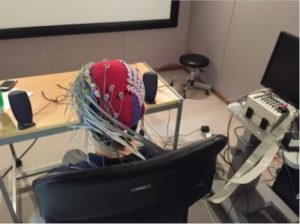 Two recent neuroscience news items in The Independent represent exactly the problem with bad science journalism today and the tendency to overhype incremental studies.
Brain-Machine Interface
Here’s the first:
Device that can literally read your mind invented by scientists. An ‘easily operated’ machine linked to a smartphone could be ready within five years.
Um, no. I have be writing about this technology for years, because it is genuinely interesting and I think is a technology to watch. Several labs have made significant progress in brain-machine interfaces. The idea is that you read the electrical activity of the brain with either scalp electrodes or brain surface electrodes. Scientists have developed software that interprets the EEG patterns and learns to correlate them with the thoughts or intentions of the subject. The subject, in turn, learns to control their mental activity to affect the EEG output.
Here is where the technology stands: With brain surface electrodes, you get a much greater resolution of EEG activity. The software has progressed to the point that monkeys can control a robotic arm with sufficient subtlety to feed themselves.
With humans we have mostly used scalp electrodes, which have a more blurry signal. Even with these people have learned to control robots or control a cursor on a computer.
Continue Reading »
Jun
09
2015
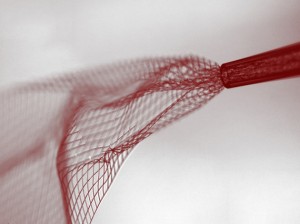 Charles Lieber with his team at Harvard University have developed a flexible mesh network of electrodes that can be injected through the skull, unfolding onto the surface of the brain. This technology could be a significant advance in our ability to study the brain.
Neuroscientists are trying to map the brain in as much detail as possible, creating what is being called the “connectome” (reminiscent of mapping the human “genome”).
There are about 87 billion neurons in the adult human brain. Each neuron is capable of making up to around 10,000 connections to other neurons, which means the total connections in the brain is somewhere around a quadrillion. The saying goes that neurons that wire together fire together, so the pattern of connections determines the pattern of electrical activity in the brain.
Continue Reading »
Apr
01
2013
We are seeing the beginning of technology to interface computers and brains. I have been writing about brain-machine-interface (BMI) technology, and brain-machine-brain interface technology. Now we have a report of brain to brain communication, which is currently as close as we can come to telepathy.
Actually, the technology is – brain to machine to another machine and then to another brain – technology. Imagine having a computer chip implanted in your brain that can read your brain activity. This information is then transferred to a computer chip implanted in someone else’s brain, who can then access that information.
If this exchange were happening in real time through wireless transfer with sufficient resolution, that would essentially be telepathy.
Continue Reading »
Oct
06
2011
It’s just a matter of time. The cyborg revolution is coming (although I won’t dare to make specific predictions about the timeline).
All the necessary basic principles have been demonstrated. We can train animals and people to operate either a robotic or virtual actuator with their thoughts alone. We can trick the brain into occupying a virtual body or “owning” an artificial limb. And now we can even provide specific sensory feedback directly to the brain – so called Brain-Machine-Brain-Interface (BMBI – I wonder if the researchers are calling it “Bambi”).
Just published in Nature Magazine is research involving rhesus monkeys that were taught to control a virtual arm with their thoughts alone. This much has been done before – various research teams are working on this technology, either involving implantable electrodes or surface electrodes. The new research, however, adds a new dimension – providing sensory feedback to the monkeys.
Continue Reading »
Jul
23
2009
I have written previously about the various attempts to reverse engineer the brain and to develop artificial intelligence (AI). This is an exciting area of research. On the one hand researchers are trying to model the working of a mammalian brain, eventually a human brain, down to the tiniest detail. On the other, researchers are also trying to build an AI – either in hardware or virtually in software.
In the middle are attempts at interfacing brains and computer chips. Remember the monkeys who can move robot arms with their minds?
All these efforts are synergistic – modeling the mammalian brain will help AI researchers build their AI, and building AI computers and applications can teach us about brain function. The more we learn about both, the easier it will be to interface them.
Continue Reading »
Aug
14
2008
I enjoy science fiction partly because it can be a thought experiment on the potential course of future technology. A common sci-fi theme is the merging of man and machine and the blurring of distinction between the two. Clearly this is a process that has already begun, but even the most thoughtful futurists cannot tell where this will lead with anything but the broadest brush strokes.
In the campy sci-fi flick Saturn 3 (1980), the character played by Harvey Keitel builds a robot (Hector) with a modified human brain as it’s CPU. Keitel trains the robot partly by imprinting his own brain patterns onto it. As he is a dangerous criminal psychotic, antics ensue.
The prequels to the classic Dune series, written by Frank Herbert’s son, Brian, along with Kevin J Anderson, the primary enemies of humanity are cymeks – immortal human brains that can inhabit their choice of robotic bodies – from battle armor to space ships.
In 2061: Odyssey Three, Arthur C Clarke paints a future where every human is equipped in infancy with a “brain cap.” This is a super-computer that fits nicely over the skull, sending electrodes down into the brain in order to seamlessly interface with it and greatly expand human intellectual capacity.
In Stephen R. Donaldson: The Gap Series (1990-94), a major plot element is the “zone implant.” This is a computer device implanted into the human brain in order to enhance and control its function. They are outlawed because of they offer complete control to whoever holds the remote control to someone’s implant. But they are also portrayed as useful for the treatment of psychological and neurological disorders.
And, of course, in the new Battlestar Galactica series (I highly recommend this series to any sci-fi fan, and even if you are not a sci-fi fan this is simply superb drama) the Cylons have created humanoid robots that are indistinguishable from normal humans but have Cylon AI.
This is just a sampling running the spectrum from brains controlling robots to AI controlling human bodies with brain-AI interfaces in between. At present we are just taking the first baby steps toward whatever version of these fictional futures await us, if any. Time will tell.
Continue Reading »
Aug
29
2007
Reader Blake Stacey asked me to comment on this article about the development of new antidepressants. It is a very interesting development in the pursuit of more effective and selective antidepressants and reveals a great deal about the state of this neuroscience.
For background, current pharmacotherapy for many neurological disorders, including mood disorders like depression, focus on altering the activity of neurotransmitters – the chemical signals by which neurons communicate with each other. Some of the more important neurotransmitters include dopamine, serotonin, norepinephrine, GABA, and glutamate. As we would expect from a messy evolved system, these neurotransmitters are used in various parts of the brain for different purposes. There is a great deal of overlap – the same neurotransmitter may be used by several different subsystems in the brain.
Neurotransmitters carry their signal by binding to a receptor. So neuron 1 will secrete dopamine, for example, which will then cross the synapse to neuron 2 where it will bind to dopamine receptors which in turn then trigger neuron 2 to fire at some frequency. To make things more complex there are several types of dopamine (and other) receptors. These receptor subtypes may have different effects in the same synapse, or may exist in different concentrations in different parts of the brain.
Continue Reading »
Apr
20
2026
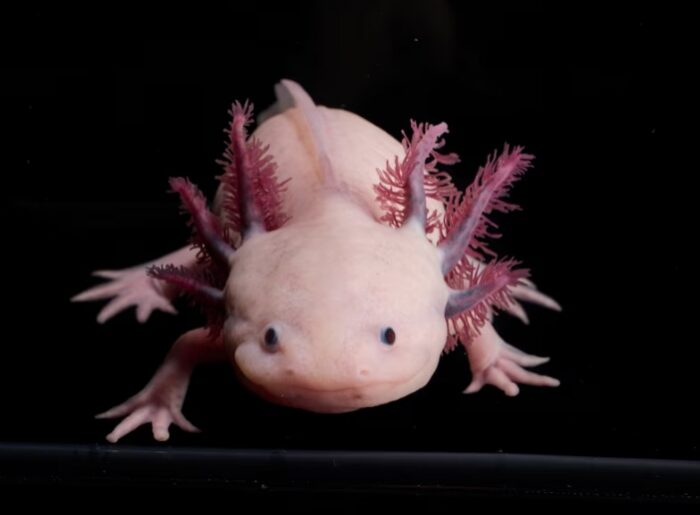 Regeneration is one of the futuristic tropes of science-fiction, because it is both incredibly powerful and not theoretically impossible. Imagine the ability to regrow a lost limb, or simply to replace a diseased or worn out limb. There are about a million limb amputations worldwide every year, so it is a very common medical problem. What if we could regenerate organs? This would be a game-changer for medicine.
There are several approaches to addressing missing limbs or failing organs. One is the cyborg approach – make a mechanical version to replace the biological one. We are making progress here, with brain machine interfaces, mechanical hearts, and other advances. Or you could transplant the body part from another person, or even an animal that has been genetically modified to be compatible. You can also regrow the missing or failing body part from the intended recipient’s own tissues and then transplant that. Or you could inject stem cells programed to regrow the needed part inside the recipient. All of these options are active research programs, have shown some incredible promise, but are also years or even decades away, especially in their mature form.
Let’s now add one more technology to the list – genetic therapy that triggers natural regeneration, meaning from the person’s own tissue. This has long been a target of potential therapy, inspired by the fact that there are many animals that can already naturally do this. Most extreme is the axolotl (a type of salamander that for some reason has become very population with the young generation), which can regenerate just about any of its body parts. They form a blastoma of pluripotent stem cells at the site of injury that can quickly regrow into a missing limb, heart, spinal cord, parts of the brain, etc. in weeks. There are also zebrafish, which can regrow their tail fins. Mice can also regrow missing digits, which is important because they are mammals showing that regeneration can happen even within the mammal clade. You don’t have to be a salamander.
Continue Reading »
Nov
17
2025
 I am currently in Dubai at the Future Forum conference, and later today I am on a panel about the future of the mind with two other neuroscientists. I expect the conversation to be dynamic, but here is the core of what I want to say.
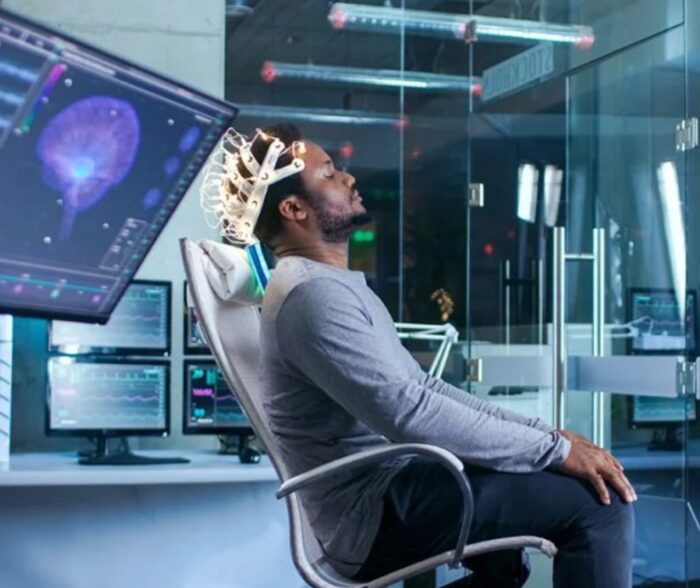
As I have been covering here over the years in bits and pieces, there seems to be several technologies converging on at least one critical component of research into consciousness and sentience. The first is the ability to image the functioning of the brain, in addition to the anatomy, in real time. We have functional MRI scanning, PET, and EEG mapping which enable us to see cerebral blood flow, metabolism and electrical activity. This allows researchers to ask questions such as: what parts of the brain light up when a subject is experiencing something or performing a specific task. The data is relatively low resolution (compared to the neuronal level of activity) and noisy, but we can pull meaningful patterns from this data to build our models of how the brain works.
The second technology which is having a significant impact on neuroscience research is computer technology, including but not limited to AI. All the technologies I listed above are dependent on computing, and as the software improves, so does the resulting imaging. AI is now also helping us make sense of the noisy data. But the computing technology flows in the other direction as well – we can use our knowledge of the brain to help us design computer circuits, whether in neural networks or even just virtually in software. This creates a feedback loop whereby we use computers to understand the brain, and the resulting neuroscience to build better computers.
Continue Reading »