Apr
27
2026
 It’s an iconic image – a giant cephalopod with its tentacles wrapped around a sailing ship, tearing it apart as the crew panic. Eventually it drags the splintered remains down into the deep. Meanwhile, the largest living octopus is the Giant Pacific octopus (Enteroctopus dofleini), averaging about 16 feet long, however an exceptionally large specimen about 30 feet long weighing 600 pounds was found. The largest squid is the Colossal Squid (Mesonychoteuthis hamiltoni), reaching roughly 1,500 pounds (490–500 kg) and lengths up to 46 feet (14 m). That’s huge – but it’s no Kraken.
What about in the past? Everything was bigger in the past, right? That’s obviously a trope, but there is some truth to it, in that there have been ages of gigantism in the evolutionary past. In some periods and locations there are rich resources allowing for the evolution of larger body size, which comes with a number of survival advantages. This can set off an arms race of size, with prey becoming larger to avoid predation, and predators becoming larger to hunt bigger prey. The age of the dinosaurs is the most iconic example of this. But that, of course, does not mean that all lineages were necessarily larger in the past. Whales are a good example – the largest whales (and animals) to have ever lived are extant. So what about cephalopods? Are the largest ones living now, like with whales, or were there even larger ones in the past?
A new study examines the fossil remains of 12 giant octopuses that lived 100-72 million years ago. These were discovered and examined through grinding digital mining techniques at Hokkaido University in Japan. This method grinds very thin (25-50 micrometers) layers from a rock specimen, then takes a high resolution full color image of each layer. This method completely destroys the specimen, but results in a high resolution 3D image of any fossils within the rock. It uses AI models to reconstruct the fossils. The technique is used in cases where the fossils are too soft to X-ray (they are invisible to X-rays), cannot be chemically separated from the surrounding rock, and are too fragile for ordinary extraction. All of these are true for the soft beaks of octopuses.
Continue Reading »
Apr
23
2026
 This interesting case was reported in the literature in 2007. For some reason it was then widely published in the mainstream media in 2015. Now it is making the rounds again on social media to support a false narrative about brain function. The story is of a 20 year old German woman who suffered a traumatic brain injury in a car accident. Over the next several months she started to slowly lose her vision – which is an important detail, it was not a sudden loss as a result of the physical trauma. After evaluation she was diagnosed with psychogenic blindness, meaning that it was not due to any physical damage to her visual system but was rather due to psychological stress. This patient also has what is now called dissociative disorder, or multiple personality, with 10 distinct personalities.
What makes the case even more interesting is that, with therapy, some of her personalities regained vision while others did not. Eventually eight of her ten personalities regained vision. This presented a rare, perhaps unique, opportunity to study the underlying neuroanatomical correlates of psychogenic blindness – what is happening in the brain when someone loses the ability for conscious sight despite their visual system working?
Psychogenic or functional neurological disorders are a complex and poorly understood phenomenon in which emotional stress and trauma presents as physical neurological symptoms. Common presentations include paralysis, language difficulty, sensory loss, and blindness. The diagnosis is mostly one of exclusion, which means sufficient examination and study is done to rule out any demonstrable damage, lesion, or other physical cause. This does not mean the patient is faking (technically called malingering) – that is a distinct condition that can usually be distinguished from a functional disorder. Usually patients with a functional disorder are very distressed by their symptoms and want further examination to find out what is wrong. In addition to simply ruling out physical causes, the diagnosis of a functional disorder can be supported by some positive evidence from the neurological exam. With psychogenic blindness, for example, patients will have normal pupillary responses (assuming no separate baseline deficit), and will have a normal reaction to optokinetic testing. This involves moving vertical black and white stripes horizontally across their vision. This will cause an involuntary response of tracking the stripes with eye movements. If this happens then we know that visual information is getting in and making its way to the visual cortex.
Continue Reading »
Apr
21
2026
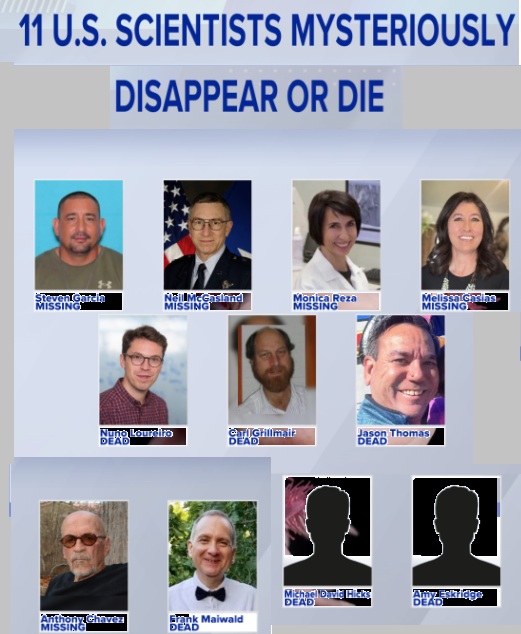 The latest social media buzz involves a list of scientists who have either died or gone missing over the last three years, with the implication that there must be something nefarious going on. The FBI is now investigating these cases to see if there is any connection, and the White House appears to be taking the case seriously. James Comer of the House Oversight Committee said: “It does appear that there’s a high possibility that something sinister is taking place here. It’s very unlikely that this is a coincidence. Congress is very concerned about this. Our committee is making this one of our priorities now because we view this as a national security threat.”
My initial reaction to stories like this is – these kinds of things crop up all the time and they always turn out to be just coincidences, or not even that. Sometimes they are just stories fabricated out of increasingly distorted information, almost always to serve some conspiracy narrative. So my reaction is the same as if someone claims to have seen Bigfoot or an alien spacecraft – initial skepticism is fully warranted, but sure, I am happy to take an objective look. This may be a rare case when there is a genuine phenomenon going on, and in any case this is what activist skeptic do – take a deep dive when these stories emerge.
Continue Reading »
Apr
20
2026
 Regeneration is one of the futuristic tropes of science-fiction, because it is both incredibly powerful and not theoretically impossible. Imagine the ability to regrow a lost limb, or simply to replace a diseased or worn out limb. There are about a million limb amputations worldwide every year, so it is a very common medical problem. What if we could regenerate organs? This would be a game-changer for medicine.
There are several approaches to addressing missing limbs or failing organs. One is the cyborg approach – make a mechanical version to replace the biological one. We are making progress here, with brain machine interfaces, mechanical hearts, and other advances. Or you could transplant the body part from another person, or even an animal that has been genetically modified to be compatible. You can also regrow the missing or failing body part from the intended recipient’s own tissues and then transplant that. Or you could inject stem cells programed to regrow the needed part inside the recipient. All of these options are active research programs, have shown some incredible promise, but are also years or even decades away, especially in their mature form.
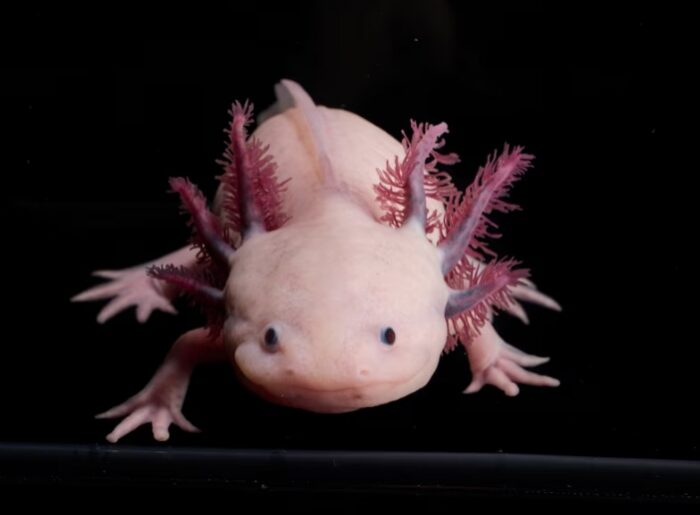
Let’s now add one more technology to the list – genetic therapy that triggers natural regeneration, meaning from the person’s own tissue. This has long been a target of potential therapy, inspired by the fact that there are many animals that can already naturally do this. Most extreme is the axolotl (a type of salamander that for some reason has become very population with the young generation), which can regenerate just about any of its body parts. They form a blastoma of pluripotent stem cells at the site of injury that can quickly regrow into a missing limb, heart, spinal cord, parts of the brain, etc. in weeks. There are also zebrafish, which can regrow their tail fins. Mice can also regrow missing digits, which is important because they are mammals showing that regeneration can happen even within the mammal clade. You don’t have to be a salamander.
Continue Reading »
Apr
16
2026
 The recent rapid advance in the capabilities of artificial intelligence (AI) applications I think qualifies as a disruptive technology. The term “disruptive technology” was popularized in 1997 by Clayton M. Christensen. To summarize, a disruptive technology is “an innovation that fundamentally alters the way industries operate, businesses function, or consumers behave, often rendering existing technologies, products, or services obsolete.” AI is potentially so powerful, and changing so quickly, that it is challenging to optimally regulate it. We are caught in a classic dilemma – we do not want to hamper our own competitiveness in a critical new technology, but we also don’t want to unwittingly create new vulnerabilities or unintended negative consequences. For now we seem to be erring on the side of not hampering competitiveness, which basically places us at the tender mercies of tech bros.
Which is partly why I found the conflict between Anthropic and the Department of Defense (still the legal name) so fascinating. In short, Anthropic’s powerful AI application, Claude, has at least two significant internal “red lines” or guardrails – it cannot be used for massive domestic surveillance, and it cannot be used for final military targeting, without a human in the loop. Anthropic CEO Dario Amodei has not backed down on this – he says that the first restriction on domestic surveillance is simply a matter of ethics. The second restriction, however, is mainly a matter of quality control – their system is still vulnerable to hallucinations and is not reliable enough to count on for final targeting decisions. Hegseth has criticized his concerns as “woke” and a critical vulnerability for the US military. More charitably, he say essentially that the US military is using the application lawfully, and should not be restricted in any lawful use of the software. Others have also stated that in an emergency they have to know the software will do whatever they ask it.
This conflict has many deep implications, and is beyond what I intend for this blog post. What I want to focus on is the fact that an AI application is creating this ethical dilemma, and forcing us to ask – who should control such awesome power, the CEO of a tech company or the Federal government? It seems that we are facing or about to face many similar questions provoked by the disruptive nature of recent AI applications.
Continue Reading »
Apr
14
2026
 Remember The Last Starfighter from 1984? In that movie a trailer-park kid with limited prospects spends his time on an arcade-style video game, Starfighter. He plays the game so much that he beats the final level, and it turns out he is the first person to ever do so. He is heavily criticized for spending so much time playing a game, which is seen as a sign of boredom and lack of ambition – a waste of time. The twist (42 year old spoiler incoming) is that the game was actually a test (the Excalibur test – a deliberate reference to King Arthur) to find a skilled pilot for an actual real-life starfighter. He goes on to save the galaxy from invasion.
The interesting premise of the movie is that playing a video game is not only a test of real-life skill, but can be used to train such skill. In 1984 this was kind of a new idea, and appealing to a generation of kids newly hooked on video games. Video games have been significantly mainstreamed over the last half century, but there is still a bit of a cultural stigma attached to them – they are seen as the realm of dorks and geeks, with inevitable jokes about how avid video gamers with “never get laid” (or something to that effect). Since the beginning of their popularity parents have worried, with such worry being fed by a sensationalist media, that video games were going to “rot” their kids’ brains, turn them into losers who can never get a skilled job, and might even cause violent behavior. Every mass shooting someone brings up violent video games.
But the evidence simply does not support these concerns. One big problem with the research is that it shows correlation only, not causation. Sure, people who play aggressive video games tend to be more aggressive, but that doesn’t mean the game is the cause. Further, there are many confounding factors, and more recent research shows that violence in the game is not the key feature. It has more to do with the level of difficulty and the resulting frustration that seems to raise aggression, not violence in the game. More competitive and difficult games tend to be more stimulating, regardless of the level of violence. The bottom line – after decades of research, systematic reviews conclude: “There is insufficient scientific evidence to support a causal link between violent video games and violent behavior.”
Continue Reading »
Apr
13
2026
 Last week I wrote about the possibilities of genetically engineering humans. The quickie version is this – we are already using genetic engineering (CRISPR) for somatic changes to treat diseases, and other applications are likely to follow. Engineering germline cells, which would get into the human gene pool, are legally and ethically fraught, but it’s hard to predict how this will play out. I have also written often about genetically engineering food. I think this is a great technology with many powerful applications, but it should be, and largely is, highly regulated to make sure that anything that gets into the human food chain is safe.
I haven’t written as much about genetically engineering pets, and this is likely to be the lowest hanging fruit. That is because pets are neither food nor are they a human medical intervention. But that does not mean they are not regulated – they are regulated in the US under the FDA and USDA. Genetic engineering is treated as an animal drug, and must be deemed safe to the animals being engineered. The USDA also can regulate engineered plants and animals to make sure they do not pose any risk to the environment, humans, or livestock. This makes sense. We would not want, for example, to allow a company to release a genetically engineered bee, pest, or predator into the environment without proper oversight.
Pets, as a category, are domesticated, are not intended to be used as food, nor are they intended to be released into the wild. I say “intended” because pets can become food for predators, and they can escape or be released into the wild, and even become feral. But these contingencies are much easier to prevent than with food or wild plants or animals. For example, if you get a rescue pet, it has likely already automatically been spade or neutered. One easy way to reduce risk would be to make any GE pet sterile, which is likely what the company would want to do anyway to prevent violation of their patents through breeding. In short, it seems that reasonable regulatory hurdles should not be a major problem for any effort to commercialize GE pets.
Continue Reading »
Apr
09
2026
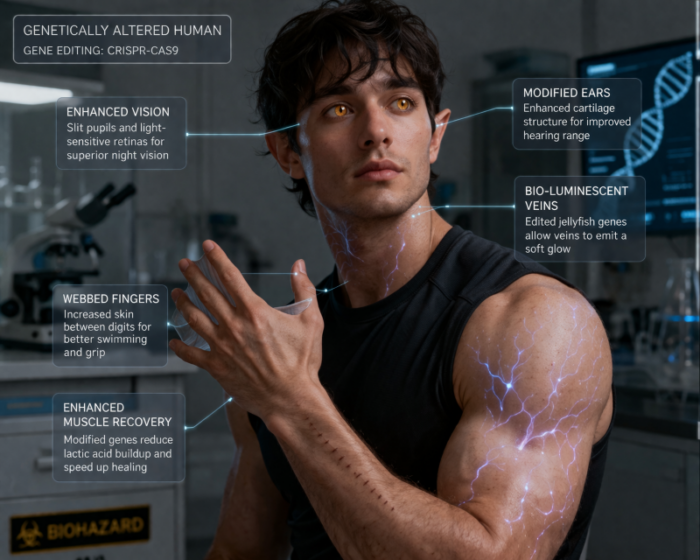 Are we getting close to the time when parents would have the option of genetically engineering their children at the embryo stage? If so, is this a good thing, a bad thing, or both? In order for this to happen such engineering would need to be technically, legally, and commercially viable. Let’s take these in order, and then discuss the potential implications.
The main reason this is even a topic for discussion is because genetically engineering is technically feasible. Obviously we do it to plants and animals all the time. We also have increasingly powerful and affordable technology for doing so, such as CRISPR. This is already powerful and practical enough for small startups to perform CRISPR as a service, if it were legal. We already have FDA-approved CRISPR treatments, and have performed personalized CRISPR therapy. CRISPR is fast and affordable enough to have made its way into the clinic. But there is a crucial difference between these treatments and genetic modification – these treatments affect somatic cells, not germ-line cells. This means that whatever change is made will stay confined to that one individual, and cannot get into the human gene pool. What we are talking about now is genetically modifying an embryo at an early enough stage that it will affect all cells, including germ cells. This means that these changed can be passed down to the next generation, and effectively enter the human gene pool.
This difference is precisely why there is regulation dealing with such procedures in many countries, including the US. In the US the situation is a little complex. It is not explicitly illegal to perform germ line gene editing on humans. However, there is a ban on federal funding for any such research. This does allow for private funding of such research, but any resulting treatment would still need FDA approval, which is highly unlikely in the current environment. Despite this, there is discussion among several startups to start exploring this idea. Why this is happening all at once is not clear, but it seems like we have crossed some threshold and startups have noticed. With current regulation, where does that leave us regarding our three criteria?
Technically a CRISPR-based germ-line treatment for humans is possible. We do have the technology. What needs to be worked out is specific changes and their results. This would require clinical trials, and that is the main stumbling block in the US and some other countries. It seems unlikely the FDA would approve such trials, and therefore there would be no way to even work towards FDA approval. A company could theoretically do privately funded studies that are not part of FDA approval, but they would still need ethical approval (IRB approval) for such studies, which may prove difficult (although not necessarily impossible). Such research could be carried out in countries with more lax regulations, however. Over 70 nations have such regulations, which means many do not. So technically we are theoretically close to having marketable treatments designed to change actual human genetic inheritance.
Continue Reading »
Apr
06
2026
 Many people might find this to be an easy question and simple concept – what is your favorite color? In fact it was used as the quintessential easy question by the bridge guardian in Monty Python and the Holy Grail. But it is a good rule of thumb that everything is much more complicated than you think or than it may at first appear, and this is no exception. We recently had a casual discussion about this topic on the SGU, and it left me unsatisfied, so I thought I would do a deeper dive. Perhaps there is a neuroscientific answer to this question.
The panel differed in their reactions to the question of favorite color (we were just giving our subjective feelings, not discussing research or evidence). Cara felt that “favorite color” is largely arbitrary. Kids are asked to pick a favorite color, which they do (under pressure) and then often just stick with that answer as they get older. She also felt the question was meaningless without context – are you referring to clothes, cars, house color, or something else? Jay was at the other end of the spectrum – he has a strong affiliation for the color orange which gives him a pleasant feeling. The rest were somewhere in between these two extremes.
I knew there had to be a science of “favorite color”, which I thought might be interesting. Indeed there is – and it is interesting.
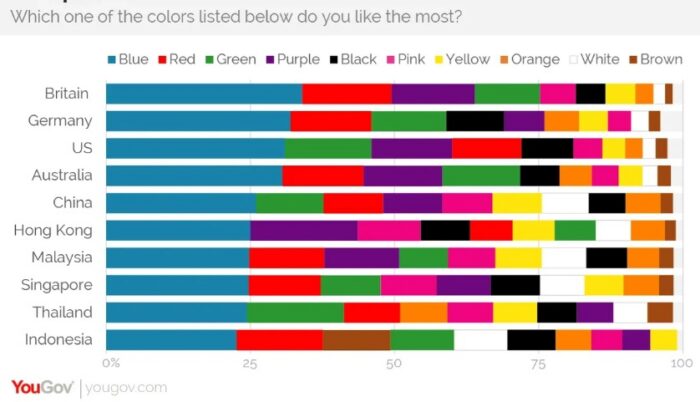
First, what is the distribution of favorite color, across the world and demographically? Blue is, far and away, the most favorite color, in most countries across the world, so it seems to be very cross-cultural. It is also the favorite across age groups and gender. The second-most favorite color is either green, red, or purple. Brown is almost universally the least favorite color. Gender has an effect on favorite color, with more women favoring pink, and reds in general (but still preferring blue overall). Republicans still prefer blue over red, but more Republicans prefer red than Democrats. There are country-specific differences as well. Red is a higher preference in China than many other countries, for example.
Continue Reading »
Apr
02
2026
 I have a love-hate relationship with TikTok, as I do social media in general. It is a great communication tool and allows scientists and science communicators to get their content out to a larger audience cheaply and easily. If you know how to use the internet and social media as a resource, you can find a video about almost any topic. I particularly love the “how to” videos. And yet these applications are also used (mostly used) to spread nonsense and misinformation, or at least inaccurate, misleading, or overly generalized information. The low bar of entry cuts both ways.
As a result I spend part of my time as a communicator with my finger in the dike of social media pseudoscience and science denial. For example, this individual feels his insights into the workings of the human brain need to be shared with the world. His musings are based entirely on a false premise, his apparent misunderstanding of what neuroscientists understand about brain function. He begins with the nicely vague statement, “scientists have discovered”, followed by a completely incorrect statement – that thoughts come to our brain from outside the brain.
Before I get into this old “brain as receiver” claim, I want to point out that this format is extremely common on TikTok in particular and social media in general. This is more worrying than any individual claim – the culture is to present some random nonsense in the format of “isn’t this crazy”, or with with a cynical tone implying something nefarious is going on. Such authors may or may not believe what they say, they may just be trying to amplify their engagement with a total disregard toward whether what they are saying is true or not. They may even be a full Poe – knowing that what they say is nonsense. Either way, they feel it is appropriate to spend the time to record and upload a video without spending the few minutes that would be needed to check to see if what they are saying is even true. The very platform they are using to spread their nonsense often has all the information they need to answer their alleged questions. The culture is profoundly incurious, intellectually vacuous, lacking all scholarship or quality control, and seems to value only engagement. Thrown into the mix are true believers, grifters, and those who display classic symptoms of some form of thought disorder. This is “infotainment” taken to its ultimate expression.
Continue Reading »