Feb 02 2026
A Fully Renewable Grid?
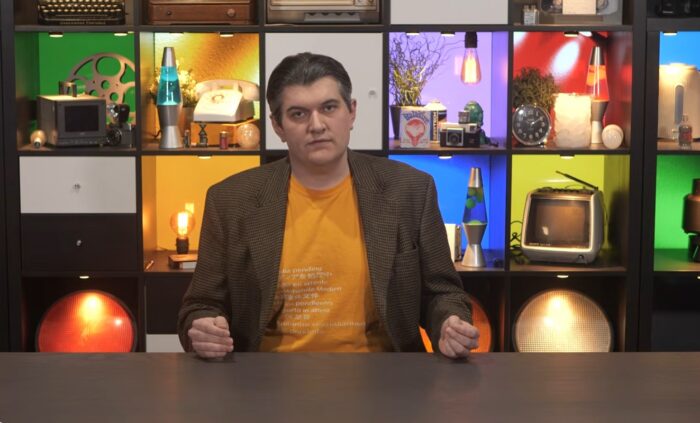 My long-stated position (although certainly modifiable in the face of any new evidence, technological advance, or good arguments) is that the optimal pathway to most rapidly decarbonize our electrical infrastructure is to pursue all low-carbon options. I have not heard anything to dissuade me so far from this position. A couple of SGU listeners, however, pointed me to this video making the case for a renewable + battery energy infrastructure.
The channel, Technology Connections, does a good job at putting all the relevant data into context, and I like the big-picture approach that the host, Alec Watson, takes. I largely agree with the points he makes. Also, at no point does he say we should not also build nuclear, geothermal, or more hydroelectric. He does, perhaps, imply that we don’t need nuclear at several points, but he did not address it directly.
So what are the big-picture points I agree with? He correctly points out that fossil fuels are disposable – they are fuel that you burn. They do not, in themselves, create any energy infrastructure. Meanwhile, a solar panel or wind turbine, once you have invested in building them, can produce energy essentially for free for 20 years. He argues that we should be investing in infrastructure, not just pulling fuel out of the ground that we will burn and it’s gone. I get this point, however, what about hydrogen? It is not certain, but let’s hypothetically say we find large reserves of underground hydrogen that we can tap into. I would not be against extracting this resource and burning it for energy, since it is clean (produces only water, and does not release carbon). Although, we might find better uses for such hydrogen other than burning it, such as feedstock for certain hard-to-decarbonize industries.
But his point remains valid – we should be looking for ways to develop our technology to be reusable, circular, and sustainable, rather than extractive. Extracting and burning a resource is one way and limited. At most this should be a stepping stone to more sustainable technology, and I think we can reasonably argue that fossil fuels was that stepping stone and it is beyond time to move beyond fossil fuel to better technology.
Also, building wind or solar plus batteries is the cheapest new energy to add to the grid. He feels the economics will simply win out. I agree – with caveats. At times I get the feeling he is arguing for what will happen in the long run, but he also says “we are here now”. We are sort-of here now, but not fully, which I will get to below. Solar panels are relatively cheap and efficient. Wind turbines are getting more efficient and cost-effective as well, although are more sensitive to market fluctuations and any delays. And he correctly points out that these technologies are still rapidly improving, while there is not much room for improvement with burning fossil fuel.
He also nicely addresses some of the common misunderstandings about renewable energy (a lot of “whatabout” questions). What about the land-use issue with solar panels? He points out that if we just converted the land currently used to grow corn for ethanol (which is a massively inefficient use of land and way to create fuel), and instead put solar panels on that same land, we could generate more than enough energy to run the entire country and charge all our EVs. Solar panels simply create much more energy per acre than corn for ethanol. That’s a solid point.
Whatabout all the lithium and rare-earths we need to build all those panels and batteries? His answer is – well, yes, we do need to extract all those minerals to build all the panels and batteries we need. However, he argues, once we do that, the panels and batteries can theoretically be infinitely recycled. Those atoms don’t go away. This is one of his “eventually” arguments, in my opinion. Yes, one day we might theoretically have an energy infrastructure built entirely on recycled material that has already been extracted. I agree, and I agree that we should be building toward that day (rather than just burning fuel). But we are nowhere near that day.
Further, technological advancements, like sodium ion batteries and newer lithium chemistry, removes many of the conflict elements and rare elements. Also true. Sodium batteries are actually already in production.
Does any of this change my position? No. I have already endorsed many of these arguments in favor of renewables. I also think we should be building and researching to develop an all-renewable future based on an entirely circular technology cycle. If we are playing the “eventually” game, however, I also think we need to add fusion to the mix, once we tackle that herculean technology challenge. This is especially true if we want to venture out into our solar system.
What he does not explicitly address, however, is the optimal path to that future. A path, I believe, that should take into consideration the amount of carbon we release into the atmosphere between now and our zero-carbon future. My position has always been, not that renewables are not great and should be a big part (if not totality) of our energy future – but that we are still in a stepping-stone era of history.
The way I see it, we need to be transitioning from the fossil fuel stepping stone to the nuclear-geothermal-hydroelectric stepping stone before we get to entirely renewable. What does this mean?
It means we should be shutting down coal-fired plants as fast as we possible can. Coal is the dirtiest form of energy and is increasingly becoming one of the most expensive (even without counting the cost of carbon, which I think we should). It also costs the most lives, all along the chain. To do this (again, as quickly as possible) means not only building lots of solar and wind, but also nuclear, geothermal and hydroelectric. The latter two, however, are location limited. Sure, we are developing technology to expand geothermal, but there is an inherent limit – if it costs more energy to pump the fluid down to the hot layers than we get out of the exchange, the process simply does not work. It’s unclear how much of a role geothermal can play. And hydroelectric requires the proper water features, and it harmful to local environments.
We can, however, build nuclear almost anywhere. We can swap them in, one-for-one, for retiring coal plants. We can have them on ships, and can place them relatively close to where the energy is used. We have plenty of fissile material, and the newer designs are safer, more efficient, and more dispatchable. The big downside to nuclear is that it is expensive – but it’s way less expensive than global warming.
Nuclear can potentially give us the 30-50 years it will take to advance our technology and build all that renewable infrastructure. And yes – we do need this time. Simply building all those panels and batteries will take time. Updating and expanding the grid will take time. All these projects need minerals, and it will take time to develop the mines necessary (yes – decades).
The question is – while we take the next 30-50 years go transition to renewables, do we want to be burning fossil fuels or uranium? That is really the big question.
I also think that Alec does not pay enough attention to the energy storage issue. Building enough battery storage for an all-renewable energy infrastructure is no small task. Again, it will take decades. Perhaps more importantly – as he correctly says, batteries get you through the night. However, they do not get you through the winter. An all-renewable future requires long-term energy storage as well. Batteries will not work for this. As far as I know, the only really viable solution right now is pumped hydro. But this too will take decades to develop, and it remains to be seen how much pumped hydro we can develop without too much harm to the environment.
The bottom line is this. If we are talking about the future of our energy and also transportation sectors, then I completely agree – we should be aiming for an all-electric, all renewable future based upon an entirely circular economy rather than a linear extraction-burn economy. But we also need to consider how much carbon will be emitted between here and there, and if we want to minimize that carbon, we also should be building out our nuclear infrastructure, maintaining our hydroelectric inventory, and continuing to develop geothermal. These energy sources also have the advantage of providing baseload and even dispatchable energy, which significantly reduces the need for energy storage and will buy us time there as well.