Feb 26 2026
Universal Respiratory Vaccine
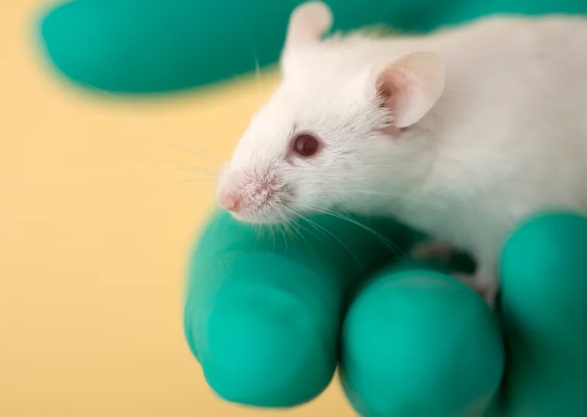 The news is abuzz with talk of a potential universal respiratory vaccine. It’s definitely interesting research, but may not be what you think. In this case, the reporting has been quite good on the whole, but the headlines can be misleading if you are not deeply steeped in the complexities of mammalian immunity. Let me start with the biggest caveat – this is a mouse study. This is therefore encouraging pre-clinical research, but we are still years away from translating this into an actual vaccine. Also, most interventions that are encouraging at the animal stage don’t make it through human testing. So don’t expect any revolution based on this treatment anytime soon. Having said that – there is great potential here.
To understand how this new approach works, let’s review some basics of immunity. (Note – the immune system is incredibly complex, and I can only give a very superficial summary here, but enough to understand what’s going on.) Mammalian immune systems have two basic components, innate immunity and adaptive immunity. The adaptive immune system is probably what most people think about when they think about the immune system and vaccines. Adaptive immunity targets and recognizes specific antigens (such as proteins) on pathogens like viruses, bacteria, or fungi. Antibodies attach to these antigens, flagging them to be targeted by immune cells like macrophages which then eat them. The macrophages in turn display the antibody-flagged antigens on their surface, triggering a greater and more specific reaction to those specific antigens. Adaptive immunity is considered slow (it takes days to ramp up), specific (it targets specific antigens on specific pathogens) and durable (it has memory, and will react more quickly and robustly to the same pathogen in the future).
By contrast, the innate immune system is fast, non-specific, and short-lived with no memory. The innate immune system consists of physical barriers, like skin and mucosa, and immune cells that target pathogens based on broad patterns that are not learned but are innate (hence the name). There are Toll-like receptors (TLRs – the name Toll comes from the German for “fantastic”, allegedly said by a researcher upon discovery). The Toll gene was first discovered in fruit flies and then similar genes were later discovered in mammals, hence “Toll-like”. TLRs detect pathogen-associated molecular patterns (PAMPs), which are highly conserved features of types of pathogens. In other words – a TLR might recognize a snippet of RNA as a pattern typical of RNA viruses, or proteins that tend to occur on pathogenic bacteria. “That looks like an RNA virus, so let’s attack it.”
While these are distinct and complementary parts of the immune system, they are also highly tied together. Components of the innate immune system trigger the adaptive immune system, which in turn stimulates innate immunity. In fact, many traditional vaccines contain adjuvants which stimulate innate immunity in order to boost adaptive immunity.
The new vaccine (technical name – GLA-3M-052-LS+OVA), which is a nasal spray given in three doses to the mice being studied, stimulated innate immunity, not adaptive immunity. Normally, after exposure to a pathogen or even allergen, innate immunity will be heightened for a few days, then return to normal. The nasal vaccine extends this heightened innate immunity in the lungs and respiratory system for three months. It does this by containing synthetic molecules that bind to TLRs, tricking them into responding as if a pathogen is present. The vaccine also contains a protein called ovalbumin, which stimulated T-cells of the adaptive immune system, keeping them resident in the tissue. These T-cells help maintain the heightened state of activity of the innate immune system. According to the authors: “Protection was mediated by persistent ovalbumin-specific CD4+ and CD8+ memory T cells that imprinted alveolar macrophages (AMs), enhancing antigen presentation and antiviral immunity.”
The trick of stimulating innate immunity was partly borrowed from the tuberculosis BCG vaccine, which also works by both triggering adaptive immunity but also stimulating the innate immune system. Researchers studies how the BCG vaccine accomplished this and applied that knowledge to this new vaccine.
In the study the researchers compared mice treated with three doses of the nasal vaccine to untreated mice and found that the treated mice were protected for at least three months from “SARS-CoV-2 and Staphylococcus aureus. In addition, the vaccine protected mice from other viruses (SARS-CoV-2, SARS, SCH014 coronavirus), bacteria (Acinetobacter baumannii), and allergens.”
In the best-case-scenario where this vaccine technology is safe and effective in people, what can we expect? Well, I don’t think this would replace any traditional vaccines based on adaptive immunity. Like the two halves of the immune system itself, it will likely be complementary to traditional vaccines. Traditional vaccines can provide years and sometimes decades of specific protection from common pathogens, and there is no substitute for that. Also, this vaccine works on respiratory infections only, although it may be possible to adapt this approach to other types of infection.
What an innate immunity-based vaccine provides is a good first line of defense against an outbreak, epidemic, or seasonal infection. This would require many millions of doses (or even billions, in the context of a pandemic) being available at short notice to provide several months of resistance to an entire population at the beginning of an outbreak or a seasonal infection (like the flu). It remains to be seen if this vaccine reduces the risk of spread or just the severity of infection. If it reduces spread (which is plausible, if viruses, for example, don’t have a chance to reproduce in large numbers), it could short circuit many respiratory epidemics.
Imagine if this vaccine were available at the beginning of COVID. It could have provided significant protection, reducing death and morbidity, and allowed us time to study the virus and develop adaptive vaccines. That is one of the benefits – it provides broad spectrum non-specific defense. We don’t necessarily need to know anything about the pathogen for this vaccine to work, so it is ideal for novel respiratory outbreaks. It also means we don’t need to track new strains of a virus, and that pathogens cannot easily adapt to this immunity by simply mutating their proteins.
There is a lot of research ahead to study the safety and effectiveness of this vaccine in humans. Even once a vaccine is approved, more research is needed to study long term effectiveness and potential side effects. One thing to consider, for example – there is likely a reason that evolutionary forces did not favor us having our innate immunity on high alert at all times. There is often a downside to immune activity, which is mostly why you feel like crap during an infection. It’s not the bug, it’s your bodies reaction to the bug. The worst-case scenario is that this approach increases the risk of auto-immunity.
Having said that – we are not living in the world in which we evolved. We are living in a globally connected world of over 8 billion people, often in close proximity to potential animal reservoirs of pathogens. The selective pressures are likely now different than they were when we were living in largely isolated tribes. But we don’t have to wait for evolution to work its slow grim task, we can tweak our immune systems with science and technology to provide some enhanced protection when and where we need it.