Feb 24 2025

The Alef Flying Car

The flying car is an icon of futuristic technology – in more ways than one. This is partly why I can’t resist a good flying car story. I was recently sent this YouTube video on the Alef flying car. The company says his is a street-legal flying car, with vertical take off and landing. They also demonstrate that they have tested this vehicle in urban environments. They are available now for pre-order (estimated price, $300k). The company claims: “Alef will deliver a safe, affordable vehicle to transform your everyday commute.” The claim sounds reminiscent of claims made for the Segway (which recently went defunct).

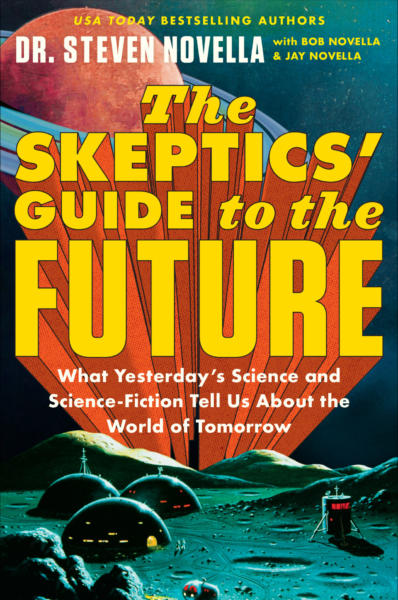
The flying car has a long history as a promise of future technology. As a technology buff, nerd, and sci-fi fan, I have been fascinated with them my entire life. I have also seen countless prototype flying cars come and go, an endless progression of overhyped promises that have never delivered. I try not to let this make my cynical – but I am cautious and skeptical. I even wrote an entire book about the foibles of predicting future technology, in which flying cars featured prominently.

So of course I met the claims for the Alef flying car with a fair degree of skepticism – which has proven entirely justified. First I will say that the Alef flying car does appear to function as a car and can fly like a drone. But I immediately noticed in the video that as a car, it does not go terribly fast. You have to do some digging, but I found the technical specs which say that it has a maximum road speed of 25 MPH.  It also claims a road range of 200 miles, and an air range of 110 miles. It is an EV with a gas motor to extend battery life in flight, with eight electric motors and eight propellers. It is also single passenger. It’s basically a drone with a frame shaped like a car with tires and weak motors – a drone that can taxi on roads.

It’s a good illustration of the inherent hurdles to a fully-realized flying car of our dreams, mostly rooted in the laws of physics. But before I go there, as is, can this be a useful vehicle? I suppose, for very specific applications. It is being marketed as a commuter car, which makes sense, as it is single passenger (this is no family car). The limited range also makes it suited to commuting (average daily commutes in the US is around 42 miles).

Continue Reading »

Comments: 0

Feb 21 2025

Thermoelectric Cooling – It’s Cooler Than You Think

I am fascinated by the technologies that live largely behind the scenes. These are not generally consumer devices, but they may be components of consumer products, or may largely have a role in industry – but they make our modern world possible, or make it much better. In addition I think that material science is largely underrated in terms of popular appeal, but it is material science that often make all other technologies possible or feasible. There is another aspect of technology that I have been increasingly interested in – solid state technology. These are, generally speaking, devices that use electricity rather than moving parts. You are likely familiar with solid state drives, that do not have spinning discs and therefore are smaller, use less power, and last longer. One big advantage of electric vehicles is that they are largely solid state, without the moving parts of an engine.

There is a technology that combines all three of these features – it is a component technology, dependent on material science, and solid state: thermoelectric devices. This may not sound sexy, but bear with me, this is cool (pun intended) technology. Thermoelectric materials are those that convert electricity into a temperature difference across a material, or convert a temperature difference into electricity. In reality, everything is a thermoelectric material, but most materials have insignificant thermoelectric effects (so are functionally not thermoelectric).

Thermoelectric devices can be used to harvest energy, from any temperature difference. These are generally not large amounts of energy – we don’t have thermoelectric power plants connected to the grid – and they are currently not practical and cost effective enough for a large scale. This may be possible in the future, but not today. However, for applications that require small amounts of energy, harvesting that energy from ambient sources like small temperature differences is feasible.

Continue Reading »

Comments: 0

Feb 18 2025

Birds Separately Evolved Complex Brains

The evolution of the human brain is a fascinating subject. The brain is arguably the most complex structure in the known (to us) universe, and is the feature that makes humanity unique and has allowed us to dominate (for good or ill) the fate of this planet. But of course we are but a twig on a vast evolutionary tree, replete with complex brains. From a human-centric perspective, the closer groups are to humans evolutionarily, the more complex their brains (generally speaking). Apes are the most “encephalized” among primates, as are the primates among mammals, and the mammals among vertebrates. This makes evolutionary sense – that the biggest and most complex brains would evolve from the group with the biggest and most complex brains.

But this evolutionary perspective can be tricky. We can’t confuse looking back through evolutionary time with looking across the landscape of extant species. Any species alive today has just as much evolutionary history behind them as humans. Their brains did not stop evolving once their branch split off from the one that lead to humans. There are therefore some groups which have complex brains because they are evolutionarily close to humans, and their brains have a lot of homology with humans. But there are also other groups that have complex brains because they evolved them completely independently, after their group split from ours. Cetaceans such as whales and dolphins come to mind. They have big brains, but their brains are organized somewhat differently from primates.

Another group that is often considered to be highly intelligent, independent from primates, is birds. Birds are still vertebrates, and in fact they are amniotes, the group that contains reptiles, birds, and mammals. It is still an open question as to exactly how much of the human brain architecture was present at the last common ancestor of all amniotes (and is therefore homologous) and how much evolved later independently. To explore this question we need to look at not only the anatomy of brains and the networks within them, but brain cell types and their genetic origins. For example, even structures that currently look very different can retain evidence of common ancestry if they are built with the same genes. Or – structures that look similar may be built with different genes, and are therefore evolutionarily independent, or analogous.

Continue Reading »

Comments: 0

Feb 14 2025

AI Powered Bionic Arm

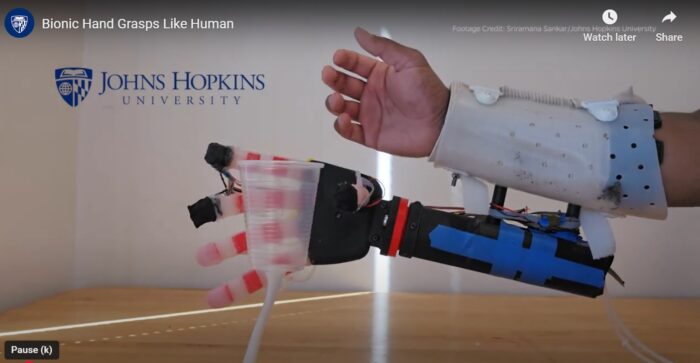
My younger self, seeing that title – AI Powered Bionic Arm – would definitely feel as if the future had arrived, and in many ways it has. This is not the bionic arm of the 1970s TV show, however. That level of tech is probably closer to the 2070s than the 1970s. But we are still making impressive advances in brain-machine interface technology and robotics, to the point that we can replace missing limbs with serviceable robotic replacements.

In this video Sarah De Lagarde discusses her experience as the first person with an AI powered bionic arm. This represents a nice advance in this technology, and we are just scratching the surface. Let’s review where we are with this technology and how artificial intelligence can play an important role.

There are different ways to control robotics – you can have preprogrammed movements (with or without sensory feedback), AI can control the movements in real time, you can have a human operator, through some kind of interface including motion capture, or you can use a brain-machine interface of some sort. For robotic prosthetic limbs obviously the user needs to be able to control them in real time, and we want that experience to feel as natural as possible.

The options for robotic prosthetics include direct connection to the brain, which can be from a variety of electrodes. They can be deep brain electrodes, brain surface, scalp surface, or even stents inside the veins of the brain (stentrodes). All have their advantages and disadvantages. Brain surface and deep brain have the best resolution, but they are the most invasive. Scalp surface is the least invasive, but has the lowest resolution. Stentrodes may, for now, be the best compromise, until we develop more biocompatible and durable brain electrodes.

Continue Reading »

Comments: 0

Feb 10 2025

Who Believes Misinformation

It’s probably not a surprise that a blog author dedicated to critical thinking and neuroscience feels that misinformation is one of the most significant threats to society, but I really to think this. Misinformation (false, misleading, or erroneous information) and disinformation (deliberately misleading information) have the ability to cause a disconnect between the public and reality. In a democracy this severs the feedback loop between voters and their representatives. In an authoritarian government it a tool of control and repression. In either case citizens cannot freely choose their representatives. This is also the problem with extreme jerrymandering – in which politicians choose their voters rather than the other way around.

Misinformation and disinformation have always existed in human society, and it is an interesting question whether or not they have increased recently and to what extent social media has amplified them. Regardless, it is useful to understand what factors contribute to susceptibility to misinformation in order to make people more resilient to it. We all benefit if the typical citizen has the ability to discern reality and identify fake news when they see it.

There has been a lot of research on this question over the years, and I have discussed it often, but it’s always useful to try to gather together years of research into a single systematic review and/or meta-analysis. It’s possible I and others may be selectively choosing or remembering parts of the research to reinforce a particular view – a problem that can be solved with a thorough analysis of all existing data. And of course I must point out that such reviews are subject to their own selection bias, but if properly done such bias should be minimal. The best case scenario is for there to be multiple systematic reviews, so I can get a sense of the consensus of those reviews, spreading out bias as much as possible in the hopes it will average out in the end.

Continue Reading »

Comments: 0

Feb 04 2025

Do Apes Have a Theory of Mind

Designing research studies to determine what is going on inside the minds of animals is extremely challenging. The literature is littered with past studies that failed to properly control for all variables and thereby overinterpreted the results. The challenge is that we cannot read the minds of animals, and they cannot communicate directly to us using language. We have to infer what is going on in their minds from their behavior, and inference can be tricky.

One specific question is whether or not our closest ancestors have a “theory of mind”. This is the ability to think about what other creatures are thinking and feeling. Typical humans do this naturally – we know that other people have minds like our own and we can think strategically about the implications of what other people think, how to predict their behavior based upon this, and how to manipulate the thoughts of other people in order to achieve our ends.

Animal research over the last century or so has been characterized by assumptions that some cognitive ability is unique to humans, only to find that this ability exists in some animals, at least in a precursor form. This makes sense, as we have evolved from other animals, most of our abilities likely did not come out of nowhere but evolved from more basic precursors.

Continue Reading »

Comments: 0

Jan 30 2025

Incorruptible Skepticism

Everything, apparently, has a second life on TikTok. At least this keeps us skeptics busy – we have to redebunk everything we have debunked over the last century because it is popping up again on social media, confusing and misinforming another generation. This video is a great example – a short video discussing the “incorruptibility’ of St. Teresa of Avila. This is mainly a Catholic thing (but also the Eastern Orthodox Church) – the notion that the bodies of saints do not decompose, but remain in a pristine state after death, by divine intervention. This is considered a miracle, and for a time was a criterion for sainthood.

The video features Carlos Eire, a Yale professor of history focusing on medieval religious history. You may notice that the video does not include any shots of the actual body of St. Teresa. I could not find any online. Her body is not on display like some incorruptibles, but has been exhumed in 1914 and again recently. So we only have the reports of the examiners. This is where much of the confusion is generated – the church defines incorruptible very differently than the believers who then misrepresent the actual evidence. Essentially, if the soft tissues are preserved in any way (so the corpse has not completely skeletonized) and remains somewhat flexible, that’s good enough.

The case of Teresa is typical – one of the recent examiners said, “There is no color, there is no skin color, because the skin is mummified, but you can see it, especially the middle of the face.” So the body is mummified and you can only partly make out the face. That is probably not what most believers imagine when the think of miraculous incorruptibility.

Continue Reading »

Comments: 0

Jan 28 2025

The Skinny on DeepSeek

On January 20th a Chinese tech company released the free version of their chatbot called DeepSeek. The AI chatbot, by all accounts, is about on par with existing widely available chatbots, like ChatGPT. It does not represent any new abilities or breakthrough in quality. And yet the release shocked the industry causing the tech-heavy stock market Nasdaq to fall 3%. Let’s review why that is, and then I will give some thoughts on what this means for AI in general.

What was apparently innovative about DeepSeek is that, the company claims, it was trained for only $8 million. Meanwhile ChatGPT 4 training cost over $100. The AI tech industry is of the belief that further advances in LLMs (large language models – a type of AI) requires greater investments, with ChatGPT-5 estimated to cost over a billion dollars. Being able to accomplish similar results at a fraction of the cost is a big deal. It may also mean that existing AI companies are overvalued (which is why their stocks tumbled).

Further, the company that made DeepSeek used mainly lower power graphics chips. Apparently they did have a horde of high end chips (the export of which are banned to China) but was able to combine them with more basic graphics chips to create DeepSeek. Again, this is what is disruptive – they are able to get similar results with lower cost components and cheaper training. Finally, this innovation represents a change for the balance of AI tech between the US and China. Up until now China has mainly been following the US, copying its technology and trailing by a couple of years. But now a Chinese company has innovated something new, not just copied US technology. This is what has China hawks freaking out. (Mr. President, we cannot allow an AI gap!)

Continue Reading »

Comments: 0

Jan 20 2025

The Hubble Tension Hubbub

Published by under Astronomy
Comments: 0

There really is a significant mystery in the world of cosmology. This, in my opinion, is a good thing. Such mysteries point in the direction of new physics, or at least a new understanding of the universe. Resolving this mystery – called the Hubble Tension – is a major goal of cosmology. This is a scientific cliffhanger, one which will unfortunately take years or even decades to sort out. Recent studies have now made the Hubble Tension even more dramatic.

The Hubble Tension refers to discrepancies in measuring the rate of expansion of the universe using different models or techniques. We have known since 1929 that the universe is not static, but it is expanding. This was the famous discovery of Edwin Hubble who notice

d that galaxies further from Earth have a greater red-shift, meaning they are moving away from us faster. This can only be explained as an expanding universe – everything (not gravitationally bound) is moving away from everything else. This became known as Hubble’s Law, and the rate of expansion as the Hubble Constant.

Then in 1998 two teams, the Supernova Cosmology Project and the High-Z Supernova Search Team, analyzing data from Type 1a supernovae, found that the expansion rate of the universe is actually accelerating – it is faster now than in the distant past. This discovery won the Nobel Prize in physics in 2011 for  Adam Riess, Saul Perlmutter, and Brian Schmidt. The problem remains, however, that we have no idea what is causing this acceleration, or even any theory about what might have the necessary properties to cause it. This mysterious force was called “dark energy”, and instantly became the dominant form of mass-energy in the universe, making up 68-70% of the universe.

I have seen the Hubble Tension framed in two ways – it is a disconnect between our models of cosmology (what they predict) and measurements of the rate of expansion, or it is a disagreement between different methods of measuring that expansion rate. The two main methods of measuring the expansion rate are using Type 1a supernovae and by measuring the cosmic background radiation. Type 1a supernovae are considered standard candle because they have roughly the same absolute magnitude (brightness). The are white dwarf stars in a binary system that are siphoning off mass from their partner. When they reach a critical point of mass, they go supernova. So every Type 1a goes supernova with the same mass, and therefore the same brightness. If we know an object’s absolute magnitude of brightness, then we can calculate its distance. It was this data that lead to the discovery that the universe is accelerating.

Continue Reading »

Comments: 0

Jan 13 2025

Should the US Ban TikTok?

My recent article on social media has fostered good social media engagement, so I thought I would follow up with a discussion of the most urgent question regarding social media – should the US ban TikTok? The Biden administration signs into law legislation that would ban the social media app TikTok on January 19th (deliberately the day before Trump takes office) unless it is sold off to a company that is not, as it is believed, beholden to the Chinese government. The law states it must be divested from ByteDance, which is the Chinese parent company who owns TikTok. This raises a few questions – is this constitutional, are the reasons for it legitimate, how will it work, and will it work?

A federal appeals court ruled that the ban is constitutional and can take place, and that decision is now before the Supreme Court. We will know soon how they rule, but indicators are they are leaning towards allowing the law to take effect. Trump, who previously tried to ban TikTok himself, now supports allowing the app and his lawyers have argued that  he should be allowed to solve the issue. He apparently does not have any compelling legal argument for this. In any case, we will hear the Supreme Court’s decision soon.

If the ban is allowed to take place, how will it work? First, if you are not aware, TikTok is a short form video sharing app. I have been using it extensively over the past couple of years, along with most of the other popular platforms, to share skeptical videos and have had good engagement. Apparently TikTok is popular because it has a good algorithm that people like. TikTok is already banned on devices owned by Federal employees. The new ban will force app stores in the US to remove the TikTok app and now allow any further updates or support. Existing TikTok users will continue to be able to use their existing apps, but they will not be able to get updates so they will eventually become unusable.

Continue Reading »

Comments: 0

« Prev - Next »