Jun 23 2025

Plastic Bag Policies Have An Effect
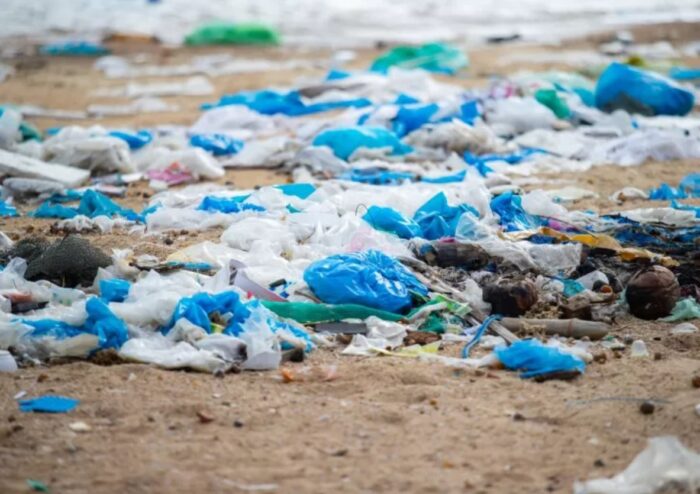
There is a lot of talk concerning the growing plastic waste problem in the world, and that’s because it is a real and serious problem. The world produces about 430 million tons of plastic waste per year, and this is steadily increasing over time. About 6 millions tons of this will end up in water environments – rivers, lakes, shorelines, and the ocean. This plastic can be disruptive to marine life through entanglement, ingestion, and contamination.

There is a bit of semi-good news – a recent study finds that policies aimed at reducing single-use plastic bags are somewhat effective. They used data from apps used by people who clean up waste along the shoreline. The apps track how much and what kind of waste they pick up. This was a convenient source of study data. It is also true that in the US there is no Federal ban on plastic bags, so the researchers were able to compares local, county, and state-wide policies limiting plastic bag use. They could also compare the two main types of policies, bans and fees.

They found that areas with plastic bag policies had 25 – 47% reduced plastic bag waste compared to areas without such policies. The effect was greater over time, and was greater in areas with higher initial plastic bag waste. They also found that plastic bag fees were more effective than bans, which I found interesting. Partial bans were the least effective. Policies at all governmental scales were effective, with state level policies being the most effective.

But – and here is the reason for my caveats above – in all areas the absolute amount of plastic waste increased over the study period. There was only a decrease in the relative amount of increase in areas with a policy compared to those without. So policies decrease the rate of increase of plastic waste. How can this data inform policies going forward?

Continue Reading »

Comments: 0

Jun 12 2025

How Humans Solve Problems

The human brain is extremely good at problem-solving, at least relatively speaking. Cognitive scientists have been exploring how, exactly, people approach and solve problems – what cognitive strategies do we use, and how optimal are they. A recent study extends this research and includes a comparison of human problem-solving to machine learning. Would an AI, which can find an optimal strategy, follow the same path as human solvers?

The study was specifically designed to look at two specific cognitive strategies, hierarchical thinking and counterfactual thinking. In order to do this they needed a problem that was complex enough to force people to use these strategies, but not so complex that it could not be quantified by the researchers. They developed a system by which a ball may take one of four paths, at random, through a maze. The ball is hidden from view to the subject, but there are auditory clues as to the path the ball is taking. The clues are not definitive so the subject has to gather information to build a prediction of the ball’s path.

What the researchers found is that subjects generally started with a hierarchical approach – this means they broke the problem down into simpler parts, such as which way the ball went at each decision point. Hierarchical reasoning is a general cognitive strategy we employ in many contexts. We do this whenever we break a problem down into smaller manageable components. This term more specifically refers to reasoning that starts with the general and then progressively hones in on the more detailed. So far, no surprise – subjects broke the complex problem of calculating the ball’s path into bite-sized pieces.

What happens, however, when their predictions go awry? They thought the ball was taking one path but then a new clue suggests is has been taking another. That is where they switch to counterfactual reasoning. This type of reasoning involves considering the alternative, in this case, what other path might be compatible with the evidence the subject has gathered so far. We engage in counterfactual reasoning whenever we consider other possibilities, which forces us to reinterpret our evidence and make new hypotheses. This is what subjects did, h0wever they did not do it every time. In order to engage in counterfactual reasoning in this task the subjects had to accurately remember the previous clues. If they thought they did have a good memory for prior clues, they shifted to counterfactual reasoning. If they did not trust their memory, then they didn’t.

Continue Reading »

Comments: 0

Jun 09 2025

GMOs May Save Florida Citrus

Citrus greening (also called Huanglongbing or HLB) is an infectious disease affecting citrus trees in Florida. It is a bacterium, Candidatus Liberibacter asiaticus, and spread by an invasive fly, the Asian citrus psyllid. Since 2004 it has caused a reduction in the Florida citrus industry by 90% and doubled production costs. It is close to completely wiping out the Florida citrus industry. Various methods have been tried to keep it under control, but they have all failed.
There is good news, however. The University of Florida in collaboration with the company Soilcea, has developed a GMO orange that is highly resistant to citrus greening. They expect to have commercial trees available by the Spring of 2027. The limiting factor is that it takes years to grow test trees to see that they remain resistant and produce viable fruit. So far the test trees are doing well.

The company licensed the finding of Nian Wang, a professor at the University of Florida, who found that the bacterium is dependent upon interactions with the host that can be traced to several genes. The company used CRISPR to silence those genes, making it more difficult for the bacterium to infect plants and thereby making the plants resistant to infection. This approach has apparently worked, although again we won’t be sure until the first test trees reach maturity.

Continue Reading »

Comments: 0

Jun 06 2025

New Potential mRNA HIV Treatment

First, don’t get too excited, this is a laboratory study, which means if all goes well we are about a decade or more from an actual treatment. The study, however, is a nice demonstration of the potential of recent biotechnology, specifically mRNA technology and lipid nanoparticles. We are seeing some real benefits building on decades of basic science research. It is a hopeful sign of the potential of biotechnology to improve our lives. It is also a painful reminder of how much damage is being done by the current administration’s defunding of that very science and the institutions that make it happen.
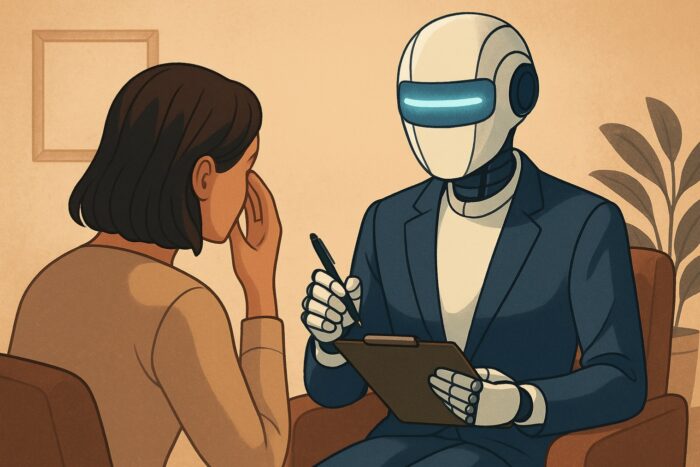
The study –Efficient mRNA delivery to resting T cells to reverse HIV latency – is looking for a solution to a particular problem in the treatment of HIV. The virus likes to hide inside white blood cells (CD4+ T cells). There the virus will wait in a latent stage and can activate later. It acts as a reservoir of virus that can keep the infection going, even in the face of effective anti-HIV drugs and immune attack. It is part of what makes HIV so difficult to fully eliminate from the body.

We already have drugs that address this issue. They are called, appropriately, latency-reversing agents (LRAs), and include Romidepsin, Panobinostat, and Vorinostat. These drugs inhibit an enzyme which allows the virus to hide inside white blood cells. So this isn’t a new idea, and there are already effective treatments, which do make other anti-HIV drugs more effective and keep viral counts very low. But they are not quite effective enough to allow for total virus elimination. More and more effective LRAs, therefore, could be highly beneficial to HIV treatment.

Continue Reading »

Comments: 0

Jun 03 2025

AI Therapists

In the movie Blade Runner 2049 (an excellent film I highly recommend), Ryan Gosling’s character, K, has an AI “wife”, Joi, played by Ana de Armas. K is clearly in love with Joi, who is nothing but software and holograms. In one poignant scene, K is viewing a giant ad for AI companions and sees another version of Joi saying a line that his Joi said to him. The look on his face says everything – an unavoidable recognition of something he does not want to confront, that he is just being manipulated by an AI algorithm and an attractive hologram into having feelings for software. K himself is also a replicant, an artificial but fully biological human. Both Blade Runner movies explore what it means to be human and sentient.

In the last few years AI (do I still need to routinely note that AI stands for “artificial intelligence”?) applications have seemed to cross a line where they convincingly pass the classic Turing test. AI chatbots are increasingly difficult to distinguish from actual humans. Overall, people are only slightly better than chance at distinguishing human from AI generated text. This is also a moving target, with AIs advancing fairly quickly. So the question is – are we at a point where AI chatbot-based apps are good enough that AIs can serve as therapists? This is a complicated question with a few layers.

The first layer is whether or not people will form a therapeutic relationship with the AI, in essence reacting to them as if they are a human therapist. The point of the Blade Runner reference was just to highlight what I think the clear answer is – yes. Psychologists have long demonstrated that people will form emotional attachments to inanimate objects. We also imbue agency onto anything that acts like an agent, even simple cartoons. We project human emotions and motivations onto animals, especially our pets. People can also form emotional connections to other actual people purely online, even exclusively through text. This is just a fact of neuroscience – our brains do not need a physical biological human in order to form personal attachments. Simply acting or even just looking like an agent is sufficient.

Continue Reading »

Comments: 0

Jun 02 2025

Telepathy Tapes Promotes Pseudoscience

I was away on vacation the last week, hence no posts, but am now back to my usual schedule. In fact, I hope to be a little more consistent starting this summer because (if you follow me on the SGU you already know this) I am retiring from my day job at Yale at the end of the month. This will allow me to work full time as a science communicator and skeptic. I have some new projects in the works, and will announce anything here for those who are interested.

On to today’s post – I recently received an e-mail from Janyce Boynton, a former facilitator who now works to expose the pseudoscience of facilitated communication (FC). I have been writing about this for many years. Like many pseudosciences, they rarely completely disappear, but tend to wax and wane with each new generation, often morphing into different forms while keeping the nonsense at their core. FC has had a resurgence recently due to a popular podcast, The Telepathy Tapes (which I wrote about over at SBM). Janyce had this to say:

I’ll be continuing to post critiques about the Telepathy Tapes–especially since some of their followers are now claiming that my student was telepathic. Their “logic” (and I use that term loosely) is that during the picture message passing test, she read my mind, knew what picture I saw, and typed that instead of typing out the word to the picture she saw.

I shouldn’t be surprised by their rationalizations. The mental gymnastics these people go through!

They’re also claiming that people don’t have to look at the letter board because of synesthesia. According to them, the letters light up and the clients can see the “aura” of each color. Ridiculous. I haven’t been able to find any research that backs up this claim. Nor have I found an expert in synesthesia who is willing to answer my questions about this condition, but I’m assuming that, if synesthesia is a real condition, it doesn’t work the way the Telepathy Tapes folks are claiming it does.

For quick background, FC was created in the 1980s as a method for communicating to people, mostly children, who have severe cognitive impairment and are either non-verbal or minimally verbal. The hypothesis FC is based on is that at least some of these children may have more cognitive ability than is apparent but rather have impaired communication as an isolated deficit. This general idea is legitimate, and in neurology we caution all the time about not assuming the inability to demonstrate an ability is due purely to a cognitive deficit, rather than a physical deficit. To take a simple example, don’t assume someone is not responding to your voice because they have impaired consciousness when they could be deaf. We use various methods to try to control for this as much as possible.

Continue Reading »

Comments: 0

May 22 2025

Preserving Food

About 30-40% of the produce we grow ends up wasted. This is a massive inefficiency in the food system. It occurs at every level, from the farm to the end user, and for a variety of reasons. This translates to enough food worldwide to feed 1.6 billion people. We also have to consider the energy that goes into growing, transporting, and disposing of this wasted food. Not all uneaten food winds up in landfills. About 30% of the food fed to animals is food waste. Some food waste ends up in compost which is used as fertilizer. This still is inefficient, but at least it is recycled.

There is a huge opportunity for increased efficiency here, one that can save money, reduce energy demand, reduce the carbon footprint of our food infrastructure, and reduce the land necessary to meet our nutritional needs. Increased efficiency will be critical as our populations grows (it is estimated to likely peak at about 10 billion people). But there is no one cause of food waste, and therefore there is no one solution. It will take a concerted effort in many areas to minimize food waste, and make the best use of the food that does not get eaten by people.

One method is to slow food spoilage. The longer food lasts after it has been harvested, the less likely it is to be wasted due to spoilage. Delaying spoilage also makes it easier to get food from the farm to the consumer, because there is more time for transport. And delayed spoilage, if sufficient, may reduce dependence on the cold chain – an expensive and energy dense process by which food must be maintained in refrigerated conditions for its entire life from the farm until used by the consumer.

A recent study explores one method for delaying spoilage – injecting small amounts of melatonin into plants through silk microneedles. The melatonin regulates the plants stress response and slows spoilage. In this study they looked at pak choy. The treated plants had a shelf-life (time in which it can be sold) from 4 days to 8 without refrigeration, and with refrigeration shelf life was extended from 15 days to 25. This was a lab proof-of-concept, and so the process would need to be industrialized and made cost-effective enough to be viable. It also would not necessarily be needed in every situation, but could be used in areas with a cold chain is very difficult or expensive, or transportation is slow. This could therefore not only reduce waste, but improve food availability in challenging areas.

Continue Reading »

Comments: 0

May 19 2025

End of Life on Earth

Published by under Astronomy
Comments: 0

Let’s talk about climate change and life on Earth. Not anthropogenic climate change – but long term natural changes in the Earth’s environment due to stellar evolution. Eventually, as our sun burns through its fuel, it will go through changes. It will begin to grow, becoming a red giant that will engulf and incinerate the Earth. But long before Earth is a cinder, it will become uninhabitable, a dry hot wasteland. When and how will this happen, and is there anything we or future occupants of Earth can do about it?
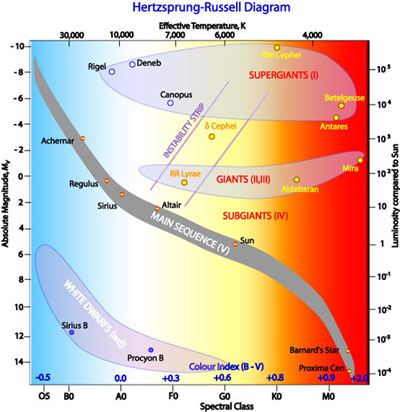
Our sun is a main sequence yellow star. The “main sequence” refers to the Hertzsprung-Russell diagram (HR diagram), which maps all stars based on mass, luminosity, temperature, and color. Most stars fall within a band called the main sequence, which is where stars will fall when they are burning hydrogen into helium as their source of energy. More massive stars are brighter and have a color more towards the blue end of the spectrum. They also have a shorter lifespan, because they burn through their fuel faster than lighter stars. Blue stars can burn through their fuel in mere millions of years. Yellow stars, like our own, can last 10 billion years, while red dwarfs can last for hundreds of billions of year or longer.

Which stars are the best for life? We categorize main sequence stars as blue, white, yellow, orange, and red (this is a continuum, but that is how we humans categorize the colors we see). Interestingly, there are no green stars, which has more to do with human color perception than anything else. Stars at an otherwise “green” temperature have enough blue and red mixed in to appear white to our color perception. The hotter the star the farther away a planet would have to be to be in its habitable zone, and that zone can be quite wide. But hotter stars are short-lived. Colder stars last for a long time but have a small and close-in habitable zone, so close they may be tidally locked to their star. Red dwarfs are also relatively unstable and put out a lot of solar wind which is unfriendly to atmospheres.

So the ideal color for a star, if you want to evolve some life, is probably in the middle – yellow, right where we are. However, some astronomers argue that the optimal temperature may be orange, which can last for 15-45 or more billion years, but with a comfortably distant habitable zone. If we are looking for life in our galaxy than orange stars are probably the way to go.

Continue Reading »

Comments: 0

May 13 2025

The AI Conundrum

What the true impact of artificial intelligence (AI) is and soon will be remains a point of contention. Even among scientifically literate skeptics people tend to fall into decidedly different narratives. Also, when being interviewed I can almost guarantee now that I will be asked what I think about the impact of AI – will it help, will it hurt, is it real, is it a sham? The reason I think there is so much disagreement is because all of these things are true at the same time. Different attitudes toward AI are partly due to confirmation bias. Once you have an AI narrative, you can easily find support for that narrative. But also I think part of the reason is that what you see depends on where you look.
The “AI is mostly hype” narrative derives partly from the fact that the current AI applications are not necessarily fundamentally different than AI applications in the last few decades. The big difference, of course, is the large language models, which are built on a transformer technology. This allows for training on massive sets of unstructured data (like the internet), and to simulate human speech in a very realistic manner. But they are still narrow AI, without any true understanding of concepts. This is why they “hallucinate” and lie – they are generating probable patterns, not actually thinking about the world.

So you can make the argument that recent AI is nothing fundamentally new, the output is highly flawed, still brittle in many ways, and mostly just flashy toys and ways to steal the creative output of people (who are generating the actual content). Or, you can look at the same data and conclude that AI has made incredible strides and we are just seeing its true potential. Applications like this one, that transforms old stills into brief movies, give us a glimpse of a “black mirror” near future where amazing digital creations will become our everyday experience.

Continue Reading »

Comments: 0

May 12 2025

Floating Solar Farms

My last post was about floating nuclear power plants. By coincidence I then ran across a news item about floating solar installations. This is also a potentially useful idea, and is already being implemented and increasing. It is estimated that in 2022 total installed floating solar was at 13 gigawatts capacity (growing from only 3 GW in 2020). The growth rate is estimated to be 34% per year.

“Floatovoltaics”, as they are apparently called, are grid-scale solar installations on floating platforms. They are typically installed on artificial bodies of water, such as reservoirs and irrigations ponds. Such installations can have two main advantages. They can reduce evaporation which helps preserve the reservoirs. They also are a source of clean energy without having to use cropland or other land.

Land use can be a major limiting factor of solar power, depending on how it is installed. Here is an interesting comparison of the various energy sources and their land use. The greatest land use per energy produced is hydroelectric (33 m^2 / MWh). The best is nuclear, at 0.3 (that’s two orders of magnitude better). Rooftop solar is among the best at 1.2, while solar photovoltaic installed on land is among the worst at 19. This is exactly why I am a big advocate of rooftop solar, even though this is more expensive up front than grid-scale installations. Right now in the US rooftop solar produces about 1.5% of electricity, but the total potential capacity is about 45%. More realistically (excluding the least optimal locations), shooting for 20-30% of energy production from rooftop solar is a reasonable goal. If this is paired with home battery backup, this makes solar power even better.

Floating solar installations have the potential of having the best of both worlds – less land use than land-based solar, and better economics and rooftop solar. If the installation is serving double-duty as an evaporation-prevention strategy, this is even better. This also can potentially dovetail nicely with closed loop pumped hydro. This is a promising grid-level energy storage solution, in that it can store massive amounts of energy for long periods of time, enough to shift energy production to demand seasonally. The main source of energy loss with pumped hydro is evaporation, which can be mitigated by anti-evaporation strategies, which could include floating solar. Potentially you could have a large floating solar installation on top of a reservoir used for closed-loop pumped hydro, which stores the energy produced by the solar installation.

Continue Reading »

Comments: 0

« Prev - Next »