 Whenever I write about climate change here, the deniers show up spouting dubious (to say the least) claims. In my opinion, this is a manifestation of a deliberate political strategy, one that we see with other topics. The strategy is to make up blatant lies, or at least claims without the slightest regard for whether or not they are true, and then spread them through ideologically friendly outlets. Sometimes this may involve amplifying claims that emerge from the most extreme “fever swamps” promoting that ideology. Just keep throwing crap against the wall, and some of it will stick. When these notions make their way into the mainstream media, they are quickly debunked. But by then it’s too late – the damage is done. Long after the false claims are soundly refuted, the rank and file believers will still be quoting them. They are now part of the narrative.
This means that for science communicators and skeptics (but also mainstream journalists), we need to have a working knowledge of these common false claims that are circulating, so that we can respond to them quickly when they emerge. One of the reasons I allow such comments to continue in my blog is because that is one of the ways that I can see which claims are circulating. I don’t mind if they come here – we can handle it. Normally I handle the claims in the comments, but occasionally there is a critical mass of nonsense that is more efficiently dealt with by a post. Here are some recent claims.
Volcanoes emit more greenhouse gas than human activity.
This is an old one, but has remarkable persistence. These claims go through a selection process. Claims survive not because they are true, but because they resonate. In this case, the volcano claim fits the overall narrative that meager human activity is nothing compared to the awesome scale of nature. They want to portray the very idea that we can alter the climate as ridiculous. Fact, however, get in the way of this narrative.
According to the US Geological Survey:
Published scientific estimates of the global CO2 emission rate for all degassing subaerial (on land) and submarine volcanoes lie in a range from 0.13 gigaton to 0.44 gigaton per year.
That sounds like a lot, but human activity releases 35 gigatons of CO2 each year. That means that human activity releases more than 100 times the CO2 as does all volcanic activity. When I pointed this out in the comments, these easily verifiable scientific facts were dismissed as a liberal conspiracy. Another strategy is to simply shift to another claim, without ever admitting that you were wrong on the first one. In this case just shift over to methane – but that is a loser argument also. Of all the methane released into the atmosphere each year, 60% is due to human causes. All natural sources amount to only 40%, and volcanoes are a minority of that. Most methane on Earth comes from biology.
I do admit it still surprises me when this one is trotted out, because these are easily checkable basic facts. This is a good way to completely squander one’s credibility. I think this says something meaningful about the intellectual process that is being employed by those dedicated to the denial of global warming.
Climate models are simplistic and wrong.
Dismissing climate models is a more complex matter to refute, because this is more than just looking up a couple of numbers. First there is the notion that climate scientists, in producing their models which predict anthropogenic global warming, did not consider natural factors. This is, of course, absurd, and represents non-experts criticizing an entire world-wide community of experts from a profound level of relative ignorance – and doing it with confidence and arrogance. This almost always comes without citations, or by citing only known outliers.
Climate models, from the beginning, have sought to include the latest science available and account for all possible factors. Over the last 50 years climate models have been steadily modified, to account for new scientific data as it comes in. In addition, models have to account for future behavior, such as how much CO2 will the world emit in the future. So they can only give ranges of outcomes based upon explicitly stated assumptions about human behavior in the future. Often models are used to project what will happen under various scenarios – continuing our current trends vs changing course.
One of the best ways to determine how well models predict the climate (how “skillful” they are, in the jargon) is to see how past models predicted later climate change. This has been done multiple time. Here is a 2019 review of 17 climate models. They found:
We find that climate models published over the past five decades were skillful in predicting subsequent GMST changes, with most models examined showing warming consistent with observations, particularly when mismatches between model-projected and observationally estimated forcings were taken into account.
That last bit means the difference between projections of CO2 emissions vs actual CO2 emissions. The bottom line is that the model basically work, and they are continuously getting better as they incorporate the latest science. Computers are also getting more powerful, allowing for more complex climate simulations. But still you will frequently hear things like, “Maybe it’s the sun. All those scientists never thought of that.”
A recent commenter brought up one I had not yet heard – neutrinos warming up the inner Earth and all that heat rising to the surface through ocean vents. The commenter also explicitly states that climate models do not include natural sources of warming. Sure, there is geological sources of heat that affect the climate – and climate scientists are well aware of this factor. Geothermal ocean heating is a known factor. It has a relatively small magnitude, and there is no reason to think that it has suddenly changed in the last 50 years. But the notion that climate scientists are not away of geothermal heating is just silly.
CO2 causes greening which absorbs excess CO2.
The basic notion that increases in CO2 concentrations in the atmosphere increases plant growth is true. CO2 is an important metabolite for plant growth. But the full story is more complicated, and turning this into a net benefit from climate change is simply not true. The increase in productivity does occur, but also results in a depletion of other nutrients, such as nitrogen, from the soil. It therefore is not sustainable in natural settings (i.e. not farmland where nutrients can be added). Also, plants are not adapted to higher CO2 levels and so they get diminishing returns from higher CO2.
But the main reason this is not a valid argument against the need to mitigate climate change, is that it ignores all the other effects. Increasing temperature and worsening droughts are bad for agriculture. Shifting climate also shifts growing zones away from where they are currently located. Also, the effect on different crops varies. Wheat will benefit, but corn production will drop, while some other crops will see no immediate change. This will be highly disruptive to agricultural infrastructure. Also, as warming continues, the effects of increased temperature and drought will overwhelm any positive effect from CO2.
The notion that plants will simply absorb any excess CO2 is also profoundly naive and just factually incorrect. There is a carbon cycle, which already includes plants absorbing CO2. But plants don’t just sequester CO2, they absorb and emit CO2 in a continuous cycle. The more CO2 there is in the system, the more CO2 there will be in every part of the system (plants, the ocean, the atmosphere, in minerals, etc.). This is already accounted for in climate models.
But sure, we should maximize biomass to help mitigate CO2 release, and stop doing things like cutting down the rainforest. But this is not going to compensate for the 35 billions tons of CO2 humans release every year.

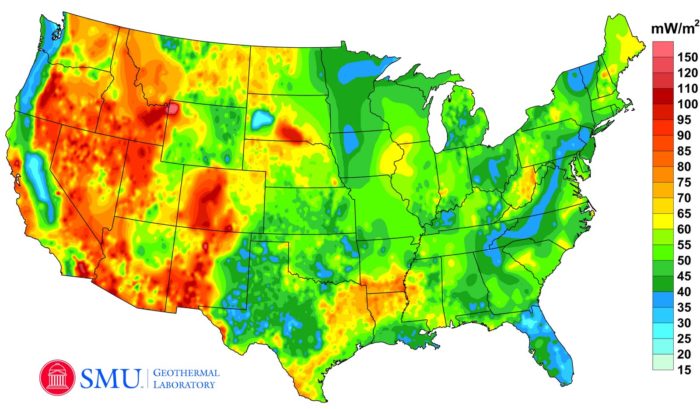 As we discuss the optimal path forward for the next 30 years to get to net-zero carbon emissions for the energy sector, one big variable is the real-world potential of geothermal energy. Right now in the US geothermal produces 0.4% of our electricity. That is almost negligible, and is not going to help get us to our goal without an order of magnitude or more increase. What is the probability that we can bring significant geothermal online within 20-30 years?
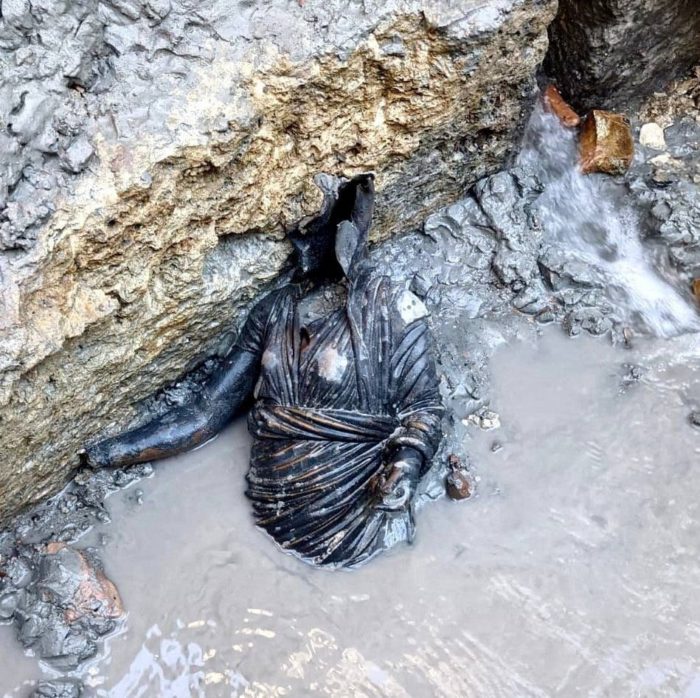 Archaeologists have uncovered a large cache of over 50 small bronze statues in the ruins of an ancient temple in Tuscany. The find dates from the second century BCE to the first century ACE. It is being reported as the greatest bronze statue find in 50 years, one of the greatest finds ever, and a significant window into that period of history.
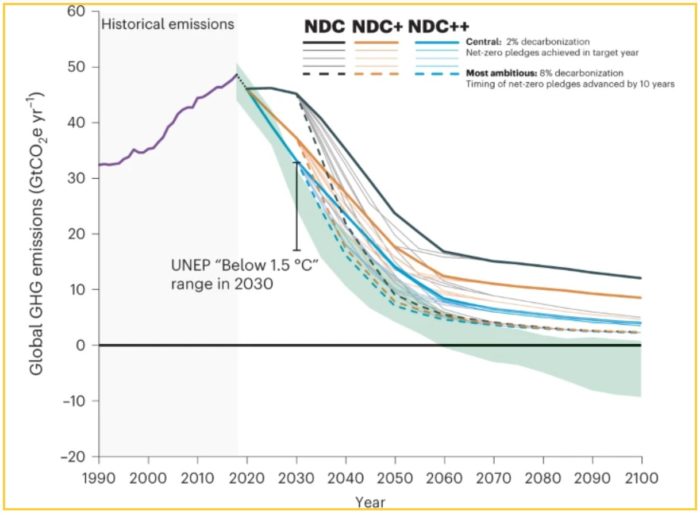 So how are we doing? We’ve been talking about mitigating climate change for literally decades, and the world is currently meeting for the 27th climate summit, COP27. It feels like all we get is dire news about how miserably we are collectively failing to do anything about climate change, but the real news is actually mixed. In some ways we are better off then we were 1-2 decades ago, in others things are worse. Let’s review.
 A
A  The allure of the myth of Atlantis is understandable, and it has been promulgated in popular culture for over a century. As evidence of the draw of this topic is the comments thread to
  The notion of near death experiences (NDE) have fascinated people for a long time. The notion is that some people report profound experiences after waking up from a cardiac arrest – their heart stopped, they received CPR, they were eventually recovered and lived to tell the tale. About 20% of people in this situation will report some unusual experience. Initial reporting on NDEs was done more from a journalistic methodology than scientific – collecting reports from people and weaving those into a narrative. Of course the NDE narrative took on a life of it’s own, but eventually researchers started at least collecting some empirical quantifiable data. The details of the reported NDEs are actually quite variable, and often culture-specific. There are some common elements, however, notably the sense of being out of one’s body or floating.
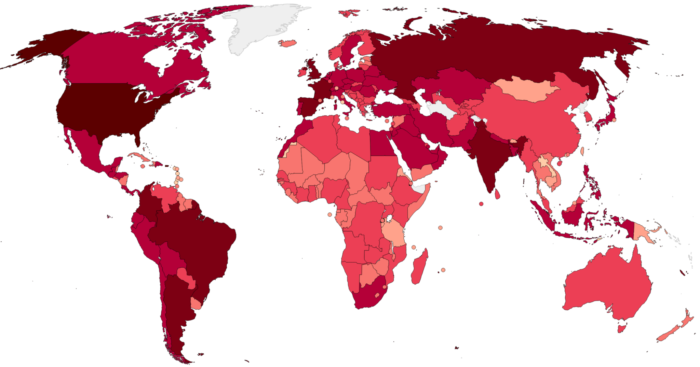 A panel of 386 experts from various disciplines and 122 countries have put together a
  It’s that time of year again – the time when we debate, yet again, whether or not we should get rid of shifting the clocks twice a year and if so, which time to make permanent, DST or standard time. It does seem like this debate has been heating up in recent years, but it is unclear if we have a political consensus sufficient to make a change. In March of this year the Senate actually passed the