Mar 16 2026
Life on Exomoons
 How common is life in the universe? This is one of the greatest scientific questions, with incredible implications, but we lack sufficient information to answer it. The main problem is the “N of 1” problem – we only have one example of life in all the universe. So we are left to speculate, which is still very useful when based on solid scientific evidence and reasoning. It helps guide our search for signs of life that arose independently from life on Earth.
One important question, therefore, is where is it possible for life to exist? We know life can arise on a rocky planet with a nitrogen and CO2 atmosphere in a temperature range that allows liquid water on the surface. We also know that such life may create and sustain large amounts of oxygen in the atmosphere. It therefore makes sense to focus our search on similar planets. But life does not have to be restricted to Earth-like life. Scientists, therefore, try to imagine what other conditions might also support some kind of life. It is possible, for example, that life arose in the vast oceans under the ice of moons like Europa or Enceladus. Such life would be very different than most life on Earth. It would be dependent on chemical processes for energy (chemosynthetic), rather than sunlight.
Knowing how many different kinds of places life could possibly exist affects our estimate of the number of locations in our galaxy that might harbor life. The current estimates for how many Earth-like exoplanets there are in the Milky Way galaxy ranges from 300 million to 40 billion, depending on various assumptions and how tightly you define “Earth-like”. There are 100-400 billion stars in the galaxy, but about a third of those stars are in multi-star systems, so that means there are tens to up to 100 billion distinct stellar systems in the Milky Way. One estimate from observed multi-star systems is that about 89% of them could allow for a stable orbit of a rocky planet in the habitable zone.
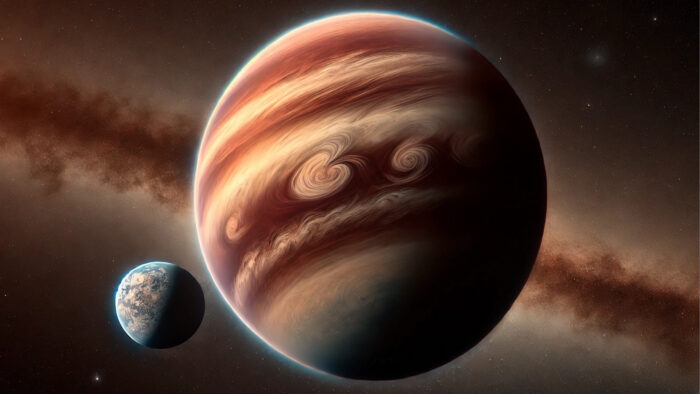
But perhaps we should not limit the calculations of how many worlds in the galaxy may support life to Earth-like planets. I am not just talking about life in oceans under icy moons. Astronomers have also been considering the possibility of life on moons that orbit free floating gas giant planets. A free floating planet (FFP), also called a nomadic planet or rogue planet, does not orbit a star at all. At some point, likely early in the life of its parent star, it was flung out of its system and now wanders freely between the stars. Astronomers estimate there may be hundreds of billions of such planets in the Milky Way. But this means the planet is dark, without any sunlight to keep it warm or fuel life. What about the moons of an FFP, however?
It is possible that an FFP can retain some of its moons even once ejected from its system – they would not necessarily be stripped of their moons in the process. However, the orbits of those moons would likely become more eccentric. Astronomers imagine a large moon orbiting an FFP gas giant in an elliptical orbit. Tidal forces would constantly stretch and pull the moon, causing its interior to heat up. These forces can be immense. Io, a large moon of Jupiter, is close enough to Jupiter that the tidal forces on it heat it up so that it is constantly volcanic and molten, turning itself inside out through such activity. So there would be a tidal Goldilocks zone around such gas giants as well, heating them up enough to support life but not become a volcanic hellscape.
Such moons could therefore be like Europa, with an icy shell but enough internal heat from tidal forces to keep a liquid ocean. But astronomers also want to know if such a moon could have liquid water on its surface. This would require a thick enough atmosphere to keep the surface water from evaporating away into space. It would also require an atmosphere capable of trapping enough heat to keep the surface warm (in this case the heat would be coming from the moon itself through tidal forces, and not from starlight, but it doesn’t matter). Astronomers have previously considered CO2 as a heat trapping gas, and this would work. However, because the upper atmosphere faces the cold dark of space, without a star to warm it up, the CO2 would slowly condense out of the atmosphere. Astronomers estimate such a moon could maintain surface water for about 1.3 billion years before the system collapses. This is a long time, long enough for life to arise, but not as long as it took life on Earth to get to its current state of complexity.
In a recent paper astronomers propose another situation that might work better – a mostly hydrogen atmosphere. An H2 dominated atmosphere would also trap sufficient heat (if it were thick enough) to maintain liquid water on the surface, just from internal heat through tidal forces. Further, such an atmosphere would be more stable than a CO2 atmosphere, lasting up to 4.3 billion years – long enough for complex life to evolve. Such life would likely be very different than Earth life, lacking sunlight and therefore photosynthesis, but it could exist.
If this analysis pans out, this could mean that potential locations for life in our galaxy is many times current estimates that do not include such moons. But again – until we actually find such life, we can only speculate about possibilities. Obviously we have no way of going to such locations (at least, not anytime soon, or likely for a very long time), but we can look for biosignatures, such as the presence of large amounts of oxygen (or any molecule that is not stable and would have to be constantly replenished by living processes) in the atmosphere.
And of course the ultimate question – could such complex life become technological, in which case we might also look for technosignatures. What would an intelligent technologically advanced species from a hydrogen exomoon around a rogue planet be like? Wouldn’t it be wonderful to find out one day.