Mar
09
2026
 Researchers have recently published a discovery that could lead to more efficient photosynthesis in many crops. It’s hard to overstate how impactful this would be, as this could significantly increase crop yields while decreasing inputs. The growing human population makes such advances critical. Even without that factor, increasing yields decreases the land intensiveness of agriculture, which has a dramatic impact on our environment and sustainability. Improved photosynthesis would be a win across the board.
Before we get into the study there are a couple of points I want to explore. When I first learned of the various research efforts to improve photosynthesis my first reaction was – why hasn’t evolution already optimized something that is so critical to all life. The first photosynthetic organisms evolved at least 3.4 billion years ago. That’s a lot of time for evolutionary tweaking. So why is efficiency still an issue? There are a couple answers, but the primary one appears to be the constraints of evolutionary history. What this means is that evolution can only work with what it has, and it cannot undo its history. Once development leads down a certain path, evolution can make variations on the path but it cannot go back in time and take a completely different path. All vertebrates are variations on a basic body plan, for example.
So what are the evolutionary constraints of photosynthesis? Photosynthesis involves using the energy from sunlight to combine carbon dioxide (CO2) with water (H2)) to make glucose and oxygen. Critical to this reaction is an enzyme, ribulose-1,5-bisphosphate carboxylase/oxygenase (RubisCO), which fixes the carbon from CO2 into organic compounds. This enzyme, RubisCO, is responsible for over 90% of all carbon in living things. It is the most common enzyme in the world and is a cornerstone of living ecosystems, which mostly depend on energy from the sun.
Continue Reading »
Nov
25
2025
Yesterday I started a response to this article, which seems to me fits cleanly into a science-denial format. The author is making a lawyers case against the notion of climate change, using classic denialist strategies. Yesterday I focused on his denial that scientists can ever form a meaningful consensus about the evidence, conflating it with the straw man that a consensus somehow is mere opinion, rather than being based on the totality of the evidence. Today I am going to focus on the notion of “post-normal” science. Macrae gives this summary of what post-normal science is:
“The conclusions of post-normal science aren’t ultimately based, then, on empirical data, with theories that can be rigorously tested and falsified, but on “quality as assessed by internal and extended peer communities,” i.e., “consensus,” i.e., informed guesses.”
This is another straw man. He is creating a false dichotomy here, based on his misunderstanding of science (he is a journalist, not a scientist). Yesterday I gave this summary of how science works:
“Science is not a simple matter of proof. There are many different kinds of evidence – observational, experimental, theoretical, and modeling (computer modeling, animal models, etc.). Scientific evidence can use deduction, induction, can start with observation or start with a hypothesis, can use theoretical constructs, can make observations about the past and make predictions about the future. All of these various activities are part of the regular operation of science. No one type of evidence is supreme or perfect – they all represent different tradeoffs. Scientific conclusions are always a matter of inference – scientists make the best inference they can to the most probable explanation given all of the available evidence. This always involves judgement, and some opinion. How are different kinds of evidence weighted when they appear to conflict?”
Continue Reading »
Nov
24
2025
This article is from a year ago, but it was just sent to me as it is making the rounds in climate change denying circles. It is by Paul Macrae, who is an ex-journalist who now seems to be primarily engaged in climate change denial. The article (a chapter from his book on the subject) is full of the standard climate denial tropes – for the sake of space, I would like to focus on three specific points. The first is the claim that climate science is “settled”, the second is the notion of “post-normal science”, and the third is a factual claim about the accuracy of prior climate models.
Of course, if there is a consensus among climate scientists that global warming (I will get into more details on what this means) is “settled”, that makes it difficult, especially for a non-scientists, to question the conclusion. So order number one – deny that there is a consensus, deny that consensus is even a thing in science, and deny that science can ever be settled. I don’t suspect that I will ever be able to slay this dragon, it is simply too useful rhetorically, but for those who are open to argument, here is my analysis.
First – consensus is absolutely a thing in the regular operations of science. A consensus can be built in a number of ways, but often panels of recognized world experts are assembled to review all existing scientific data and make a consensus statement about what the data shows. This is often done when there is a policy or practice question. For example, in medicine, practitioners need to know how to practice, and these consensus statements are used as practice guidelines. They also set the standard of care, so as a practitioner you should definitely be aware of them and not violate them unless you have a good reason. Obviously, the question of global warming is a serious policy question, and so providing scientific guidance to policy makers is the point, such as with the IPCC. Consensus is also used to set research and funding priorities, to establish terminology, and resolve controversies. But to be clear – these mechanisms of consensus do not determine what the science says. That is determined by the actual science. The point is to provide clarity regarding complex scientific evidence, especially when a practice or policy is at issue.
Continue Reading »
Sep
02
2025
 The World Wide Web has proven to be a transformative communication technology (we are using it right now). At the same time there have been some rather negative unforeseen consequences. Significantly lowering the threshold for establishing a communications outlet has democratized content creation and allows users unprecedented access to information from around the world. But it has also lowered the threshold for unscrupulous agents, allowing for a flood of misinformation, disinformation, low quality information, spam, and all sorts of cons.
One area where this has been perhaps especially destructive is in scientific publishing. Here we see a classic example of the trade-off dilemma between editorial quality and open access. Scientific publishing is one area where it is easy to see the need for quality control. Science is a collective endeavor where all research is building on prior research. Scientists cite each other’s work, include the work of others in systematic reviews, and use the collective research to make many important decisions – about funding, their own research, investment in technology, and regulations.
When this collective body of scientific research becomes contaminated with either fraudulent or low-quality research, it gums up the whole system. It creates massive inefficiency and adversely affects decision-making. You certainly wouldn’t want your doctor to be making treatment recommendations on fraudulent or poor-quality research. This is why there is a system in place to evaluate research quality – from funding organizations to universities, journal editors, peer reviewers, and the scientific community at large. But this process can have its own biases, and might inhibit legitimate but controversial research. A journal editor might deem research to be of low quality partly because its conclusions conflict with their own research or scientific conclusions.
Continue Reading »
Mar
18
2025
 For much of human history, wolves and other large carnivores were considered pests. Wolves were actively exterminated on the British Isles, with the last wolf killed in 1680. It is more difficulty to deliberately wipe out a species on a continent than an island, but across Europe wolf populations were also actively hunted and kept to a minimum. In the US there was also an active campaign in the 20th century to exterminate wolves. The gray wolf was nearly wiped out by the middle of the 20th century.
The reasons for this attitude are obvious – wolves are large predators, able to kill humans who cross their paths. They also hunt livestock, which is often given as the primary reason to exterminate them. There are other large predators as well: bears, mountain lions, and coyotes, for example. Wherever they push up against human civilization, these predators don’t fare well.
Killing off large predators, however, has had massive unintended consequences. It should have been obvious that removing large predators from an ecosystem would have significant downstream effects. Perhaps the most notable effects is on the deer population. In the US wolves were the primary check on deer overpopulation. They are too large generally for coyotes. Bears do hunt and kill deer, but it is not their primary food source. Mountain lions will hunt and kill deer, but their range is limited.
Without wolves, the deer population exploded. The primary check now is essentially starvation. This means that there is a large and starving population of deer, which makes them willing to eat whatever they can find. They then wipe out much of the undergrowth in forests, eliminating an important habitat for small forest critters. Deer hunting can have an impact, but apparently not enough. Car collisions with deer also cost about $8 billion in the US annually, causing about 200 deaths and 26 thousand injuries. So there is a human toll as well. This cost dwarfs the cost of lost livestock, estimated to be about 17 million Euros across Europe.
Continue Reading »
Oct
03
2024
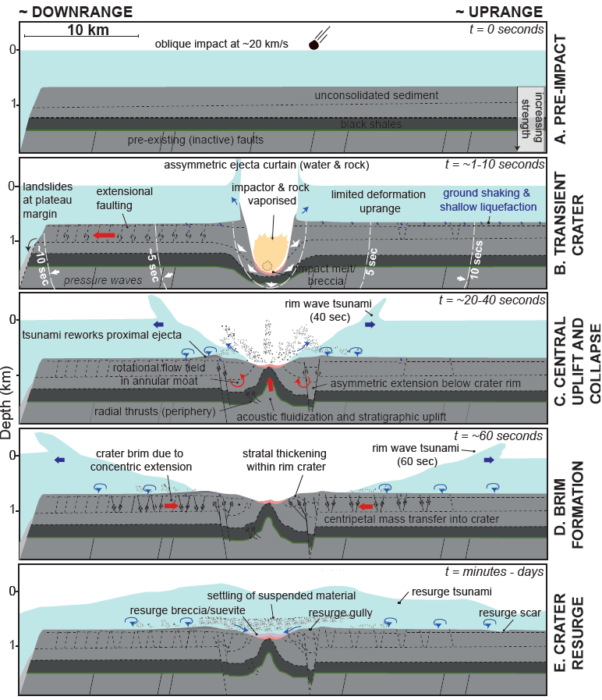 It is now generally accepted that 66 million years ago a large asteroid smacked into the Earth, causing the large Chicxulub crater off the coast of Mexico. This was a catastrophic event, affecting the entire globe. Fire rained down causing forest fires across much of the globe, while ash and debris blocked out the sun. A tsunami washed over North America – one site in North Dakota contains fossils from the day the asteroid hit, including fish with embedded asteroid debris. About 75% of species went extinct as a result, including all non-avian dinosaurs.
For a time there has been an alternate theory that intense vulcanism at the Deccan Traps near modern-day India is what did-in the dinosaurs, or at least set them up for the final coup de grace of the asteroid. I think the evidence strongly favors the asteroid hypothesis, and this is the way scientific opinion has been moving. Although the debate is by no means over, a majority of scientists now accept the asteroid hypothesis.
But there is also a wrinkle to the impact theory – perhaps there was more than one asteroid impact. I wrote in 2010 about this question, mentioning several other candidate craters that seem to date to around the same time. Now we have a new candidate for a second KT impact – the Nadir crater off the coast of West Africa.
Geologists first published about the Nadir crater in 2022, discussing it as a candidate crater. They wrote at the time:
“Our stratigraphic framework suggests that the crater formed at or near the Cretaceous-Paleogene boundary (~66 million years ago), approximately the same age as the Chicxulub impact crater. We hypothesize that this formed as part of a closely timed impact cluster or by breakup of a common parent asteroid.”
Continue Reading »
Jul
30
2024
 The topic of genetically modified organisms (GMOs) is a great target for science communication because public attitudes have largely been shaped by deliberate misinformation, and the research suggests that those attitudes can change in response to more accurate information. It is the topic where the disconnect between scientists and the public is the greatest, and it is the most amenable to change.
The misinformation comes in several forms, and one of those forms is the umbrella claim that GMOs have been bad for farmers in various ways. But this is not true, which is why I have often said that people who believe the misinformation should talk to farmers. The idea is that the false claims against GMOs are largely based on a fundamental misunderstanding of how modern farming works.
There is another issue here, which falls under another anti-GMO strategy – blaming GMOs for any perceived negative aspects of the economics of farming. Like in many industries, farm sizes have grown, and small family farms (analogous to mom-and-pop stores) have given way to large corporate owned agricultural conglomerates. This is largely due to consolidation, which has been happening for over a century (long before GMOs). It happens because larger farms have an economy of scale – they can afford more expensive high technology farm equipment. They can spread out their risk more. They are more productive. And when a small farm owner retires without a family to leave it to, they tend to consolidate with a larger farm. Also, government subsidies tend to favor larger farms.
Continue Reading »
May
24
2024
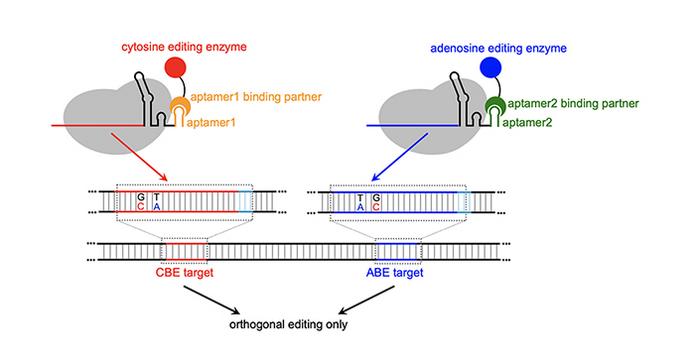 Have you memorized yet what CRISPR stands for – clustered regularly interspaced short palindromic repeats? Well, now you can add MOBE to the list – multiplexed orthogonal base editor. Base editors are not new, they are basically enzymes that will change one base – C (cytosine), T (thymine), G (guanine), A (adenosine) – in DNA to another one, so a C to a T or a G to an A. MOBE is a guided system for making multiple desired base edits at once.
This is a complementary system to CRISPR, which targets a sequence of DNA and then uses Cas9 or a similar payload to make a double-stranded cut in the DNA. The cells natural repair system can then be leveraged to make changes during the repair process, such as inserting a new genetic sequence. In this way, and with different payloads, CRISPR can make targeted gene insertions or deletions, kill targeted cell types, or turn genes off and back on again.
MOBE cannot insert entire genes. Rather, systems like this can make single base edits. What is new about the MOBE system is that it can make multiple different types of edits at once. Some single base edits can change the nature of the resulting protein. Many single base changes in DNA are “silent” meaning that they do not alter the resulting amino acid that is coded for, because each amino acid has 3-4 similar three base pair codes. It’s also possible that a single base mutation will change the amino acid coded for, but the new amino acid is structurally similar to the previous one, so no conformational change in the protein results. But some point mutations will change one amino acid for a different one with a different effect – turning a straight line into a kink, for example. These alter the three dimensional folded structure of the protein, and therefore its function. Some point mutations may also change the code to what is called a stop codon, ending the production of the protein at that point and dramatically changing its structure.
Continue Reading »
May
21
2024
 For decades scientists were confused by Antarctic sea ice. Climate models predict that it should be decreasing, and yet it has been steadily and slowly increasing. It also made for a great talking point for climate change deniers – superficially it seems like counter evidence to the global warming narrative, and at least paints scientists as if they don’t really know what’s going on.
That talking point was never a good one. It was really just an excellent example of the bad faith strategies of deniers and a misunderstanding of how science works, and also how climate works. Scientists pointed out that “global warming” does not mean that the planet is warming everywhere equally. This is why “climate change” is a better term – it is more technically precise. The climate is changing due to human activity, and while there is an overall warming trend to this change, there is a lot of local variation. For example, while Antarctic sea ice was increasing, the ice shelfs of Antarctica itself were losing mass. Also, sea ice loss in the Artic more than offset the increase in the Antarctic, and global ice has been steadily decreasing.
The climate is a complex and dynamic process, and any change over time is likely to have a lot of moving and interacting parts. It is a lot easier to model and predict net global trends than it is to model every local reaction to those trends. But this situation did set up yet another meta-experiment. Deniers claimed that global climate change itself is just a temporary fluctuation in a complex system. Some places are warming, others are cooling, and it all will eventually come out in the wash. Meanwhile, the dominant scientific opinion was that greenhouse gases are causing climate forcing, resulting in directional climate change with complex local effects but clear global trends. Eventually these global trends will dominate any short time-scale or regionally local fluctuations.
Continue Reading »
May
17
2024
 The Egyptian pyramids, and especially the Pyramids at Giza, have fascinated people probably since their construction between 4700 and 3700 years ago. They are massive structures, and it boggles the mind that an ancient culture, without the benefit of any industrial technology, could have achieved such a feat. This has led to endless speculation, especially in modern times, that perhaps some lost advanced civilization was at work, or maybe aliens.
This view has been criticized as being partly driven by racism – whenever some amazing artifact of non-European culture is discovered, it must be aliens, because those savages could not be responsible. But also it reflects our general fascination with the idea of aliens or lost civilizations (like Atlantis). And perhaps mostly it results from the fact that modern cultures tend to underestimate the intelligence and ingenuity of past and especially ancient cultures. We have a bias that pre-modern people were all superstitious, simple, and generally ignorant – with a few exceptions, like ancient Rome (which is Occidental, so that’s OK). You’ll notice that no one thinks the Colosseum was built by aliens – those Romans were clever.
In any case, we also tend to underestimate how effective simple engineering principles can be. The ancient Egyptians had all six of the basic engineering tools at their disposal – the wheel, lever, wedge, screw, inclined plane, and pulley. These tools can be leveraged to accomplish amazing feats – “Give me a lever long enough and a fulcrum on which to place it and I will move the world.”
Continue Reading »