Feb 09 2026
Uranium and Motivated Reasoning
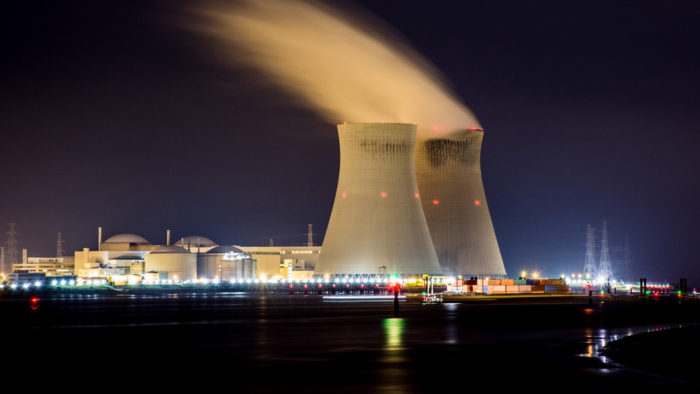
This post is only partly about uranium, but mostly about motivated reasoning – our ability to harness our reasoning power not to arrive at the most likely answer, but to support the answer we want to be true. But let’s chat about uranium for a bit. In the comments to my recent article on a renewable grid, once commenter referred to a blog post on skeptical science and quoted:
“Abbott 2012, linked in the OP, lists about 13 reasons why nuclear will never be capable of generating a significant amount of power. Nuclear supporters have never addressed these issues. To me, the most important issue is there is not enough uranium to generate more than about 5% of all power.”
This is the flip side, I think, to the misinformation about renewable energy I was discussing in that post. Let me way, I don’t think there is an objective right answer here, but my personal view is that the pathway to net zero that emits the least amount of carbon includes nuclear energy, a view that is in line with the IPCC. There is, however, still a lot of anti-nuclear bias out there, just as their is pro-fossil fuel bias, and pro-renewable bias, and every kind of bias. If you want to make a case for any particular source of power, there are enough variables to play with that you can make a case. However, factual misstatements are different – we should at least be arguing from the same set of verified facts. So let’s address the question – how much uranium is there.
There is no objective answer to this question. Why not? Because it depends on your definition. Most estimates of how much uranium there is in the world, in the context of how much is available for nuclear power, do not include every atom of uranium. They generally take several approaches – how much is in current usable stockpiles, how much is being produced by active mines, and how much is “commercially” available. That last category depend on where you draw the line, which depends on the current price of uranium as well as the value of the energy it produces. If, for example, we decided to price the cost of emitting carbon from energy production, the value of uranium would suddenly increase. It also depends on the technology to extract and refine uranium. The value of uranium is also determined by the efficiency of reactors.
Right now about 9% of the world’s electricity comes from nuclear, and about 19% of energy in the US. At the current rate of energy production, current producing uranium mines and known resources would last for about 90 years. This is better than most mineral needed to build renewable infrastructure. Right there the “5%” figure quoted above is demonstrably wrong, we are already greater than 5%. Let’s say we doubled the amount of energy produced by nuclear power, and over that same time period there was a 50% increase in energy demand. Current supplies would then last for 45 years, and nuclear would be about 12% of world energy production. Forty-five years would be just fine – that would give us the time to further develop solar, wind, battery, geothermal, and pumped hydro technology. It is conceivable that we could have an all renewable grid by then. It is even possible we might have fusion by then.
But that also assume a couple of things – no new uranium mine discovery, and no significant increases in efficiency. Neither of these things are likely to be true. There are vast known commercially-viable reserves of uranium waiting to be developed. Improved geological techniques are also finding more reserves. Further, newer nuclear designs use uranium more efficiently – there is more burned fuel and less spent nuclear fuel. In fact newer designs can potentially burn the spent fuel from older reactors, further extending the uranium supply. We can also reprocess spent nuclear fuel to make more usable fuel. The figures above also do not count national reserves of uranium, because these figures are not public. Military grade uranium has been and can be repurposed for energy production as well.
Further still – if the acceptable price of uranium increases because of the value of uranium and the cost of energy, and/or the cost of extracting uranium from various sources goes down, then new reserves of uranium become available. For example, there is about 4.5 billion tonnes of uranium in seawater, which is about 1,000 times known terrestrial sources. That’s enough uranium for current use for 90,000 years. Let’s say only 10% of that uranium can be commercially extracted, and our demand increases by a factor of 10 – the supply would still last for 900 years. That is likely longer than fission technology will be needed.
Even putting uranium from seawater aside, known and likely terrestrial sources, combined with advancing nuclear technology, means we likely have enough uranium to burn at double the current rate for 100-200 years, conservatively. In other words – the supply of uranium is simply not a significant limiting factor for nuclear power. So why is this still an anti-nuclear talking point?
That is where we get back to motivated reasoning. Even if we are looking at the same set of facts, they can be perceived as positive or negative depending on your bias. You can say – nuclear only supplies 9% of the world’s power, or that nuclear provides a whopping 9% of world power. Solar has only increased in efficiency by about 10% over the last 30 years (from about 12 to about 22 %), or you can say that the efficiency of solar has almost doubled over this time, while costs have plummeted. You can focus on all the negative tradeoff, or all of the positive benefits of any technology. The same problem can be either a minor nuisance or a deal-killer. You can focus on whatever slice of the evidence is in line with your bias. And of course you can accept as fact things that appear to support your narrative, while questioning those that do not.
We all do this, pretty much all the time. It takes a conscious effort to minimize such motivated reasoning. We have to step back, deliberately try to not care what the outcome is, and just try to be as fair and accurate as possible. We have to ask – but is this really true? What would a neutral person say? What would someone hostile to this position say? It’s a lot of mental work, but it’s good mental hygiene and a good habit to get into.