Jun
16
2023
 On the current episode of the SGU, because it is pride month, we expressed our general support for the LGBTQ community. I also opined about how important it is to respect individual liberty, the freedom to simply live your authentic life as you choose, and how ironic it is that often the people screaming the loudest about liberty seem the most willing to take it away from others. That was it – we didn’t get into any specific issues. And yet this discussion provoked several responses, filled with strawman accusations about things we never said, and weighed down with a typical list of tropes and canards. It would take many articles to address them all, so I will focus on just one here. One e-mailer claimed: “It is obvious to me that the 98% of trans people have a mental illness that should be treated like any other mental illnesses.”
Being trans itself is not considered a mental illness, but this deserves some extensive discussion. It’s important to first establish some basic principles, starting with – what is mental illness? This is a deceptively tricky question. The American Psychiatric Association provides this definition:
Mental illnesses are health conditions involving changes in emotion, thinking or behavior (or a combination of these). Mental illnesses can be associated with distress and/or problems functioning in social, work or family activities.
But this is not a technical or operational definition (something that requires book-length exploration to be thorough), but rather a quick summary for lay readers. In fact, there is no one generally accepted technical definition. There is some heterogeneity throughout the scientific literature, and it may vary from one illness to another and one institution to another. But there are some generally accepted key elements.
First, as the WHO states, “Mental disorders involve significant disturbances in thinking, emotional regulation, or behaviour.” But then we have to define “disorder”, which is typically defined as a lack or alternation in a function possessed by most healthy individuals that causes demonstrable harm. “Significant” is also a word that’s doing a lot of heavy lifting there. This is typically determined disorder by disorder, but usually includes elements of persistent duration for greater than some threshold, and some pragmatic measure of severity. For example, does the disorder prevent someone from participating in meaningful activity, productive work, or activities of daily living? Does it provoke other demonstrable harms, such as severe depression or anxiety? Does it entail increased risk of negative health or life outcomes?
Continue Reading »
Jun
28
2021
 In science it is not only OK to be wrong, it is an unavoidable and perpetual state – depending, of course, on how you define “wrong”. We lack a complete understanding of the universe, and all of our theories are at best approximations of reality. From this perspective no theory is completely correct, and therefore to some extent is at least somewhat wrong. The idea of progress in science it to become less wrong, knowing that perfect knowledge is not technically possible.
Progress in science is therefore mostly about identifying what facts and ideas we hold that are wrong, exactly how they are wrong, and how we can gather new data or observations that will test those ideas, allow us to refine them, and become one step less wrong.
Some philosophers express this idea as – there is no metaphysical truth in science. What science has is models that predict how the universe will behave. The more accurate and far reaching those predictions, the better the model is. When these models start to break down, because new observations conflict with their predictions, then we have to revise the model to account for the new observations. In this way we make more and more complex, and/or deep models that can make better and better predictions.
Continue Reading »
May
27
2021
The pandemic has brought into sharp focus the potential danger of misinformation. There are times when we need to act collectively as a society to accomplish certain goals. This is particularly challenging in a society that is organized around a principle of individualism – a principle I endorse and value. Liberty is a precious right to be jealously defended. But it is not the only right, or principle of value. So at times we have to delicately balance various competing interests. I like my freedom, but I also really like not catching a deadly disease, or spreading it to my family.
In a perfect world (one we definitely do not live in) there would be no need for restrictive or draconian measures. All that would be necessary was distributing information – hey, if you want to protect yourself and others, wear a mask, socially distance, wash your hands, and get vaccinated. If you’re really interested, here are the facts, the published studies, the expert analysis, to back up these recommendations. Here are the error bars and level of uncertainty, the risk vs benefit analysis, and comparison to other options.
This approach is necessary, and works to a degree, but it is insufficient. There are two main shortcomings of the information approach. First, people are only semi-rational beings, not Vulcans. We are susceptible to tribalism, motivated reasoning, confirmation bias, and a host of cognitive biases, faulty heuristics, and logical fallacies. Our intuitions about balancing risk and benefit are also flawed, and we have a hard time dealing with very large numbers. Just peruse the comments to any blog post on this site that is even slightly controversial and you will find copious examples of every type of flawed thinking.
Continue Reading »
Nov
06
2020
This is a really interesting study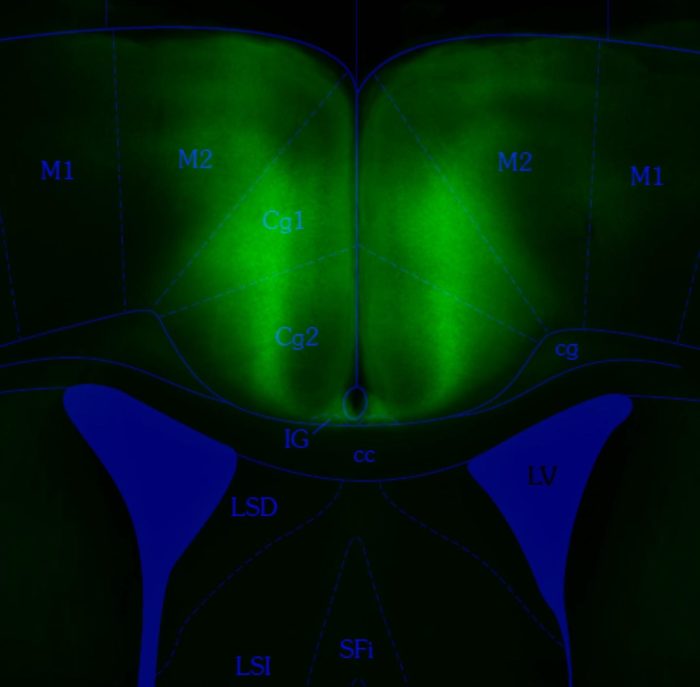 trying to work out one of the brain regions involved in decision-making. The researchers are studying mice, and using a technique know as calcium imaging and optogenetics to view the activity of brain cells in a living animal in real time. The short version is that a brain region known as the anterior cingulate cortex (ACC) is necessary for model-based decision making. But let’s back up a bit and talk about decision making.
There appears to be two basic ways that vertebrates make decisions – model-based decision making and model-free decision making. The former involves creating an internal model of what is likely to happen in the world as a consequence of our specific actions. This approach also updates that model based upon experience. For example you may have a mental model of what is likely to happen if you slap people without provocation. If you ever decided to actually slap someone, their reaction would be used to update your model and inform future model-based decisions.
Model-based decision making is very effective, as it can take into consideration many variables and constantly updates itself with real-world experience. But this approach is also very labor-intensive. One of the basic principles of neuroscience is that brains are lazy, meaning that they tend to choose the pathway of least energy expenditure to get to a desired outcome. What this means on a neurological level is that the brain is generally wired with mechanisms to reduce energy expenditure, by which I mean thinking. As we learn, pathways form that make actions, thoughts, and behaviors more automatic. This often literally means laying down subcortical pathways that can carry out the procedure automatically without having to engage higher cortical processing, which is very energy intensive. For example, when you drive to work, which you have done hundreds or thousands of time, you will likely be on “automatic pilot”. You don’t have to think about your route, or when to turn, you just drive there from memory. It’s so easy, your brain can engage in other tasks, to the point that you may not even remember the drive.
Continue Reading »
Aug
07
2020
 Liver scientists have a hypothesis – that the biological functioning of the liver, from the organism level down to the cellular level – is actually responsible for all the functions that appear to correlate with the liver. This is not a controversial hypothesis.
If, for example, those with severe liver disease, such as cirrhosis, lose the ability to make certain clotting factors, to regulate their blood glucose, to produce bile and digest fats, to metabolize drugs, and detoxify the blood, and to eliminate certain metabolic products from the blood, such as bilirubin, then those are all things that the liver actually does. In other words, the reason for the correlation is that liver function is the ultimate biological causation of all these things. Other parts of the body may be involved, but the liver is in the loop somewhere.
This hypothesis holds up very well. Liver disease reliably correlates with these downstream effects, and curing the liver or replacing it in severe cases reverses these effects. We can also culture liver cells in the lab and measure many aspects of their biological function, such as producing enzymes and metabolizing drugs. In many cases we have identified genes for liver enzymes, and can see that they are active in liver cells and not active in non-liver cells (mostly, there are always layers of complexity). We can even identify in some cases genetic mutations that produce altered function of those enzymes and produce specific diseases.
In fact the scientific hypothesis that the biological activity of the liver causes everything we see as liver function is so well established that it is taken as a given, and not questioned by any serious scientist. Over decades, countless labs and researchers doing countless studies have all relied upon this assumption, and it has worked out well.
This all may seem so obvious that it is silly to bother to point it out. But what if there were those who claimed that, in actual fact, some of what we think of as liver function is actually a manifestation of liver fairies. These are mystical entities that live in the liver. They are invisible and undetectable, but they carry out some of the functions we think of as liver function. The only reason that these functions correlate with the liver is because that is where the liver fairies live. They become unhappy when their home is not healthy, and stop doing some of their functions.
Continue Reading »
May
12
2017
 I honestly don’t care what people choose to believe about unknowable speculations outside the realm of science and human knowledge. As long as they don’t use such belief as justification for public policy or to infringe on the rights of others, believe whatever you want.
However, once someone claims that they have scientific evidence for a supernatural belief, or can prove such a belief logically, then they have stepped into the arena of logic and science and their claims can be examined.
One such claim is that the existence of God can be proven through various logical arguments. I have never seen such an argument that I found even slightly compelling. They all have gaping holes in their logic. The latest incarnation comes from Robert Nelson, who appears to be promoting his 2015 book, “God? Very Probably.” He claims to have five rational arguments that lead to the conclusion that God very probably exists. Let’s take a look. Continue Reading »
May
31
2016
 Do we truly have free will? This is a vexing question, and as with the question of consciousness, there are complementary philosophical and neuroscientific approaches. Philosophy gives thoughtful possible answers given what we know, but neuroscience advances what we know.
As I have discussed many times before, the totality of neuroscientific evidence strongly supports the conclusion that consciousness is a phenomenon of brain function. Dualist philosophies, those that posit that consciousness is anything other than or in addition to brain function, are simply trumped by the scientific evidence.
Free will, however, is a thornier question and more entangled with the philosophy. There are those who maintain that free will is entirely an illusion, because our brains are machines so they must follow physical laws which determine their behavior, hence our behavior, therefore no true free will. While I do not think this can reasonably be refuted, some think the real question is whether or not we make choices. If we do, whether or not those choices are free from physics, then perhaps that can be considered a form of free will.
Putting aside the philosophical question here, the neuroscientific question is this – to what extent do we make conscious choices vs subconscious choices?
Continue Reading »
Sep
21
2015
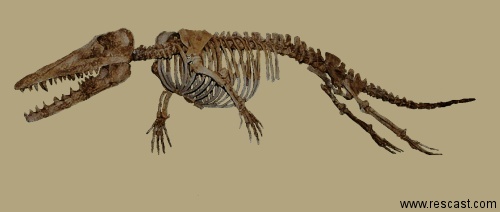
Part I: Transitional Fossils
Creationists are an endless source of material for skeptical analysis. The reason for this is that modern creationism is what I call “sophisticated nonsense.” It is an elaborate system of motivated reasoning crafted to defend a particular religious view.
The energy, time, and resources that some creationists put into this endeavor is astounding, resulting in a mountain of false claims, half-truths, misdirections, unsound arguments, and misinterpretations.
Creationists are engaged in science denial – denying evolutionary science. The purpose of denial is doubt and confusion, so they don’t have to create and defend a coherent explanation of the origins of life on Earth. They don’t have to provide an explanation for all the available evidence. All they have to do is muddy the waters as much as possible.
Continue Reading »
Jun
29
2015
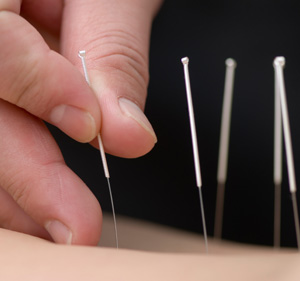 A recent article at the Atlantic by Jennie Rothenberg Gritzi demonstrates just how thoroughly the alternative medicine movement (I will refer to this as CAM) has been able to influence the cultural conversation over the practice of medicine. This is great evidence of how successful a persistent marketing campaign can be.
Gritzi relates early on in the article that she was predisposed to CAM from a young age, which might explain her journalistic failures in this piece. She writes:
After visiting the NIH center and talking to leading integrative physicians, I can say pretty definitively that integrative health is not just another name for alternative medicine.
Continue Reading »
Jan
12
2015
 There are many enduring controversies within science, and they are fun to follow. There are raging debates about the so-called Hobbit or Homo floresiensis, is it a new species or a diseased human? You may be surprised to hear that there is still a controversy over whether or not the dinosaur extinction was due to a meteor impact or other terrestrial factors (although I think this one is heavily tilting toward the impact theory).
One controversy I have been following, here and on the SGU, concerns the Young Dryas and whether or not the cooling characteristic of that period was due to melting glaciers or a local comet impact.
Such controversies always raise a few general issues for me. The first is how the mainstream media covers them, which I always find disappointing. Properly covering genuine scientific controversies is challenging, but that is what science journalists are supposed to do. What I find is that they tend to present each new study in the debate as if it is definitive and has ended the debate, rather than putting it into the proper context of the ongoing controversy.
Another common mistake is to rely on one expert rather than getting a reasonable sample. They tend to weight the story toward the side of the expert on which they relied, and maybe provide only token coverage of other views. There is also, of course, the issue of proper balance. Reporting should reflect the balance of opinion in the scientific community. It’s OK to present minority opinions but they should be presented as such.
Continue Reading »