May 31 2012
Richard Leakey, Evolution and Motivated Reasoning
Richard Leakey, son of Mary and Louis Leakey, is a deservedly famous paleoanthropologist who has contributed significantly to our understanding of human evolution. In a recent interview he expressed his confidence that skepticism over evolutionary theory will fade away over the next 15-30 years. He is quoted as saying:
“If you get to the stage where you can persuade people on the evidence, that it’s solid, that we are all African, that color is superficial, that stages of development of culture are all interactive,” Leakey says, “then I think we have a chance of a world that will respond better to global challenges.”
While I hope this is true, I am not as optimistic. I think the primary problem with his argument is the premise that you can get to the stage, “where you can persuade people on the evidence.” In my opinion the evidence indicates that for many people, you cannot persuade them on the evidence. Unfortunately, human psychology simply does not work that way.
I agree with his premise that the evidence for evolution as a fact is overwhelming. In fact, I think we are already there. We do not need to wait 15-30 years for the evidence to be solid and convincing. There is a confluence of evidence from genetics, paleontology, anatomy, and developmental biology that has only one scientific explanation – common ancestry and organic evolution. We’re still working out the details, but the big picture is crystal clear.
 Many teachers are panicking over AI (artificial intelligence), and for good reason. This goes beyond students using AI to cheat on their homework or write their essays for them. If you have AI essentially think for you, then you will not learn to think. On the other hand
  It is a useful exercise to think about the way millions or even billions of people behave to look for low-hanging fruit in terms of increased energy efficiency or environmental sustainability. While this should be a purely evidence-based and cost vs benefit exercise, it has unfortunately been sucked into the ever-growing culture war (at least in the US). Plastic straws are a great example of this. We use them mostly by habit and culture. They are often given, for example, by default in restaurants. As a result an estimated
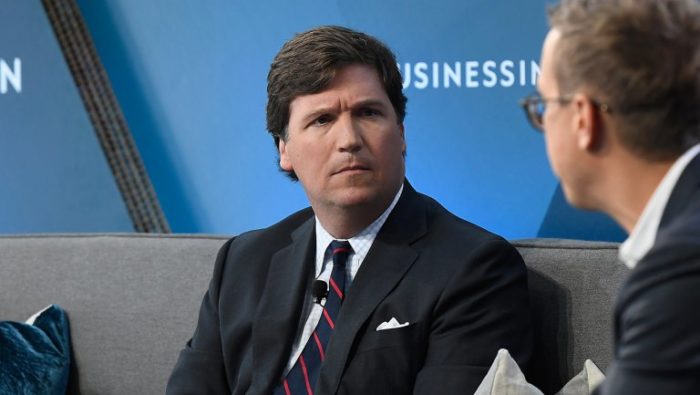 The line between news and commentary has arguably become more blurred in recent decades. This has implications for libel law, which also reflects the shifting media landscape.
 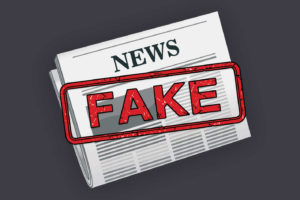 A new study
 It has rapidly become conventional wisdom that the widespread use of social media has resulting in an increase in the “echochamber effect.” This results from people only consuming media that already is in line with their existing beliefs and ideology. This is nothing new, psychologists have long documented that people are much more likely to access information that reinforces their existing beliefs and biases, and much less likely to engage with information that directly challenges their beliefs.
 Newsweek, who has been following the story of Italian Neurosurgeon, Sergio Canavero, now reports:
 Last year Facebook announced that it was partnering with several outside news agencies, the Associated Press, Snopes, ABC News, PolitiFact and FactCheck.org, to fact-check popular news articles and then provide a warning label for those articles on Facebook. How is that effort working out?
 In North America house sparrows are a menace.