Jan 26 2026
Rethinking the Habitable Zone
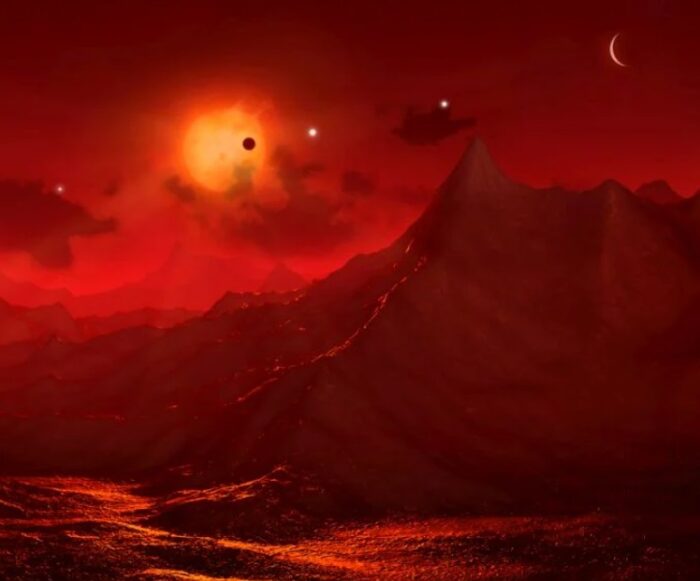 As we continue the search for life outside of the Earth, it helps if we have a clear picture of where life might be. This is all a probability game, but that’s the point – to maximize the chance of finding the biosignatures of life. One limitation of this search, however, is that we have only one example of life and a living ecosystem – Earth. Life may take many different forms and therefore exist in what we would consider exotic environments.
That aside, it seems a good bet that life is more likely in locations where liquid water is possible, and therefore liquid water is a reasonable marker for habitability. When we talk about the habitable zone of stars, that is what we are talking about – the distance from the star where it is possible for liquid water to exist on the surface of planets. There are more variables than just the temperature of the star, however. The composition of the atmosphere also matters. High concentrations of CO2, for example, extend the habitable zone outward. There is therefore a conservative habitable zone, and then a more generous one allowing for compensating factors.
A new paper wishes to extend the conservative habitable zone further, specifically around M and K class dwarfs. K-dwarfs, or orange stars, are likely already the best candidates for life. They are bright and hot enough to support liquid water and photosynthesis, they emit less harmful radiation than red (M) dwarfs, and live a relatively long time, 15-70 billion years. They also comprise about 12% of all main sequence stars. Yellow stars like our sun are also good for life, but have a shorter lifespan (10 billion years) and make up only about 6% of main sequence stars.
There has been a lot of speculation about the habitability of red dwarfs, mostly because they make up about 70% of the stars in the Milky Way. Therefore they dramatically change the number of star systems that are candidates for life. Most of the time that you see a headline about a new study increasing or decreased the possibility of life in the galaxy, it’s a good bet it’s about red dwarf stars. Research has gone back and forth about this question, but overall I think the probability is quite low.
The biggest problem with red dwarfs is that they emit a lot of radiation, enough to blast the atmosphere of any planet in the habitable zone away. They do settle down when they get older, however. This means if a planet wanders into the inner stellar system after the star has calmed down, it may keep its atmosphere. Or a planet may reconstitute its atmosphere later in life. But this this means far fewer candidates, and these events are less likely.
Another recent paper also was pretty down of red dwarf life. The researchers calculate that while the light from red dwarfs was enough to support photosynthesis, it is not enough to support complex life. So if there were life on planets around red dwarfs, they would likely only be microbes. That’s still exciting, but, you know.
The new paper is about another feather of red dwarf planets in the habitable zone that is also problematic. In order to be close enough to be hot enough for liquid water, a planet would also likely be tidally locked. This means it would show the same face to the sun at all times, with the near side boiling and the far side freezing. A lot of attention is therefore paid to the terminus, the zone around the middle between too hot and too cold that is just right. But would this be enough to support life, and what would conditions be like there? What the new paper explores is the heat distribution on such planets. They find that heat could travel from the near side to the far side in sufficient amounts to allow for liquid water, even on the far side of the planet.
What this does is extend the habitable zone inward, closer to the star, where it is too hot on the near side and perhaps even in the terminus, but, they argue, could be habitable on the far side of the tidally locked planet.
They also argue that the conservative habitable zone may be extended outward, because there could be liquid water beneath an entirely frozen surface. This did not sound like news to me, however – because of Europa and Enceladus. We already know that icy worlds outside the conservative habitable zone can contain liquid water beneath the surface. On these worlds like would need to be mostly chemosynthetic, deriving its energy from chemical reactions rather than sunlight.
While the paper is interesting, it seems like a tweak to our existing models. I also don’t think (unlike as some flashy headlines imply) that this has a significant effect on the probability of life and therefore the amount of life in the galaxy. It basically means there may be some outlier planets that manage to have life despite being outside a conservative habitable zone. In any case, we should not expect any civilizations on these worlds. At most we might find some extremophile microbes.
Another way to look at this is (again, since we are playing the probability game), every time we identify a challenge to habitability, even if it can be theoretically overcome, the number of potential worlds that have overcome it is reduced. So now, in order to have life on a planet around an M-dwarf, we need for it to have migrated in later in life, or reconstituted an atmosphere, be able to eke out photosynthesis with low energy light, and hunker down in the liminal spaces between hot and frozen death. Such planets also likely need a strong magnetic field to protect from even the later-stage radiation from M-dwarfs.
Sure, we may find such life. But it still means that 70% of the stars in our galaxy are poor candidates for life, and at most may host some microbes. Orange stars, meanwhile, are a much better candidate. They are probably the sweet spot for life.