Sep 20 2021
Science is not Just Philosophy
It is not uncommon, if you do not like any particular finding of scientific research, to attack the institutions of science or even the very notion of science itself. These kinds of attacks are now common in the anti-vaccine pushback against common sense public health measures, and often from a religious or ideological perspective. It’s not surprising that the false claim that science is just philosophy has reared its head in such writings. The attack on science also tends to have at least two components. The first is a straw man about how scientists are pretending that science is a monolithic perfect and objective entity. This is then followed by the claim that, rather, science is just opinion, another form of subjective philosophy. This position is entirely wrong on both counts.
Here is one example, embedded in a long article loaded with misinformation about vaccines and the COVID pandemic. There is way too much misdirection in this article to tackle in one response, and I only want to focus on the philosophical claims. These are now common within certain religious circles, mostly innovated, at least recently, in the fight against the teaching of evolution. They have already lost this fight, philosophically, scientifically, and (perhaps most importantly) legally, but of course that does not mean they will abandon a bad argument just because its wrong.
First the straw man:
The second consequence of “following science” is that it reinforces one of modernity’s most enduring myths: that “science” is a consistent, compact, institutionally-guaranteed body of knowledge without interest or agenda. What this myth conceals is the actual operation of the sciences—multiple, messy, contingent, and tentative as they necessarily are.
The myth is itself a myth. It exists almost nowhere except in the minds of science deniers and those with an anti-science agenda. Elsewhere the author admits:
As a lay person, unqualified to judge the technical issues, I have concluded only that there might be a legitimate question here, and one that must, necessarily, remain open until time and experience can settle it.
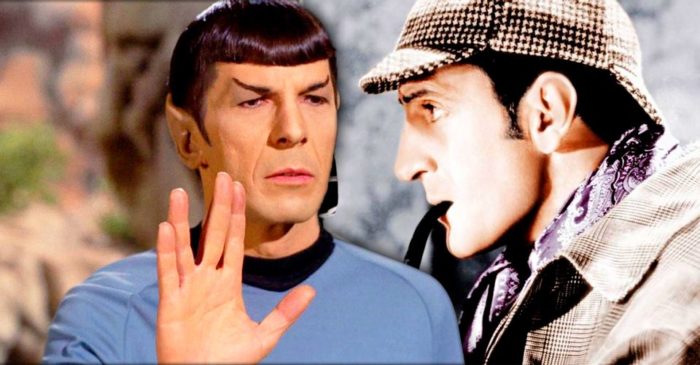 You’ve probably noticed that it’s very difficult to write a character who is extremely intelligent in some way. It’s easy to make a character knowledgeable, because you can just put a lot of facts into their mouth. The character Arthur P. Dietrich (played by Stephen Landesberg) on the sitcom Barney Miller always had a relevant fact at the ready. He seemed to know everything. What’s difficult is making a character wise, or giving them the ability to think in complex and logical ways. More specifically, it’s difficult to write a character that’s smarter than the writer themselves.
 About a month ago
 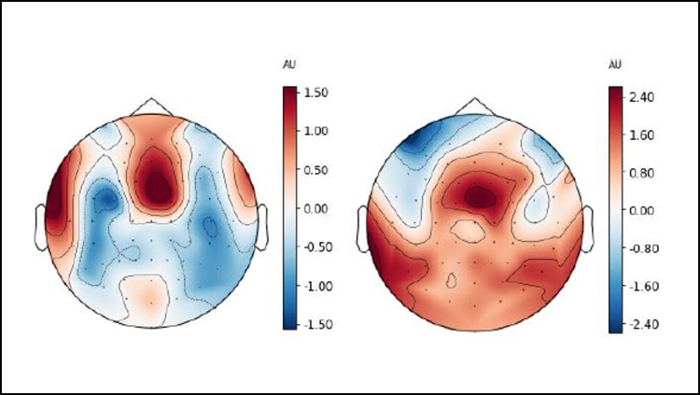 It is a fundamental truth of human behavior that people sometimes cheat. And yet, we tend to have strong moral judgements against cheating, which leads to anti-cheating social pressure. How does this all play out in the human brain?
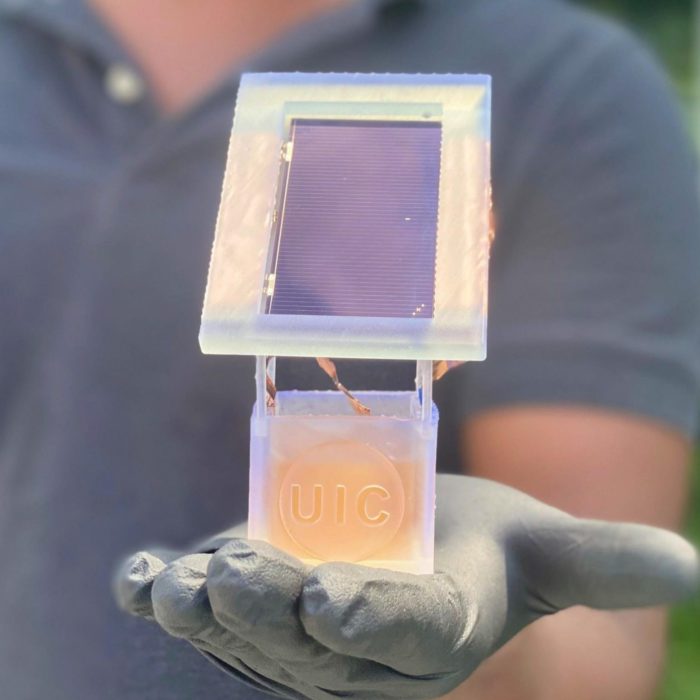 Ammonia is the second most produce industrial chemical in the world. It is
 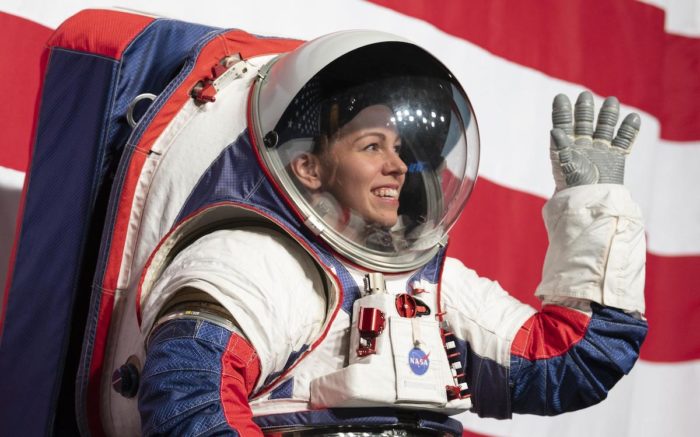 One of the technologies that had to be developed in order to return to the Moon, and possibly go on to Mars, is spacesuits. It may seem like we already have developed adequate spacesuit technology, since we used them on the Moon during the Apollo missions, but this is not true. The Apollo suits were only designed to survive for days on the Moon, not for the much longer missions the Artemis program plans. They were also very clumsy, as you can tell from watching any Apollo footage of the astronauts.
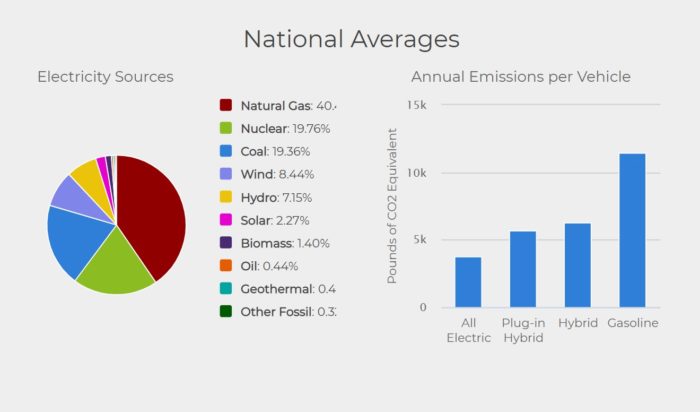 I recently purchased a full electric vehicle (EV) and so far I’m very satisfied with the purchase. The functionality and performance is just superior, in my opinion, to similar internal combustion engine (ICE) vehicles. The up front cost is a little higher than for a similar ICE vehicle, but that difference is coming down, especially if you consider the reduced cost of operation from reduced fuel and maintenance costs. In fact, depending on the specifics some EVs may be cheaper over the lifetime of the car vs a similar ICE vehicle.
  The International Space Station (ISS) is getting old. Construction started on the station in 1998 and it has been continuously occupied since November 2000. Construction took 10 years, 30 missions, 15 space agencies, and 15 countries to complete. The lifespan of the modules that make up the ISS was originally set at 15 years, but this has been extended to 30 years, with the ISS commissioned through 2028. It is unclear if it will be extended beyond that.
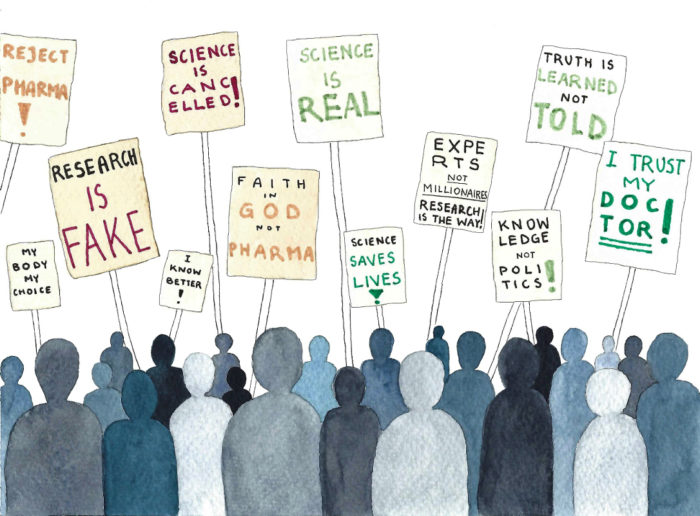 The ultimate goal of scientific skepticism is to skillfully use a process that has the maximal probability of accepting claims that are actually true and rejecting those that are false, while suspending judgment when an answer is not available. This is an open-ended process and is never complete, although some conclusions are so solid that questioning them further requires an extremely high bar of evidence. There are many components to scientific skepticism, broadly contained within scientific literacy, critical thinking skills, and media savvy. Traditional science communication focuses on scientific literacy (the so-called knowledge deficit model), but in the last few decades there has been copious research showing that this approach is not only not sufficient when dealing with many false beliefs, it may even be counterproductive.
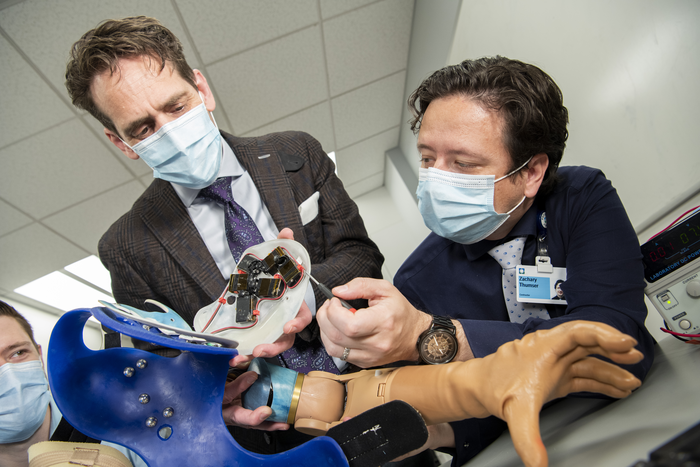 The term “bionics” was coined by Jack E. Steele in August 1958. It is a portmanteau of biologic and electronic. Martin Caidin used the word in his 1972 novel, Cyborg (which is another portmanteau of cybernetic organism). But the term really became popularized in the 1970s TV show, The Six Million Dollar Man. Of course, at the time bionic limbs seemed futuristic, perhaps something we would see in a few decades. Thirty years always feels like far enough in the future that any imagined technology should be ready by then. But here we are, almost 50 years later, and we are nowhere near the technology Steve Austin was sporting. Bionics, as depicted, was more like 100 or more years premature. This is tech more appropriate to Luke Skywalker’s hand in Star Wars, rather than some secret government project in the 1970s.