Jan 13 2026
Is Donut Lab’s Solid State Battery Legit?
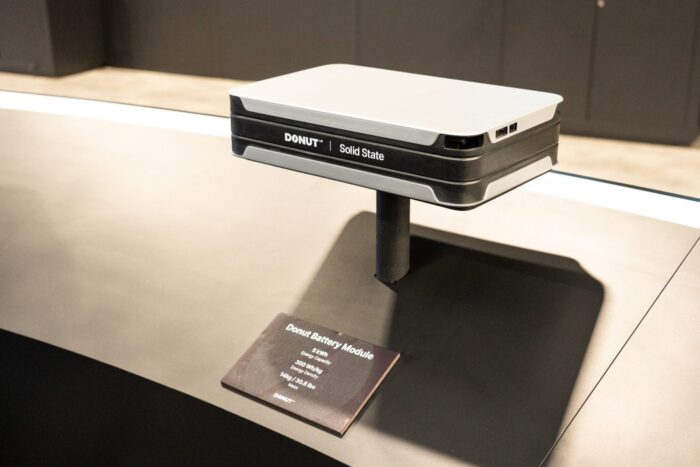 The tech world is buzzing with the claims of a startup battery company out of Finland called Donut Lab. They claim to have created the world’s first production solid state battery. At first blush the claims are exciting but seem in line with the promises that we have been hearing about solid state batteries for years. So it may seem that a company has finally cracked the technical issues with the technology and gotten a product across the finish line. But let’s take a closer look.
First let’s review their claims. The CEO is claiming that their battery has a specific energy of 400 watt hours per kilogram. This is great, considering the current lithium ion batteries in production are in the 175-250 range. The Amprius silicon anode Li-ion battery has 370 Wh/kg, so 400 sounds plausibly incremental, but make no mistake, this would still be a huge breakthrough. Meanwhile the CEO also claims 100,000 charge-discharge cycles, and operation temperature from -30 to 100C. In addition he claims his battery is cheaper than standard Li-ion, does not use any geopolitically sensitive raw materials, and is already in production (for motorcycles). Further it can be fully recharged in 5 minutes, and is incredibly stable with no risk of catching fire.
As I have pointed out previously, battery technology is tricky because a useful EV battery needs a suite of features all at the same time, while reality often requires trade-offs. So you can get your high capacity, but with increased expense, for example (like the Amprius battery). So claiming to have every critical feature of an EV battery improve all at once is beyond a huge deal. That in itself starts to get into the implausibility range, but it’s not impossible. My reaction appears to be similar to most people in the tech world – show me the money. At the CES where Donut rolled out its battery claims, in short, they did not do that.
A battery company with these claims, if they wanted to be taken serious, would have presented their actual battery at CES demonstrating at least some of these features, like the energy density and cycle life. But all they had was an empty case – no actual battery. That we either a disastrous marketing decision, or they don’t have an actual battery. I’m beginning the smell the “fake it til you make it” syndrome that tanked Theranos.
As we go deeper the story gets more dodgy. The company, Donut Lab, is a small Finish company (registered in Estonia). Their employee roster boasts a single technical expert, the rest are in marketing and management. So now we are supposed to believe that this small company with a single engineer has outperformed the world’s battery tech giants with hundreds or even thousands of experts and who are pouring billions of dollars into R&D to be the first to market with a solid state battery. Um, no. I love a good Cinderella story, and it would be great if a viable solid state battery hit the market a few years (or maybe more) ahead of schedule, but this is just too much to believe.
Then there is the history of the CEO, Marko Lehtimäki. Last year this guy claimed to have created the first true artificial intelligence, Asinoid. He wrote: “Asinoids are today the world’s only AI with their own life, thoughts, continuous evolution and synthetic neuroplasticity with the ability to adopt to any kind of physical or digital ”body”, from humanoid robots to SaaS apps, drone swarms and CCTV cameras. Their intelligence is modeled carefully after the only true known intelligence — the human brain.”
This was just vaporware. Reading his posts I get the vibe that this guy wants to become the next Elon Musk, grabbing experts to create one moonshot breakthrough after another. He may be truly delusional, or really think that his companies are on the verge of these breakthroughs, so it’s just good marketing to get ahead of the curve. Or he may just be a scammer. Either way, he has no credibility.
We are therefore seeing a pattern that is extremely familiar and clear to experienced skeptics – an astounding claim with nothing real to back it up made by someone with a history of dubious claims. I would be shocked (although also happy) if this turns out to be legit.
Meanwhile, where does solid state battery tech actually sit? The technology is promising, and is expected to produce batteries with higher energy density, faster charging, and longer lifespans. But these will likely come at the expense of higher cost. The large companies working on this tech are also facing challenges to mass production and have not solved all the technical issues. Solid state batteries have been promised for a long time, and the technology is taking a lot longer than optimists expected. Realistically, this is a medium to long term technology. At best we will see them at the end of this decade but more likely in the early to mid 2030s. It may even take longer.
Meanwhile, Li-ion technology continues to advance. Over the next few years we will see silicon anode batteries in EVs at the high end. We are also starting to see sodium ion batteries at the low end, at about half the price of Li-ion batteries and still with acceptable energy density, although at the low end of current Li-ion batteries. This is proven technology, with continued incremental improvement in manufacturing and design. I suspect that these batteries will take us into the mid-2030s, until the industry shifts over to something like solid state batteries.