Oct 27 2025
Current Emissions Cause Sea Level Rise for Centuries
 I would not be surprised if the period of time roughly between 2000 and 2050 looms large in the collective mind of humanity for centuries to come – and not in a good way. It is increasingly seeming like our behavior during this period is locking in a certain about of climate change, including sea level rises and loss of ice sheets, for centuries. Some climate changes are likely to be irreversible on human time scales.
A recent study adds to the mountain of evidence that this is the case. They find that under current climate policies emissions through 2050 lock in 0.3 meters of sea level rise through 2300. If current policy continues through 2090 then the locked in sea level rise will be about 0.8 meters. If, on the other hand, we make significant efforts to reduce emissions, we can reduce this locked in sea level rise by 0.6 meters. The point is, what we do now will impact global coastlines for centuries. And while 0.8 meters may not sound like a lot, that is an average with some areas experiencing much more. That is also enough to cause significant displacement of coastal populations.
Meanwhile, it is during this time period (the first half of the 21st century) that the consensus of climate experts was pretty solid – the evidence is clear that greenhouse gas emissions are trapping heat and causing average global warming. You could argue that this consensus existed earlier, but 2000 is a convenient round number – by then there was no reasonable denial of that consensus. And of course, I am talking about the big picture, not all the tiny details. It was clear we needed to think of ways to move our civilization away from burning more and more fossil fuel. In 2016 the Paris Accords were signed, formalizing global recognition that we need to collectively address this issue. This makes it difficult to deny that we did not recognize there was a problem and that we urgently need to do something about it.
 Batteries are an increasingly important technology to our civilization. If I could wave a magic wand and make one specific non-medical technology advance 10-20 years in a day, it would be battery technology. Batteries are used in our everyday devices, like phones and laptops. They are the single most critical factor to EVs, and they can provide grid storage which can make the adoption of low carbon energy much easier. Fortunately, battery technology is heavily researched and has been steadily increasing for the last few decades. We are now benefiting from this slow but cumulative improvement.
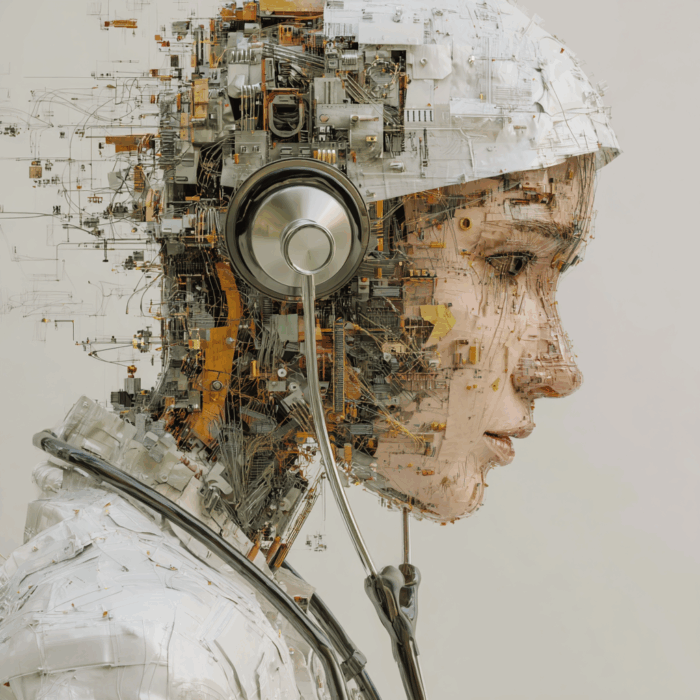 Large language models, like Chat GPT, have a known sycophancy problem. What this means is that they are designed to be helpful, and to prioritize being helpful over other priorities, like being accurate. I tried to find out why this is the case, and it seems it is because they use Reinforcement Learning from Human Feedback (RLHF) – the ostensible purpose of this was to make their answers relevant and helpful to the people using them. It turns out, giving people exactly what they want does not always create the optimal result. Sometimes it’s better to give people what they need, rather than what they want (every parent knows or should know this).
 I attended a Ren Faire this past weekend, as I do most falls, and saw a forging demonstration. The cheeky blacksmith, staying in character the whole time, predicted that steel technology was so revolutionary and so useful that it would still be in wide use in the far future year of 2025. It is interesting to reflect on why, and to what extent, this is true. Once we figured out how to make steel both hard and strong it became difficult to beat it as an ideal material for many applications. SpaceX (a symbol of modern technology), in fact, builds its Starship rockets out of stainless steel.
 Quantum computers are a significant challenge for science communicators for a few reasons. One, of course, is that they involve quantum mechanics, which is not intuitive. It’s also difficult to understand why they represent a potential benefit for computing. But even with those technical challenges aside – I find it tricky to strike the optimal balance of optimism and skepticism. How likely are quantum computers, anyway. How much of what we hear is just hype? (There is a similar challenge with discussing AI.)
 It is becoming increasingly clear, in my opinion, that we need to further shift from an overall economic system based on a linear model of extraction-manufacture-use-waste to a more circular model where as much waste as possible becomes feedstock for another manufacturing process. It also seems clear, after reading about such things for a long time, that economics ultimately drives such decisions. If the one-way road to waste is the cheapest pathway, that is the path industry will take. Unfortunately, this model historically has lead to massive pollution, growing waste, and a changing climate. How do we switch to an economically viable circular economy, to minimize waste and environmental impact without decreasing standard of living? That is always the $64,000 question.
 Watch
Watch  I have been using Chat GPT since it was first released, so I was interested to see how much of an upgrade the new Chat-GPT 5 is. For those of you living in a luddite cave, Chat-GPT is one of the new artificial intelligence (AI) applications known as an LLM, or large language model. I genuinely use it for personal projects, but also try to put it through its paces just to see how well it works. Here are some of my personal impressions.
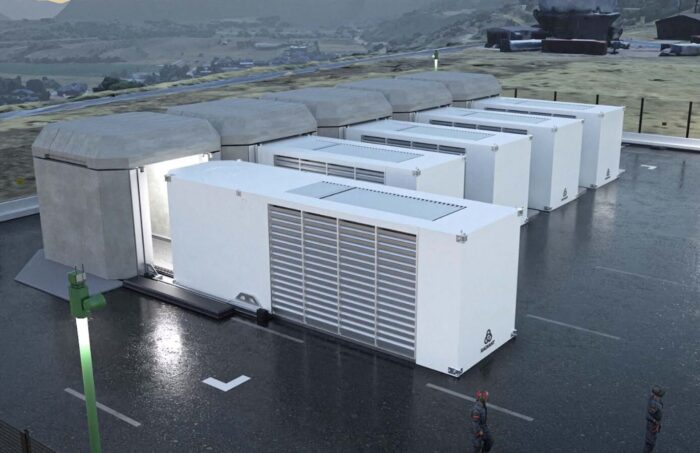 I was sent this news item,
  The
The