Mar 02 2026
Flexible School Start Time
 A recent study shows pretty clearly that highschoolers benefit from a little extra sleep. We will get to the study in a bit, but first I want to note that this information is not new. Teenagers tend to stay up late, and yet we make them get up super early to be at class, often by 7:00 AM. This is not good for their health or their learning. So why do we do it?
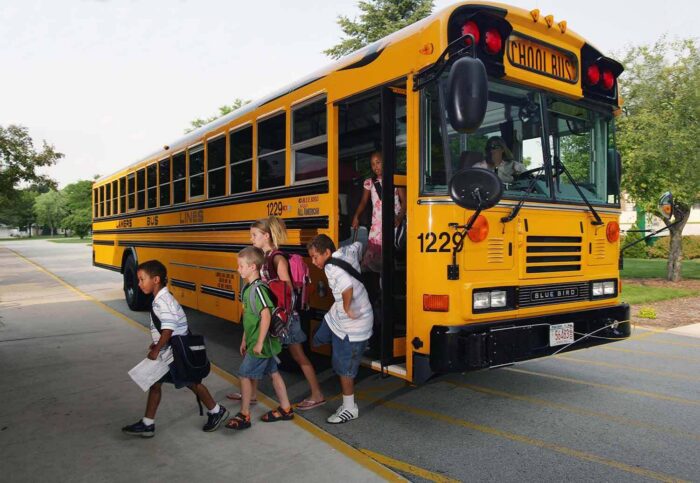
The primary reason is logistical, which is tied to cost. School systems have tiered start times for elementary, middle school, and high school because this allows them to use the same fleet of buses and drivers for all three. Starting high school later, at the same time as middle school, would mean increasing the size of the fleet. There are other stated reasons, but honestly I think this is the real reason and everything else is a backend justification. The other reasons are more tradeoffs, that benefit some people but not others. For example, a parent with a long commute could drop off their highschooler on the way to work. There is more time for after school clubs, sports, and jobs. While some older teens may get home early to watch their younger siblings until their parents get home.
This all points to a main reason our civilization is frustratingly sub-optimal (to be polite). The default is to follow the pathway of least resistance – everyone just does what’s best for themselves, with people in power doing their best to solidify more power, with vested interests putting the most consistent effort into making the system work for their narrow interest. What is often lacking is any kind of systemic planning, and when that does occur (even with the best intentions) the law of unintended consequences often results in a net wash or even detriment. The world is complex, and we are just not very good at managing that level of complexity. What we need are institutions that can accumulate evidence-based institutional knowledge to incrementally make things work better. But that’s a lot of work, and it’s too easy for vested interests to sabotage such efforts.
I’m not trying to be nihilistic – nihilism is part of the problem, and is often used as a weapon by those vested interests to short circuit attempts to make things work better for everyone. But we have to understand the nature and scope of the problem, and we need the energy and dedication to sustain efforts to make things work better. Such efforts can work, and historically they have made things better. But it’s a constant struggle.
OK, back to the study. In this study they gave students the option to start class up to an hour later. For example, school would officially start at 8:30, but also offered an optional module at 7:30 for those who wanted to come early and end early. The found:
“Under the flexible model, 95% of students used the later-start option. The median SST was delayed by 38 minutes (n = 711, β = .57, 95% confidence interval [.53, .62], p < .001, R2β = .52), with corresponding significant delays in wake times and increased sleep duration on school days. Among the paired subsample, SST delay was significantly associated with increased school day sleep duration (n = 205, β = .51 [.05, .94], p = .03, R2β = .02). No worsening was observed. Improvements included reduced problems falling asleep, fewer students with clinically low health-related quality of life, and higher scores in mathematics and English.”
Now that I am retired I have personally experienced (yes, this is just anecdotal) the benefits of sleeping in longer. I no longer even set an alarm – I wake up when I feel like it. I am still working basically full time doing all my science communication activities, but mostly on my own schedule. My sleep quality and daytime alertness have significantly improved. I highly recommend it. But more importantly – the evidence clearly shows that this is generally true – being able to sleep in longer results in better sleep and performance.
So it seems like a no-brainer – why can’t we do this? I think the key here is flexibility, which can be paired with increased flexibility at work, especially for parents. Flexible work start times and the ability to work from home, even if only 1-2 days a week, results in a huge improvement in life satisfaction. Then families will have the ability to make their schedules work. Let’s prioritize sleep, health, and educational effectiveness first, and make the system work for these goals. It makes no sense for a school system to sacrifice the well-being and education of their own students in order to meet their own logistical needs.
The obvious response to this question is – well, it’s all about money. We have to be realistic. School systems operate with limited budgets and have to make the most with the resources they have. If they have to maintain a larger bus fleet, where will that money come from? I get it. This is reality. My question is – who made this decision? Did we as a society, or even just the affected parents, make this decision collectively with adequate information to understand the implications of their decision? We may just have to accept the fact that running an effective school system is more expensive than we might want it to be, and cutting costs in this way is simply not an acceptable option.
If we prioritize the health and education of students, I think we will find there are other elements of the system that can accommodate. This is where municipal planning becomes even more integrated. Investing in public transportation and subsidizing it for students, for example, will give students more options and reduce the strain on a dedicated school bussing system. Facilitating carpooling among students is another option. More parental flexibility helps. Make schools more local and walkable/bikeable, and organize safe group walks to and from school. Optimize and disperse drop-off areas to limit bottle necks and reduce drop-off congestion.
This requires thoughtful planning, but mostly an unwillingness to simply sacrifice students to simplify logistics and reduce costs.