Archive for February, 2026

Feb 26 2026

Universal Respiratory Vaccine

The news is abuzz with talk of a potential universal respiratory vaccine. It’s definitely interesting research, but may not be what you think. In this case, the reporting has been quite good on the whole, but the headlines can be misleading if you are not deeply steeped in the complexities of mammalian immunity. Let me start with the biggest caveat – this is a mouse study. This is therefore encouraging pre-clinical research, but we are still years away from translating this into an actual vaccine. Also, most interventions that are encouraging at the animal stage don’t make it through human testing. So don’t expect any revolution based on this treatment anytime soon. Having said that – there is great potential here.

To understand how this new approach works, let’s review some basics of immunity. (Note – the immune system is incredibly complex, and I can only give a very superficial summary here, but enough to understand what’s going on.) Mammalian immune systems have two basic components, innate immunity and adaptive immunity. The adaptive immune system is probably what most people think about when they think about the immune system and vaccines. Adaptive immunity targets and recognizes specific antigens (such as proteins) on pathogens like viruses, bacteria, or fungi. Antibodies attach to these antigens, flagging them to be targeted by immune cells like macrophages which then eat them. The macrophages in turn display the antibody-flagged antigens on their surface, triggering a greater and more specific reaction to those specific antigens. Adaptive immunity is considered slow (it takes days to ramp up), specific (it targets specific antigens on specific pathogens) and durable (it has memory, and will react more quickly and robustly to the same pathogen in the future).

By contrast, the innate immune system is fast, non-specific, and short-lived with no memory. The innate immune system consists of physical barriers, like skin and mucosa, and immune cells that target pathogens based on broad patterns that are not learned but are innate (hence the name). There are Toll-like receptors (TLRs – the name Toll comes from the German for “fantastic”, allegedly said by a researcher upon discovery). The Toll gene was first discovered in fruit flies and then similar genes were later discovered in mammals, hence “Toll-like”. TLRs detect pathogen-associated molecular patterns (PAMPs), which are highly conserved features of types of pathogens. In other words –  a TLR might recognize a snippet of RNA as a pattern typical of RNA viruses, or proteins that tend to occur on pathogenic bacteria. “That looks like an RNA virus, so let’s attack it.”

Continue Reading »

No responses yet

Feb 23 2026

Why UFOs Are Back

Published by under UFO's / Aliens

Fascination with UFOs (unidentified flying objects) is endless. I get it – I was into the whole UFO narrative when I was a child, and didn’t shed it until I learned science and critical thinking and filtered the evidence through that lens. I credit Carl Sagan for initiating that change. In his excellent series, Cosmos (still worth a watch today), he summarized the skeptical position quite well. To paraphrase – after decades, there isn’t a single hard piece of evidence, not one unambiguous photo or video. He gave a couple of examples of evidence (widely cited at the time) that were completely useless. Now -four decades later – the situation is the same. The evidence, in a word, is crap. It is exactly what you would expect (if you were an experienced skeptic) from a psychocultural phenomenon, without any evidence that forces us to reject the null hypothesis.
So why does belief in UFOs (meaning that some of them are alien spacecraft) not only persist but are experiencing a resurgence? Ostensibly this was triggered by the release of the Pentagon videos. I have already dealt with them – they are just more low-grade evidence. In fact, as I have argued, the low-grade quality of the images is the phenomenon. UFOs, or UAPs as the Pentagon now calls them, are not an alien phenomenon, they are an “unidentified” phenomenon. Mick West has arguably done the most thorough analysis of these videos. He convincingly shows how they are just misidentified birds, balloons, and planes. If you look at the videos you will see that they are blobs and shadows and lights. They are not clear and unambiguous images of spacecraft. Believers must infer that they are spacecraft by their apparent properties – and that is where the technical analysis comes in. A sprinkle of motivated reasoning, or simply lack of expertise, is enough to convince yourself that these are fast moving large objects. But a better analysis (again, see Mick West above) shows this is not the case. They are small, moving with the wind, or flying at the speed of a bird.

But the US military is taking UAPs seriously. This is actually not a surprise – unidentified anomalous phenomena might be Chinese spy balloons, or Russian fighter planes. This has always been at the core of the government’s interest. it is now policy to scramble fighter jets for visual confirmation of anything not identifiable on radar. And now that they are doing that – 100% of UAPs so far have been identified as mundane objects, mostly balloons. In fact, the US military is happy to encourage public belief in “UFOs” because it is a convenient cover for their own top secret projects. It is not a coincidence that UFO sightings tend to cluster around military bases.

Continue Reading »

No responses yet

Feb 16 2026

The Future of AI-Powered Prosthetics

It’s not easy being a futurist (which I guess I technically am, having written a book about the future of technology). It never was, judging by the predictions of past futurists, but it seems to be getting harder as the future is moving more and more quickly. Even if we don’t get to something like “The Singularity”, the pace of change in many areas of technology is speeding up. Actually it’s possible this may, paradoxically, be good for futurists. We get to see fairly quickly how wrong our predictions were, and so have a chance at making adjustments and learning from our mistakes.

We are now near the beginning of many transformative technologies – genetic engineering, artificial intelligence, nanotechnology, additive manufacturing, robotics, and brain-machine interface. Extrapolating these technologies into the future is challenging. How will they interact with each other? How will they be used and accepted? What limitations will we run into? And (the hardest question) what new technologies not on that list will disrupt the future of technology?

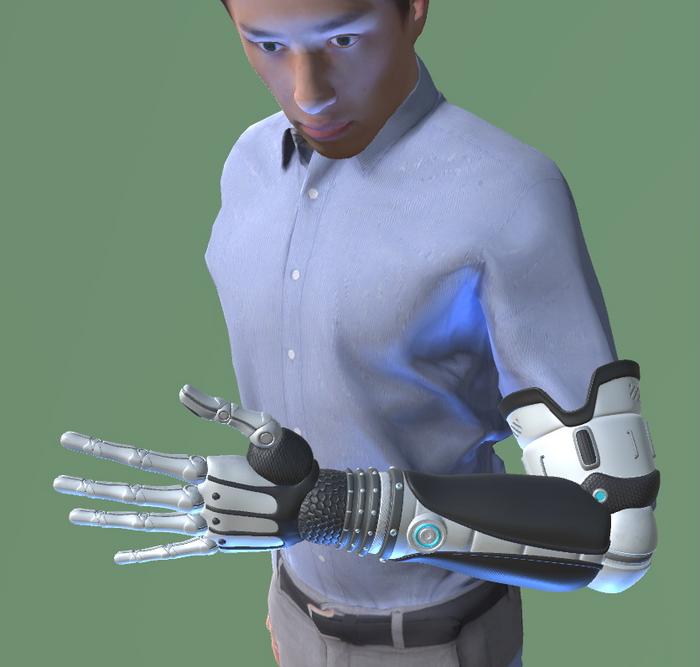
While we are dealing with these big question, let’s focus on one specific technology – controllable robotic prosthetics. I have been writing about this for years, and this is an area that is advancing more quickly than I had anticipated. The reason for this is, briefly, AI. Recent advances in AI are allowing for far better brain-machine interface control than previously achievable. Recent advances in AI allow for technology that is really good at picking out patterns from tons of noisy data. This includes picking out patterns in EEG signals from a noisy human brain.

This matters when the goal is having a robotic prosthetic limb controlled by the user through some sort of BMI (from nerves, muscles, or directly from the brain). There are always two components to this control – the software driving the robotic limb has to learn what the user wants, and the user has to learn how to control the limb. Traditionally this takes weeks to months of training, in order to achieve a moderate but usable degree of control. By adding AI to the computer-learning end of the equation, this training time is reduced to days, with far better results. This is what has accelerated progress by a couple of decades beyond where I thought it would be.

Continue Reading »

No responses yet

Feb 12 2026

Falling In Love With AI

There are many ways in which our brains can be hacked. It is a complex overlapping set of algorithms evolved to help us interact with our environment to enhance survival and reproduction. However, while we evolved in the natural world, we now live in a world of technology, which gives us the ability to control our environment. We no longer have to simply adapt to the environment, we can adapt the environment to us. This partly means that we can alter the environment to “hack” our adaptive algorithms. Now we have artificial intelligence (AI) that has become a very powerful tool to hack those brain pathways.
In the last decade chatbots have blown past the Turing Test – which is a type of test in which a blinded evaluator has to tell the difference between a live person and an AI through conversation alone. We appear to still be on the steep part of the curve in terms of improvements in these large language model and other forms of AI. What these applications have gotten very good at is mimicking human speech – including pauses, inflections, sighing, “ums”, and all the other imperfections that make speech sound genuinely human.

As an aside, these advances have rendered many sci-fi vision of the future quaint and obsolete. In Star Trek, for example, even a couple hundred years in the future computers still sounded stilted and artificial. We could, however, retcon this choice to argue that the stilted computer voices of the sci-fi future were deliberate, and not a limitation of the technology. Why would they do this? Well…

Current AI is already so good at mimicking human speech, including the underlying human emotion, that people are forming emotional attachments to them, or being emotionally manipulated by them. People are, literally, falling in love with their chatbots. You might argue that they just “think” they are falling in love, or they are pretending to fall in love, but I see no reason not to take them at their word. I’m also not sure there is a meaningful difference between thinking one has fallen in love and actually falling in love – the same brain circuits, neurotransmitters, and feelings are involved.

Continue Reading »

No responses yet

Feb 09 2026

Uranium and Motivated Reasoning

Published by under Skepticism,Technology

This post is only partly about uranium, but mostly about motivated reasoning – our ability to harness our reasoning power not to arrive at the most likely answer, but to support the answer we want to be true. But let’s chat about uranium for a bit. In the comments to my recent article on a renewable grid, once commenter referred to a blog post on skeptical science and quoted:

Abbott 2012, linked in the OP, lists about 13 reasons why nuclear will never be capable of generating a significant amount of power. Nuclear supporters have never addressed these issues. To me, the most important issue is there is not enough uranium to generate more than about 5% of all power.”

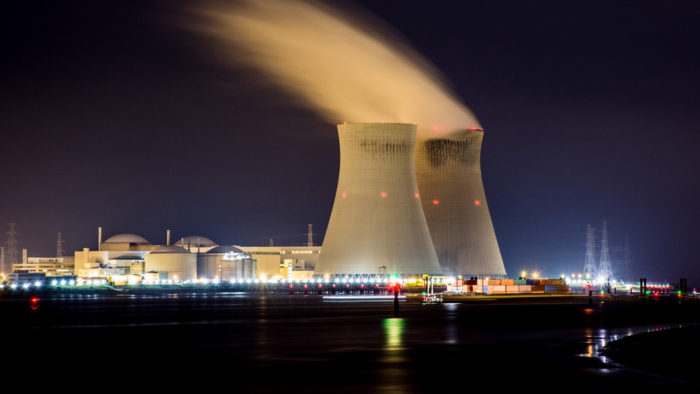
This is the flip side, I think, to the misinformation about renewable energy I was discussing in that post. Let me way, I don’t think there is an objective right answer here, but my personal view is that the pathway to net zero that emits the least amount of carbon includes nuclear energy, a view that is in line with the IPCC. There is, however, still a lot of anti-nuclear bias out there, just as their is pro-fossil fuel bias, and pro-renewable bias, and every kind of bias. If you want to make a case for any particular source of power, there are enough variables to play with that you can make a case. However, factual misstatements are different – we should at least be arguing from the same set of verified facts. So let’s address the question – how much uranium is there.

There is no objective answer to this question. Why not? Because it depends on your definition. Most estimates of how much uranium there is in the world, in the context of how much is available for nuclear power, do not include every atom of uranium. They generally take several approaches – how much is in current usable stockpiles, how much is being produced by active mines, and how much is “commercially” available. That last category depend on where you draw the line, which depends on the current price of uranium as well as the value of the energy it produces. If, for example, we decided to price the cost of emitting carbon from energy production, the value of uranium would suddenly increase. It also depends on the technology to extract and refine uranium. The value of uranium is also determined by the efficiency of reactors.

Continue Reading »

No responses yet

Feb 05 2026

The AI Slop Problem

Published by under Technology

Mark Zuckerberg said a few months ago that AI is ushering in a third phase of social media. First social media was used to connect with family and friends, then it became a platform for content creators, and now creativity is being further unleashed with new AI-powered tools. That’s a pretty rosy view, and unsurprising coming from the creator of Facebook. Many people, however, are becoming increasing concerned about what the net effect of AI-generated content will be, especially low-grade content (now colloquially referred to as AI slop).

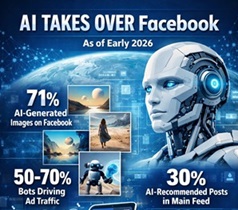
One thing is clear – AI-generated content, because it is so easy and fast, is increasingly flooding social media. AI’s influence takes two basic forms, AI-generated content, and recommendations driven by AI-powered algorithms. So an AI might be telling you to watch an AI-generated video. Recent studies show that about 70% of images on Facebook are now AI-generated, with 80% of the recommendations being AI-powered. This is a fast-moving target, but across social media AI-generated content is somewhere between 20 and 40%. This is not evenly distributed, with some sites being overwhelmed. The arts and crafts site Etsy has been overrun by AI slop, causing some users to abandon the platform.

We are already seeing a backlash and crackdown, but this is sporadic and of questionable effectiveness. Etsy, for example, has tried to limit AI slop on its site, but with limited success. So where is all this headed?

We need to consider the different types of content separately. Much of AI-slop is obviously fake and for entertainment purposes only. They may be cartoony or obviously humorous, with no intent to pass as real or deceive. Some content is meant to entertain (i.e., drive clicks and engagement), but is not obviously fake. Part of the appeal, in fact, may be the question of whether or not the content is real. Other content is meant to deceive, to influence public opinion or the behavior of the content consumer. This latter type of content is obviously the most concerning.

Continue Reading »

No responses yet

Feb 03 2026

Forgetting History

Engaging on social media to discuss pseudoscience can be exhausting, and make one weep for humanity. I have to keep reminding myself that what I am seeing is not necessarily representative. The loudest and most extreme voices tend to get amplified, and people don’t generally make videos just to say they agree with the mainstream view on something. There is massive selection bias. But still, to some extent social media does both reflect the culture and also influence it. So I like to not only address specific pieces of nonsense I find but also to look for patterns, patterns of claims and also of thought or narratives.
Especially on TikTok but also on YouTube and other platforms, one very common narrative that I have seen amounts to denying history, often replacing it with a different story entirely. At the extreme the narrative is – “everything you think you know about history if wrong.” Often this is framed as – “every you have been told about history is a lie.” Why are so many people, especially young people, apparently susceptible to this narrative? That’s a hard question to research, but we have some clues. I wrote recently about the Moon Landing hoax. Belief in this conspiracy in the US has increased over the last 20 years. This may be simply due to social media, but also correlates with the fact that people who were alive during Apollo are dying off.

Another factor driving this phenomenon is pseudoexperts, who also can use social media to get their message out. Among them are people like Graham Hancock, who presents himself as an expert in ancient history but actually is just a crank. He has plenty of factoids in his head, but has no formal training in archaeology and is the epitome of a crank – usually a smart person but with outlandish ideas and never checks his ideas with actual experts, so they slowly drift off into fantasy land. The chief feature of such cranks is a lack of proper humility, even overwhelming hubris. They casually believe that they are smarter that the world’s experts in a field, and based on nothing but their smarts can dismiss decades or even centuries of scholarship.

Continue Reading »

No responses yet

Feb 02 2026

A Fully Renewable Grid?

Published by under Technology

My long-stated position (although certainly modifiable in the face of any new evidence, technological advance, or good arguments) is that the optimal pathway to most rapidly decarbonize our electrical infrastructure is to pursue all low-carbon options. I have not heard anything to dissuade me so far from this position. A couple of SGU listeners, however, pointed me to this video making the case for a renewable + battery energy infrastructure.

The channel, Technology Connections, does a good job at putting all the relevant data into context, and I like the big-picture approach that the host, Alec Watson, takes. I largely agree with the points he makes. Also, at no point does he say we should not also build nuclear, geothermal, or more hydroelectric. He does, perhaps, imply that we don’t need nuclear at several points, but he did not address it directly.

So what are the big-picture points I agree with? He correctly points out that fossil fuels are disposable – they are fuel that you burn. They do not, in themselves, create any energy infrastructure. Meanwhile, a solar panel or wind turbine, once you have invested in building them, can produce energy essentially for free for 20 years. He argues that we should be investing in infrastructure, not just pulling fuel out of the ground that we will burn and it’s gone. I get this point, however, what about hydrogen? It is not certain, but let’s hypothetically say we find large reserves of underground hydrogen that we can tap into. I would not be against extracting this resource and burning it for energy, since it is clean (produces only water, and does not release carbon). Although, we might find better uses for such hydrogen other than burning it, such as feedstock for certain hard-to-decarbonize industries.

But his point remains valid – we should be looking for ways to develop our technology to be reusable, circular, and sustainable, rather than extractive. Extracting and burning a resource is one way and limited. At most this should be a stepping stone to more sustainable technology, and I think we can reasonably argue that fossil fuels was that stepping stone and it is beyond time to move beyond fossil fuel to better technology.

Continue Reading »

No responses yet