Jan
26
2026
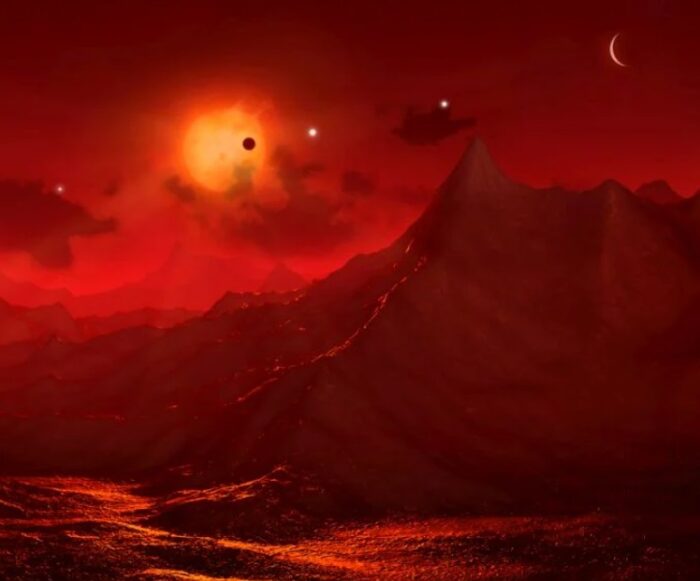 As we continue the search for life outside of the Earth, it helps if we have a clear picture of where life might be. This is all a probability game, but that’s the point – to maximize the chance of finding the biosignatures of life. One limitation of this search, however, is that we have only one example of life and a living ecosystem – Earth. Life may take many different forms and therefore exist in what we would consider exotic environments.
That aside, it seems a good bet that life is more likely in locations where liquid water is possible, and therefore liquid water is a reasonable marker for habitability. When we talk about the habitable zone of stars, that is what we are talking about – the distance from the star where it is possible for liquid water to exist on the surface of planets. There are more variables than just the temperature of the star, however. The composition of the atmosphere also matters. High concentrations of CO2, for example, extend the habitable zone outward. There is therefore a conservative habitable zone, and then a more generous one allowing for compensating factors.
A new paper wishes to extend the conservative habitable zone further, specifically around M and K class dwarfs. K-dwarfs, or orange stars, are likely already the best candidates for life. They are bright and hot enough to support liquid water and photosynthesis, they emit less harmful radiation than red (M) dwarfs, and live a relatively long time, 15-70 billion years. They also comprise about 12% of all main sequence stars. Yellow stars like our sun are also good for life, but have a shorter lifespan (10 billion years) and make up only about 6% of main sequence stars.
Continue Reading »
Jan
22
2026
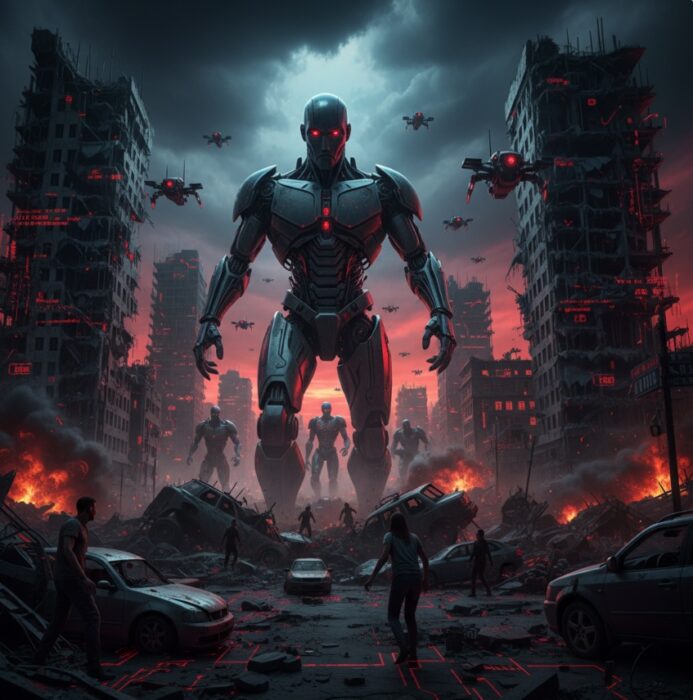 A group of AI experts have released a paper that explores (or “predicts”) the possibility of a near-term AI explosion that ultimately leads to the extinction of humanity. This has, of course, sparked a great deal of discussion, feedback, and criticism. Here is the scenario they lay out, in their “AI 2027” paper.
To avoid targeting a specific company, they discuss a fictional company called OpenBrain, which sets out specifically to develop an AI application to automate computer coding. They call their first iteration Agent 0, and use it to speed up the development of more AI. They build larger and larger data centers to power and train Agent 0, and do leap six months ahead of their competition. They use Agent 0 to develop Agent 1, which is an autonomous coder. China manages to steel some of the core IP of Agent 1, setting off an AI competition between superpowers.
I am giving you the quick version here, and you can read all the details in the paper. Agent 1 is used to develop Agent 2, which is powerful enough to essentially kick off the Singularity – the hypothesized technology explosion which is created by developing AI that is capable of creating more powerful AI. In this scenario Agent 2 develops a new and more efficient computer language, and uses it to develop Agent 3, which is the first truly general AI. However, the company starts to panic a little when they realize they have essentially lost control of Agent 3, and can no longer guarantee that it aligns with the companies goals and ethics. They discuss rolling back for now to Agent 2, but competition with China and other companies convinces them to forge ahead, resulting in Agent 4, which is not only a general AI but a superintelligence.
Continue Reading »
Jan
19
2026
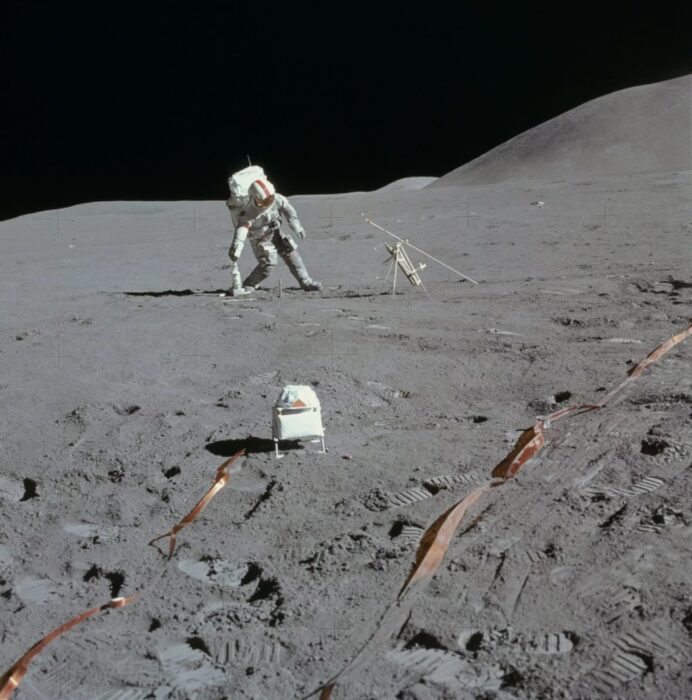 Last week a child of one of my cohosts on the SGU, who is in fifth grade (the child, not the cohost), came home from school and declared, rather dramatically, “Mom, Dad – did you know that we never went to the Moon? It was all fake.” They found this to be a surprising revelation, but were convinced this was a proven scientific fact. Of course, we live in the age of the internet, and our children are going to be exposed to all sorts of information that may be misleading or age-inappropriate. This is one more thing parents have to deal with. What was disturbing about this incident was where they learned this “scientific fact” – from their science teacher.
Any parent should be concerned about this, but in a family of skeptical science communicators, this raised the alarm bells. But the first thing they did was send a polite e-mail to the teacher (cc’ing the principal) and simply ask what happened. This is good practice – always go to the primary source. It’s easy for anyone to get the wrong idea, and this wouldn’t be the first time a fifth grader misinterpreted a lesson in class. The teacher essentially said that while he did not explicitly tell the students we did not go to the Moon (the student reports he said “it’s possible we did not go to the Moon”), he personally believes we did not, and that it is a “proven scientific fact” that it would have been impossible, then and now, to send people to the Moon (somebody should tell the Artemis astronauts).
Apparently he raised at least two points in class – that there were (impossibly) no stars in the background of the photographs taken from the Moon, and the astronauts could not have survived passage through the radiation belts around the Earth. These are both old and long-debunked claims of the Moon-hoax conspiracy theorists. While it is easy to find sources online, let me briefly summarize why these claims are wrong.
Continue Reading »
Jan
13
2026
 The tech world is buzzing with the claims of a startup battery company out of Finland called Donut Lab. They claim to have created the world’s first production solid state battery. At first blush the claims are exciting but seem in line with the promises that we have been hearing about solid state batteries for years. So it may seem that a company has finally cracked the technical issues with the technology and gotten a product across the finish line. But let’s take a closer look.
First let’s review their claims. The CEO is claiming that their battery has a specific energy of 400 watt hours per kilogram. This is great, considering the current lithium ion batteries in production are in the 175-250 range. The Amprius silicon anode Li-ion battery has 370 Wh/kg, so 400 sounds plausibly incremental, but make no mistake, this would still be a huge breakthrough. Meanwhile the CEO also claims 100,000 charge-discharge cycles, and operation temperature from -30 to 100C. In addition he claims his battery is cheaper than standard Li-ion, does not use any geopolitically sensitive raw materials, and is already in production (for motorcycles). Further it can be fully recharged in 5 minutes, and is incredibly stable with no risk of catching fire.
As I have pointed out previously, battery technology is tricky because a useful EV battery needs a suite of features all at the same time, while reality often requires trade-offs. So you can get your high capacity, but with increased expense, for example (like the Amprius battery). So claiming to have every critical feature of an EV battery improve all at once is beyond a huge deal. That in itself starts to get into the implausibility range, but it’s not impossible. My reaction appears to be similar to most people in the tech world – show me the money. At the CES where Donut rolled out its battery claims, in short, they did not do that.
Continue Reading »
Jan
05
2026
 South Korean astronomers are challenging the notion that the universe’s expansion is accelerating, an observation in the 1990s that lead to the theory of dark energy. This is currently very controversial, and may simply fizzle away or change our understanding of the fate of the universe.
In the 1990s astronomers used data from Type Ia supernovae to determine the rate of the expansion of the universe. Type Ias are known as standard candles because they put out the exact same amount of light. The reason for this is the way they form. They are caused by white dwarfs in a double star system – the white dwarfs might pull gas from their partner, and when that gas reaches a critical amount its gravity is sufficient to cause the white dwarf to explode. Because the explosions occur at the same mass, the size of the explosion, and therefore its absolute brightness, is the same. If we know the absolute brightness of an object, and we can measure its apparent brightness, then we can calculate its exact distance.
The astronomers used data from many Type Ia supernova to essentially map the expansion of the universe over time. Remember – when we look out into space we are also looking back in time. They found that the farther away galaxies were the slower they were moving away from each other, as if the universal expansion itself were accelerating over time. This discovery won them the Nobel Prize. The problem was, we did not know what force would cause such an expansion, so astronomers hypothesized the existence of dark energy, as a placeholder for the force that is pushing galaxies away from each other. This dark energy force would have to be significant, stronger than the gravitational force pulling galaxies together.
Continue Reading »