May 30 2023
Should You Get a Heat Pump?
 Starting around 1550 and lasting through the 1600s, England had an energy crisis. They were running out of wood, which was the main source of fuel for residential and commercial heating. England also needed a lot of wood for their massive navy – it took about 2,000 trees to build one of the larger warships. As a result they turned to coal, which has a high energy density and worked nicely for heating. It has the not-insignificant problem, however, of generating a lot of pollution, choking large cities like London in black smoke. This lasted into the 20th century, culminating with the great London smog of 1952.
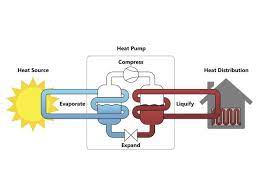
The world still burns a lot of coal to generate heat, but generally not in homes. There are other options, especially where people live. We can generate heat by burning cleaner sources of fuel, like natural gas. We can also generate heat through electrical resistance, producing no pollution directly (only in the production of electricity, which is likely remote from the user). Heat can also be harvested from waste heat and pumped into buildings. Or heat can be moved from one source to another using a heat pump.
Moving to more efficient and environmentally friendly methods of producing heat is at least as important to minimizing global warming as generating clean electricity. About half of world energy is used simply to generate heat, more than any other use (generating electricity is 20% and transportation is 30%). Decarbonizing heat production is therefore arguably more important than decarbonizing either electricity production or transportation, although of course they are all important.
Two technologies are likely to make the most difference in decarbonizing heat production. The first is harvesting waste heat from energy production and other industrial processes. This requires producing energy somewhat close to where the heat is needed, which is another advantage of more distributed rather than centralized energy production. Harvesting waste heat needs to be designed up front for any installation that will generate a lot of heat. Data centers, for example, expend a lot of energy just cooling all those computers. That heat can be put to good use.
 When it comes to big problems it’s generally a good idea to remember some basic principles. One is that there is no free lunch. This is a cliche because it’s true. Another way to put this is – there are no solutions, only trade offs. Sometimes there is a genuine advance that does improve the calculus, and there are certainly more or less efficient ways to do things. But when making decisions that affect the technological infrastructure for a world-spanning civilization of billions of people, everything has consequences.
 There is an ongoing culture war, and not just in the US, over the content of childhood education, both public and private. This seems to be flaring up recently, but is never truly gone. Republicans in the US have recently escalated this war by banning over 500 books in several states (mostly Florida) because they contain “inappropriate” content. There are a few issues worth exploring here.
 I have been writing blog posts and engaging in science communication long enough that I have a pretty good sense how much engagement I am going to get from a particular topic. Some topics are simply more divisive than others (although there is an unpredictable element from social media networks). I wish I could say that the more scientifically interesting topics garnered more attention and comments, but that is not the case. The overall pattern is that topics which have an ideological angle or affect people’s world-view inspire more passionate criticism or defense. Timed drug release is an important topic, with implications for potentially anyone who has to take medication at some point in their lives. But it doesn’t challenge anyone’s world view. ESP, on the other hand, is a fringe topic likely to directly affect no one, but apparently is 70 times more interesting to my readers (using comments as a measure).
 Researchers recently published
  I recently recorded a YouTube video on the notion of hydrogen fuel cell cars (it will be posted soon, and I will add the link when it’s up). One question I did not get into in the video, but which is an interesting thought experiment, is hydrogen – plug-in battery hybrid vehicles. I can find just one model coming online in Australia, the Hyundai N Vision 74. This approach could, theoretically, save hydrogen from losing the the competition to replace internal combustion engine cars. I still don’t think so, but it’s an interesting idea.
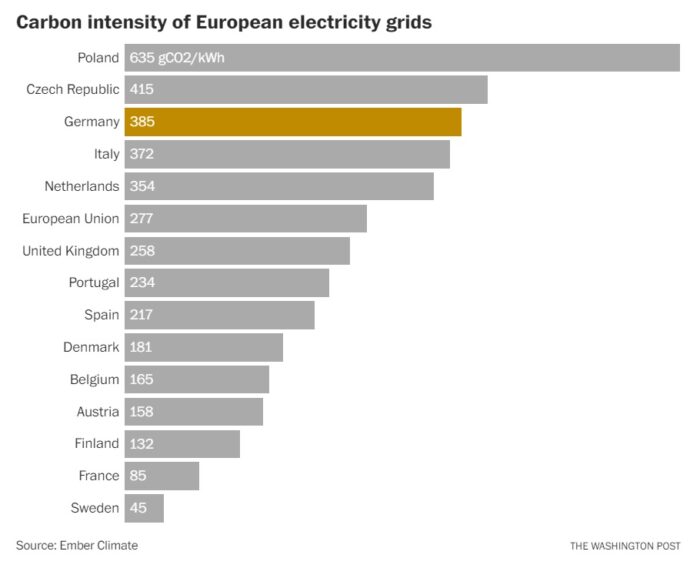 Germany has been thrown around a lot as an example of both what to do and what not to do in terms of addressing global warming by embracing green energy technology. It’s possible to look back now and review the numbers, to see what the effect was of its decision to embrace renewable technology and actively shut down their nuclear power plants. The numbers, I think, tell a pretty clear story.
 Elon Musk has a complicated legacy. Most people I encounter who bother to express an opinion tend to be either a fan or hater. I am neither. He’s a complicated and flawed person who has accomplished some interesting things, but also has had some epic failures. People like a clean narrative, however, so it’s tempting to portray him as either all good or all bad, or at least minimize the parts that don’t align with your narrative. I find it interesting, for example, that many people who don’t like Musk feel compelled to take away his genuine accomplishments, like SpaceX. The common criticisms I hear are that Musk did not engineer the rockets (of course he didn’t), or that he didn’t build SpaceX, he bought it. The first claim is irrelevant and the second is simply wrong. SpaceX exists because of Musk, because of his dedication to building that company and his willingness to sink lots of his own money into a string of failures until it worked. You have to give the devil his due. Similarly, his successes do not excuse his personal failures, unsavory business practices, unfortunate politics, or epic failures like Twitter.
 This is one of those technologies that most people probably never think about, but could potentially have a significant impact on our lives – timed drug release. The concept is nothing new, but there is a lot of room for improvement on current technologies. We already have time-release capsules, patches, and some drugs that can have long term effects with one dose, like Depo Provera. But for most drugs, you have to dose them every day at least.
 I know this wasn’t the purpose of